
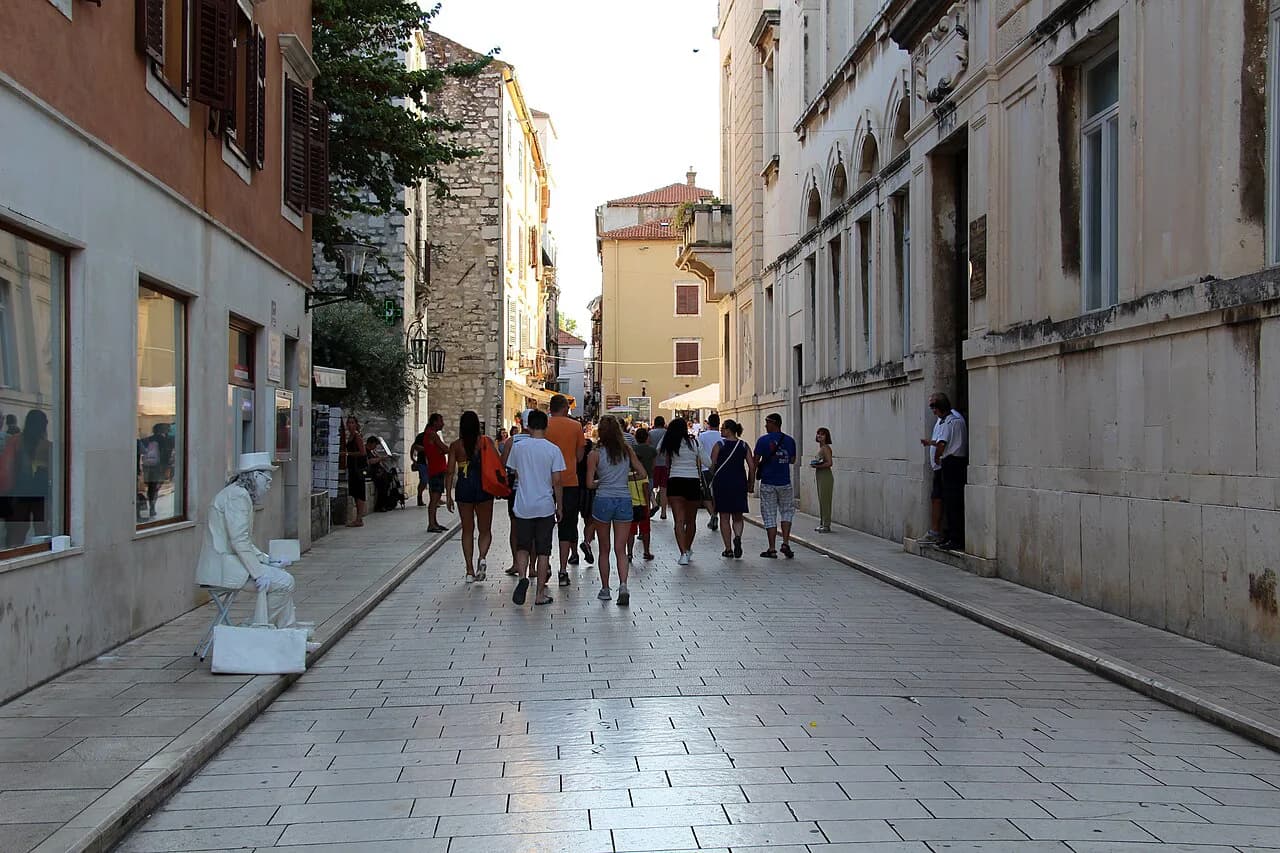
Zadar City Market: A Visitor's Guide to the Tržnica

Zadar city market is the town's main tržnica, a working market with two distinct halves: an open-air produce section and a fish hall. It sits inside the old town walls, so it slots naturally into a walk between the City Gate and the seafront rather than demanding a trip of its own. This guide covers the layout, what to buy on each side and how much time to give it.
Allow around half an hour, more if you plan to buy fish or chat with vendors. The market is a short walk from the Church of St Donatus and the Sea Organ, which makes it an easy first or last stop of a morning in the old town.
What Zadar City Market is
The tržnica is the town's everyday market, Split between an open-air section and a covered fish hall. The open-air side carries local produce such as vegetables, fruit, honey and olive oil, while the fish hall is where fresh fish is sold. Visitors who only walk the open-air rows miss half the market.
This is a working market rather than a sight, and the appeal is the produce itself rather than any display. Vendors sell what is in season, so the stalls change through the year. It rewards a slower look and is best treated as everyday shopping rather than an attraction.

Where it is
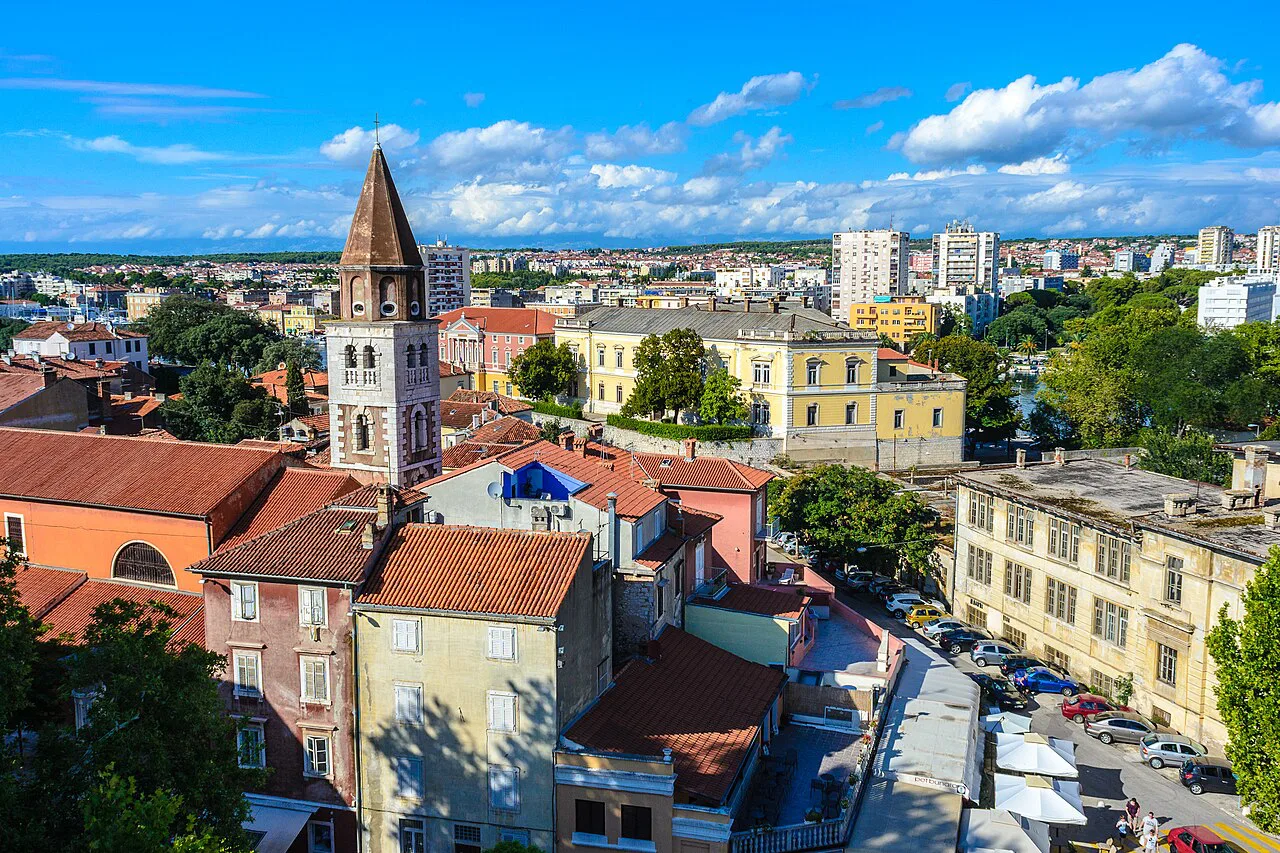
The market stands at Ul. pod bedemom 1/A, just inside the old town near the City Gate. That position puts it a few minutes' walk from the Church of St Donatus and the Sea Organ, so it fits neatly into a circuit of the peninsula.
On foot is the sensible way in: the old town is compact and largely pedestrian. If you are driving, leave the car outside the walls and walk through the gate; parking sits next to the market.

How the market works
Buying is straightforward: you point at what you want, the vendor weighs it and you pay in euros. Croatia has used the euro since 2023, so there is no currency conversion to worry about. Small notes and coins make the quickest transactions at busy stalls.
The fish hall runs on the same principle, with fish sold by weight. Many vendors are helpful with questions, which makes it easy to ask what is freshest that morning.
What to buy
On the open-air side, look for vegetables, fruit, honey and olive oil. Honey and oil are the practical souvenirs: sealed, light and easy to carry for the rest of a trip. Seasonal fruit is the better buy for eating on the spot.
Fresh fish is the reason to seek out the covered hall, but it shapes what you can realistically buy. Unless you have a kitchen and a plan for the same day, fish is a poor purchase for a visitor. Go for the spectacle and the smell of the market rather than to stock up.
When to come and how long to allow
Mornings are when the market is at its best, with produce laid out and fish arriving early. Come in the morning before the old town fills with day visitors if you want space to browse.
Half an hour covers both halves at an easy pace; an hour lets you buy produce and talk to vendors. Pair it with the City Gate a few steps away and the seafront beyond, and you have a natural morning loop.
What's nearby
The City Gate is the closest landmark, and the Church of St Donatus is a couple of minutes further into the old town. The Sea Organ sits on the waterfront at the tip of the peninsula, a short walk from the stalls. These are reference points for orienting yourself rather than a full itinerary.
For a sit-down meal after browsing, the old town has plenty of konobas within a few streets; our Zadar food landmarks guide gathers the places worth planning around. Our guide to Foša in Zadar covers the small harbour just outside the walls, a short walk from the market.
If you want to stay close to the water, the Zadar seafront around Kornat is an easy extension of the walk. Our Kornat Zadar guide covers that stretch of coast and what to expect there.
Is it worth a detour?
Yes, if you are already in the old town: it takes half an hour and asks nothing of your wallet beyond what you buy. It is not a standalone destination, and anyone expecting a large covered market will find it modest. The reward is the everyday food side of Zadar, seen in half an hour.
If you are planning a meal nearby afterwards, Konoba Skoblar in Zadar is one option in the old town worth checking against your route.
Konoba Stomorica in Zadar is another old-town address to consider if you want lunch after the market.
Is the market worth a stop on your Zadar walk?
Yes, as a short morning stop between the City Gate and the seafront. Buy honey or olive oil to carry, look at the fish hall, and move on. Budget half an hour and come early.
Frequently Asked Questions
Is there a flea market in Zadar?
Zadar's main market is a produce and fish market rather than a flea market. It is the place to go for vegetables, fruit, honey, olive oil and fresh fish, not second-hand goods.
Do I need a ticket for Zadar city market?
No. It is a working public market, so you simply walk in and pay only for what you buy from the stalls.