Best Restaurants in Rovinj: Where to Eat and What to Order
Our pick of the best restaurants in Rovinj, from old-town seafood terraces to konobas serving Istrian fuži with truffles, plus what to order and how to book.
On this page
The best restaurants in Rovinj divide into three useful groups: old-town terraces with harbour views, konobas a few streets behind the waterfront where the cooking leans Istrian, and market-edge places for lunch. Pick by occasion first and menu second, because the view usually decides the bill.
Rovinj sits on a northern Istrian peninsula once ruled by Venice, and its kitchen reflects both sides of that geography: Adriatic fish on one hand, truffles, pasta, cured pork and cattle from the peninsula's interior on the other. This guide covers what to order, how fish is priced, which areas suit which evening, and how high season changes the booking maths.
What Rovinj restaurants do best: Adriatic fish and Istrian ingredients in one town
Restaurants here serve fish from the Adriatic alongside Istrian staples such as truffles, homemade pasta, wild asparagus, boškarin (Istrian cattle) and local olive oil, so a single dinner can move from a shared fish starter to a truffle pasta without changing restaurant. Istria is recognised in particular for its olive oil as well as its truffles and cured meats.
That range is the reason to eat in Rovinj rather than treat it as a scenic stop. Istria has a serious olive-oil reputation, and the cured meats, cheeses and pasta styles you meet on Rovinj menus are peninsula-specific rather than generic Croatian. If you want the seafood side in more depth, the guide to the best seafood restaurants in Rovinj is worth reading before you shortlist. If you are weighing another Adriatic stop on the same trip, the Best Restaurants in Dubrovnik follow the same pick-by-occasion logic.
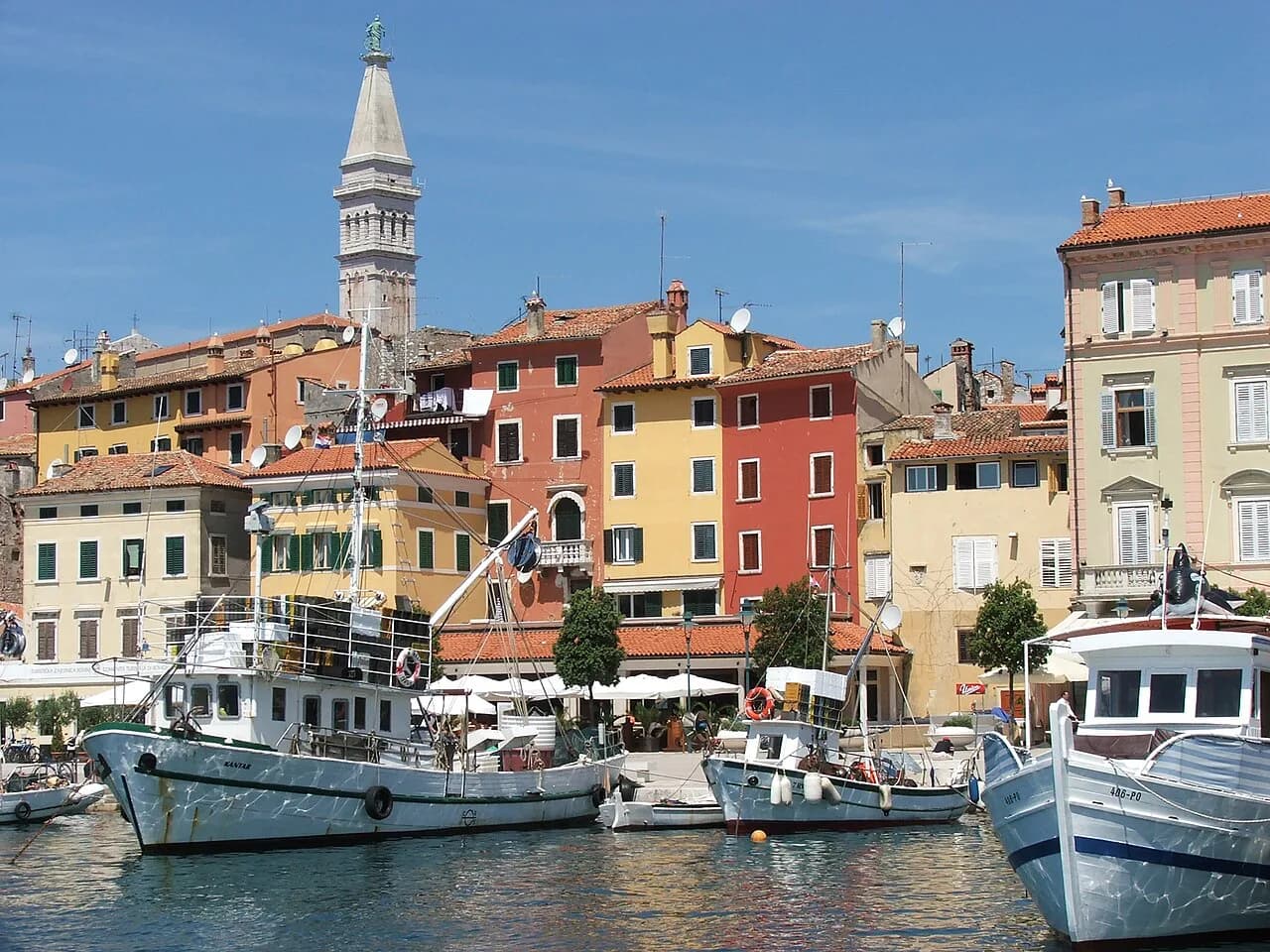
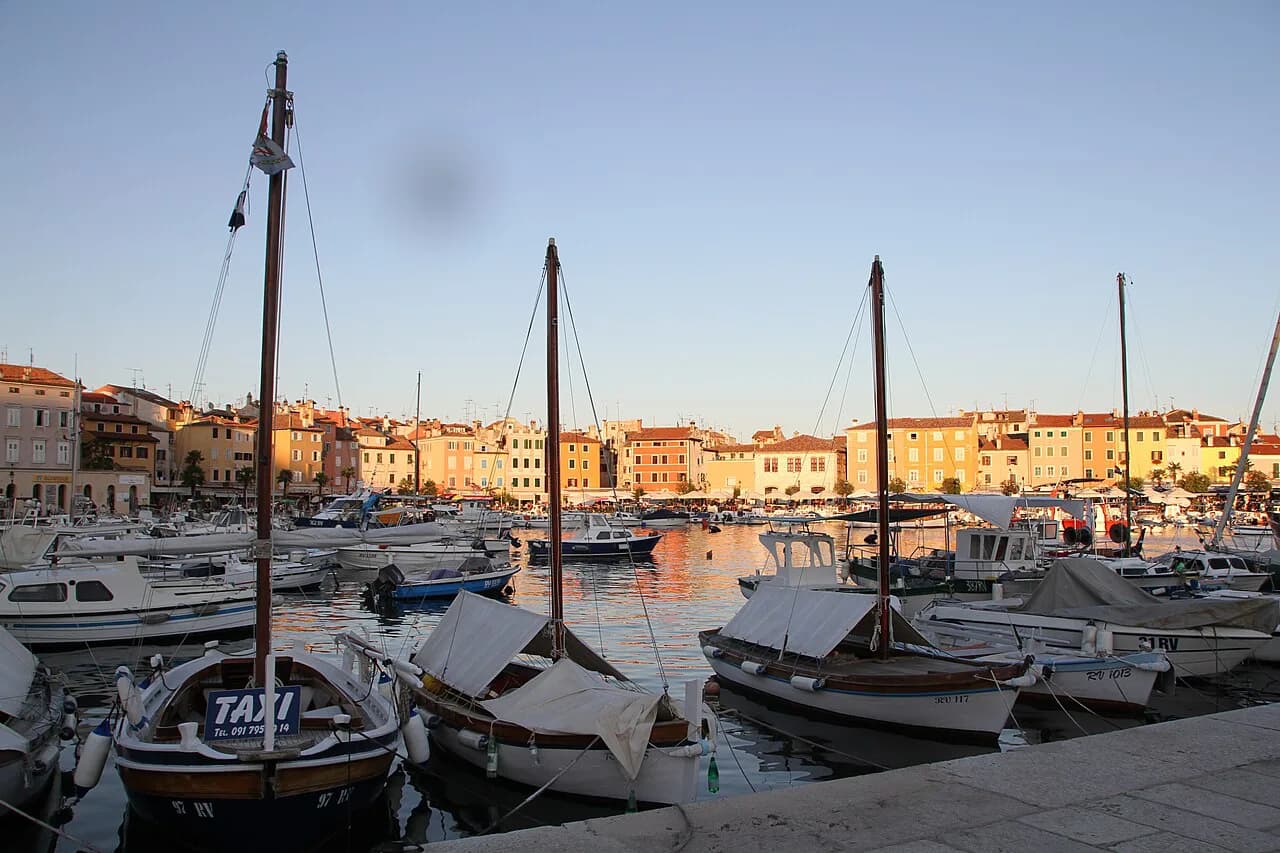
The town itself is small and walkable, with the Church of St. Euphemia on the hill above the old town and the Valdibora harbour at the other end of the peninsula. That compactness means you can compare an old-town terrace and a quieter back-street dining room on the same evening stroll, and the same is true of how eating out works across the country, as this Croatia guide explains.
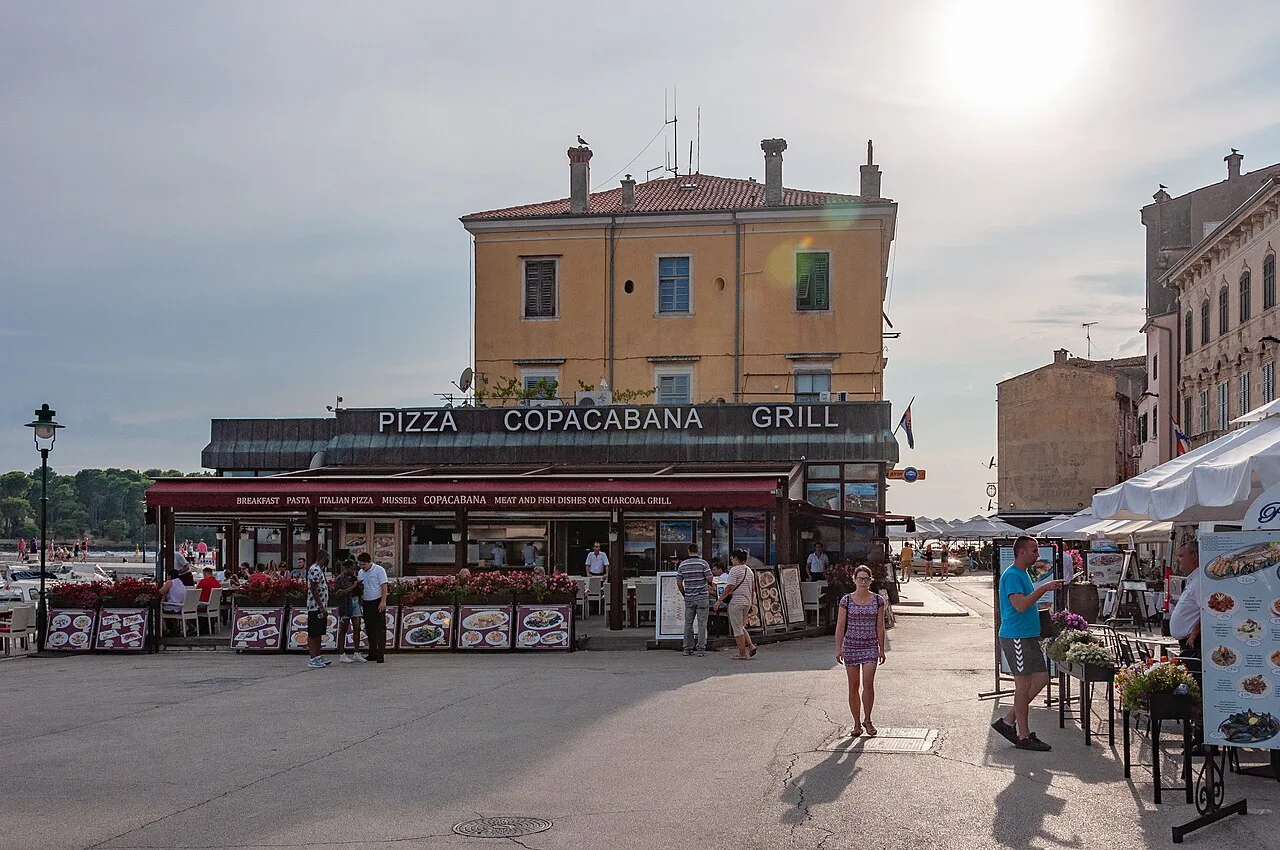
Old-town terraces versus places a few streets back
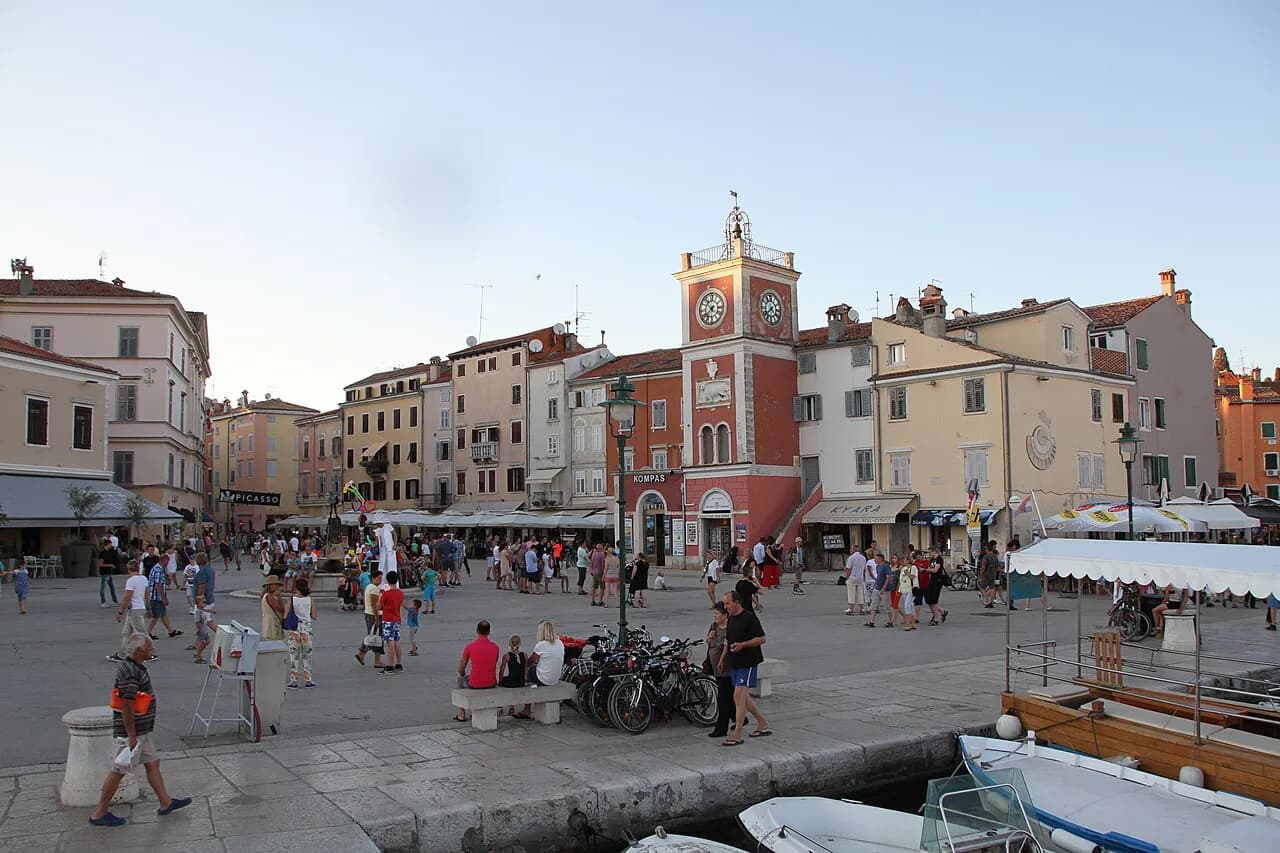
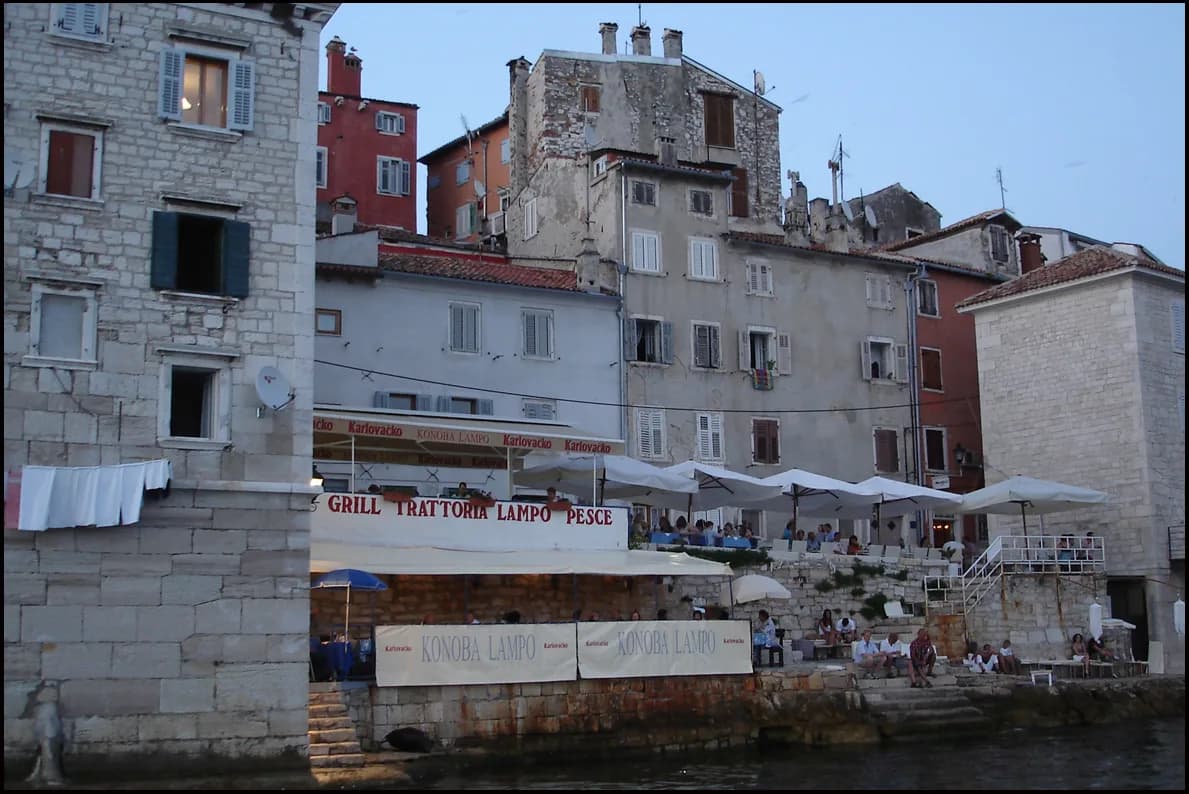
The old-town terraces sell atmosphere: stone lanes, rooflines, a glimpse of the harbour and the pleasure of eating outside with no particular plan. You pay for that in the dinner bill and in the pace, since the busiest rooms turn tables quickly in summer.
The streets behind the waterfront and the edges of the centre tend to be calmer, with more space between tables and cooking that leans on Istrian classics rather than the view. The trade-off is simple: give up the postcard setting and you often get a more relaxed meal and a shorter wait.
A practical compromise is to book a view for one evening and eat inland-facing for the rest of the trip, and the restaurants in Rovinj old town are the ones to shortlist for that view night because they sit inside the lanes themselves. Rovinj is small enough that neither choice costs you much walking, and the two experiences feel genuinely different rather than like the same dinner twice.
Seafood and fish: what to order, and how fish is priced by the kilo
Order whole fish grilled simply, with olive oil, lemon and blitva (Swiss chard with potato), and let the kitchen do less rather than more. Mussels, clams and prawns are the other safe bets, usually served as a starter or with pasta. Scampi and shellfish are best ordered by asking what came in that day.
Fish is normally priced by the kilo rather than per portion, so the final cost depends on the size of the fish you choose. Ask the waiter to show you the fish and confirm its weight and the per-kilo rate before it goes on the grill; that one question turns an open-ended seafood dinner into a known number.
Shared starters keep a fish dinner in budget: a plate of marinated anchovies or a shellfish pan to open, then one whole fish between two with a side of blitva. If you want the full seafood treatment without the terrace premium, choose a back-street konoba and spend the difference on a better bottle.
Istrian classics to look for on menus
Fuži and pljukanci are the two pasta shapes to know. Fuži is rolled, quill-shaped pasta often paired with truffles or meat sauce, while pljukanci are hand-rolled, dumpling-like strands that hold heavier sauces well. Both appear with game, boškarin or mushrooms depending on the season.
Žgvacet is a slow-cooked meat stew, traditionally made with chicken or game, and it is the dish to order when you want something cooked for hours rather than minutes. Čripnja refers to cooking under a domed lid with coals heaped on top, most often used for lamb; it is a shared, unhurried plate rather than a quick solo dinner.
Truffles deserve a word of caution and a word of enthusiasm. Istrian white truffles from the Motovun forest are the prized ones, and truffle pasta, truffle fritaja (a soft omelette) and truffle risotto are the standard vehicles. Truffle dishes sit at the top of the Rovinj price range, so order them once and deliberately rather than as an afterthought.
Boškarin is Istrian cattle, a large, pale, long-horned breed, and its meat appears as carpaccio, steak, goulash and sausage. It carries a European origin label, which is worth knowing when a menu prices it above ordinary beef. Order it if you want to eat something you cannot easily find at home.
Istrian cured meats and cheeses to start
Begin with a shared plate of Istrian pršut, the air-dried ham salted with sea salt and aged in the peninsula's microclimate, alongside ombolo, a dried, pressed pork chop also called žlomprt. Add local sheep's cheese and a dish of olive oil and you have the cheapest way to eat well in Rovinj.
Cheese lists often include a hard full-fat sheep's cheese plus variants with truffles or wrapped in walnut leaves. If the origin matters to you, ask which cheeses on the board are Istrian and which come from further along the coast.
A cured-meat and cheese board is also the best opening move for a mixed group, since it keeps vegetarians and fish-eaters happy at the same table while the mains are decided. Pair it with a glass of malvazija rather than a cocktail and the meal starts on Istrian terms.
Where to eat for a special occasion versus a casual midweek dinner
For a special occasion, choose an old-town room with a sea-facing terrace and book it as soon as your dates are fixed. Restaurants such as La Puntulina, Giannino and Adriatic Hotel are frequently named for that kind of evening; treat them as atmosphere-led starting points and confirm menus, booking and opening details directly with each.
For a casual midweek dinner, look at the konoba end of the market: Restoran Lavanda, Sidro Restaurant and Restaurant Calisona are among the dining names often grouped with Rovinj's mid-range rooms, and a back-street setting usually means a shorter wait and a less formal service style.
If your priority is the meal rather than the milestone, look at the best dinner in Rovinj options and pick a room with a short, changing menu over one with a laminated book of photographs. A short menu usually signals a kitchen cooking to its own strength.
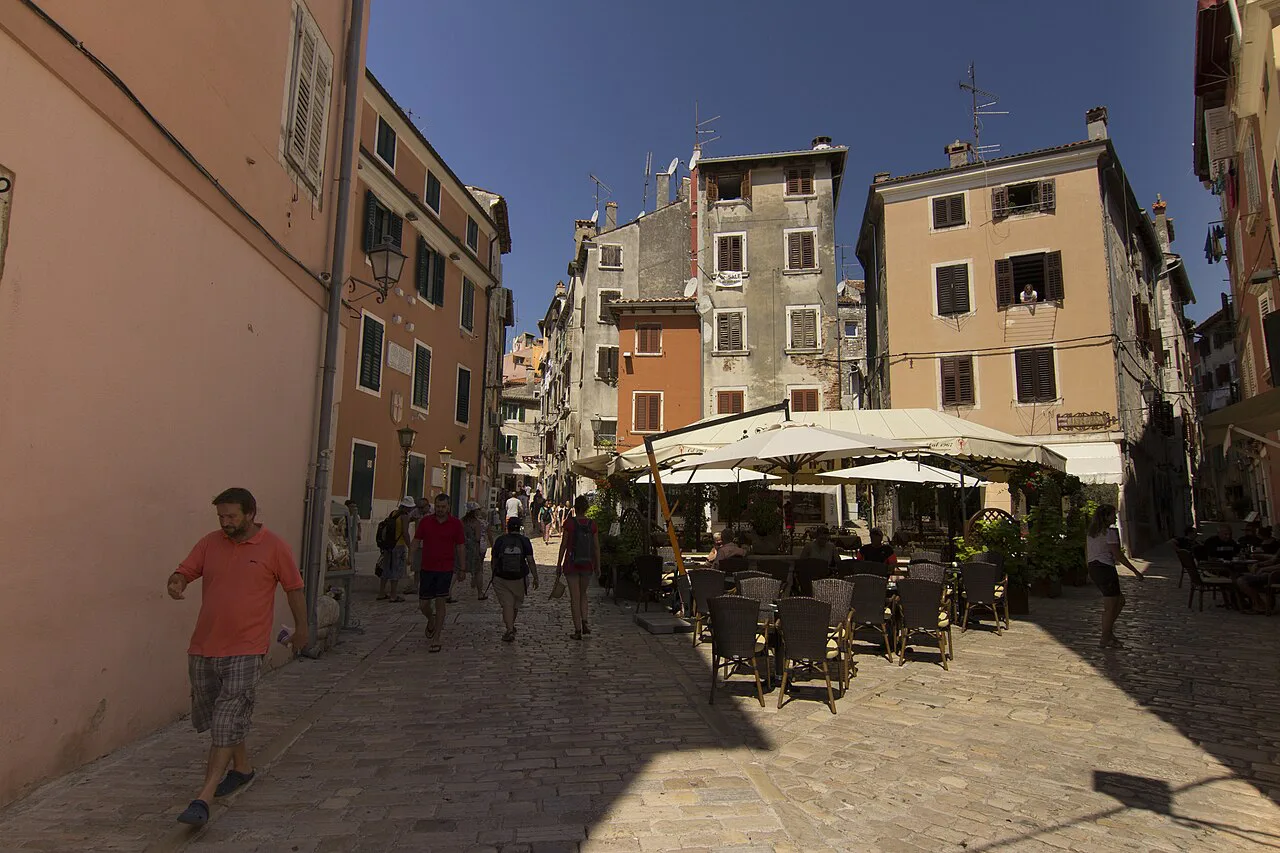
Booking in high season: which sittings and areas fill first
In July and August, the sea-view terraces in the old town fill first, and the earliest and latest sittings go before the middle of the evening. Book the view-led rooms several days ahead if you have a fixed date; for back-street konobas, a same-day call in the morning usually works.
Rovinj recorded 4.1 million overnight stays in 2023, the first Croatian destination to pass that mark in a single year, which tells you how compressed the peak weeks are. Outside high season the pressure eases sharply and walk-ins become realistic again, so a June or September dinner needs far less forward planning.
When you book, ask for the terrace or the interior explicitly, and confirm the time rather than assuming a sitting. Groups of six or more should book earlier than couples, since larger tables are limited in the small old-town dining rooms.
Wine with dinner: malvazija and teran
Istrian malvazija is the white to order with fish, shellfish and truffle pasta: fresh, lightly aromatic and usually the cheapest good bottle on the list. Teran is the red, high in acidity and tannin, and it suits boškarin, game and žgvacet far better than a heavy international red.
House wines in Rovinj are often local, so asking for the open malvazija or teran by the glass is a sensible way to keep the bill down without settling for something dull. Order a bottle only once you know what the table is eating, particularly if the order splits between fish and boškarin.
Vegetarian and non-fish options on Rovinj menus
Istrian cooking is kind to vegetarians: truffle fritaja, pasta with truffles or wild asparagus, mushroom dishes, grilled vegetables and cheese boards cover most of the ground. The risk is repetition if you eat out for a week, so vary between pasta, egg dishes and vegetable plates rather than ordering truffle pasta every night.
Vegan eating is harder but not hopeless, since Istrian menus lean on olive oil, vegetables, beans and pasta. Ask for dishes without cheese or egg rather than expecting a marked vegan section, and check the pasta sauce base before ordering.
If you are avoiding gluten, the safest orders are grilled fish, meat and vegetable plates, cured meats and cheese, with polenta or potatoes in place of pasta. Truffle dishes served with fuži or bread are the ones to swap out.
Breakfast and lunch: the market and bakery stops
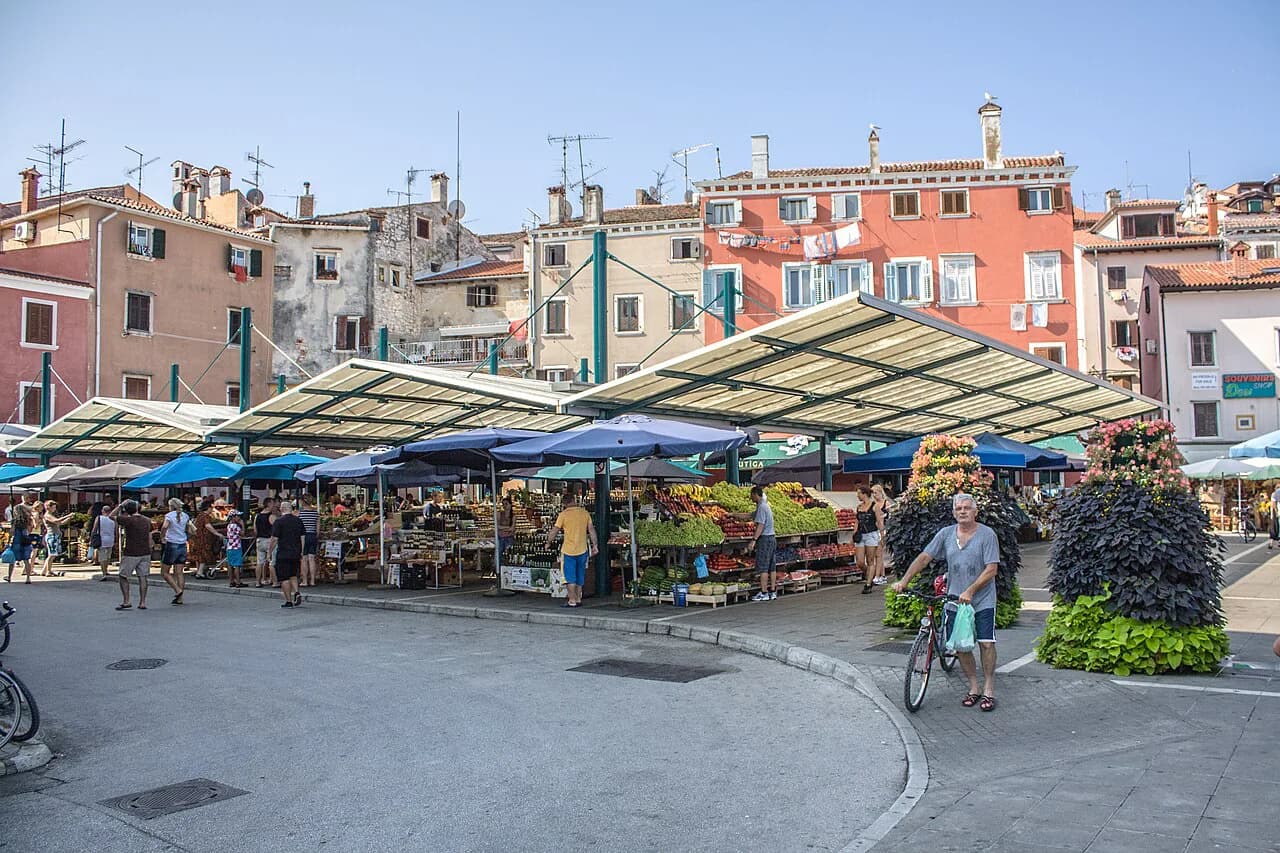
The Green Market near the edge of the historic port at Valdibora Square is the place to build a picnic lunch: a fresh fish section alongside local produce, nuts, homemade jams and chutneys, and Istrian truffles in season. Go in the morning when the stalls are at their fullest.
Between restaurant meals, a bakery and a market stall cover breakfast and a light lunch cheaply. If you want a sit-down midday meal instead, the Where to Have Lunch in Rovinj picks include places that keep lunch simpler and cheaper than their dinner service.
Lunch in Rovinj is also the moment to eat the dishes that cost most at dinner: a plate of fuži at midday usually comes at a lower level than the same dish after dark, and the terrace is quieter.
Which Rovinj restaurant should you book first?
Book one old-town terrace for the evening you want the view, then spend the rest of the trip in the konobas behind the harbour, where Istrian cooking and a calmer room come at a lower level. Order pršut and cheese to start, one whole fish or a plate of fuži as a main, and confirm the fish's weight and per-kilo rate before it is grilled.
If the group splits between seafood, meat and vegetarian plates, the market at Valdibora plus a bakery lunch is the simplest fix on a busy day. Whatever you choose, book the view-led rooms a few days ahead in peak summer and leave the back streets for walk-ins.
Explore more Rovinj guides
Frequently Asked Questions
Do you need to book restaurants in Rovinj?
In July and August, book the old-town terraces with sea views several days ahead, since the earliest and latest sittings go first. Konobas a few streets back usually accept a same-day morning call, and outside high season walk-ins are realistic.
How is fish priced in Rovinj restaurants?
Fish is normally sold by the kilo, so the final cost depends on the size of the fish. Ask to see the fish and confirm its weight and the per-kilo rate before it goes on the grill.
What food is Rovinj known for?
Rovinj pairs Adriatic fish and shellfish with Istrian cooking: fuži and pljukanci pasta, truffles from the Motovun forest, pršut and ombolo, local sheep's cheese, boškarin beef and žgvacet stew. Truffle dishes and boškarin sit at the top of the price range.
Sources
Notes on eating well in Croatia
Optional updates to our food guides.
You might also like
Continue reading
More guides you'll find useful