Michelin-Starred Restaurants in Croatia: Where to Eat
Croatia's Michelin-starred restaurants, from Zagreb and Rovinj to Dubrovnik, with the dish to order at each and which towns hold more than one star.
On this page
Croatia's Michelin-starred restaurants cluster in a handful of towns, and two of them sit in Rovinj. The starred kitchens named in the guides below are Noel in Zagreb, Monte and Agli Amici in Rovinj, Draga di Lovrana in Lovran, Nebo in Rijeka, Pelegrini in Šibenik, LD Terrace on Korčula, Restaurant 360 in Dubrovnik, Alfred Keller on Mali Lošinj and Boškinac near Novalja. This guide groups them north to south so you can see which stars fall on your route, and pairs each one with the dish that best shows what the kitchen does.
Most nights in Croatia are konoba nights: grilled fish, a plate of pršut (dry-cured ham) and a carafe of local white in a stone-walled tavern. A starred meal is the other end of the scale, a planned evening with several courses and a higher bill, and it helps to know which of the two you are choosing. For the everyday side, our guide to restaurants in Croatia covers the taverns, pekare (bakeries) and markets that fill the rest of a trip.
Which restaurants in Croatia hold a Michelin star
The round-ups consulted here name ten one-star restaurants, spread across Zagreb, Istria, Kvarner, Dalmatia and the islands: Noel, Monte, Agli Amici, Draga di Lovrana, Nebo, Pelegrini, LD Terrace, Restaurant 360, Alfred Keller and Boškinac. Star status changes with each Michelin Guide edition, so confirm the current list on the Michelin Guide's own site before you build a trip around a booking.
The geography rewards planning. Istria and Kvarner hold five of the ten, which makes a Rovinj base with a drive to Lovran and Rijeka realistic, while Dalmatia and the islands account for the rest. If your route runs Zagreb to Dubrovnik, you can pass through several of the starred towns without a detour.
Zagreb: Noel
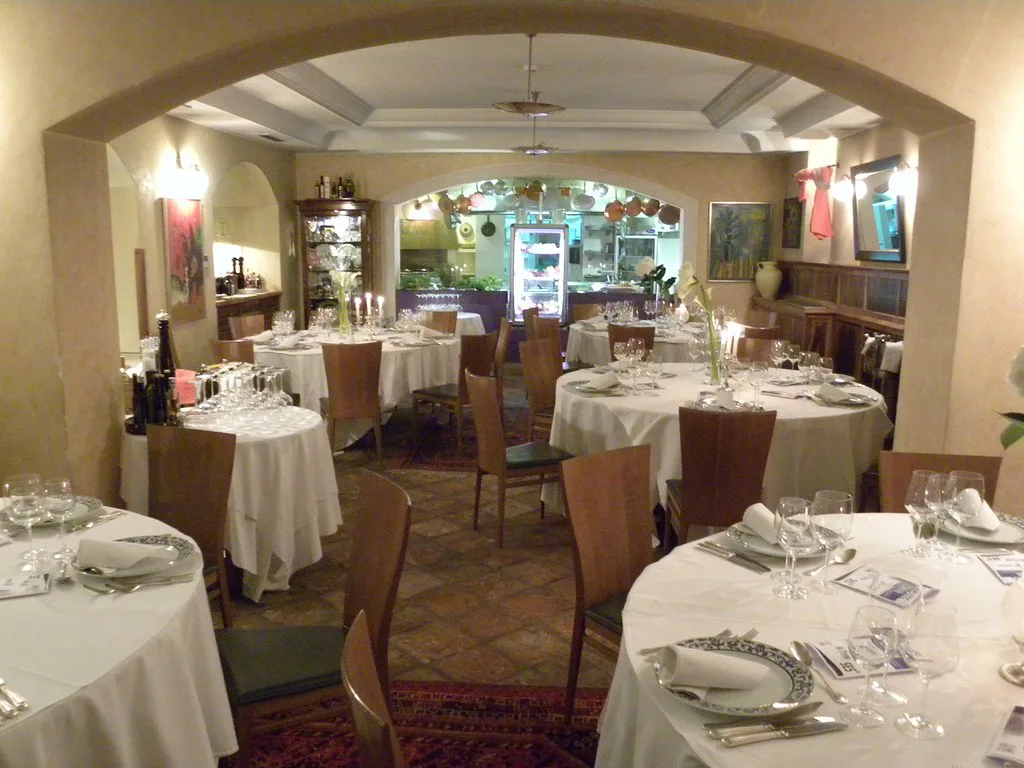
Noel serves modern European cooking in the Croatian capital, with Bruno Vokal as head chef and a tasting-menu format. The dish to order, if it appears on your menu, is Adriatic fish with white asparagus and smoked eel, which shows the kitchen's habit of pairing Croatian fish with continental vegetables.
How many Michelin-star restaurants are there in Croatia? The round-ups consulted here name ten one-star restaurants: Noel in Zagreb, Monte and Agli Amici in Rovinj, Draga di Lovrana in Lovran, Nebo in Rijeka, Pelegrini in Šibenik, LD Terrace on Korčula, Restaurant 360 in Dubrovnik, Alfred Keller on Mali Lošinj and Boškinac near Novalja. Star counts change with each Michelin Guide edition, so check the current list on the Michelin Guide's own site before booking around one.
Is Croatia expensive to eat out? It depends entirely on the type of meal. Konoba lunches of grilled fish, pasta or stew with a carafe of house wine are moderate by western European standards, while starred tasting menus are a special-occasion spend comparable to fine dining elsewhere in Europe.
Do I need to book a Michelin-starred restaurant in Croatia? Yes, and well ahead in high season. These are small dining rooms with tasting-menu formats, and July and August tables in Rovinj, Dubrovnik and Korčula fill first.
Zagreb is the natural first or last stop on a Croatian trip, and a starred dinner here works well on an arrival night when you are not yet driving. Noel's modern European menu makes it a city restaurant rather than a coastal one, and it is the only starred table on this list in the capital.
Rovinj: Monte and Agli Amici
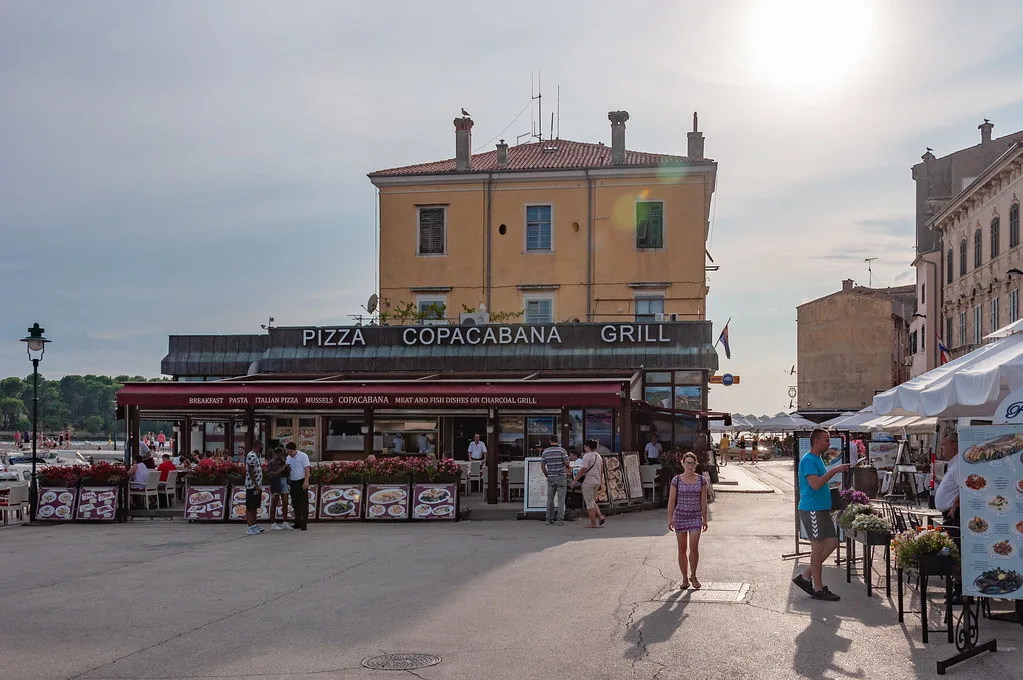
Monte sits in Rovinj's old town under chef Danijel Đekić, who owns it with his wife Tijtske, the sommelier. One round-up consulted here describes it as the first restaurant in Croatia awarded a Michelin star, in 2017, and quotes Michelin inspectors describing the cooking as creative and occasionally theatrical, with modern techniques applied to carefully presented dishes. The signature to look for is suckling pig with lentils, yellow cabbage, kulen sausage (a spiced cured pork sausage) and pork rind.
Agli Amici is the second Rovinj star, the restaurant of the Grand Park Hotel, with Emanuele Scarello as head chef. Its dish to order is prawns tortelli with peppers and hazelnut butter, a pasta course that leans Italian, which makes sense this close to the Istrian coast's Italian-speaking history.
With two stars in one small town, Rovinj is the obvious base for a starred evening in Istria. Book whichever fits your date, then spend the rest of the stay on Istrian tavern food: fuži (hand-rolled pasta) with truffles, istarski pršut and malvazija wine. For the everyday end of eating out across the country, see our guide to restaurants in Croatia.
Lovran and Rijeka: Draga di Lovrana and Nebo
Draga di Lovrana sits above the Kvarner coast at Lovran, where Zdravko Tomšić cooks Mediterranean dishes with the occasional French accent. The plate associated with the kitchen is piper gurnard, a firm-fleshed Adriatic fish, served with carrot, pistachio, butter and parsley. The setting above the sea is a reason to book lunch rather than dinner, when the view does some of the work.
Nebo in Rijeka, with Deni Srdoč as head chef, mixes regional specialities with more modern cooking, and the dish to order is duck with haskap berry and mushroom. Rijeka is a working port city rather than a resort, so a starred dinner here feels less like a holiday splurge and more like a city evening out.
Šibenik and Korčula: Pelegrini and LD Terrace
Pelegrini sits in the heart of Šibenik, where Rudolf Štefan cooks contemporary food built on local flavours. The signature is brudet, the Croatian fish stew, in a refined version rather than the family pot. Šibenik's old town is compact and steep, and a dinner here slots easily into an evening walk through its lanes.
LD Terrace on Korčula, with Marko Gajski as head chef, focuses on local produce and Mediterranean cooking. The dish to look for is monkfish gnocchi with black truffles.
Dubrovnik: Restaurant 360
Restaurant 360 is built into Dubrovnik's historic town walls, with a terrace over the old port and a glassed-in kitchen inside. Marijo Curić is executive chef, and the kitchen presents classic dishes in a modern style with Mediterranean and Dubrovnik ingredients. The plate to order is black pork with beetroot and sour onion tart, pork skin chips, sweet potato and mustard cream.
It is a dinner restaurant, offering tasting menus alongside a shorter à la carte route. That matters in high season, when Dubrovnik's old town is at its busiest and an evening booking is the calmest way to see the walls without the daytime crowds. Book well ahead for July and August.
Mali Lošinj and Novalja: Alfred Keller and Boškinac
Alfred Keller, the starred restaurant on Mali Lošinj, serves creative modern cooking under head chef Michael Gollenz. The dish to order is pan-roasted Adriatic fish fillet with fennel and kulen. Mali Lošinj is a ferry journey from the mainland, so this is a star to plan a night around rather than a spur-of-the-moment stop.
Boškinac, near Novalja on Pag, puts the island's specialities at the centre of the menu under chef Boris Šuljić. The dish to order is octopus with Lika mushrooms, potato cream with wild leaves and a house foam.
What a starred meal costs and how to order it
Starred kitchens in Croatia generally sell tasting menus, often in two or three lengths, with an à la carte option at some. Noel, for example, listed a four-course and a seven-course tasting menu, and Monte offered three menus of three, four and six courses, with those figures published in kuna before Croatia adopted the euro in 2023. Treat any pre-2023 figure as history and ask the restaurant for its current euro prices when you book.
The trade-off is straightforward. A longer menu gives you more of the kitchen's range but takes most of an evening and costs more; a short menu or the à la carte lets you sample one or two signature dishes and keep the bill down. Order wines by the glass if you want the food to be the focus, and remember that tipping in Croatia is customary but discretionary, usually rounded up rather than a fixed percentage.
The bigger constraint is the diary rather than the dress code. High-season tables in Rovinj, Dubrovnik and Korčula go early, so reserve as soon as your dates are fixed and give the restaurant any dietary requirements at that point rather than on the night.
Where the starred kitchens sit in Croatia's broader eating scene
A starred dinner is one night of a Croatian trip, not the pattern of it. The everyday meal is a konoba lunch of grilled fish priced by the kilo, a bowl of black risotto or a plate of ćevapi (grilled minced-meat rolls) with raw onion and flatbread, and a supermarket picnic assembled from Konzum or a morning market. That contrast is part of the pleasure: the starred room shows what trained chefs do with Croatian produce, and the tavern shows what a family kitchen does with the same fish.
If you want to understand the ingredients behind both, a morning at a market or an afternoon in a Croatian cooking class fills in the gaps between the two kinds of meal. Croatian food culture on the coast runs on olive oil, fish, shellfish and greens, and the starred kitchens draw on exactly that larder.
Which starred table should you book?
Pick by route rather than by reputation. If you are driving Istria and Kvarner, base in Rovinj for Monte or Agli Amici and add lunch at Draga di Lovrana; if you are heading south, Pelegrini in Šibenik and Restaurant 360 in Dubrovnik fit a Dalmatian itinerary without a detour.
Book one starred dinner per trip and spend the other evenings in konobas, where the food is just as Croatian and the bill leaves room for the rest of the holiday. Confirm the current Michelin listing before you commit, since stars move between editions.
Explore more Croatia guides
Frequently Asked Questions
How many Michelin-star restaurants are there in Croatia?
The round-ups consulted here name ten one-star restaurants: Noel in Zagreb, Monte and Agli Amici in Rovinj, Draga di Lovrana in Lovran, Nebo in Rijeka, Pelegrini in Šibenik, LD Terrace on Korčula, Restaurant 360 in Dubrovnik, Alfred Keller on Mali Lošinj and Boškinac near Novalja. Star counts change with each Michelin Guide edition, so check the current list on the Michelin Guide's own site before booking around one.
Is Croatia expensive to eat out?
It depends entirely on the type of meal. Konoba lunches of grilled fish, pasta or stew with a carafe of house wine are moderate by western European standards, while starred tasting menus are a special-occasion spend comparable to fine dining elsewhere in Europe. Prices are in euros since 2023, and fish is often sold by the kilo, so ask the weight before you commit.
Do I need to book a Michelin-starred restaurant in Croatia?
Yes, and well ahead in high season. These are small dining rooms with tasting-menu formats, and July and August tables in Rovinj, Dubrovnik and Korčula fill first. Reserve as soon as your dates are fixed, and mention dietary requirements when you book rather than on the night.
Sources
Notes on eating well in Croatia
Optional updates to our food guides.
You might also like



Continue reading
More guides you'll find useful