
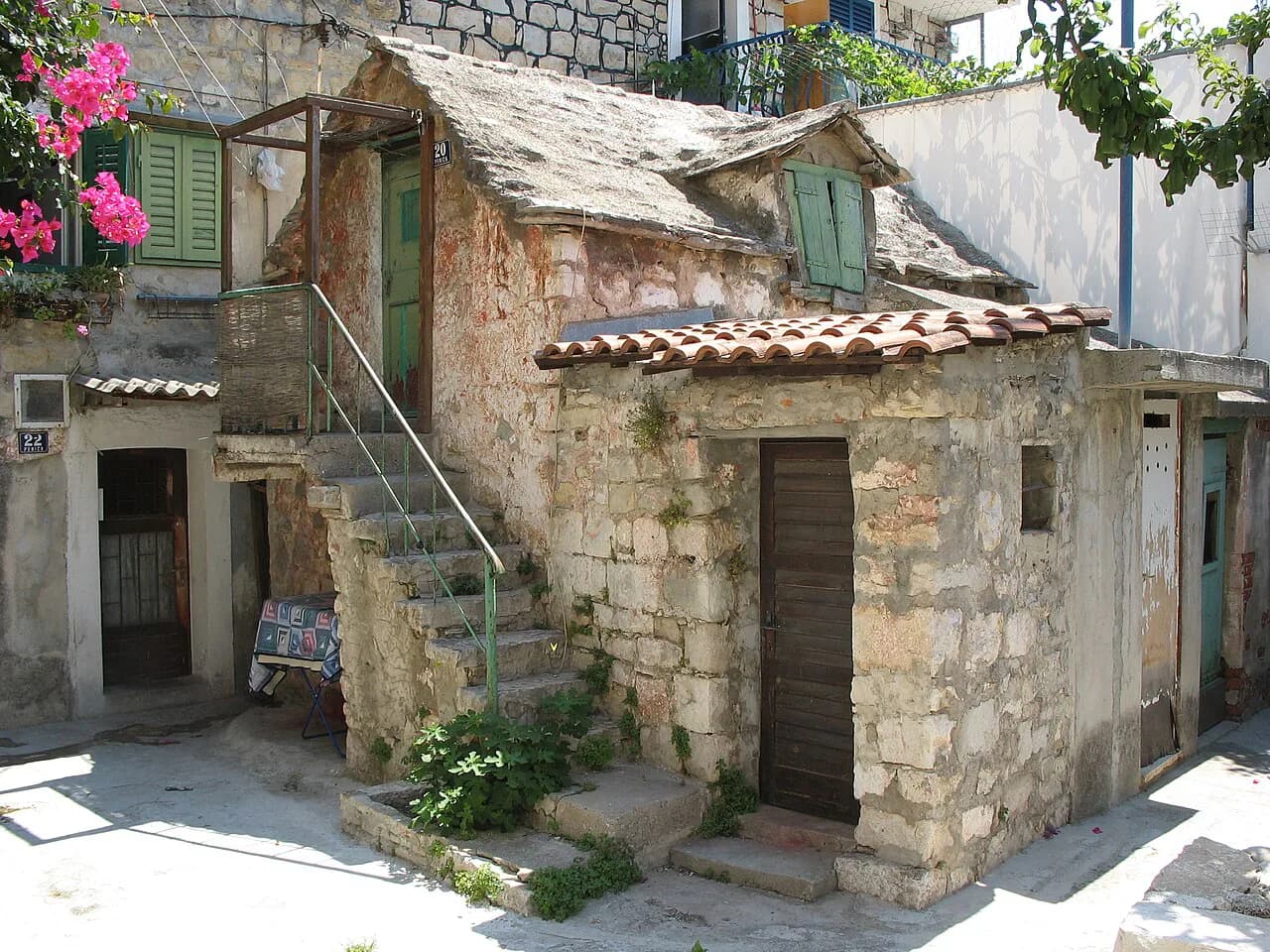
Konoba Varoš in Split: What to Order and How It Works

Konoba Varoš is a traditional Dalmatian tavern in the old part of Split, set just above the Bellevue hotel and a couple of minutes from the waterfront. Its signature dishes are three peka portions cooked under the bell, and the kitchen asks for three hours' notice on them, so this is a dinner to arrange in the morning rather than a table to fall into at eight.
The rest of the menu runs through the Dalmatian repertoire: cold seafood starters, soups, pasta and risotto, grilled fish and squid, and meat dishes including a Zagreb steak and pašticada, the slow-braised beef in a sweet-sour sauce. Below is where the konoba sits, what the peka costs, how the indoor room changes a hot summer evening and when to book.
What Konoba Varoš is
This is a konoba in the proper sense: a tavern built around traditional cooking, here described by the house as Dalmatian cuisine with a modern touch. The dining room is air-conditioned, decorated in an old style, and staff take reservations by phone. It sits in the ancient core of the city rather than on the seafront strip, which keeps it in the orbit of the old town without putting it in the busiest pedestrian flow.
The Split food landmarks page has a short guide to each named market and konoba. Treat Varoš as a booked dinner built around one long-cooked dish, not a quick lunch stop between sights.

Where it is: Ban Mladenova, above the Bellevue
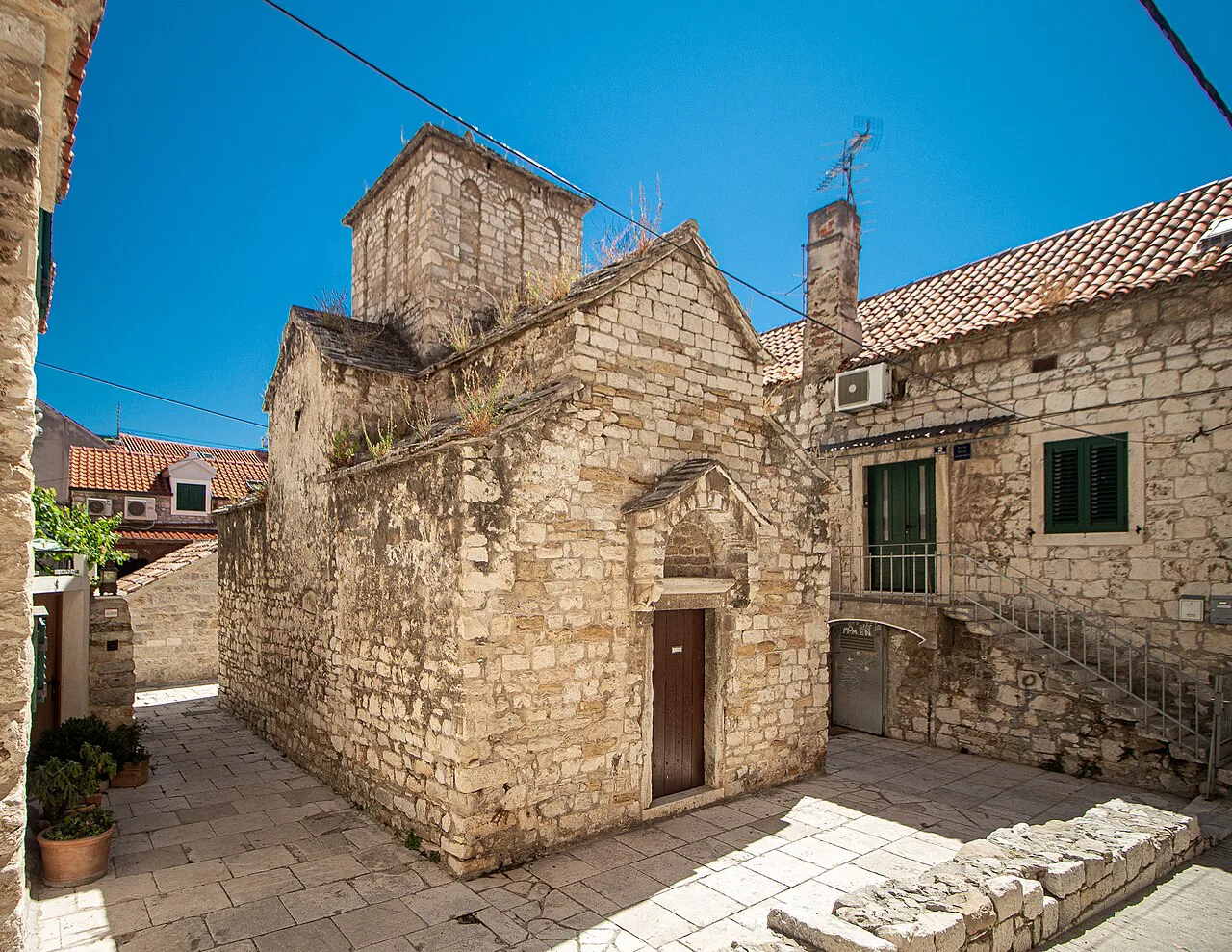
The address is Ban Mladenova 9, in the old part of Split near the waterfront and above the Bellevue hotel. Coming from the Riva, you leave the seafront promenade and climb a short way into the lanes behind it; from the palace side it is a similarly brief walk. Either approach takes minutes, so it slots easily into an evening that starts with a stroll along the harbour.
Because it is set back from the promenade, the walk there is part of the evening: stone lanes, residential doorways and far less foot traffic than the Riva. If you are coming from the eastern end of the old town, allow a little more time and use the waterfront as your landmark rather than trying to cut through the narrowest alleys.

The peka: veal, lamb and octopus under the bell
Peka is the Dalmatian method of cooking meat or octopus with potatoes under a heavy lid covered in embers, and it cannot be rushed. Konoba Varoš offers it in three versions: veal, lamb and octopus, all with potatoes. The house is explicit that these dishes require three hours' advance ordering, which is the single decision that shapes a visit here.
In practice that means calling or reserving in the morning for the same evening, or ordering it when you book a table for the next night. Turning up at peak dinner time and asking for peka will not work. Everything else on the menu, from the cold starters to the grilled fish, can be ordered on the night.
Peka prices in euros
The house lists the veal peka portion at 25 euros, the lamb peka at 27 euros and the octopus peka at 32 euros, each served with potatoes. Those are portion prices on the konoba's own menu rather than a price per kilo, which makes budgeting straightforward: one portion is a substantial main for a hungry diner.
Because the peka is priced per portion and cooked to order, it suits a table that has decided in advance rather than a group still deciding at the table. If the budget is tighter, the grilled fish and squid, pasta and risotto occupy the more affordable end of the menu, though fish sold by weight should always be confirmed before it is cooked.
What else to order
Start with the cold section: octopus salad, Dalmatian pršut (cured ham) and sheep's cheese are the classic opener, and they arrive without the wait that peka demands. Soups run to a shrimp cream soup and a classic fish soup, both a sensible bridge to a grilled main.
For mains beyond the peka, the kitchen grills fresh fish and squid and also fries squid, and there are crustaceans and shellfish including grilled prawns and clams cooked in the buzara style, a light garlic, wine and tomato sauce. The meat side brings a Zagreb steak and pašticada, so a table that does not want seafood is well covered.
If you want to build a meal around the city's produce first, the Split green market Pazar is where the fish, cheese and ham you meet on this menu come from in the morning. It is a useful stop earlier in the day, before a booked peka dinner.
How the room works in high summer
The dining room is indoor and air-conditioned, which is a real advantage in July and August when the old town's stone lanes hold the heat well into the evening. The trade-off is atmosphere: you eat inside, without the people-watching of a terrace on a square. In spring and early autumn, when the evenings are mild, that indoor setting matters much less.
Service speaks enough English to guide you through the menu; the room is described as decorated in an old style with paintings and sculptures on the walls, and the house's own guest reviews note locals and visitors eating together rather than a turnover-driven tourist room. The pacing reads as unhurried.
Booking a table and timing the peka
Reservations are taken by phone, and the konoba lists its opening hours as 09:00 to 24:00 daily. The peka rule and the seating rule are really one booking: ring in the morning, state the peka you want, and you have both the dish and the table secured before the evening rush.
If you leave the decision until the afternoon, you may still get a table but not the peka, which is the whole point of coming here. A second option is to book tonight for tomorrow's peka: the long cook happens while you are elsewhere and the table is set when you arrive.
How it compares with old-town terraces
The old town is full of konobas with open-air tables, and their appeal is obvious: you sit outside, watch the evening pass and order on impulse. Konoba Varoš inverts that. You gain a cool room, a set menu of long-cooked dishes and a table held for you; you give up the passing scene and the freedom to walk in and take whatever is free.
Quieter alternatives are close by if the indoor room does not suit. Konoba Matejuška, Split is a small konoba near the Matejuška quay with a handful of tables, and Konoba Hvaranin in Split offers another traditional menu a short walk away, both useful for a second night when you want a different setting.
If you are building a food-led stay rather than a single dinner, the wider Split pages collect the markets and food addresses worth pairing with a booked peka night. That way the one long meal does not have to carry the whole trip.
Is Konoba Varoš worth booking ahead for?
Yes, if you want peka without leaving the old town. The three-hour rule is not an inconvenience to work around; it is the reason the dish is worth ordering, and the 25 to 32 euro portion prices make it a known cost rather than a surprise.
Plan it as a booked evening: call in the morning, name your peka, and arrive expecting a cool indoor room rather than a terrace. If your group cannot commit that far ahead, take a grilled fish or the pašticada instead and keep the peka for a night you can organise.