
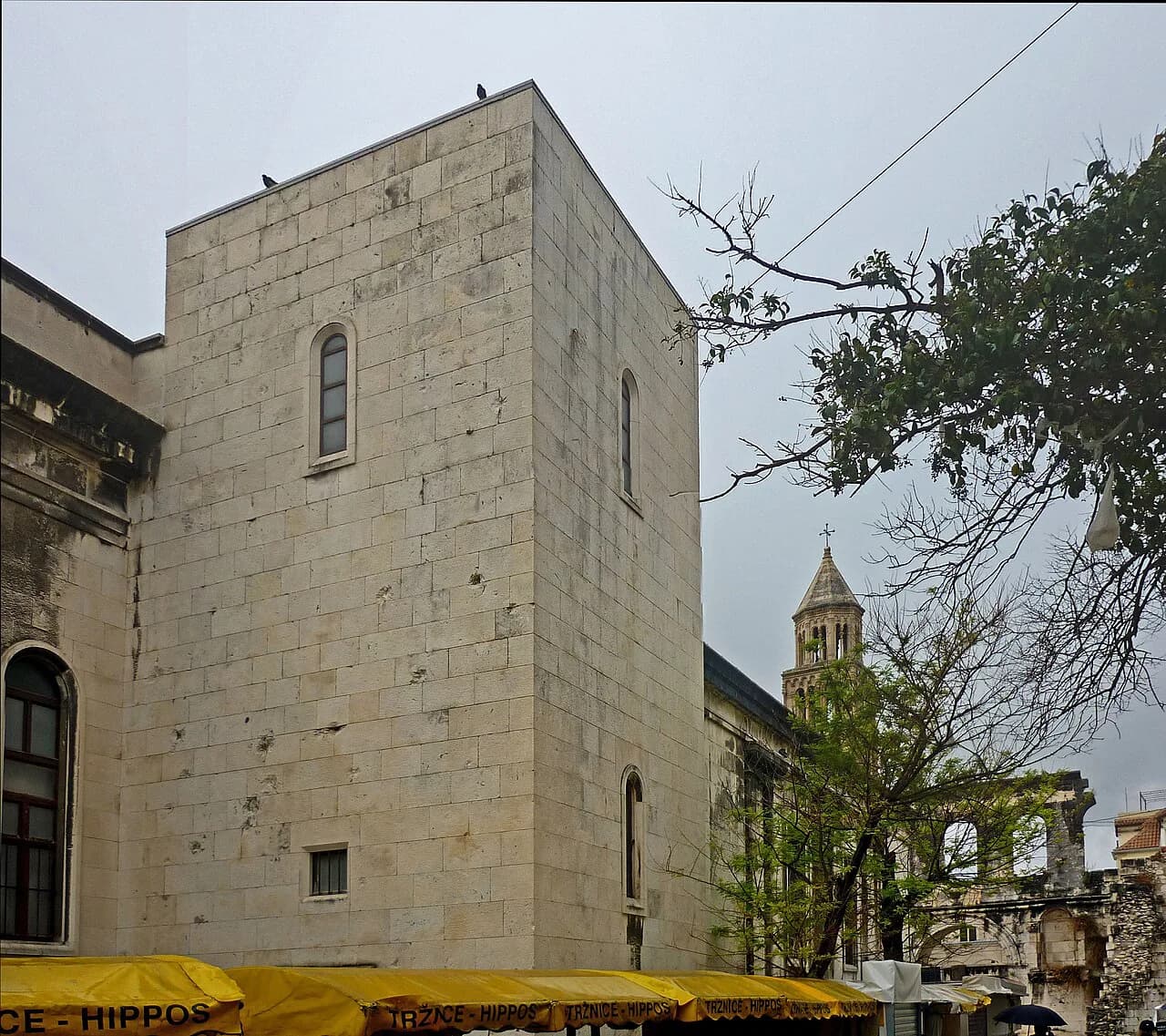
Pazar Split: The Green Market Beside Diocletian's Palace

Pazar is Split's open-air green market, laid out along Hrvojeva Street against the eastern wall of Diocletian's Palace and running up to the Silver Gate. It is free to walk through, takes maybe half an hour to browse properly, and rewards an early start. This guide covers the layout, what the stalls sell, the timing that works best and how to pair it with the fish market nearby.
Treat it as a working market rather than a sight: local households still shop here for vegetables, fruit and fish in preference to the supermarkets that have opened across the city. That is precisely why it is worth a detour on your way into the old town.
Where Pazar is and how the stalls are arranged
The green market occupies Hrvojeva Street, the lane that hugs the eastern wall of Diocletian's Palace, and stretches from the wall itself to the Silver Gate. The produce stalls cluster at the end nearer the ferry port, while the stretch along the palace walls fills with inexpensive clothing, shoes and souvenirs. Knowing which end you want saves a lot of weaving through crowds.
Pazar sits within a larger group of places worth visiting in the old town core, so it works well as a first stop before the palace courtyards and the Riva promenade. For the named markets and konobas with a guide of their own, see Split food landmarks.

Finding the market on foot
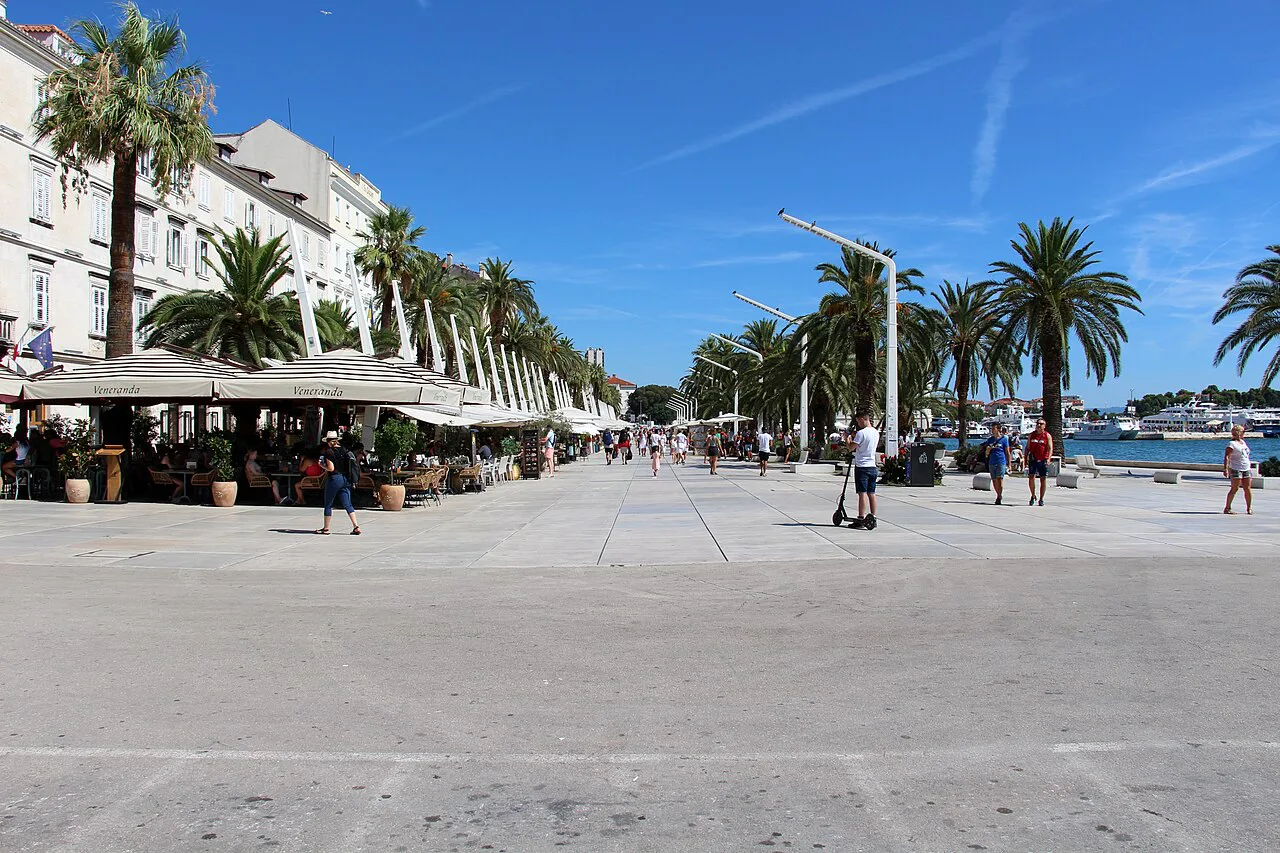
From the Riva, walk east along the seafront towards the palace and follow the eastern wall round to Hrvojeva Street, where the stalls begin and run up to the Silver Gate. From the ferry port, the market is a few minutes inland and the produce stalls are the first thing you reach. Both approaches take under ten minutes at an easy pace.
If you are coming from Marmont Street, the shopping artery that runs through the old town, head towards the palace's Iron Gate and follow the main palace street through to the Silver Gate. The lane opens directly onto the market. Wheeled luggage is awkward on the polished stone, so leave bags at your accommodation if you can.

What the stalls sell
The produce comes largely from smallholders in the Split hinterland and from the nearby islands, and it is strictly seasonal: expect whatever is being picked that week rather than a fixed list. Alongside the vegetables and fruit you will find a spread of Mediterranean goods, from figs and olives to cheese, cured meats and lavender. Because everything is sold by small producers rather than shipped in, the selection shifts through the year.
Self-caterers get the most out of Pazar. If you have rented an apartment for a week, buying tomatoes, greens and cheese here is both cheaper and better than the supermarket, and it gives you the makings of a simple lunch or a picnic on the Riva. Bring a tote bag of your own.
Buying well: prices, haggling and local habits
Prices are reasonable outside peak season but climb sharply when the summer crowds arrive, and haggling before you commit is normal practice rather than rude. The most reliable guide to quality is the shoppers around you: local households return to the same trusted vendors week after week, so watch where they queue and follow suit. Late morning, once the day-trippers have thinned, is when vendors become more open to a deal.
Buy in the quantities you will actually use that day. Soft fruit and leafy greens do not survive a hot afternoon in a backpack, and the market is a place to shop for the next meal rather than to stock a pantry.
Timing a visit
The market opens around 7am and closes by about 2pm, so an early start gives you the best produce and the thinnest crowds. Arriving after midday is the bargain-hunter's move, when vendors are keener to clear stock before packing up.
Aim to spend 30 to 45 minutes at the stalls, longer if you are shopping for a meal or stopping for a coffee on the edge of the market. Sunday trading and public-holiday arrangements are not something to assume; check with your accommodation before planning a Sunday visit around it.
Ribarnica, the fish market
The Ribarnica, Split's fish market, is a few corners from Marmont Street and about a six-minute walk from Pazar. The shortest route runs past People's Square (Pijaca), through the Iron Gate of the palace and along the main palace street to the Silver Gate, then up Stari Pazar. The fish market operates in a closed hall in winter and spills outdoors in summer.
Go early if you want the best of the morning catch, and go with a plan: the display changes daily, so ask what is local and in season rather than naming a species in advance. It is a working market, not a photo stop, so keep moving and let the regulars get to the counter.
Eating nearby after the market
The market sits a short walk from several traditional restaurants in the old town, which makes a late-morning shop followed by lunch an easy sequence. Konoba Varoš in Split is one option within the historic core, and Konoba Matejuška, Split is another small dining room close to the waterfront. Both suit a meal built around fish and local vegetables of the kind you have just seen on the stalls.
Book ahead in July and August if you want a table at a named konoba, and expect quieter, shorter opening patterns outside the summer season. For a broader look at where to eat around the palace and the Riva, Konoba Hvaranin in Split is a further option worth checking against your route.
What's within a few minutes of the stalls
Diocletian's Palace is quite literally the market's neighbour: the stalls run along its eastern wall, and the Silver Gate leads straight into the imperial complex. People's Square (Pijaca) is a couple of minutes west, and the Riva seafront is five minutes south. That concentration means you can see the market, the palace and the promenade in a single unhurried morning.
Is Pazar worth building into your morning?
Yes, if you go early and treat it as a market rather than an attraction. Half an hour at the produce stalls, a short walk to the Ribarnica, and you have seen the working side of Split that most visitors miss. Skip it if you are only in town for an afternoon and want the palace first.
Go before 11am for the best produce and the least jostling, and shop for the next meal rather than the whole week.
Frequently Asked Questions
Is Pazar open on Sundays?
The market's regular pattern is an early-morning start to early afternoon, but Sunday and public-holiday trading is not something to count on. Ask at your accommodation before planning a Sunday visit around the market.
How long do you need at Split's green market?
Thirty to forty-five minutes is enough to walk the length of Hrvojeva Street and buy a few things. Allow more if you are shopping for a meal or pairing it with the fish market.
Is the market expensive?
Prices are reasonable outside high season and rise steeply in summer, when demand from visitors is at its peak. Haggling before you buy is normal practice, particularly later in the morning.
Where exactly is Pazar in Split?
It runs along Hrvojeva Street against the eastern wall of Diocletian's Palace, from the wall up to the Silver Gate. The produce stalls are at the end nearer the ferry port, and the stretch along the palace walls holds cheap clothing, shoes and souvenirs.