Rijeka Market Guide: The Placa, Fish Hall and Pavilions
Rijeka's central market, the Placa, has an Art Nouveau fish hall, pavilions for cheese and cured meat, and open-air stands for produce. What to buy and when to go.
On this page
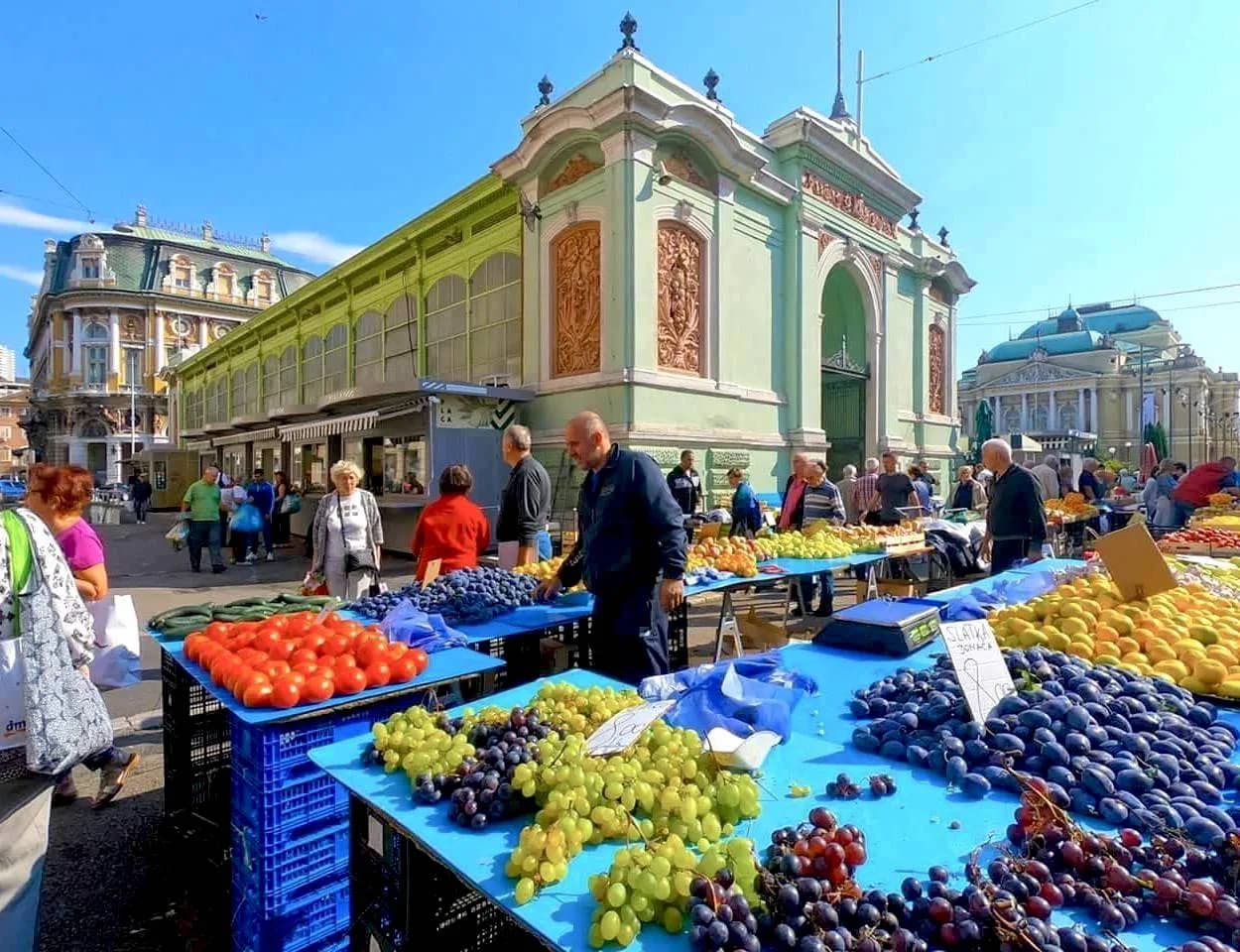
Rijeka's central market, the Placa, is the city's main food market, set along the waterfront beside the passenger catamaran platforms at Gat Karoline Riječke. It splits into three buying zones: the historic fish hall called the Ribarnica, the twin green pavilions for cheese, cured meat, honey, figs and olive oil, and the open-air wooden stands for fruit, vegetables and herbs. This guide takes each zone in turn, then covers the morning trading rhythm, how payment works between the outdoor and indoor sections, and which purchases travel well.
The market grew out of a shallow gravel shore where fishermen moored small boats and sold their catches directly to local families. In the late 1800s the area was laid out under imperial Austrian masterplans into the square and covered halls that stand today, bounded by the Ivan Zajc National Theatre on one side and the harbour docks on the other. The whole space is pedestrianised, which makes it an easy stop on foot between the Korzo and the waterfront.
What the Rijeka Market Is and Where It Sits by the Waterfront
The Placa, formally the Glavna Tržnica, occupies the immediate waterfront embankment just steps from the catamaran platforms of Gat Karoline Riječke. That position is the practical point: you can walk off a boat or down from the Korzo and be at the fish counters within minutes, without a detour into the city. The Ivan Zajc National Theatre forms one edge of the square, so the market sits between the city's main performance venue and the working harbour.
Because the market is fully pedestrianised, there is no car park to negotiate inside the grid; you arrive on foot and move between the halls and stands on foot. If you are provisioning for a ferry or catamaran, this layout matters more than it sounds, because you can carry a full bag straight from the fish hall to the ship ramps without crossing traffic.
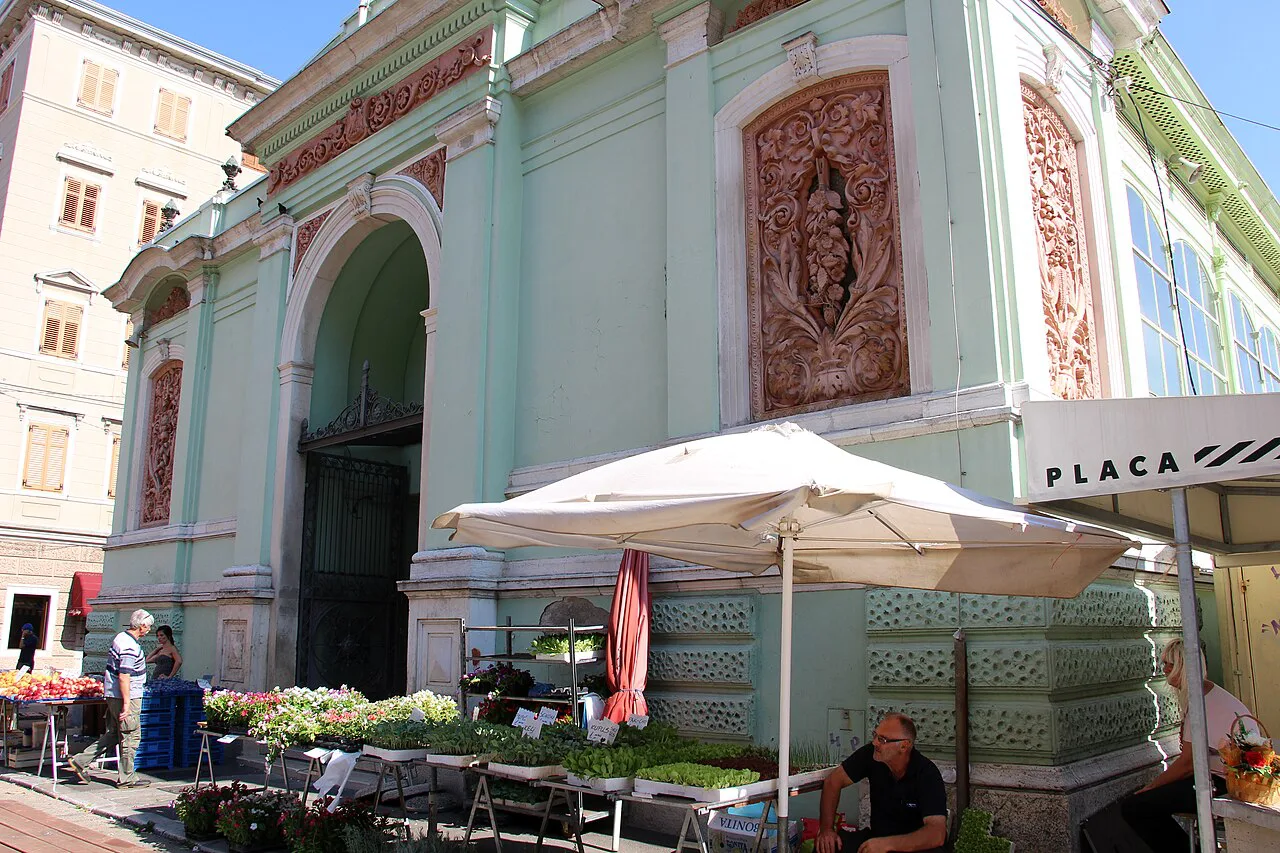
The Fish Hall (Ribarnica): What Is Sold There and How the Hall Is Laid Out
The Ribarnica is the market's architectural centrepiece, a tall Art Nouveau hall with an exterior of stone pillars and carvings of maritime life. Inside is a high, cathedral-like trading floor under a curved roof of iron ribs and glass panes. That roof lets in bright natural light across the whole floor and allows sea breezes to keep the interior cool.
Inside, local fishmongers line uniform stone counters with catches landed hours earlier by local fishing boats. The range runs from silver sea bass and Kvarner scampi to slices of tuna and sardines; the stone counters are monitored for temperature, so the hall works as a serious seafood counter rather than a display. Come early in the morning for peak trading energy, with vendors shouting in the port dialect and ice rustling on the stone.
The fish hall is the one zone where a morning visit pays off most clearly. If you plan to cook, buy here first, then move to the pavilions and outdoor stands with your chilled items at the bottom of the bag. Coffee in Rijeka is a natural next stop once you have finished the fish counters, since the cafés along the Korzo are a short walk from the market edge.
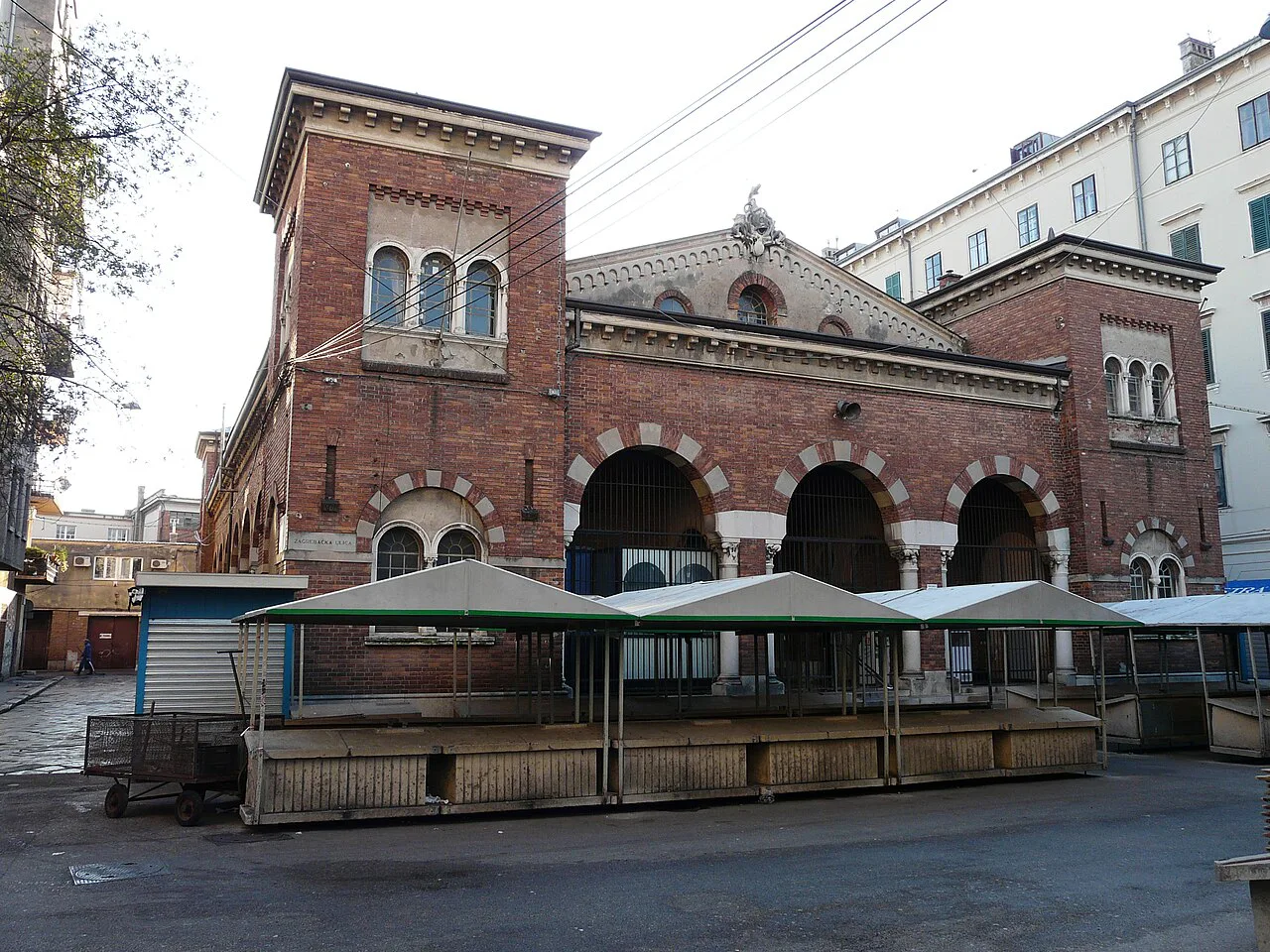
The Pavilions: Cheese, Cured Meat, Honey, Figs and Olive Oil
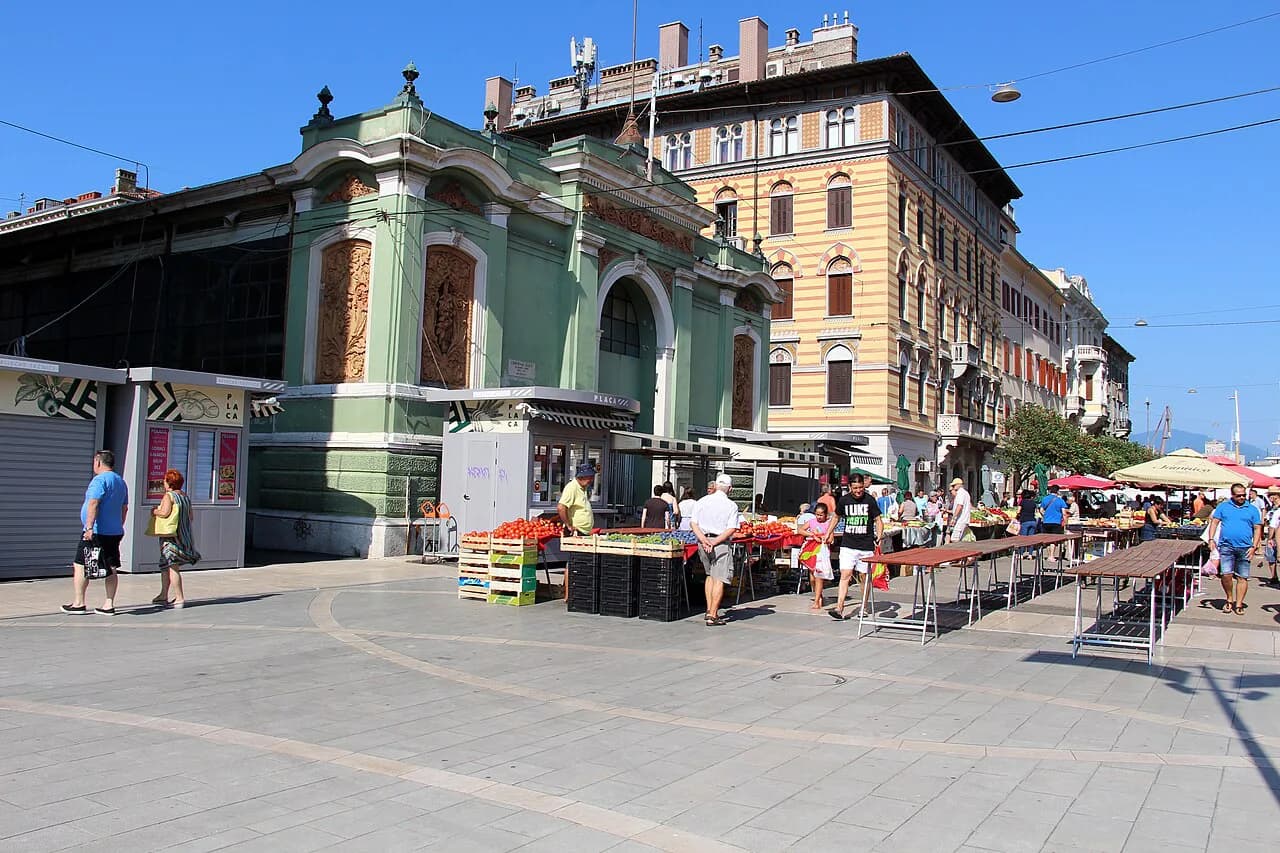
Around the fish hall stand matching pavilions that house specialist butchers, dairy farms and stands stacked with domestic honey, dried figs and olive oils. Their indoor ground levels contain dairy cold rooms, so this is where you shop for cheese and cured meat rather than at the open-air stands. The pavilions sit between the Korzo and the theatre, in the central square.
Look for island labels from Krk or Pag; Paški sir, the hard sheep's cheese from Pag, is the obvious buy if you want something that survives a hot ferry crossing inside a daypack. The air around the pavilions carries the scent of ripe local tomatoes, basil, figs and olive oil from Krk and Cres, which makes the square in front of the Art Nouveau halls worth a slow walk even if you buy nothing.
The Open-Air Stands: Fruit, Vegetables and Herbs in the Square
The open-air square in front of the pavilions is where independent local farmers set up wooden produce stands. Expect the Adriatic summer and autumn basket: ripe tomatoes, fresh basil, figs and herbs, alongside seasonal vegetables. This is the everyday-produce zone and the one to browse first if you are self-catering rather than provisioning for a boat.
The produce stands are run by individual farmers, so the range shifts with the season rather than with a fixed list. Treat the square as a place to build a picnic or a kitchen bag around what looks best that morning, then top up with cheese and cured meat from the pavilions. For bread to go with it, a bakery Rijeka stop on the walk back towards the Korzo makes sense before you settle in somewhere for breakfast.
Morning Timing: Why the Placa Is a Before-Noon Stop
The Placa runs on an early-morning rhythm: the outdoor wooden stands and covered halls trade through the morning and wind down towards midday. That means the market is a before-noon stop, not an afternoon one, and a visit after lunch may find most of the trading gone. If seafood is your priority, arrive early, when the fish hall is at its busiest and the catches are freshest.
Sundays run on a much reduced schedule, with only a limited number of outdoor farm stands and a small part of the fish hall expected to trade through the early morning; treat that as a stripped-back market day rather than a full one. If you want the complete spread of stalls, plan your visit between Monday and Saturday. A market breakfast of bread, cheese and figs bought on site is one way to use the morning well; otherwise, breakfast Rijeka options along the Korzo are a short walk away.
Cash at the Market: Outdoor Stands and Indoor Pavilions
Payment splits, broadly, by zone. The open-air wooden stands, run by independent local farmers, generally take euro cash rather than cards. Card terminals operate inside the large indoor meat and dairy pavilions, so bring euro notes if you intend to buy produce from the square or pay the fish boats directly.
The fish hall is also a cash-favoured zone: local boat captains generally prefer physical euros for rapid transactions, so keep small notes ready rather than relying on a card at the stone counters. A workable routine is to draw euros before you arrive, spend cash in the fish hall and the outdoor stands, and use a card in the indoor pavilions.
Buying to Travel: Hard Sheep's Cheese and Cured Meat for Ferry Journeys
If you are heading up the ship ramps for an island-hopping catamaran or ferry, the pavilions are the right place to provision. Hard sheep's cheese from Pag and Krk, cured meats from the indoor butchers and a jar of olive oil all survive a hot crossing in a standard daypack. The market's position beside Gat Karoline Riječke means you can shop and then walk straight to the catamaran platforms.
Skip soft cheeses, fragile fruit and anything that needs refrigeration in favour of hard cheese, cured meat, honey and dried figs. Buy fresh fish only if you have a kitchen or an ice box waiting at the other end, and keep it at the bottom of the bag under cool items. Bread and pastries for the journey are better bought last, on the way to the port.
How the Placa Fits Into a Morning in Rijeka
A sensible order runs fish hall first, pavilions second, outdoor stands last, all before midday. Start at the Ribarnica early in the morning for the best seafood, move into the pavilions for cheese and cured meat, then finish in the square for fruit and vegetables. Allow around an hour if you are browsing, or less if you have a shopping list.
After the market, the Korzo is the natural next step for coffee, and the city's cafés are the place to sit down with a pastry from your bag. Coffee in Rijeka is an easy plan: the cafés along the Korzo are a short walk from the market edge. If you want something cold instead, ice cream in Rijeka is the warmer-weather option within easy reach of the centre. Either way, the market fits a morning rather than an afternoon.
Which Zone to Head for First
Head for the Ribarnica fish hall first, early in the morning, then the pavilions for cheese and cured meat, then the outdoor stands for fruit before the market winds down around midday. Bring euro cash for the fish counters and the farmer stands, and save the card for the indoor pavilions. If you are catching a catamaran, buy hard sheep's cheese and cured meat from the pavilions and skip anything that needs a fridge.
Explore more Rijeka guides
Frequently Asked Questions
Can you walk to the Rijeka market from the harbour?
The Placa sits on the immediate waterfront by the Gat Karoline Riječke catamaran platforms, so it is a short walk on foot from the harbour side of the city. The market space is pedestrianised, with the Ivan Zajc National Theatre forming one edge and the Korzo a few minutes away.
Is the Rijeka market open on Sundays?
Sunday trading is reduced rather than full: a limited number of outdoor farm stands and a small part of the fish hall are expected to trade through the early morning. For the complete spread of stalls, plan your visit between Monday and Saturday.
Sources
Notes on eating well in Croatia
Optional updates to our food guides.
You might also like
Continue reading
More guides you'll find useful