Rijeka Fish Market: The 1866 Fish Hall and City Market
Rijeka's fish market is the 1866 fish hall inside the city market, where Kvarner boats land their catch and locals shop. Here is what to see and when to go.
On this page
Rijeka's fish market is the 1866 fish hall inside the city market, a working food market at the eastern end of the centre rather than a heritage display. Go before mid morning, head straight for the stone counters, and treat the pavilions and outside stalls as the rest of the same errand. This guide covers what the hall is, where it sits, what is sold under each roof and how to shop it for a self-catering stay.
The fish hall at the heart of the city market
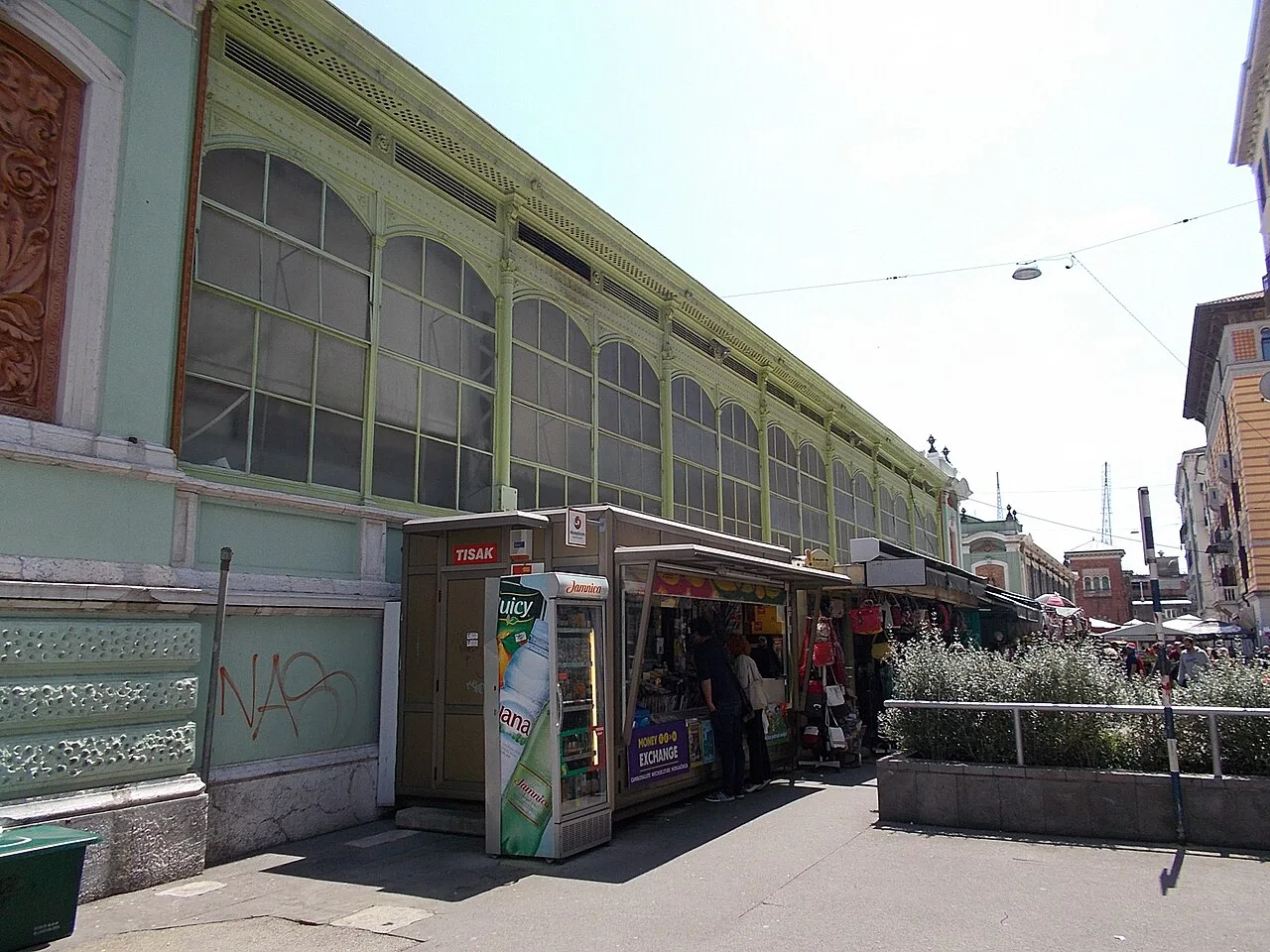
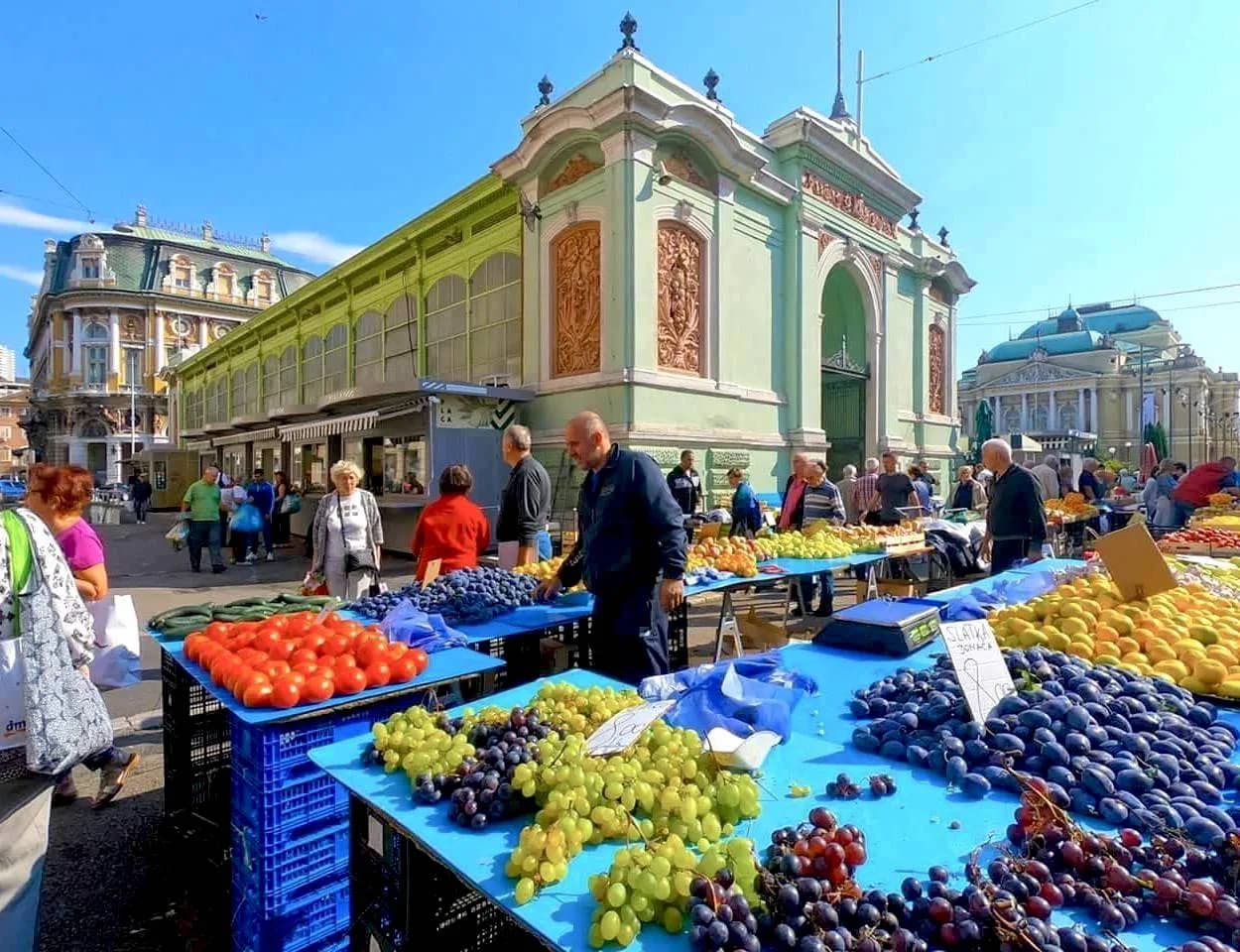
Fish was sold in the open on this spot until 1866, when the city put up a purpose-built fish market: a hall of stone counters with fish, shells and marine motifs worked into the decoration. It is the oldest and finest of the market buildings, and the one to step inside even if you are buying nothing. The rest of the market grew around it, so the hall reads as the anchor of a working civic complex rather than a standalone attraction.
Where to find it
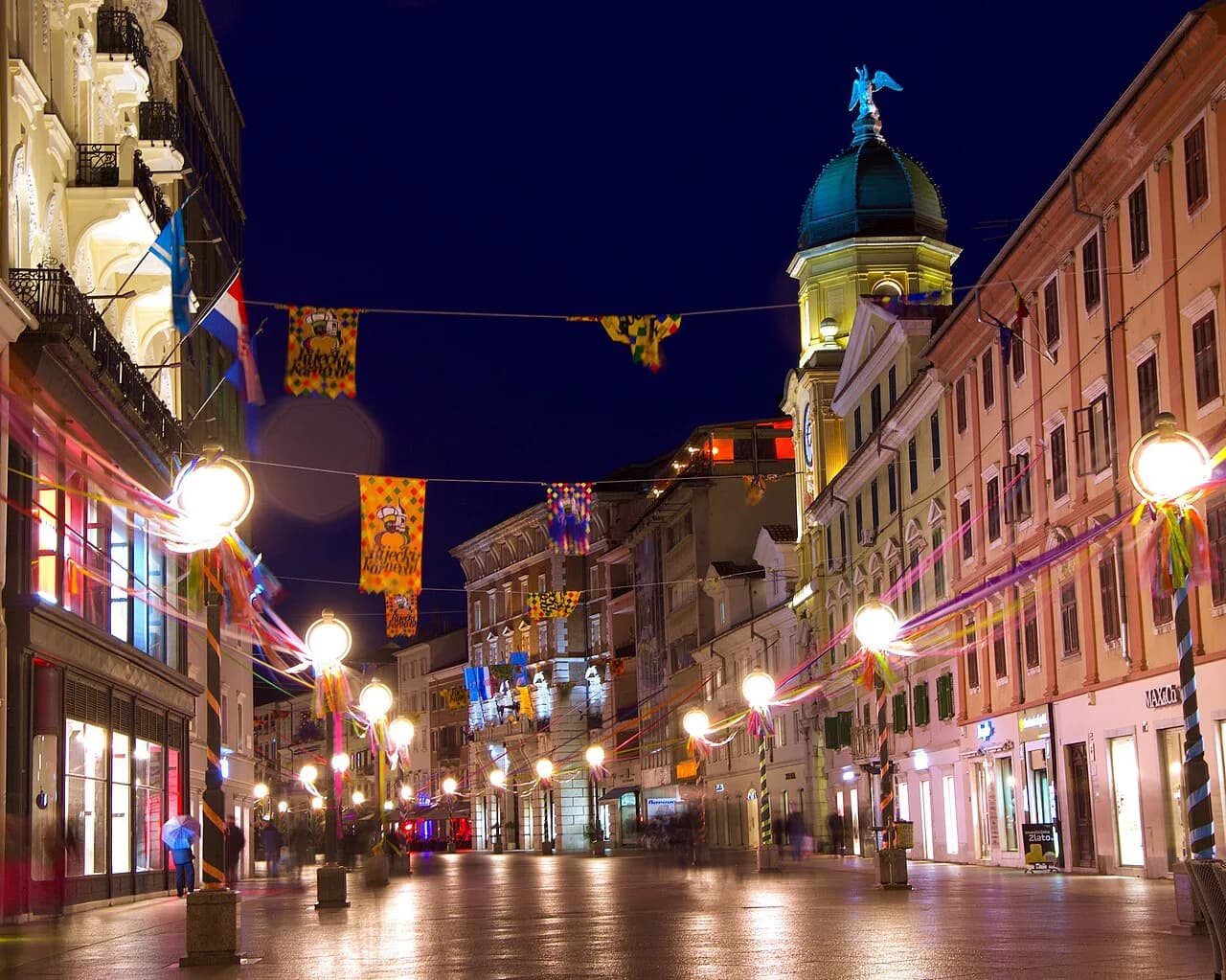
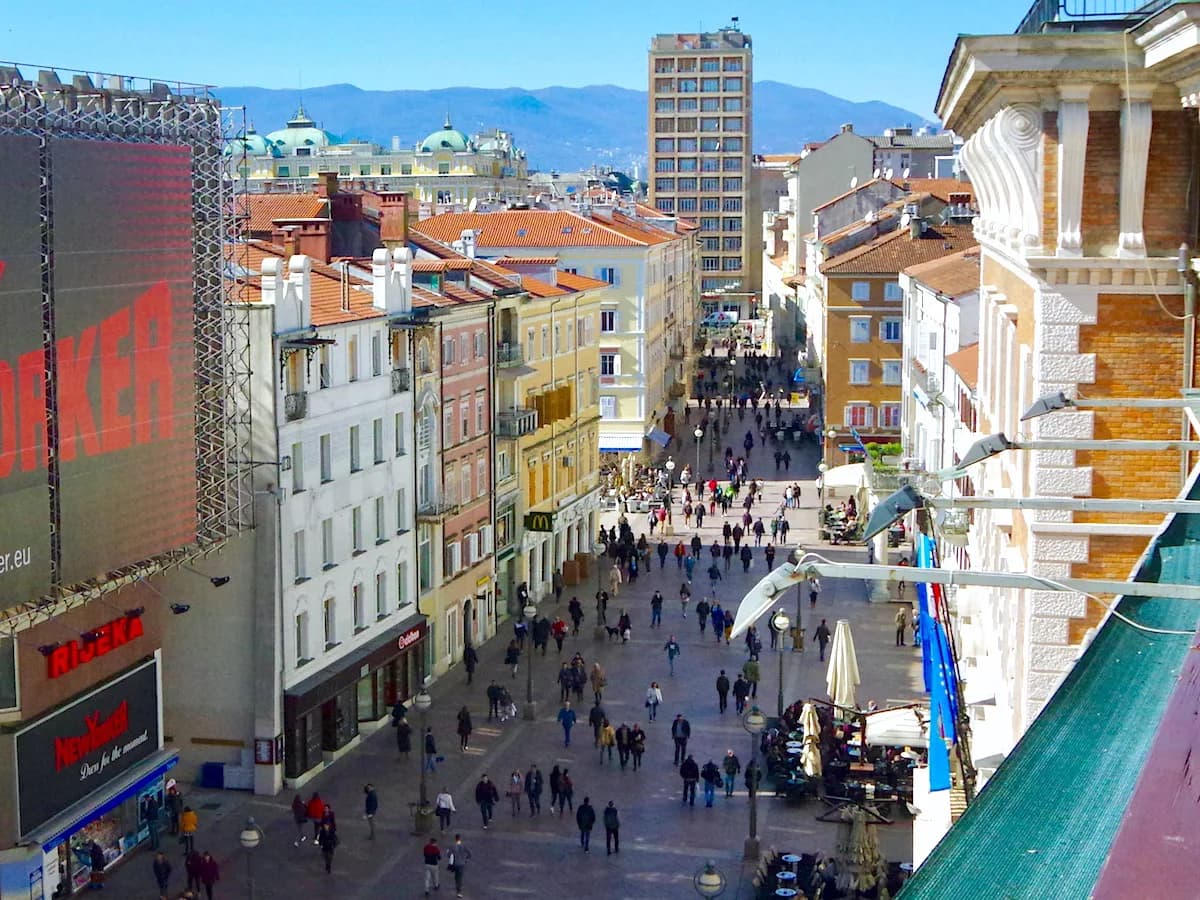
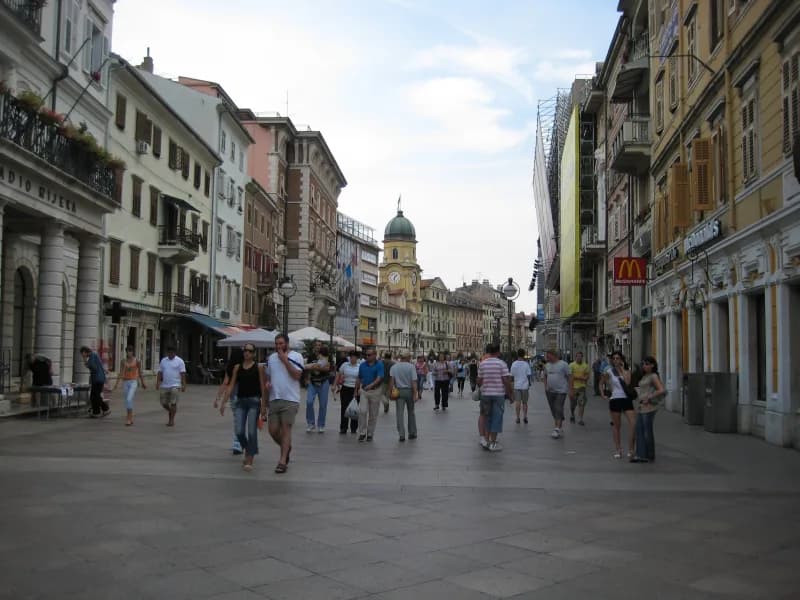
The market sits at the eastern end of Rijeka's centre, a few minutes' walk from the Korzo and the cathedral. Entry is free because it is a market, not a ticketed sight, and half an hour covers a proper look. If you are starting a morning in the city, the market makes a natural first stop before you head west along the Korzo.
What is sold in the fish hall
On a good morning the counters carry what came off the boats in the Kvarner, laid out on ice in the hall built to show it. Expect whole fish and shellfish rather than a pre-packed selection, and expect the range to shift with the season and the weather. Look at the ice and the eyes first: clear eyes and firm flesh are the signs you want before you point at anything.
Buying fish for the grill is where the market earns its place on a self-catering trip. Pick one fish large enough to serve everyone rather than several small ones, ask for it cleaned and gutted on the spot, and keep it cold on the way home. Small shellfish and white fish suit a simple grill or a pan; oily fish stand up to stronger flavours.
The 1880 pavilions: meat, dairy and dry goods
Construction began in 1880 on two further pavilions alongside the fish hall, designed by Izidor Vauchnig, who ran Rijeka's office for architecture. They hold the meat, dairy and dry goods, so the market covers a full shop rather than fish alone. Together with the hall they show what a confident nineteenth-century port built for itself: civic, permanent and unsentimental.
The open stalls outside
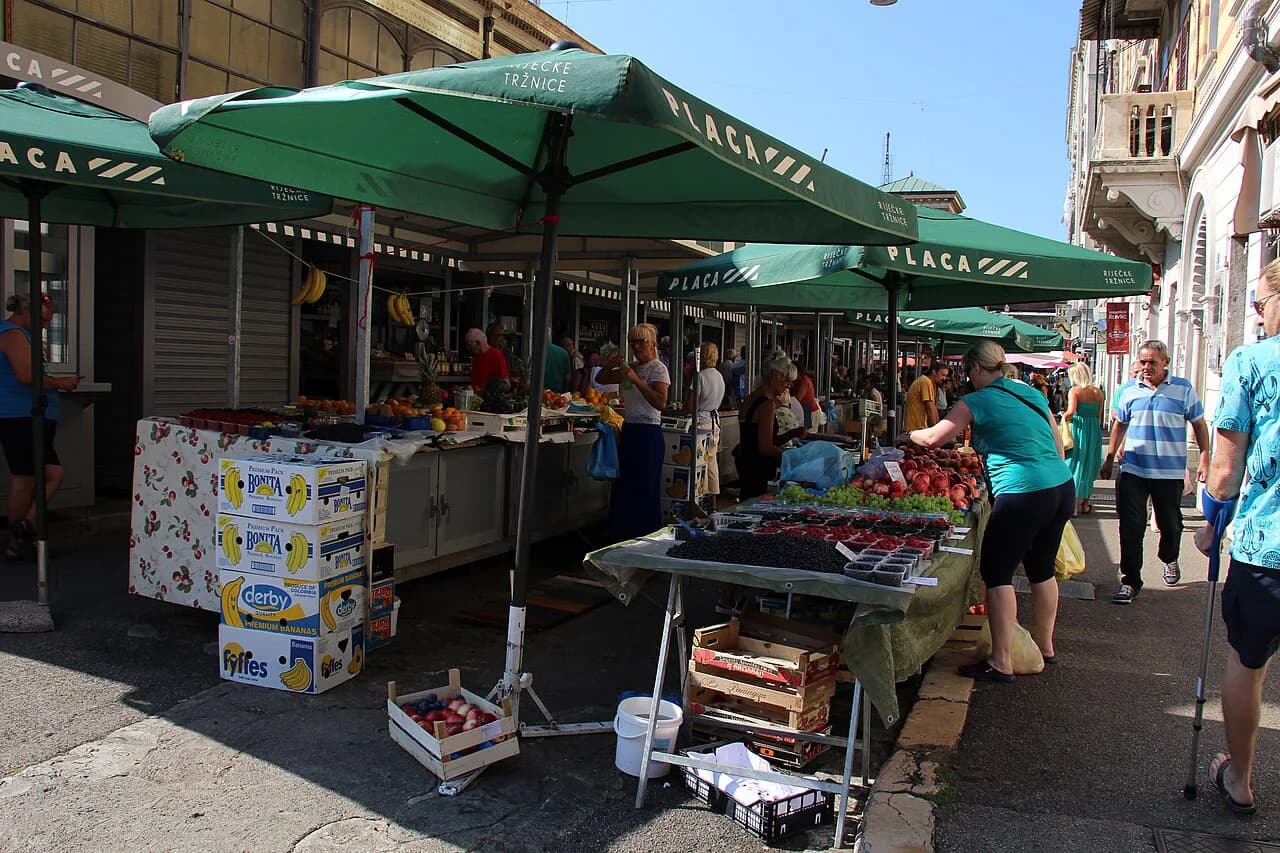
The open stalls in front of the pavilions carry the fruit and vegetables, which is where most of the colour and noise of a market morning sits. Walk them first if you are assembling a picnic or a flat supper, then go inside for fish. Produce here is sold by the season, so build the meal around what looks best rather than a fixed list.
How a market morning works
Trade starts early, is strongest before mid morning and thins through the afternoon. Arriving at midday, especially on a Sunday, is the commonest way to find a lot of shutters down. Aim to be there by mid morning and you get the full market rather than the tail end of it.
Where to eat around the market
There are small places in and around the market rather than a food hall in the modern sense, and the surrounding streets have plenty of bakeries and cafés. That makes the market a good anchor for a morning that moves from shopping to a sit-down coffee or a quick pastry. Pair it with a bakery run for bread to go with whatever fish you have bought. For the practical details, see the bakery Rijeka.
If you want a proper sit-down rather than a stand-up coffee, the cafés around the centre are the obvious next stop after the fish hall. Rijeka's eating in general is better value than the resort towns along the coast, so a market morning can turn into a cheap and good lunch without much planning.
Breakfast before the fish hall
An early start at the market fits neatly after breakfast in the centre, since the Korzo is only a few minutes west of the fish hall. If you want something more substantial than a pastry on the hop, plan a sit-down breakfast first and shop afterwards, when the counters are still full. It also keeps you out of the midday lull, when trade has already begun to thin.
Is it a tourist market?
No, and that is the point of going. This is where Rijeka buys its food, so the interest is in watching an ordinary morning rather than in buying souvenirs. Even if you are not shopping, the fish hall alone justifies half an hour, and the walk from the Korzo is short enough to fold into a city stroll.
Timing your visit to the fish hall
Rijeka's fish market is a fish hall from 1866 at the eastern end of the city centre, a few minutes from the Korzo, and it is still a working market rather than a museum piece. The fish come off Kvarner boats and sit on ice in a hall built for the purpose, with meat, dairy and dry goods in the 1880 pavilions and fruit and vegetables on the open stalls outside. Go before mid morning, avoid a late Sunday, and you will see the market at its best.
Is the fish hall worth half an hour?
Yes: the 1866 fish hall is the one building to step inside, and the surrounding pavilions and stalls make the visit a proper morning rather than a photo stop. Go early to catch the trade, buy fish for the grill if you are self-catering, and leave the souvenir hunting for elsewhere.
Explore more Rijeka guides
Frequently Asked Questions
What day should I avoid at Rijeka's city market?
Sunday afternoon, when trade has thinned and a lot of shutters are down. Mornings are the time to go on any day, with trade strongest before mid morning.
Can you eat at the fish market?
There are small places in and around the market rather than a modern food hall. The surrounding streets have bakeries and cafés, so a market morning can turn into breakfast or a coffee nearby.
How long do you need at Rijeka's fish market?
Thirty to forty-five minutes covers the fish hall, the two pavilions and the open stalls outside. If you are shopping for a self-catering meal, allow a little longer.
Sources
Notes on eating well in Croatia
Optional updates to our food guides.
You might also like
Continue reading
More guides you'll find useful