Zadar Market: What to Buy and How It Works
Zadar Market is the city's daily produce market on the old peninsula, with fruit and vegetables from Ravni kotari and the islands, plus a separate fish market.
On this page
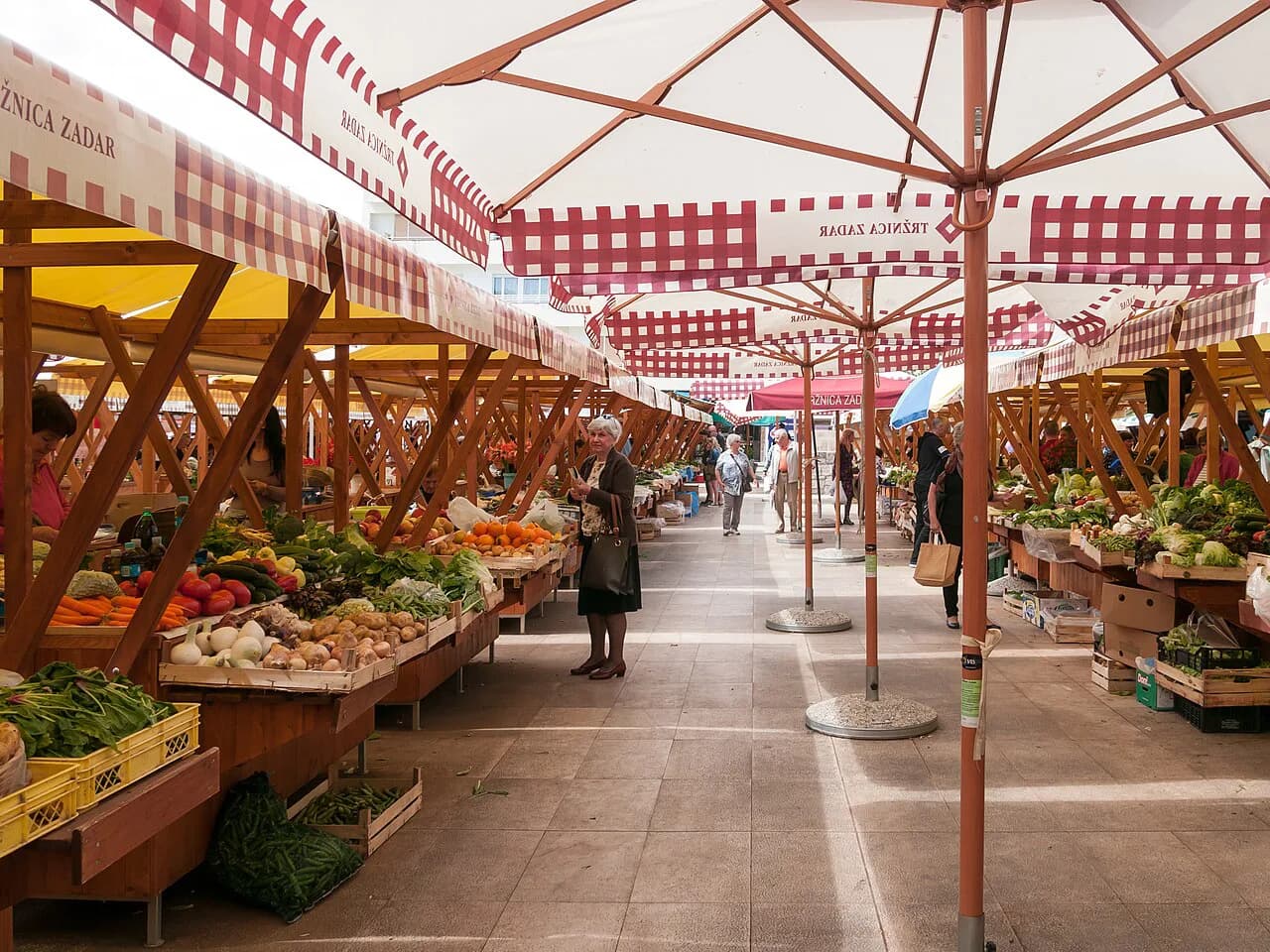
Zadar Market is the place to shop if you want to eat like the city does: an open-air produce market on the peninsula, set beneath the historic ramparts, with fruit, vegetables, olive oil, cheese and honey brought in from the surrounding countryside and islands. It is a working market, not a display, so you go with a bag and buy by weight. This guide covers what the stalls sell, how the produce market differs from the separate fish market on Nova obala, and how to build a market morning into a day of eating in Zadar.
What Zadar Market is and where it sits
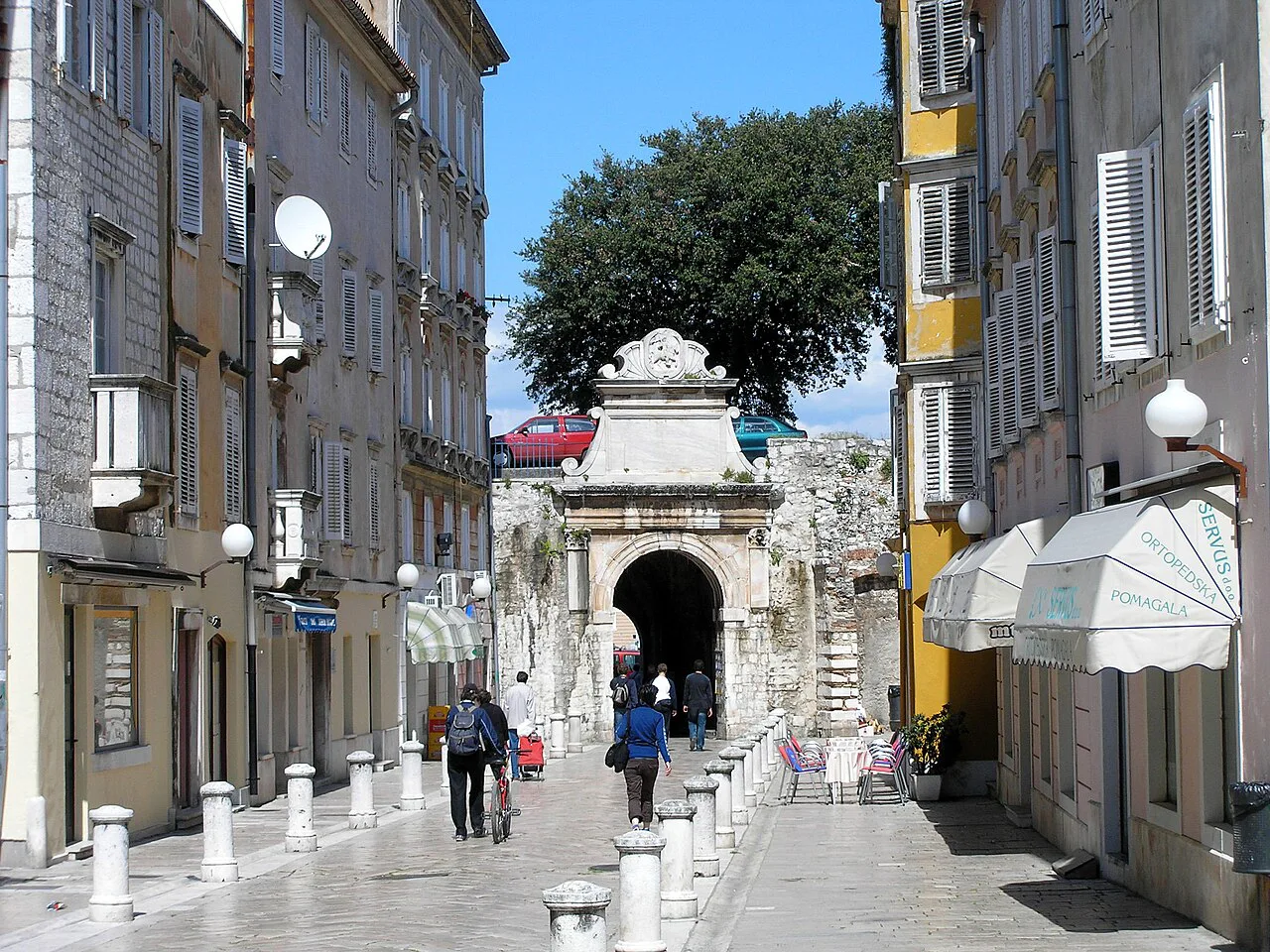
The market sits on the Zadar peninsula, tucked under the historic ramparts that form part of the UNESCO World Heritage listing, and it has long been part of the city's urban identity alongside the fish market. Its roots run back to Liburnian Iadera, and it has served as the place where produce is sold and news is exchanged ever since. For a visitor, that means a market that feels embedded in the streets rather than staged for tourists.
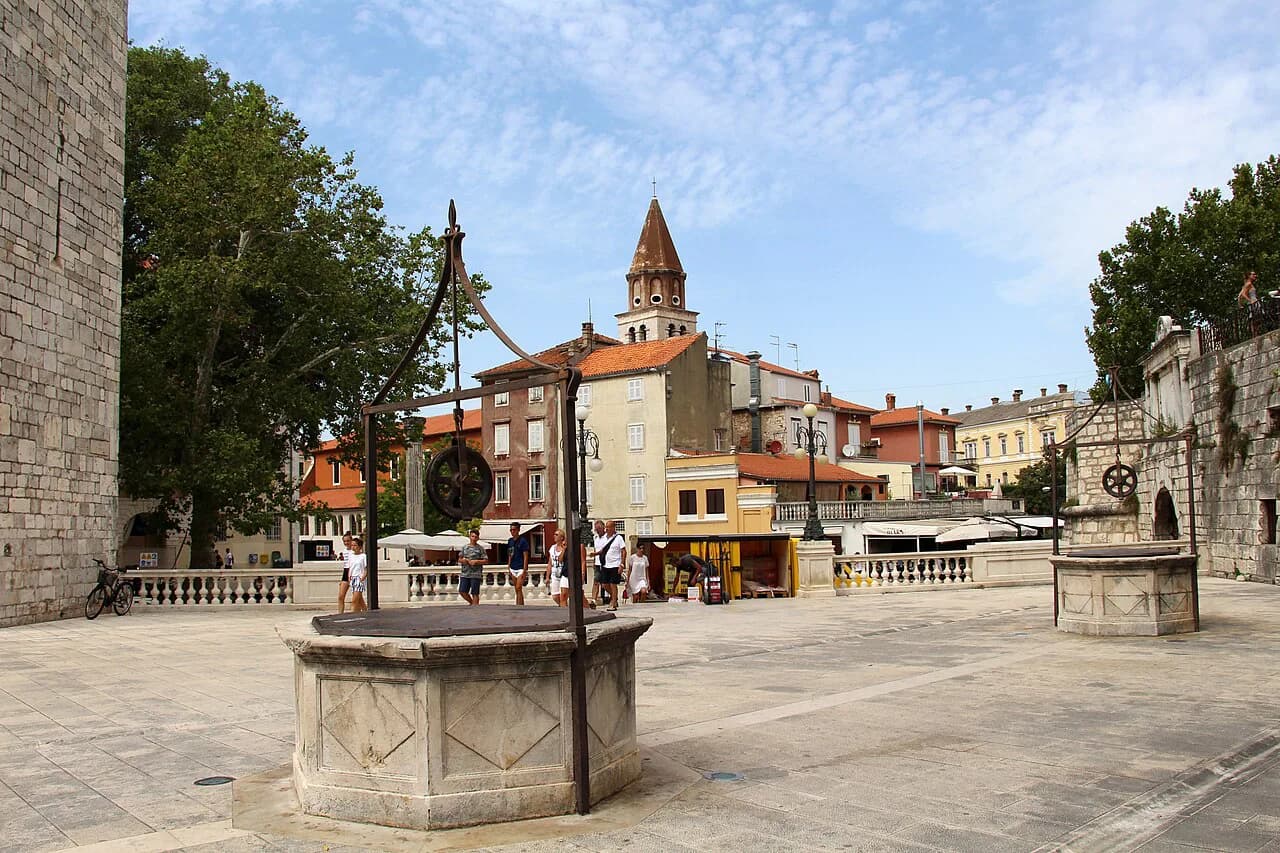
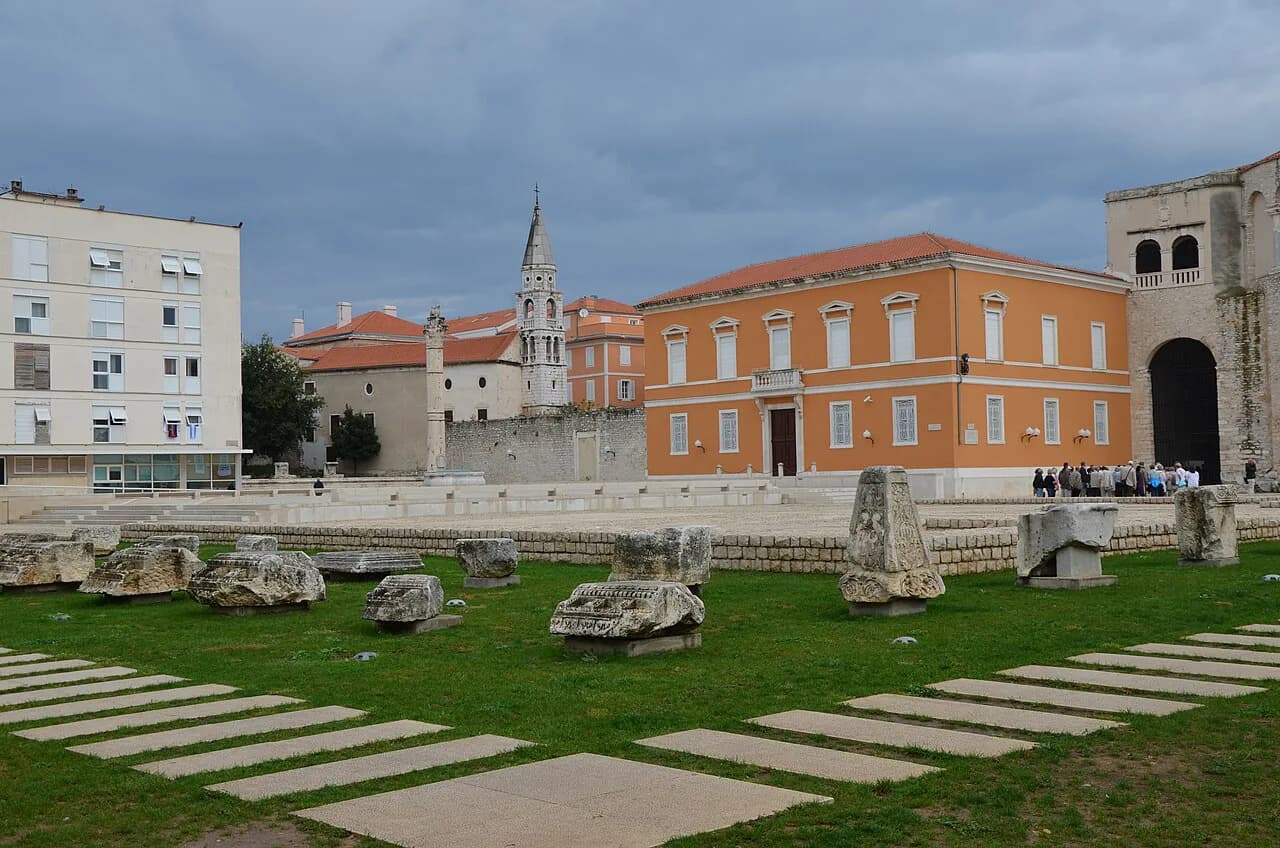
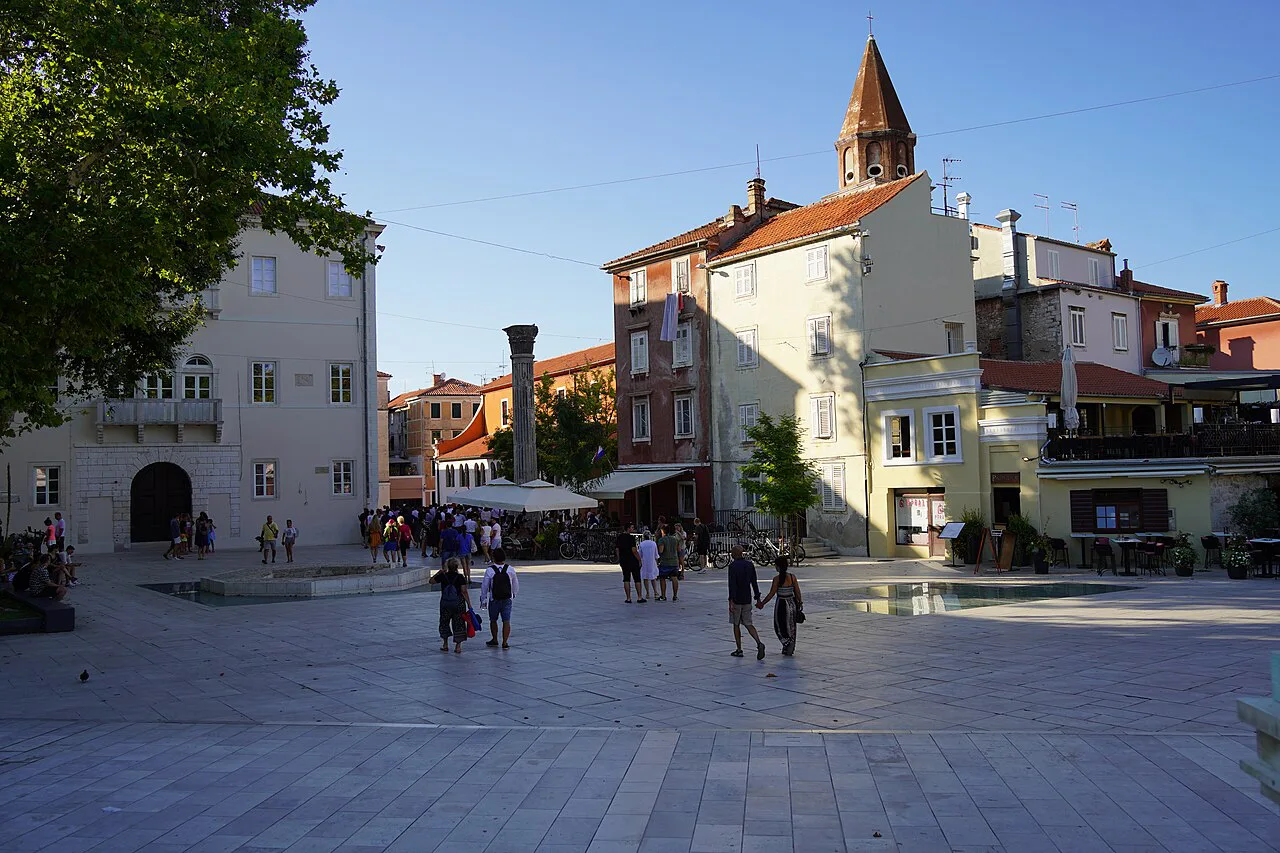
The site as you see it now took shape in 1952, when the architect Josip Budak arranged the market space from ruins and framed it with the remains of the church of St. Mary the Great, the chapel of St. Rocco, the facades of the unfinished church of St. Simon and the wall of the Romanesque Pasini palace. Earlier markets in the city had shifted between several locations over the centuries, including the Roman Forum and the square known as Piazza dell'Erbe, which was destroyed in the Allied bombing of 1943 to 1944. Knowing this helps you read the layout: you are shopping inside a set of historic fragments, not a purpose-built hall.
Approach it from the old town lanes rather than from a car park, and you arrive on foot among the stalls. The photographer Ante Brkan documented trading here from 1953 to 1981, and his market photographs were later exhibited publicly, which says something about how central this patch of ground is to local memory.
What is sold at the stalls
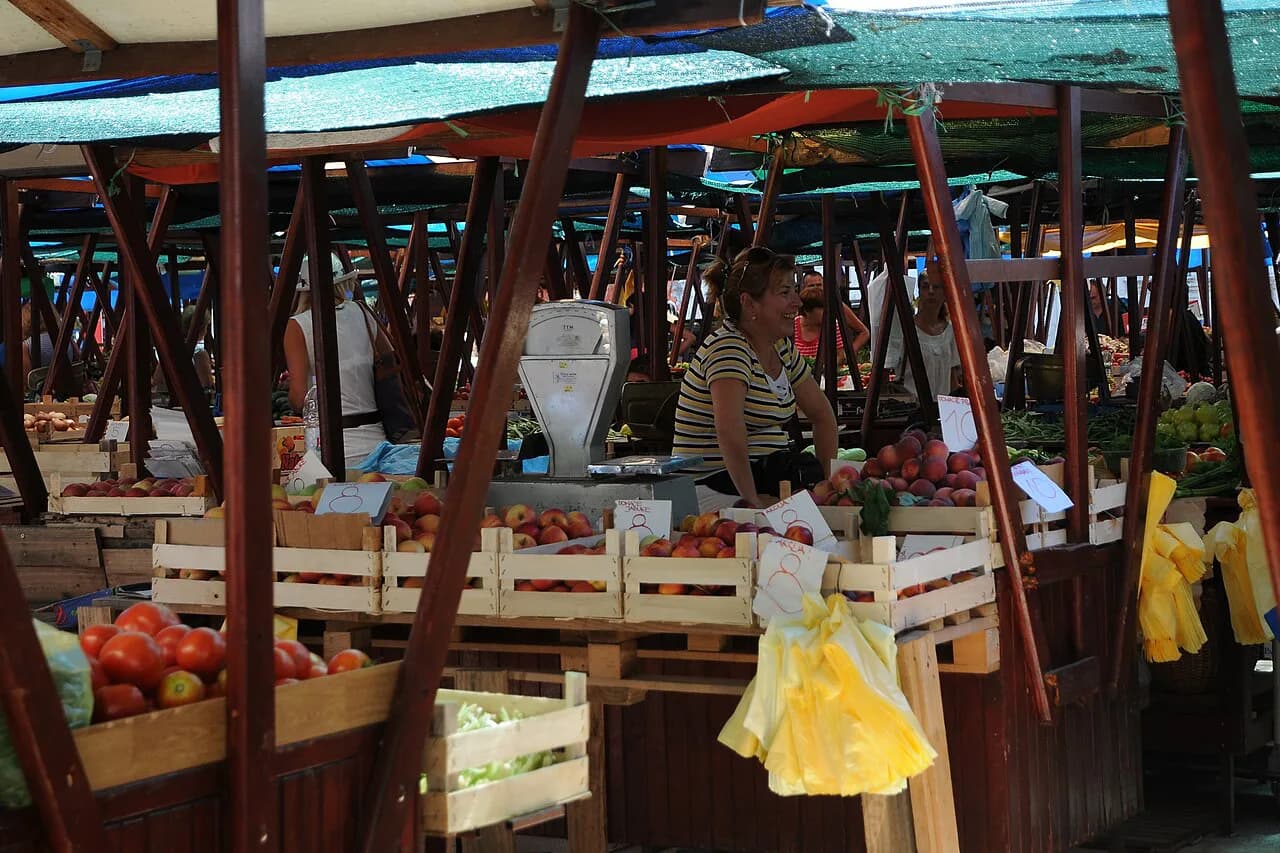
The stalls carry fruit, vegetables, olive oil, cheeses, honey, flowers and seedlings, all brought in from the surroundings of Zadar, the fertile Ravni kotari plain and the Zadar islands. That short supply chain is why the produce looks the way it does: seasonal, uneven in size and sold in the quantities the grower happened to bring that morning. If you are used to supermarket uniformity, adjust your expectations and buy what looks best rather than what is on a list.
Olive oil, cheese and honey are the three things worth carrying home, because they travel well and give you a taste of Ravni kotari and the islands without needing refrigeration. Flowers and seedlings are sold for local gardens rather than for visitors, but they add colour to the morning and are part of why the market is a pleasure to walk through even if you buy nothing. Fruit and vegetables are the everyday business of the place.
Historically the wider city trade covered grain, hay, firewood, leather, butter and cheese from Ravni kotari, and at one point the markets of Zadar were known for the abundance of Mediterranean fruit and vegetables brought in by peasants from the islands and the hinterland. That history explains the range you see: this has always been a collection point for the coast and its back country, not a single-producer shop.
The fish market on Nova obala
The fish market is a separate part of the market day and sits on the west side of Nova obala, where it moved from the old town square in 1903. Fish and seafood caught the night before in the Adriatic are sold there, which is why it rewards an early start rather than a late wander. Treat the two markets as a pair: produce under the ramparts, fish down by the water.
What you find depends on the boats and the season, so go to look rather than to hunt for a named species. If you are self-catering, fish is the one purchase to plan a whole meal around: buy it, cook it simply and eat it the same day. Ask the vendor how they would cook what you are pointing at, and you will usually get a straight answer.
How the market works for a visitor
This is an open-air market of stalls rather than a covered hall with a single checkout. You buy directly from the person selling, by weight or by the piece. Bring a sturdy bag and a little patience for the morning crowd.
Go in the morning, when the produce is freshest and the fish has just come off the boats. The trade here has always been an early one, and morning is when the stalls are at their busiest. That is the practical rule to shop by, whatever the season.
If you are staying in a flat and want to bulk-buy water, wine, coffee or household basics alongside your market haul, a supermarket fills the gaps the stalls do not cover. Look at our guide to Supermarkets in Zadar for Self-Catering and Everyday Food Shopping when you need a bigger basket than the market can give you.
What to buy for a picnic or a self-catering lunch
Build a picnic from the market itself: a wedge of cheese, a jar of honey, a bottle of olive oil, tomatoes and fruit, plus bread from a bakery on the way. Buy the cheese and honey first, since they do not bruise, then the soft fruit last so it survives the walk. A pekara is the natural stop for bread and something savoury to go with it; our pick of the best bakery Zadar list is a sensible place to start.
For a self-catering lunch, buy what you can eat within a day or two: soft fruit, salad vegetables and fish for the same evening. Olive oil and honey are the exception that keeps, so buy a larger bottle of oil if you have room in your case and treat it as the one proper souvenir of the trip. Cheese will survive a cool bag for a morning but not a hot afternoon.
What to taste before you leave is simple: whatever the vendor offers you a sliver of. Market selling here has always involved conversation and a bit of tasting, and that exchange is part of the pleasure. If you want a sit-down coffee afterwards, see our guide to the Best Cafés in Zadar for a Proper Coffee Stop.
A market morning, then lunch nearby
The most sensible way to use the market is as the first stop of an eating day: shop the stalls and the fish market in the morning, drop your bag at your room, then eat lunch in a konoba in the old town rather than carrying produce around all afternoon. The market sits inside the peninsula street grid, so lunch is minutes away on foot.
If you have bought fish for the evening, keep lunch light and leave room for it. If you have bought only oil, honey and cheese, you have the makings of a picnic to take to wherever you plan to spend the afternoon. Either way, the market sets the shape of the day.
A slow breakfast before the market is better than shopping hungry, and a coffee afterwards is the local rhythm. Our guide to the best breakfast in Zadar covers the morning options within reach of the old town if you want to eat first.
Should you make the market your first stop in Zadar?
Yes, if you want to understand what Zadar eats and where it comes from. The produce market under the ramparts and the fish market on Nova obala together give you a morning of shopping, a picnic or a self-catered dinner, and a sense of Ravni kotari and the islands without leaving the city.
Go early with a bag and no fixed list, and let the stalls decide your lunch. If you want something sweeter after the market, our pick of the best ice cream Zadar page and the cake shop Zadar guide cover the rest of the morning.
Sources
Notes on eating well in Croatia
Optional updates to our food guides.
You might also like
Continue reading
More guides you'll find useful