Zadar Fish Market: What to Buy and How It Works
Zadar's fish market is a morning hall within the town Tržnica where the catch is sold, with produce, meat and cheese nearby. Here is what to buy and how to shop it.
On this page
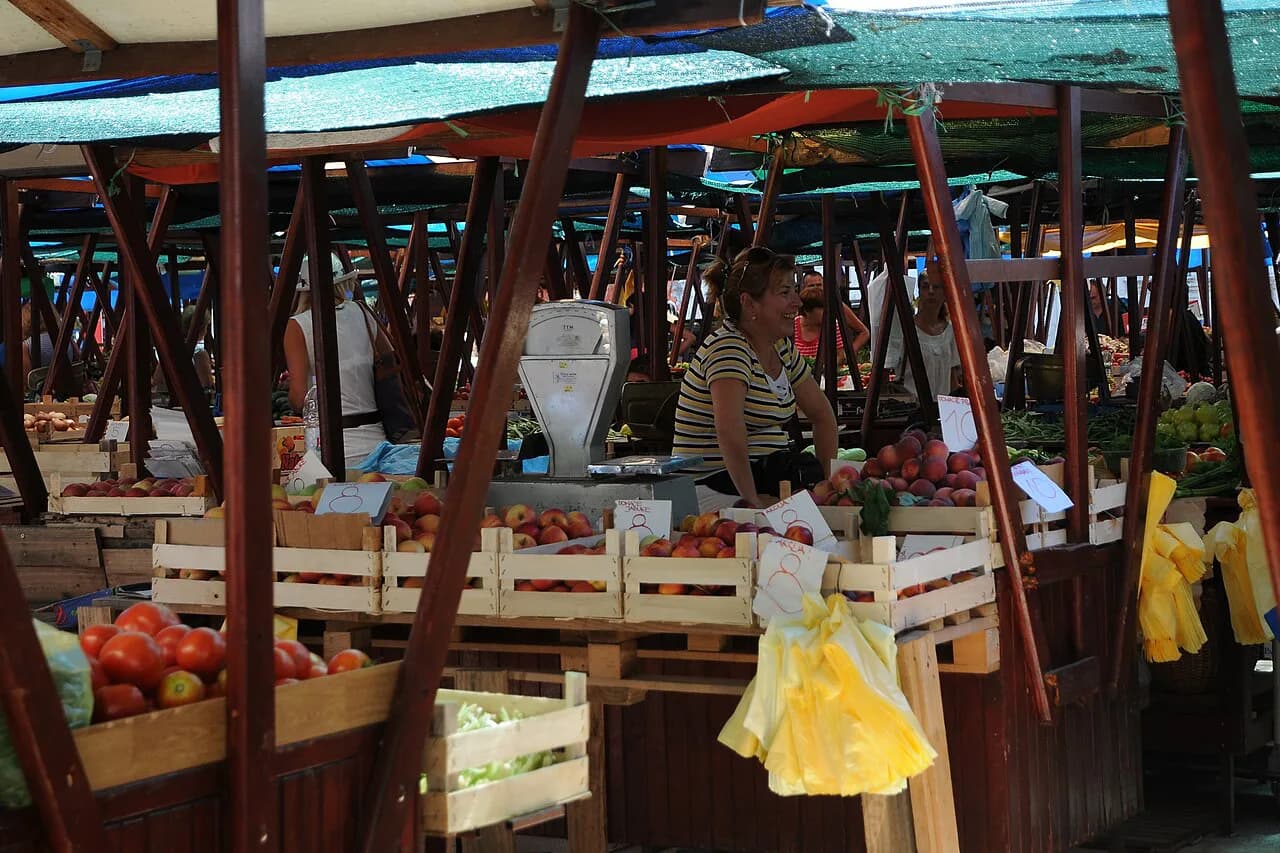
Zadar's fish market is the morning heart of the town's Tržnica, the central market where fishermen sell their daily catch and the surrounding halls cover produce, meat and cheese. Treat it as a working market rather than a photo stop — the trade is brisk and the slabs empty as the morning goes on.
This guide covers where the fish hall sits within the wider market, the species you are most likely to see, how buying by weight works at the stall, and how to cook a market purchase if you are staying in a flat. For the wider market beyond the fish, see our guide to Zadar market.
A fishing town's morning market
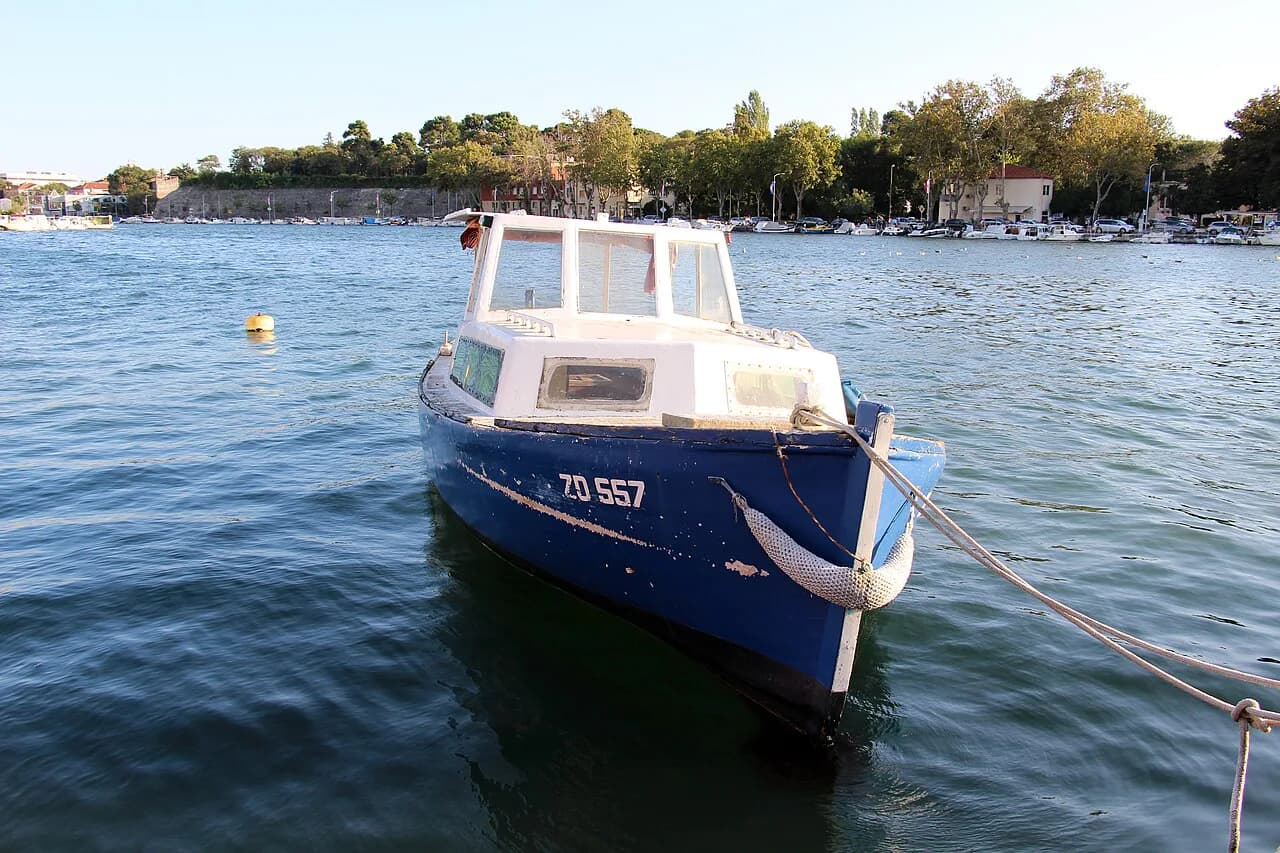
Zadar has lived by the sea for centuries, and the fish market is where that identity is most visible. Fishermen bring in the daily catch each morning and sell it directly from the stalls, so what you see on the slabs reflects what came out of the Adriatic that day rather than a wholesale supply chain. The result is a market that feels like a public institution rather than a tourist attraction.
It is also a social place. Locals come to buy, argue over the best specimens, exchange news and meet neighbours, and on weekends the market briefly becomes the centre of the city. That atmosphere is part of what makes a visit worthwhile, even if you are only buying a single fish for supper.
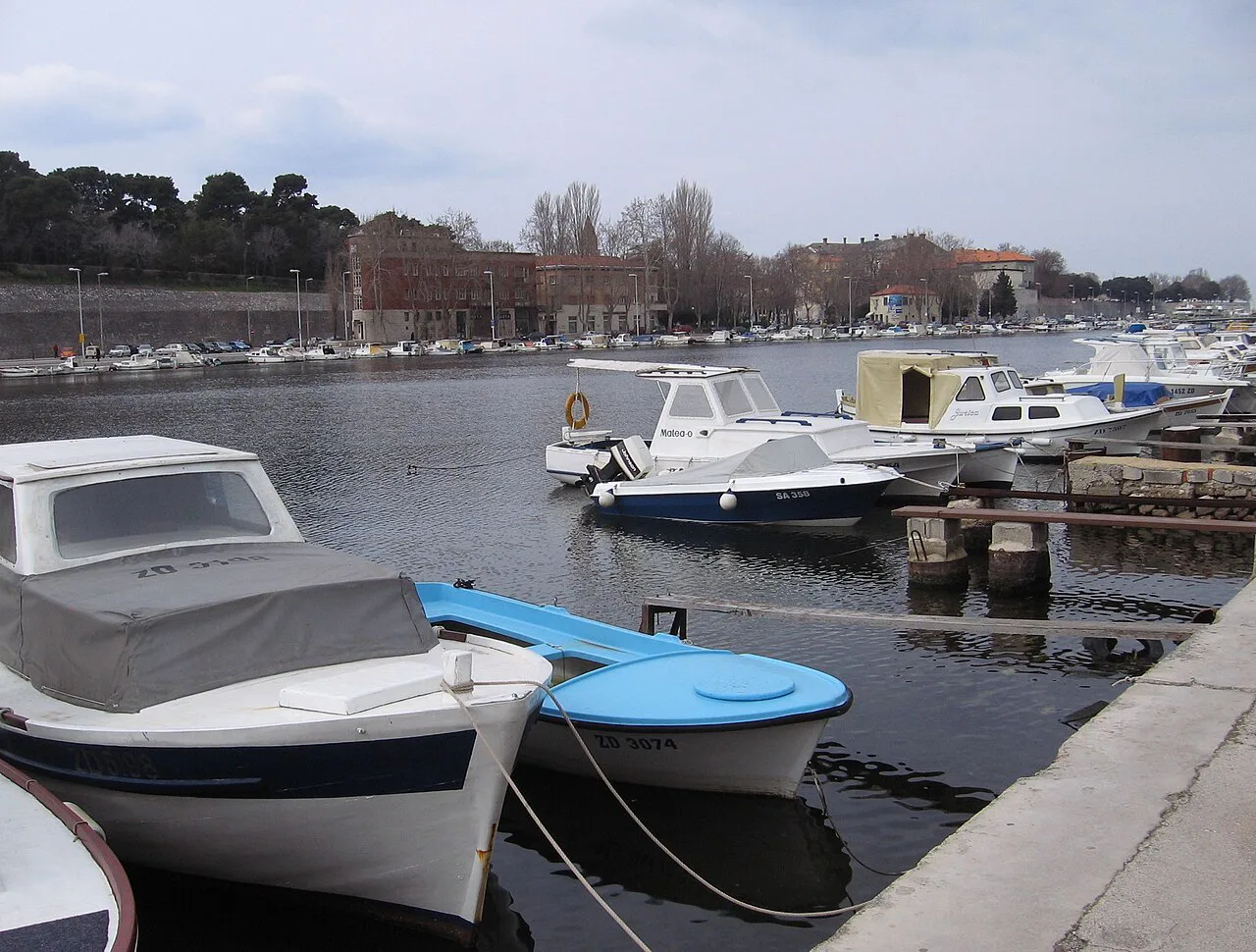
Where the fish hall sits in the Tržnica
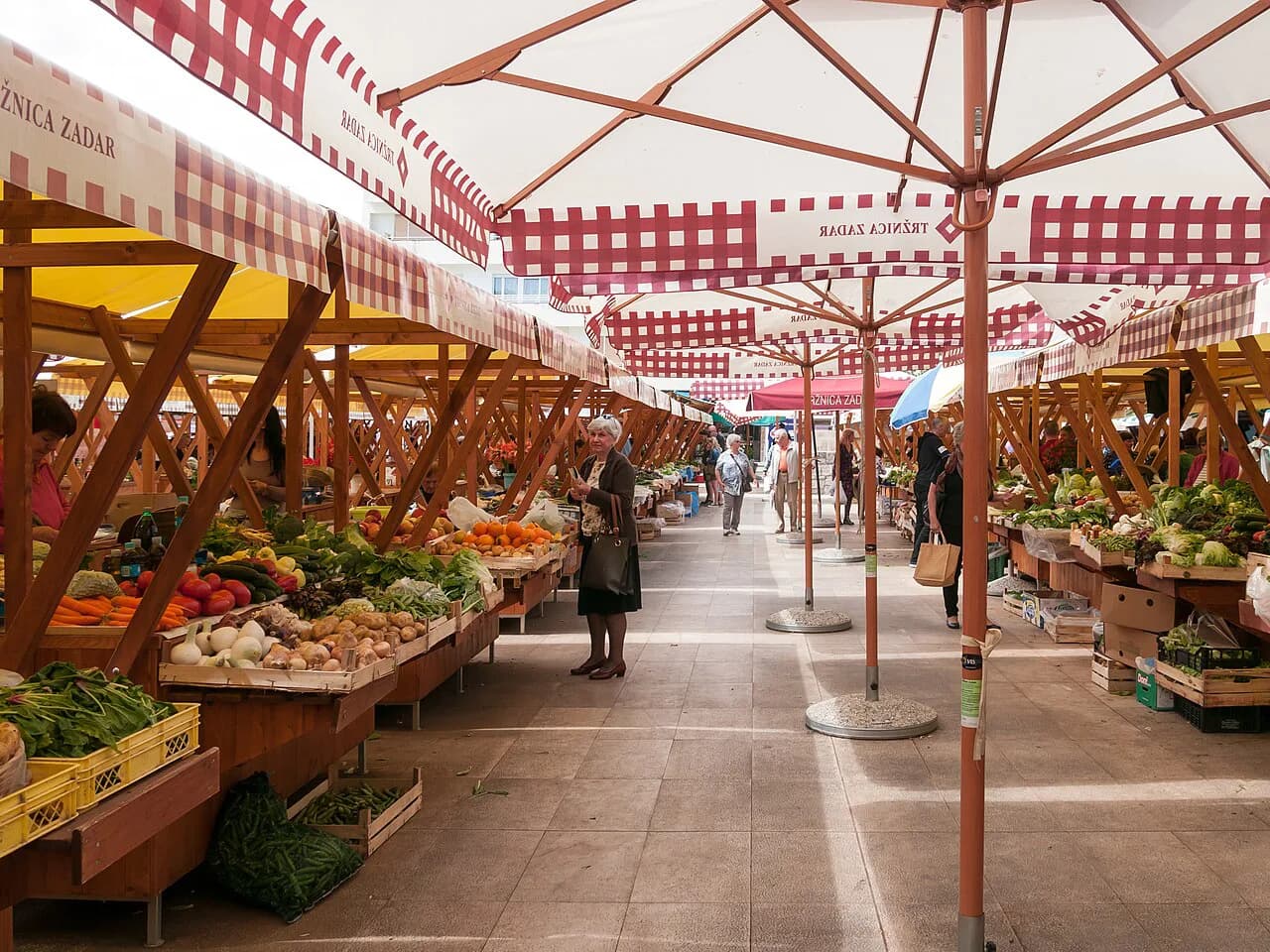
The fish market is a dedicated hall within Zadar's broader town market, the Tržnica, and it is the place where locals buy the day's fish. That two-part layout matters: the fish hall is where the catch is sold, while the surrounding market covers fruit, vegetables, meat and cheese. Shoppers can move between the two in a single visit, which makes the Tržnica a one-stop morning errand for anyone self-catering.
For visitors, the practical consequence is that you do not need to choose between the fish hall and the rest of the market. Arrive with a bag, work through the fish hall first, then pick up produce, cheese and bread on the way out. Our Zadar Market guide covers the wider market in more detail.
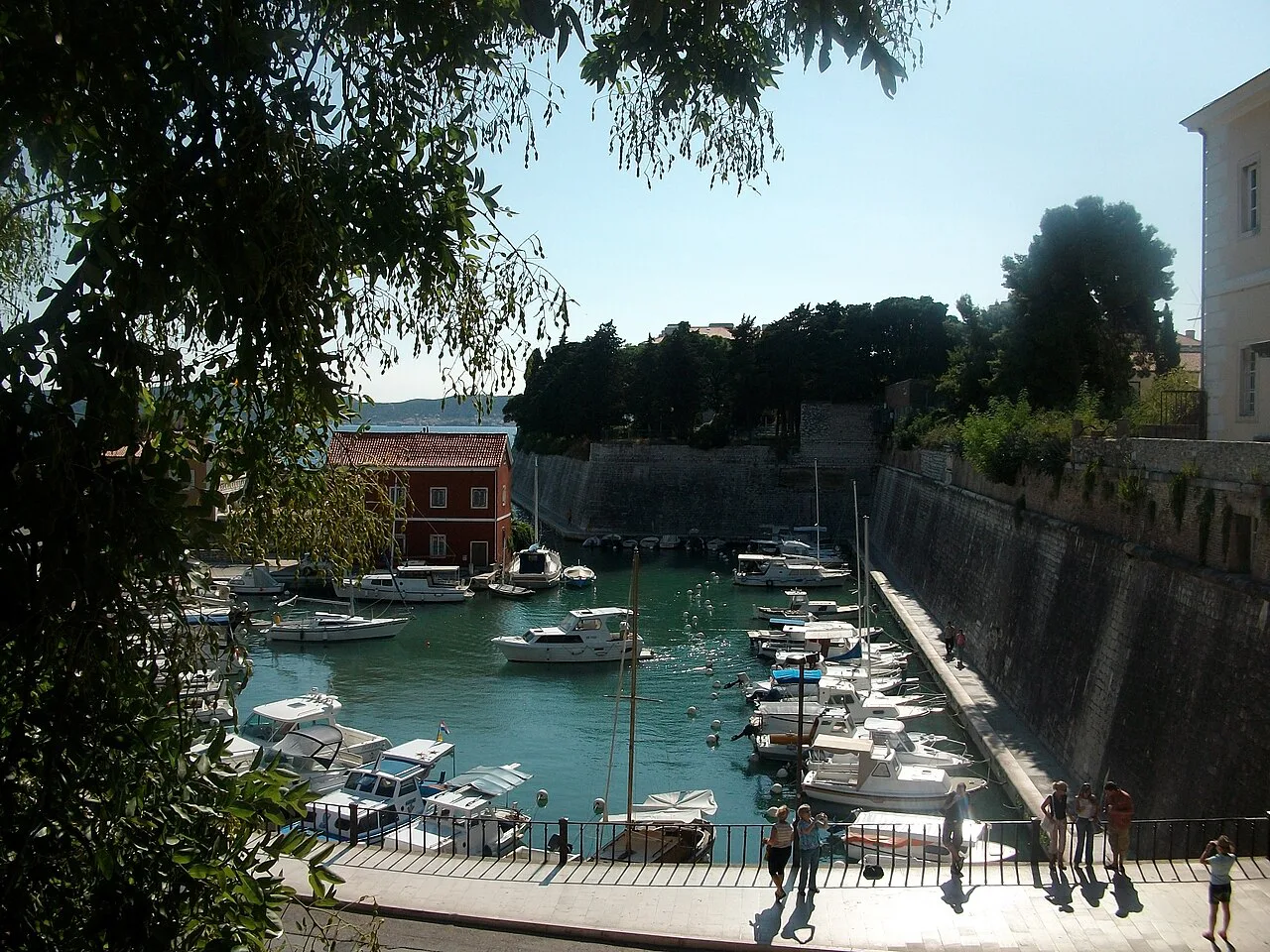
What is sold in the fish hall
The fish hall is stocked with the day's catch, displayed on ice and sold from the stalls. The range reflects what Adriatic fishermen bring in rather than a fixed menu. Expect whole fish — you choose the specimen you want.
Sardines are the small, inexpensive option and are best simply grilled or fried; tuna is the substantial purchase, sold in steaks or chunks and suited to searing or braising. Beyond those two, ask the stallholder what is good that morning — they know what came off the boats. Do not expect a written menu or labels in English; pointing works perfectly well.
Species to look for on the slabs
Sardines (srdele) are the everyday Adriatic fish and the easiest entry point for anyone new to buying whole fish. They are small, cheap and forgiving to cook — grilled over high heat or dusted in flour and fried.
Tuna (tuna) is the premium buy. Look for deep red flesh with no brown edges. Other species appear depending on the season and the boats, but the market's character is small-scale and daily, so the best approach is to ask what is freshest rather than arriving with a fixed list.
How buying works at the stall
Point to the fish you want and let the stallholder weigh your chosen specimen. Prices are set at the stall, so ask before committing if you are on a budget — a large tuna steak costs considerably more than a bag of sardines.
A cloth bag or cool bag is useful, especially in summer, as the fish is not wrapped for a long walk. If you are paying at the stall, check whether it takes cards before committing.
Produce, meat and cheese around the fish hall
The rest of the Tržnica covers the components of a full meal: fruit and vegetables in season, meat from the butchers, and cheese from the dairy stalls. That makes the market a practical stop for anyone staying in a flat with a kitchen. A single loop of the halls can supply fish, vegetables, cheese and bread for dinner.
If you need items the market does not cover, the supermarkets in Zadar fill the gaps for oil, pasta, rice and store-cupboard basics. Combining a market visit with a supermarket run is the most efficient way to stock a self-catering kitchen.
Turning a market purchase into a meal
Sardines need almost nothing: gut them, toss in olive oil, salt and pepper, and grill or fry them hot and fast. Serve with lemon and bread. Tuna steaks benefit from a brief sear and should be eaten pink in the middle rather than cooked through, which dries them out.
If your flat has only a hob, frying is the simplest option for both fish. Add a tomato and onion salad from the produce stalls, a wedge of local cheese and a loaf of bread, and you have a complete Dalmatian-style meal without a restaurant bill. For bread, Bakeries in Zadar are worth knowing before you set out.
Fitting the market into a Zadar morning
The natural sequence is market first, breakfast second: work through the fish hall, then walk to a café for coffee and something to eat. Our guide to the best breakfast in Zadar covers the options near the centre, and Best Cafés in Zadar for a Proper Coffee Stop is the place to start if you only want coffee.
After breakfast, the old town is a short walk and the waterfront gives you a place to sit with a coffee and watch the boats. If you want a sweet finish, the best ice cream Zadar options and the Cake Shops in Zadar both make a reasonable excuse to linger. None of this is a formal itinerary — the market is simply the best reason to be up and about early.
Is the fish market worth an early start?
Yes, if you want to see how Zadar actually eats and you are willing to get up early. The fish hall shows you the daily catch at its freshest, the surrounding Tržnica covers the rest of the meal, and the whole visit takes under an hour. It is not a polished visitor attraction, and that is precisely the point.
Go with cash, a bag and an open mind about what is on the slabs, and ask the stallholder what is good that day. The rest of Zadar follows: coffee, breakfast and a slow walk through the old town.
Explore more Zadar guides
Frequently Asked Questions
What is the best fish to eat in Croatia?
Sardines and tuna are two species commonly sold at Zadar's fish market, and both are excellent eating. Sardines are inexpensive and best grilled or fried; tuna is the premium buy and suits searing or braising. Ask the stallholder what is freshest that morning, as the catch varies day to day.
Do I need to speak Croatian to buy fish at the market?
No. Pointing at the fish you want and holding up fingers for the quantity works perfectly well. Learning a few words such as srdele (sardines) and tuna helps, but it is not essential.
Can I pay by card at the fish market?
Card acceptance is not something the market publishes, and stall by stall it varies. Bring some cash as a backup and ask at the counter before your fish is weighed, so you are not caught short with a purchase already bagged.
Sources
Notes on eating well in Croatia
Optional updates to our food guides.
You might also like
Continue reading
More guides you'll find useful