Zadar Food: What to Eat and Where to Order It
What to eat in Zadar: zadarska torta, tuna from the Zadar archipelago, black risotto, lamb on the spit and Maraschino, and where to order each one.
On this page
Zadar food runs on fish from its own archipelago, lamb and pork from the hinterland, and marasca cherries turned into a liqueur and a flourless cake. The city is small enough to eat across the whole range in a few days, but the geography matters: the peninsula trades in seafood, risotto and cake, while the villages inland supply spit-roast lamb and peka. This guide works through each speciality in turn, then sets out where to order it and how the evening tends to run.
What Zadar food is known for
The Zadar table pulls from three directions at once. The sea gives cuttlefish for black risotto and tuna from the archipelago around Kali and Ugljan, while the hinterland contributes lamb cooked on the spit, cured pork and peka baked under a metal lid. The city itself adds Maraschino, the marasca cherry liqueur produced here since the sixteenth century, and a cake built on it.
Menus across the city also carry the wider Dalmatian repertoire, so you will see seafood plates alongside pizzerias, burger bars, meat restaurants and Asian kitchens in the same few streets. If you want the seafood end of that list concentrated in one sitting, a Zadar food tour is the efficient way to cover it; if you would rather sit down properly, the konobas in Zadar cover the traditional side.
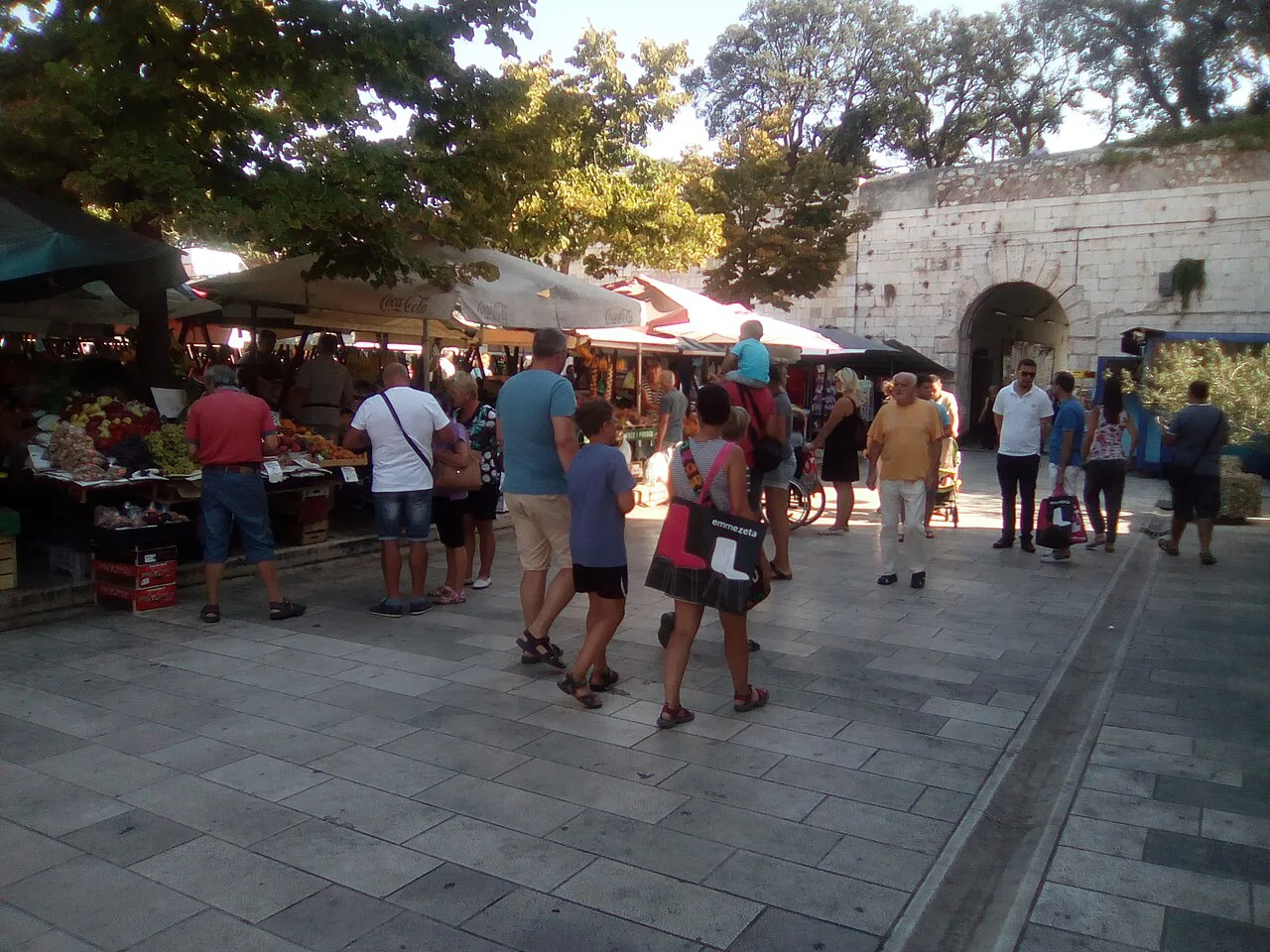
Zadarska torta: almonds, eggs, sugar and Maraschino
Zadarska torta is the sweet to understand before you order anything else. It is made from ground almonds, eggs and sugar with marasca liqueur and no flour at all, which gives it the dense, damp crumb and marzipan-adjacent flavour you get on the first forkful.
It is one of the oldest cakes in Dalmatia and is often made for celebrations, which is why it shows up on menus as a signature rather than an afterthought. You will find it in restaurants and pastry shops across the city, and ordering one slice between two is usually enough after a fish main.
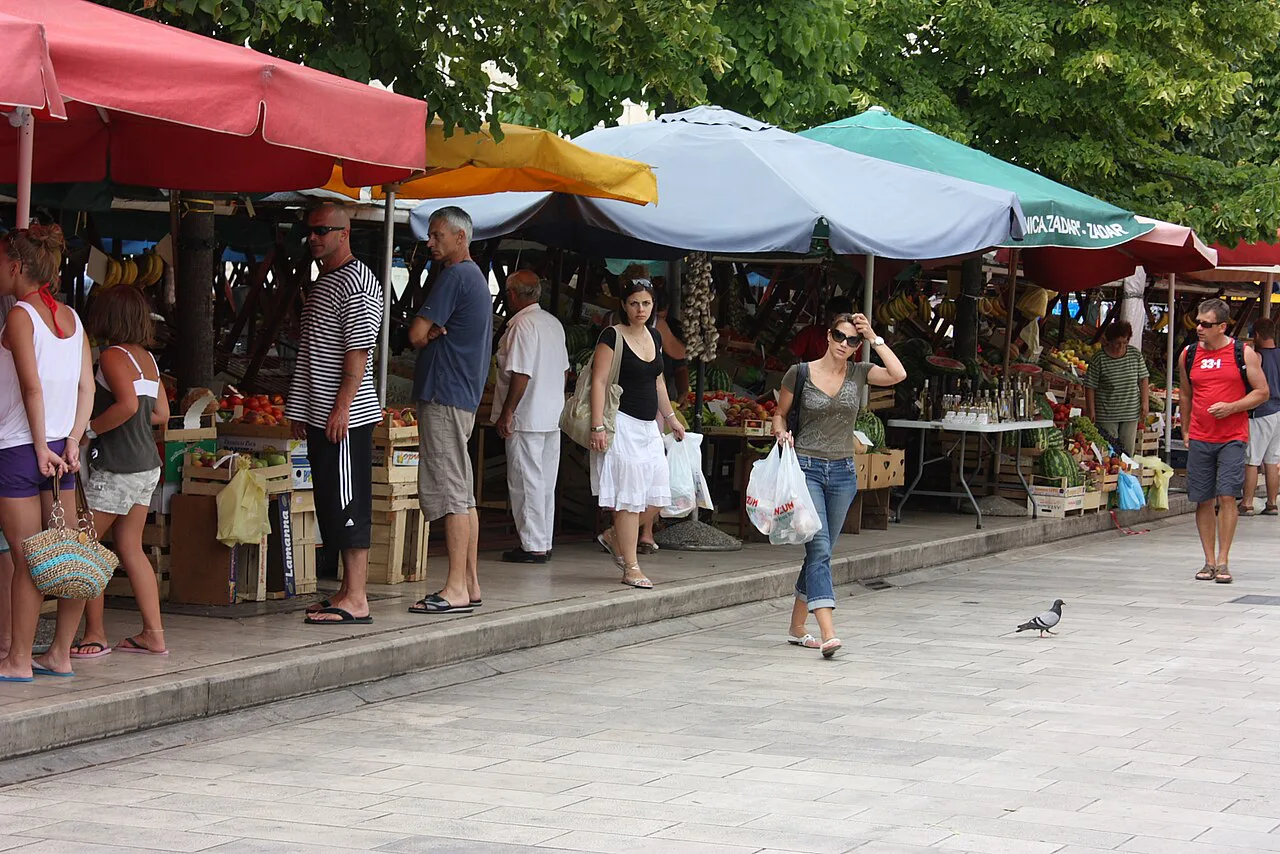
Tuna from the Zadar archipelago
Tuna steak appears on a surprising number of menus here, and the reason is local. The waters around the Zadar archipelago include one of Croatia's best-known tuna farming areas, and fishermen from Kali on Ugljan supply the city with wild fish, so the kitchens are working with something that travelled a short distance rather than a long one.
Order it simply: a thick steak, seared and served with potatoes or greens, is the standard treatment. At the fish end of the menu, whole fish and some seafood are commonly priced by weight, so it is worth asking what a portion weighs before you commit.
Maraschino: what the Zadar liqueur tastes like
Maraschino is Zadar's most famous product and the thread running through its desserts. It is distilled from marasca cherries and has a lightly sweet, aromatic flavour with a bitter edge underneath, which is exactly why it works as an aperitif or alongside a slice of zadarska torta. Production here goes back to the Dominican monks of the sixteenth century, and the liqueur later travelled well beyond Dalmatia.
A small glass before dinner or a splash with dessert is the normal measure, and it is strong enough that one is plenty. If you are driving or pacing yourself, the cake will give you the same flavour without the alcohol bite.
Black risotto and cuttlefish
Black risotto takes its colour and its saline depth from cuttlefish ink, and it is one of the most reliable things to order in Zadar. The rice should be loose enough to move on the plate rather than set into a cake, and the cuttlefish pieces should be tender rather than chewy.
It arrives as a starter or a main depending on the kitchen, and it is a good test of a restaurant before you spend on a whole fish. Pair it with a plain green salad and keep the rest of the order simple.
Lamb on the spit and peka outside the old town
Lamb on the spit is a highlight of Zadar and its surroundings, and it is the dish to seek out beyond the peninsula. Peka is the other one: octopus or veal cooked with potatoes and vegetables under a metal lid, which needs long, slow heat and is best ordered where the kitchen has built the meal around it.
Both are dishes for a table of at least three or four, since the quantities are generous and the pleasure is in sharing. Peka Zadar is the fuller guide to where it is cooked and how to book it.
Posedarski pršut and Ninski šokol
Inland from the city, the cured pork tradition gives you Posedarski pršut, a dry-cured ham from the Posedarje area, and Ninski šokol, a pork speciality from Nin. Both belong on a cold board with bread, cheese and something sharp to cut the fat.
These are the things to order when you want a slow start to a meal rather than a plate of pasta, and they pair naturally with a glass of Maraschino or a local red. Ask what the board includes before ordering, since the composition varies from kitchen to kitchen.
Fritule and smokvenjak with a coffee
Fritule are small fried dough balls, served across Dalmatia and eaten warm with sugar, and they are the easy sweet to pick up alongside a coffee. Smokvenjak is the other local habit: a dense fig cake that keeps well and works as something to carry for later in the day.
Both are everyday things rather than restaurant desserts, and that is the point. Order them mid-morning with an espresso and you have eaten like the city does between meals.
Where to eat: terraces, the ferry port and the neighbourhoods
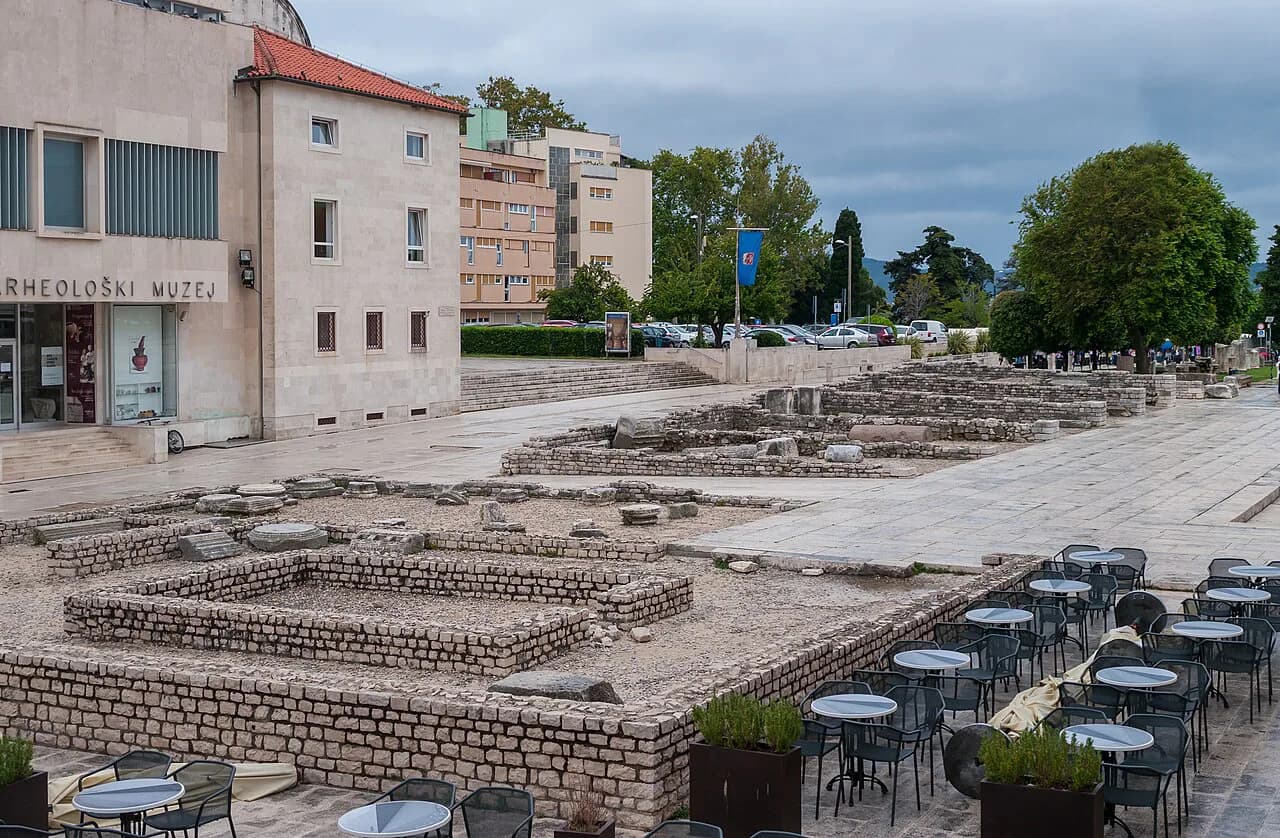
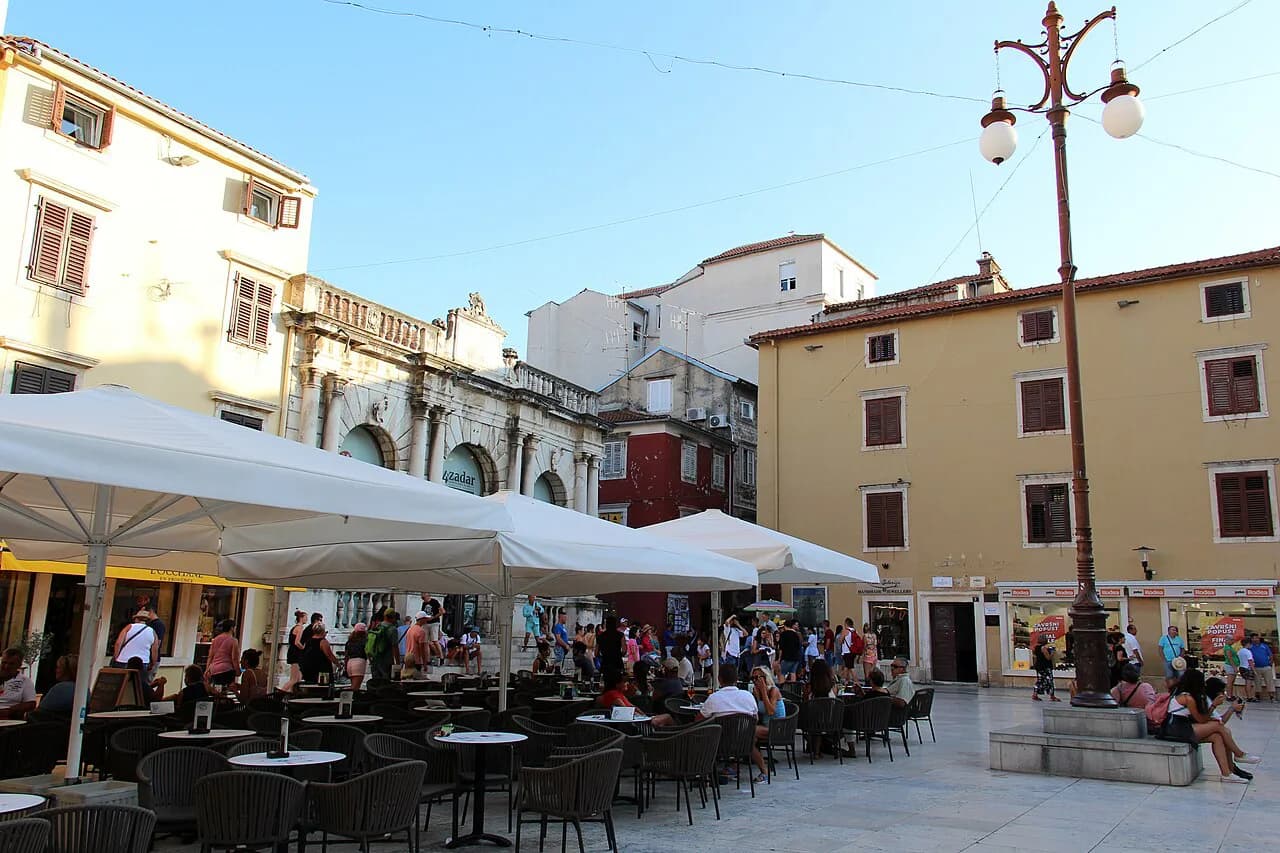
The old-town peninsula is where most visitors eat, and the trade-off is straightforward: you get the atmosphere of stone lanes and the Roman Forum, and you pay for it in higher prices and busier tables. Streets off the main drag give you more room and quieter service for the same seafood.
The ferry port end, around Liburnska obala, is the useful middle ground, with restaurants that lean towards Croatian wines and a more modern table while staying close to the water. It is a short walk from the old-town lanes and makes a calmer base for a fish dinner than the busiest squares.
For the cheapest end of the scale, look at what locals order rather than what is advertised on the street: pizza, burgers, Ćevapi in Zadar and grilled meat all cost far less than a whole fish. Street food Zadar covers the quick, standing-up version of the city's eating.
The Botanist: plant-based cooking with Dalmatian roots
The Botanist is the plant-based address to know in Zadar, and it takes Dalmatian cooking seriously rather than treating vegetables as a substitute. It was founded by four brothers from Petrčane after one of them adopted veganism, and the kitchen works from their grandparents' slow-cooked Mediterranean approach. It sits on Ul. Mihovila Pavlinovića in the city.
The menu is entirely plant-based and names its dishes after animals, which makes reading it a small puzzle. Look for the chickpea stew with kale chips and soparnik (the Dalmatian chard pastry), and an oyster mushroom brudet — the Dalmatian fish stew, here rebuilt around mushrooms and served on polenta. A Wellington steak in puff pastry with broad-bean croquettes and truffle potato cream covers the celebratory end.
The restaurant's own farm is intended to supply it with organic produce, and the menu changes with the season. Its own site says it is designed to appeal to all diners, not only vegans, and it invites bookings through its site and by phone.
Booking a table in high season
Through July and August, booking ahead is strongly advised in Zadar, and the same applies to any restaurant with a terrace and a view. Outside those months the pressure drops sharply, and you can often walk in on the day.
For a peka or spit-roast lamb, it is worth calling a day or more ahead: both take hours to cook. A Zadar konoba that serves them can tell you what to order when you ring, and our konobas in Zadar guide covers the traditional side of the city.
Prices in euros and what a fish dish costs
Croatia has used the euro since 2023, so every price you see is in euros. The wide spread in Zadar runs from pizza and grilled meat at the cheap end to whole fish priced by weight at the top, and the difference between the two is much larger than the difference between two mid-range konobas.
For a working budget by course and by type of venue, Zadar food prices sets out the bands. Read the fish price per kilo before you sit down, since whole fish is the item that moves a bill most.
Which Zadar dish to order first
Start with zadarska torta and a glass of Maraschino to understand what the city tastes like, then move to black risotto and tuna steak for the seafood side. Save the spit-roast lamb and peka for a table of four, ordered a day ahead, and give the plant-based kitchen one evening of its own. If you are weighing up another Dalmatian stop, Dubrovnik food follows a similarly seafood-led menu, which makes it a useful comparison for the rest of your trip.
Explore more Zadar guides
Frequently Asked Questions
What is zadarska torta made from?
Ground almonds, eggs and sugar with marasca liqueur, and no flour at all. That is what gives it the dense, damp texture and the almond flavour that pairs with Maraschino.
Is Zadar good for vegetarian and vegan food?
Yes. The Botanist is entirely plant-based and applies Dalmatian technique to vegetables, including a chickpea stew with kale chips and an oyster mushroom version of brudet served on polenta.
Do I need to book a restaurant in Zadar in summer?
In July and August booking ahead is strongly advised, particularly for terraces and for anything cooked slowly such as peka or spit-roast lamb, which need ordering in advance.
Sources
Notes on eating well in Croatia
Optional updates to our food guides.
You might also like
Continue reading
More guides you'll find useful