Rovinj Fish Market: What to Buy at the Town Ribarnica
Rovinj's fish market, the ribarnica, sits beside the town tržnica and sells fresh fish, prawns and squid by the kilo. What you'll find and how to buy it.
On this page
Rovinj's fish market is the town ribarnica, a covered fish hall that sits right beside the open-air tržnica, so you can buy a bag of blitva and a kilo of fish in a single morning loop. Come early, bring cash as a backup, and point at what looks best rather than working from a fixed list. This guide covers what the counters hold, how buying by the kilo works, and what the market tells you about eating fish in Rovinj.
What the Rovinj fish market is and where it sits
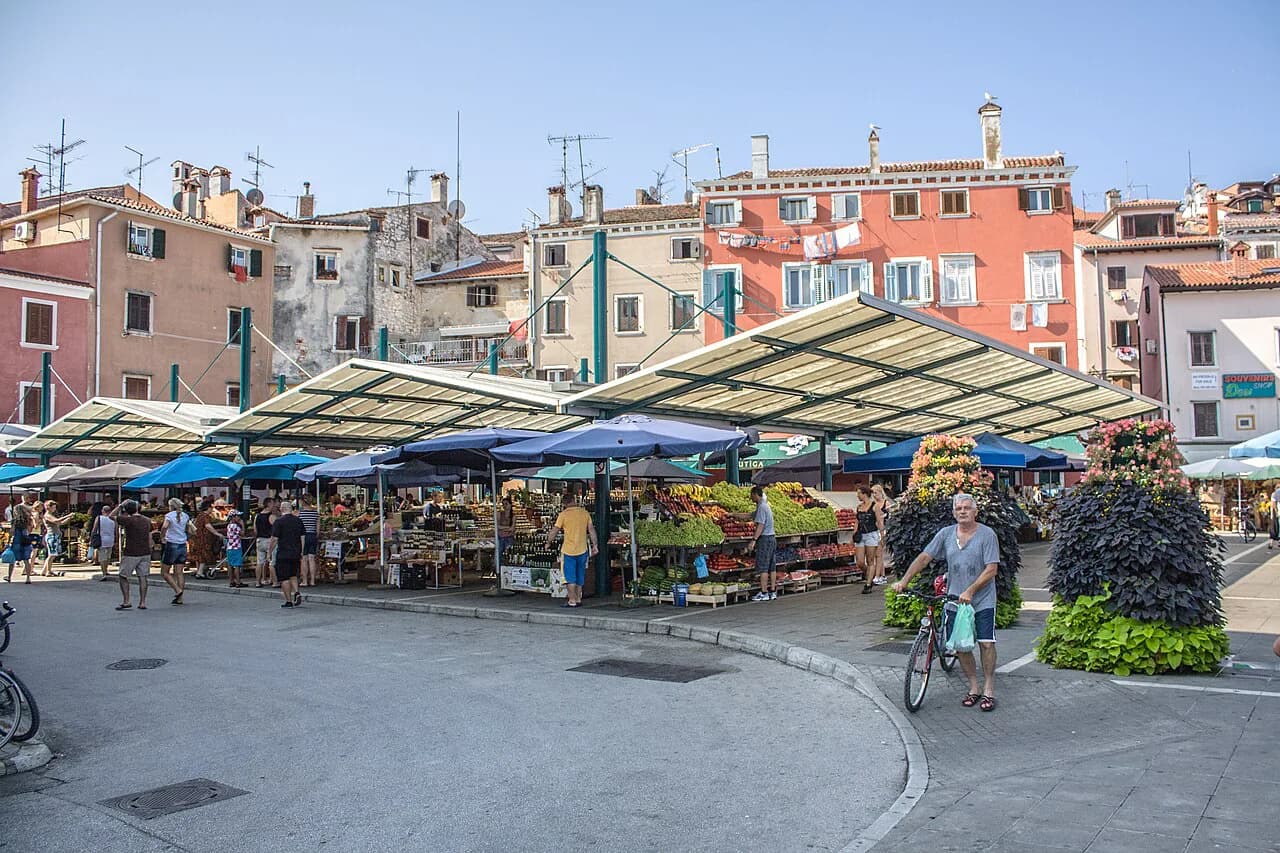
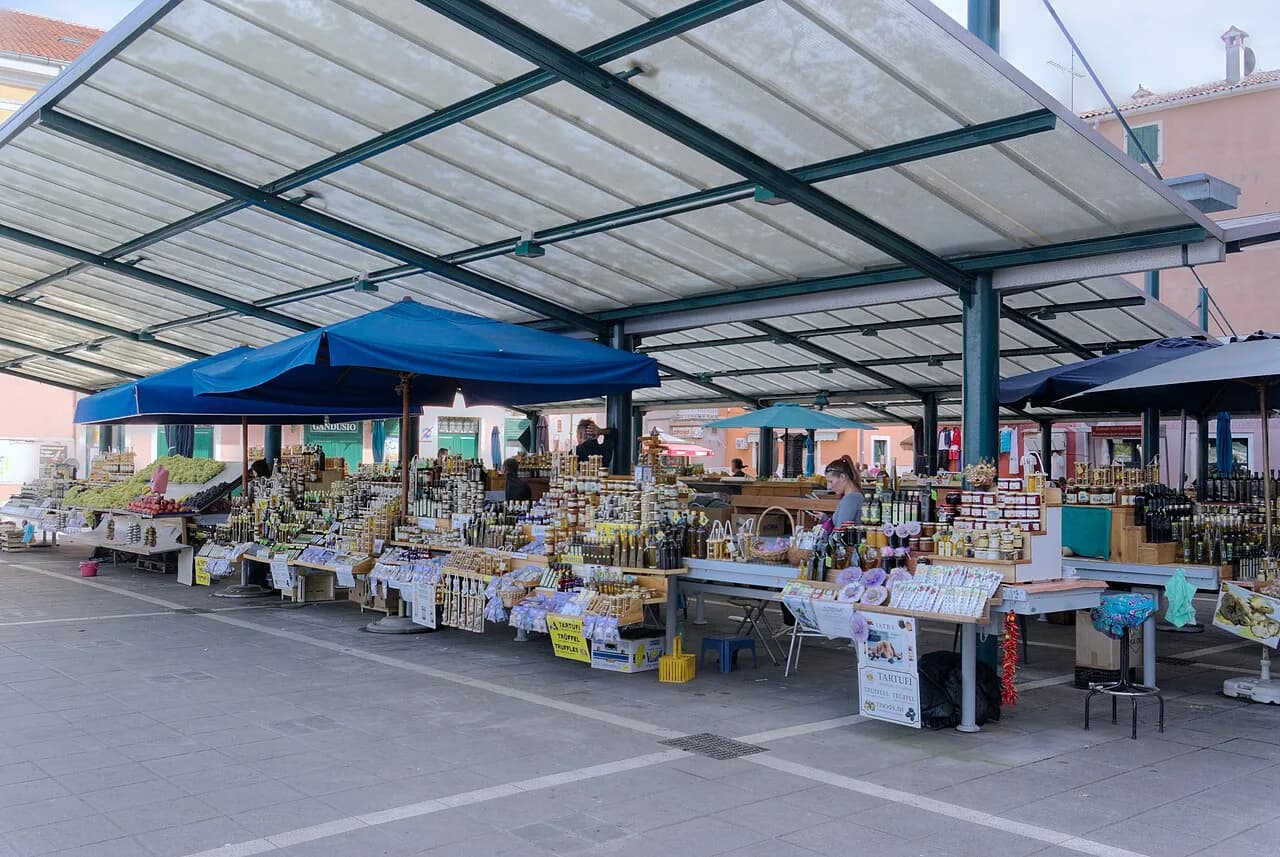
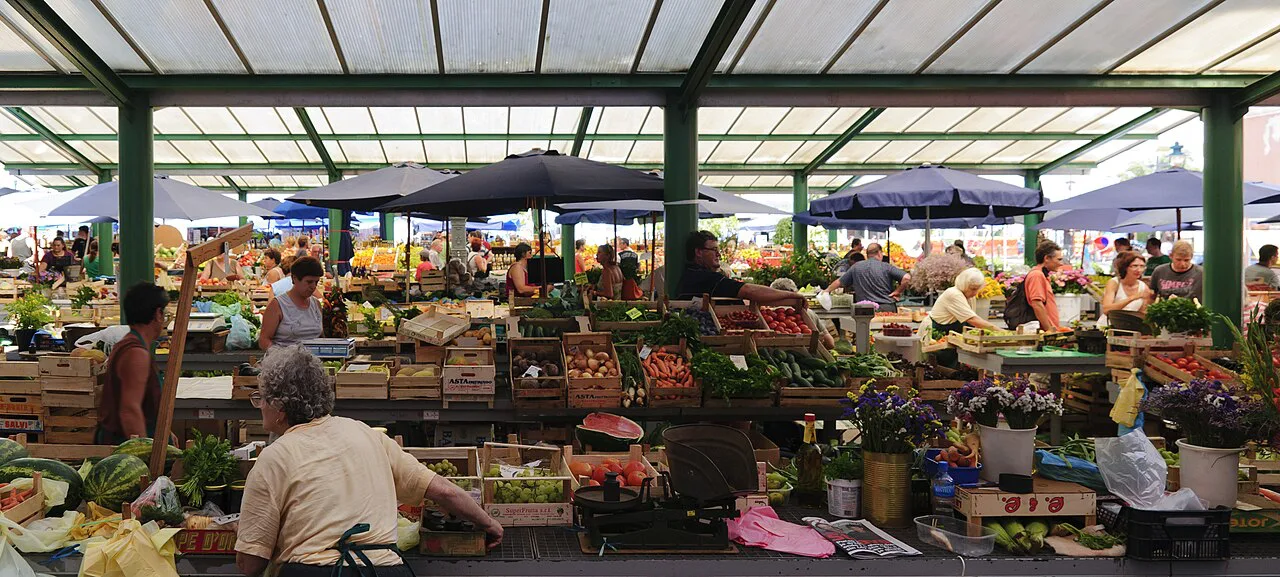
The ribarnica is Rovinj's dedicated fish hall, run on the town market site beside the fruit and vegetable stalls of the tržnica. The two share a location, which is why visitors often use the two words interchangeably, but they sell different things: one is fish and seafood, the other is produce, preserves and flowers. Go to the fish hall for list, squid or prawns, and to the tržnica next door for tomatoes, greens and a jar of marmalade.
The fish hall is a working municipal market rather than a visitor attraction, and the operator named in local reporting is Denis Fatorić of A & B d.o.o., the company running the town fish market. That matters for how you shop: supply follows the boats and the weather, so what you see on a Tuesday may not be there on a Thursday. Plan the market as a morning errand before a day out, not as a fixed appointment.
How the ribarnica works: counter service and buying by the kilo
Shopping is a direct transaction: you choose the fish you want and it is weighed for you. Fish is sold by the kilogram, so ask for a whole fish of a size you can actually cook, or a smaller weight if you only need enough for one meal. Confirm the weight and the total before you pay.
Trade ebbs and flows with the season and the weather. In a May report, sellers described a transition period with fewer buyers and a leaner fish selection than in high summer; by August, the same hall was drawing morning crowds buying fish and shellfish. Come early if you want the widest choice, and expect company rather than a quiet browse in peak season.
The fish you'll see at the counter
The core offer is Adriatic white fish and cephalopods. Look for list (sole), oslić (hake) and trilja (red mullet), alongside brancin (sea bass) and orada (sea bream), plus lignje (squid). Hake and sole suit a simple pan-fry in olive oil with garlic and parsley, while red mullet is small enough to cook whole and serve per person.
For a Croatian fish stew, brodet, the stallholder has pointed buyers towards the cheaper, mixed catch that holds up in a long simmer — kočarska riba (trawler-caught fish) and fish for brodet, plus prawns and squid from the same hall. Ask what is good for brodet and you will usually be steered to smaller or less fashionable fish, which keeps the cost down and the flavour strong.
Blue fish and the spring and winter closed seasons
Blue fish, the oily species such as sardines and anchovies, drops off the counter during closed seasons. A May 2026 report quoted the stallholder saying the blue-fish catch stops by law from 1 May to 1 June, so shoppers wanting blue fish have to wait for the Ban to lift; a December 2023 report noted a sardine Ban starting 24 December. If you are in Rovinj in May and planning a meal around sardines, build the menu around white fish or squid instead.
Winter is a different constraint. Local boats work as much as the weather allows, and in poor conditions fish may be brought in from further along the coast, including the Kvarner area, to fill the counter. That is not a reason to skip the hall, but it explains why the selection swings so much between visits. Ask where the fish comes from if provenance matters to you.
Farm-raised fish alongside the catch
Farmed fish is a distinct option, and not only at the market. In the hall, the May 2026 report from the ribarnica listed uzgojena riba (farmed fish) among the available stock, while the December 2023 account of the operator's offer named brancin and orada without saying which are wild. Separately, Cromaris runs a fish shop in Rovinj on the Valalta side of town, beside Diskont Valalta rather than at the market hall, selling fresh farmed fish and fish delicacies, so there is a dedicated option beyond the market.
Buying farmed fish is a fair trade-off rather than a compromise: you get consistent size and availability, but less of the day-to-day variety that makes the market interesting. If you are cooking for a group and need four sea bass of the same size, farmed is the practical choice. If you want something unusual, shop the wild counter first and treat the farmed fish as the fallback.
The tržnica next door: produce, preserves and flowers
The produce market beside the fish hall is where you build the rest of the meal. In early May 2026, shoppers could find young garlic at ten euros a kilo, young onions at six euros, lettuce at four to five euros, blitva (Swiss chard) at four euros, and rocket and saladini at eight euros a kilo, with marmalades, syrups and ajvar at five euros and bunches of carnations at five euros.
Buy with a little scepticism. Growers at the tržnica have said that genuine local producers are thinning out and that resellers are a persistent problem, so a stall is not automatically a small farm. Look for a stallholder who can tell you where the produce was grown, and buy what is in season rather than what looks most polished. Spring greens, young alliums and bitter leaves are the safer bets.
The same visit is a practical way to stock a self-catering kitchen: fish and squid from the ribarnica, chard and salad from the tržnica, and a jar of ajvar or a bottle of syrup for later. If you would rather start the day with coffee and pastries than cooking, our guide to Coffee in Rovinj covers where to go once the market bags are full.
What the market tells you about eating seafood in Rovinj
The market's rhythm explains a lot about restaurant menus in town. When the boats are in and the weather is fair, expect a broader choice of white fish; during a blue-fish closed season, sardines and anchovies drop off menus or come from elsewhere. Ask at the stall what is local on the day, since the catch shifts with the weather and the season.
The weighing culture matters too. Fish sold by the kilo at the market translates into how restaurants price larger fish, so asking the weight and the total before ordering is normal rather than awkward. The same habit works at the counter: choose the fish, ask for the weight, then decide.
The Rovinj food landmarks page has a short guide to each named market and konoba. For a proper breakfast before a market morning, the best breakfast in Rovinj is worth planning around.
Where to go next for fish in Rovinj
After the market, the obvious next step is a konoba where the day's catch is cooked simply. Look for places that list fish by weight and are clear about whether it is wild or farmed, and book ahead in high season if you want a table in the evening. A morning market visit pairs naturally with our Rovinj Market guide to the town's food shopping and eating.
For supplies beyond fish and vegetables, Supermarkets in Rovinj covers the larger shops for oil, rice, bread and the odds and ends a rented kitchen needs. If you would rather buy bread and pastries from a specialist, our guide to bakeries in Rovinj points you to the morning options.
Is the Rovinj fish market worth a morning?
Yes, if you are self-catering or want to understand what Rovinj's kitchens are working with. Go early, buy by weight, ask what is good for brodet, and pair the fish with greens from the tržnica next door.
Set your expectations by the season: expect a leaner counter in spring and plenty of choice and company in summer, with blue fish absent while the spring closed season runs. Bring a bag, some cash as a backup and a rough idea of dinner rather than a rigid list.
Frequently Asked Questions
What is the difference between the ribarnica and the tržnica in Rovinj?
The ribarnica is the covered fish hall where fish, squid and prawns are sold by weight. The tržnica is the adjacent produce market, selling fruit, vegetables, preserves and flowers from growers and resellers.
Can you buy blue fish at Rovinj market in May?
Not while the spring closed season is in force. According to a May 2026 report, the blue-fish catch stops by law from 1 May to 1 June, so sardines and other blue fish are absent until it lifts; plan around white fish, squid or farmed fish in that window.
How is fish priced at the Rovinj ribarnica?
Fish is sold by kilogram and weighed for you. Ask for the weight and confirm the total before you pay.
Where can you buy farmed fish in Rovinj?
Farmed fish appears on the market counter, and Cromaris runs a separate fish shop in Rovinj, on the Valalta side of town beside Diskont Valalta, selling fresh farmed fish and fish delicacies. It is a useful fallback when the wild selection is thin.
Sources
Notes on eating well in Croatia
Optional updates to our food guides.
You might also like
Continue reading
More guides you'll find useful