Split Fish Market (Peškarija): What to Buy and How It Works
Split's fish market, Peškarija, is a Secession-style hall on Marmontova Street in the centre of town, a short walk from the Riva.
On this page
Split's fish market, Peškarija, is a working seafood hall on a square beside Marmontova Street, a couple of minutes from the sea and the Riva. It is open from about 6.30 am until 2 pm and winds down in the early afternoon, so it rewards an early start rather than a lazy lunchtime stroll. This guide covers what is sold on the tables, how the white-fish and blue-fish sides differ, and the small rituals — filleting, salted anchovies, the late-morning markdown — that make a visit worthwhile.
What and where Peškarija is
Peškarija is Split's central fish market, in the middle of town on Marmontova Street. The Riva waterfront and the sea are a couple of minutes' walk away. Come here as part of a wander through the old town.
It is a genuine working market: locals shop here for the day's fish, and the tables empty as the morning goes on. If you want the fullest selection and the best pick of what came off the boats, arrive early.
Why the building matters
The hall is a Secession-style structure of white stone and ironwork, built more than 120 years ago, and it counts as one of Split's monuments in its own right. Its setting at the heart of the old city puts it at the centre of daily life. Look up at the ironwork before you look down at the ice.
For local people the market carries a meaning well beyond its architecture; it is one of the points where the city's Mediterranean character is most obvious. Expect conversation, shouting and the smell of the sea rather than a museum hush.
What is sold on the tables
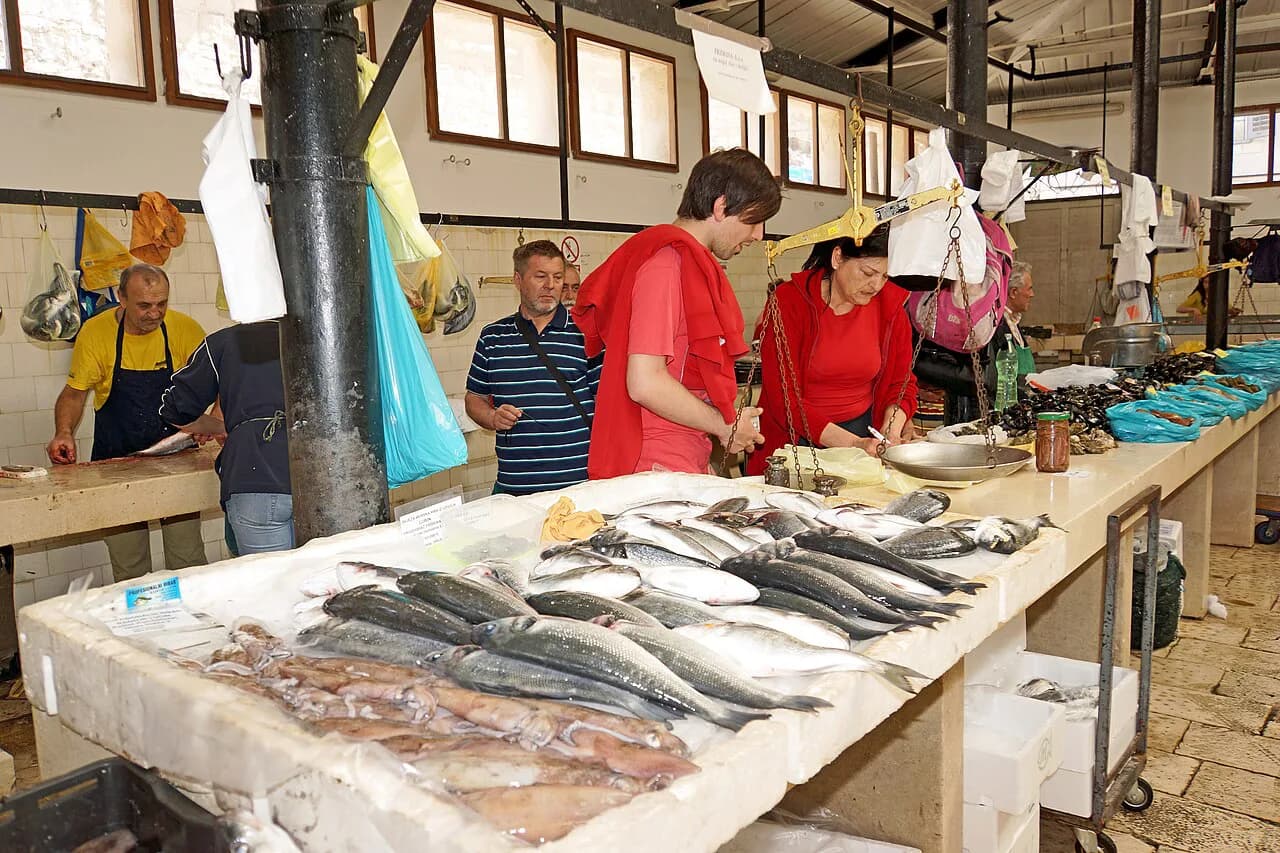
The range runs from cheap blue fish — sprats, picarels, sardines, mackerels and anchovies — to pricier white fish such as red scorpionfish, dentex, red porgy and sea bass. Lobsters and shellfish also turn up on the tables. Overnight weather shapes the offer, so the selection changes from one morning to the next.
Picarels, sprats, mackerels, sardines and anchovies are the everyday fish most locals are filling bags with. For the grill or the oven, these small blue fish are the practical choice. Ask a seller which fish is best that day.
White fish versus blue fish
Inside, the white fish are the high-quality, more expensive end of the range and are sold alongside oysters. The blue fish are cheaper and just as fresh, which makes them the sensible buy if you are cooking for a group or watching the budget.
Small blue fish need little more than olive oil, salt and a hot grill or a baking tray. White fish and shellfish reward plainer treatment still. Decide what you are cooking before you point at a table, because the price difference between the two ends is considerable.
Oysters and shells
Head for the northern part of the building if oysters and shellfish are what you are after, where they are sold alongside the white fish. These are the luxury end of the market and the part most worth asking questions about, from origin to how they should be kept until you eat them. Buy them last if you have other shopping to do.
How buying works
Start with a slow lap of the tables before you buy anything. Chat to the sellers about where the fish was caught; some speak foreign languages and some do not. You can also choose between wild and cultivated fish, which is worth deciding deliberately.
Prices follow the overnight catch, so the offer and the cost swing from day to day. Ask what is good that morning and let the answer guide you rather than hunting for one fixed species.
Having your fish cleaned and filleted
At the long stone table you can hand over your purchase and have it cleaned and cut into fillets for a small fee, which is a real help if you are staying somewhere with a kitchen and no proper knife. The service saves you the mess and the learning curve. Ask at the table before you pay for the fish so you know what is possible.
A cleaned and filleted fish is far easier to carry back to an apartment and quicker to put in a pan. Have it done last thing before you leave so it stays cold on the way home, and bring a bag.
Salted anchovies from the barrels
Old women sell salted anchovies from barrels at the market, and you can ask to taste one before you buy. Take them up on it: the salt level and the texture vary, and a taste tells you more than any description. Buy a small quantity first, then go back for more if it suits you.
Salted anchovies are a pantry ingredient rather than a snack: chopped into a dressing, laid over bread, or stirred through a simple sauce. They keep far better than fresh fish, which makes them a sensible purchase if you are travelling on.
Morning timing and the late-morning markdown
The market is at its best early, and the offer thins as the morning goes on. From around midday, prices are reduced to shift whatever fish is left, so a late visit can be a bargain if you are flexible about what you cook. The trade-off is a narrower choice and less time to have your fish prepared.
Treat an early start as the safe option and a late one as a gamble. If you have a kitchen and no fixed menu, the markdown is worth planning around; if you want a specific fish, do not risk it. It is a morning place either way.
How the market feels
This is a noisy, chatty, sensory place: sellers calling, locals catching up, the smell of fresh fish in the air. A sulphur whiff drifts over from the neighbouring spa, which is said to be why the fish market stays relatively free of flies.
The sulphur smell is tied to the spot itself: the spa waters are said to be one of the reasons Diocletian built his palace here. Whether or not you buy anything, a walk through the tables gives you a sense of how Split eats. After the market, a flat white or a strong coffee nearby is the natural next stop, and our Coffee in Split guide is the place to start.
Practical points for a market visit
Bring a sturdy bag and shoes that can take a bit of wet floor, and keep your fish cool on the way home. If you have no kitchen, stick to salted anchovies and oysters you can eat straight away, and plan your meal elsewhere. The outside part of the market is closed under new hygiene regulations, so selling now takes place inside the market building.
If you are staying in an apartment, a fish bought here and cooked simply is one of the best meals in Split; if you are not, pair the visit with a bakery run instead. A good loaf turns a few fillets into a proper meal, and our guide to bakeries in Split covers the bread side of that plan.
Should you build your morning around Peškarija?
Yes, if you are cooking or simply want to see Split at work. Go early, walk the tables before committing, ask where the fish came from, and use the stone table to have your purchase cleaned and filleted. The white-fish side is the expensive one; the blue fish is the everyday buy.
Skip it if you have no kitchen and no interest in fish beyond a plate at lunch. For everyone else, pair the market with a coffee on the way back and keep it to a morning. Finish with a Best Ice Cream in Split if the day is warm.
Explore more Split guides
Frequently Asked Questions
Is there a seafood market in Split?
Yes. Peškarija is Split's central fish market, on a square beside Marmontova Street and a short walk from the Riva. It sells fresh fish, shellfish and oysters, and locals shop there alongside visitors.
What is the best time to go to a fish market in Split?
Early morning gives the widest choice and the freshest selection. The market runs from about 6.30 am until 2 pm, and around midday prices are reduced to clear what is left, which suits flexible buyers but means fewer fish to choose from.
Sources
Notes on eating well in Croatia
Optional updates to our food guides.
You might also like
Continue reading
More guides you'll find useful