Zadar Cooking Class: What Each Experience Actually Involves
A Zadar cooking class can pair a guided old-town walk and market shop with hands-on Dalmatian cooking. Here is what each format involves and how to choose.
On this page
Book a Zadar cooking class and you get either a focused private lesson in a Dalmatian kitchen, billed at about two and a half hours, or a longer half-day session that starts with a guided walk and a shop at Zadar market before you cook. Both are hands-on and both end with lunch, and the market-and-cooking format is arranged for private groups only. This guide explains what each format involves, what you cook with and how to match a class to the length of your trip.
The two formats work differently, so read the details before you decide. One is a private cooking lesson of about two and a half hours; the other is presented by Culinary Croatia as a private half-day option built around a city tour, a market visit and a hands-on cooking session with your own group, running all year round. If your main aim is Dalmatian food rather than sightseeing, compare the eating side of your trip too: the wider picture of Zadar Food covers the dishes worth knowing before you cook them.
What a Zadar cooking class involves
The Culinary Croatia market-and-cooking format is private: you book for your own group, and guests outside it do not join. That matters if you are travelling as a family or a small party of friends and want the kitchen to yourselves. Expect to cook rather than watch, with a local chef guiding you through the techniques, then sit down to eat what you made, with wine at lunch.
The shorter option is a private cooking class of roughly two and a half hours, which fits comfortably into an afternoon without eating your whole day. The longer option is a half day and adds a café stop, a guided walk and the market shop before you reach the kitchen. Choose the first if cooking is the point; choose the second if you want the market and the old town explained on the way in.
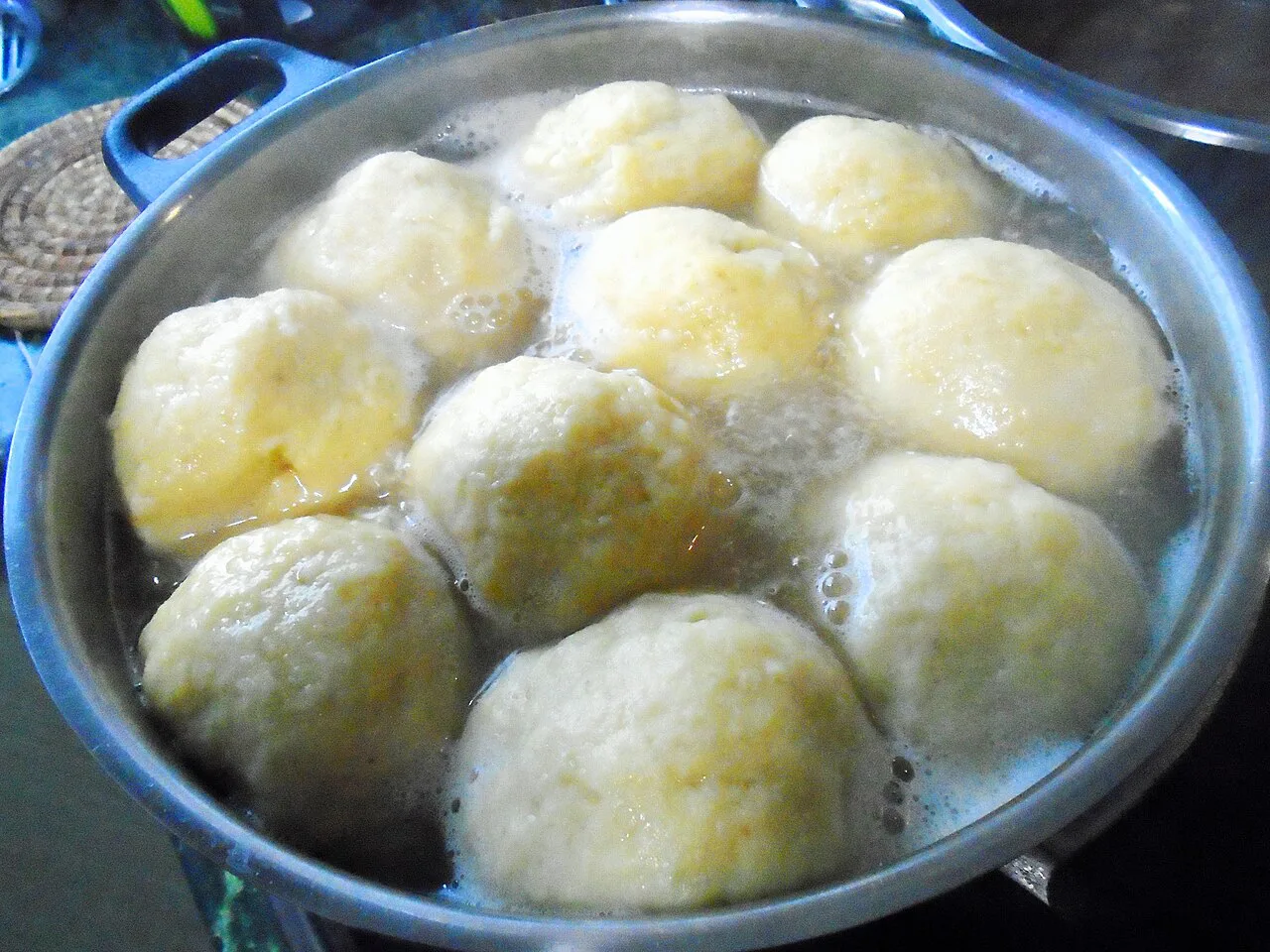
Private cooking and market-and-cooking half day formats
Two main shapes turn up in Zadar. The first is the private lesson, a straightforward kitchen session in Dalmatian style with lunch at the end. The second is the market-and-cooking half day, arranged by Culinary Croatia, which uses the market shop as the teaching part of the day, so you learn what you are about to cook before you touch a pan.
A bread-making workshop also appears for Zadar, which concentrates on one technique rather than a full menu. It may suit anyone who wants a single skill and a lighter time commitment. If your interest runs to the street-level eating of the city rather than the kitchen, street food in Zadar is the better starting point.
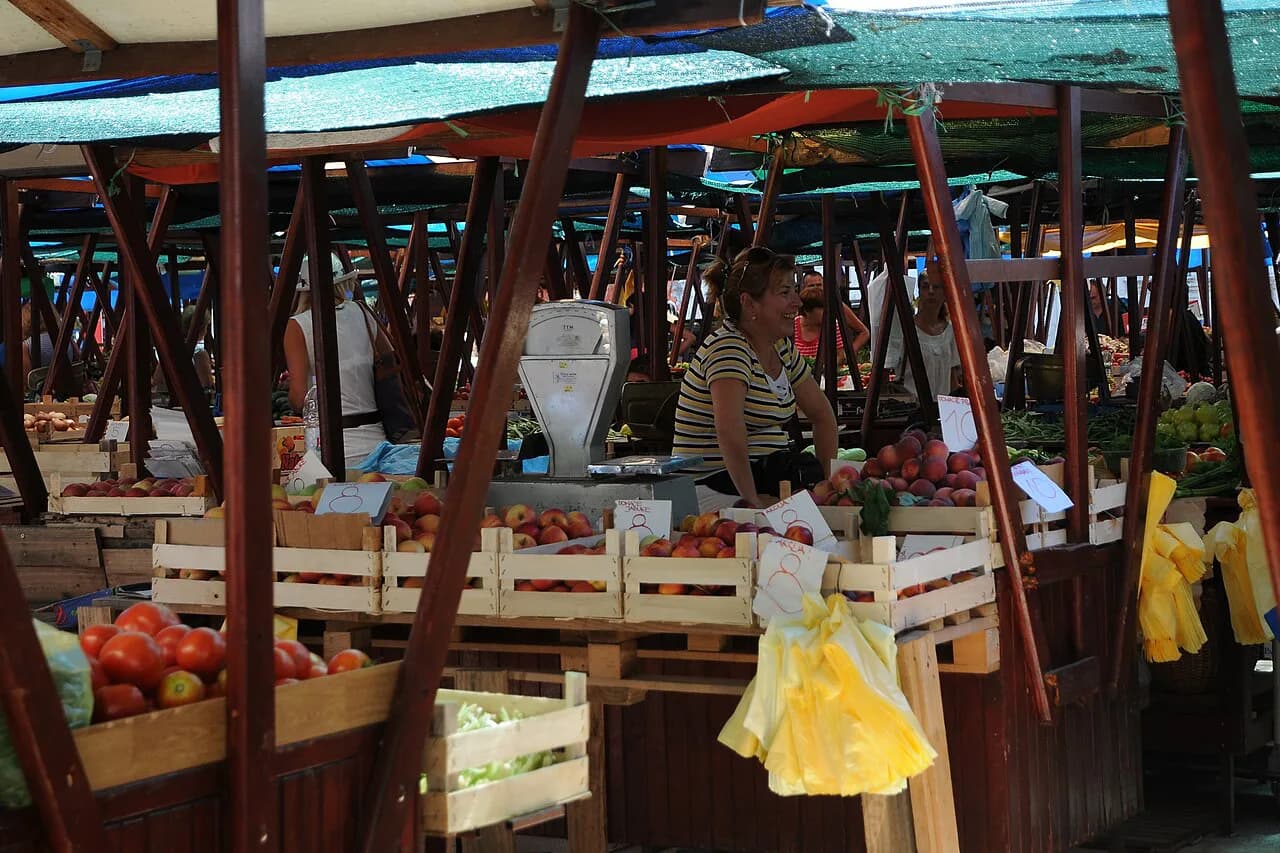
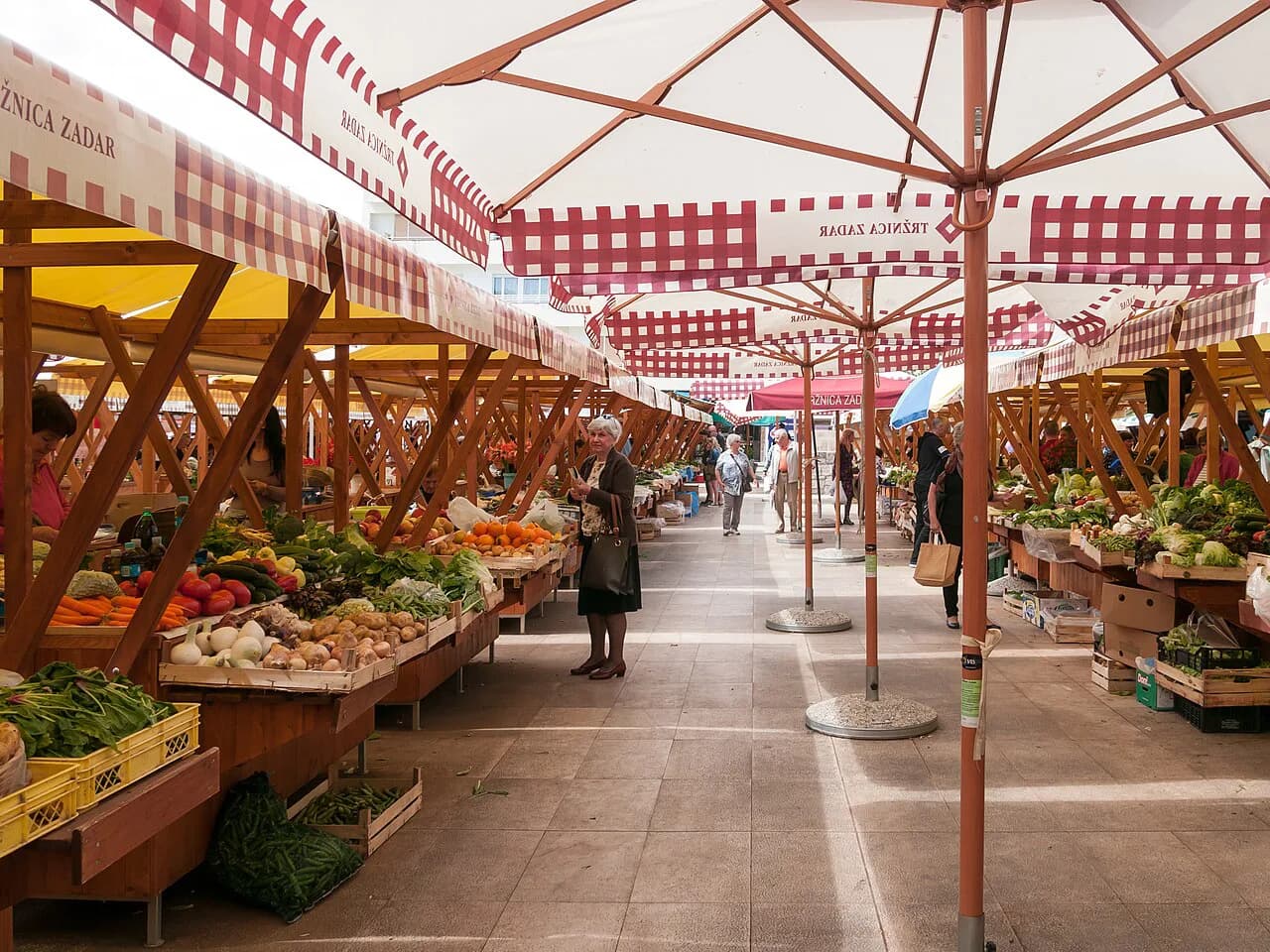
Shopping Zadar market for lunch: what the hinterland and Adriatic put on the menu
On the combined format, the market is the heart of the morning. A licensed guide walks you through the stalls where the produce of the Zadar hinterland meets the Adriatic catch, and you choose the ingredients that will become lunch. Expect fresh seafood, lamb from the inland grazing country, hard cheeses from Pag, softer cheeses from the Velebit mountains, honey and spirits among the choices.
That shop is also where you decide what kind of meal you are cooking. Seafood points you towards a lighter Dalmatian lunch, while lamb and cheese push the menu inland. If you would rather eat seafood cooked by someone else, with the fish priced by weight, the konobas are the place to look; the guide to Konobas in Zadar sets out which ones to consider.
What you cook: a modern twist on Dalmatian classics
On the Culinary Croatia format the cooking is described as a modern take on Dalmatian classics, prepared from the ingredients bought that morning at the market. That means the dishes follow the market rather than a fixed sheet, so the menu shifts with the season. Your chef demonstrates the methods and then hands over, which is the point of choosing a hands-on class over a demonstration.
Because the menu follows the market, treat any dish name you see advertised as an indication rather than a promise for your date. The market-and-cooking half day is arranged by Culinary Croatia, and the shorter private lesson by Terra Travel's Zadar Cooking Class; ask the relevant operator directly when you enquire.
Ravni Kotari and the produce behind the class
The green country behind Zadar is called Ravni Kotari, and it supplies much of the fresh produce sold in the city. It is a gardening and fruit-growing region that remains largely agricultural and feeds not only the coast but a good deal of Croatia beyond the region. Knowing this explains why the market shop is worth the time: the vegetables and fruit in your basket travelled a short distance.
The same hinterland supplies the lamb and the cheeses that define the inland side of Dalmatian cooking, while the Adriatic provides the fish and shellfish. A class that draws on both gives you a fair picture of how Zadar eats. For a wider sense of what things cost in the city, see Zadar food prices.
Group size and privacy on a Zadar cooking class
The Culinary Croatia market-and-cooking format is built for private groups, with a maximum of fifteen guests, and it runs on request rather than as an open session. That cap keeps the kitchen workable and means the chef can actually watch what everyone is doing. Smaller groups get more attention, so if you are a couple, ask whether a smaller booking changes the shape of the day.
The private lesson is booked for your party, and the market-and-cooking half day is likewise private, arranged on request through its operator. Neither format is a walk-in drop-in class, so plan the booking before you travel rather than on the morning. Confirm your group size and preferred day with Terra Travel for the private lesson or with Culinary Croatia for the half day, and ask what the kitchen can take.
Dietary needs and children on a Zadar cooking class
Children are welcomed on the Culinary Croatia market-and-cooking format, which is a useful option for families who want one shared activity that is not a museum. Tell the operator about dietary restrictions when you enquire, because the market-led menu depends on what your group can eat. Not every preference can be accommodated, so raise it early rather than on the day.
The shorter private lesson with Terra Travel is the easier sell for younger children, since two and a half hours in a kitchen holds attention better than a full half day with a walking tour. If you are building the day around food with children, Ćevapi in Zadar covers the grilled minced-meat dish most kids will happily eat.
Maraschino and the local drink to know
Zadar is the home of Maraschino, a cherry liqueur made from a distinctive local cherry, and it appears among the spirits you may meet at the market. Sip it in small measure rather than treating it as a session drink.
City tour and cooking combined: what the walking part covers
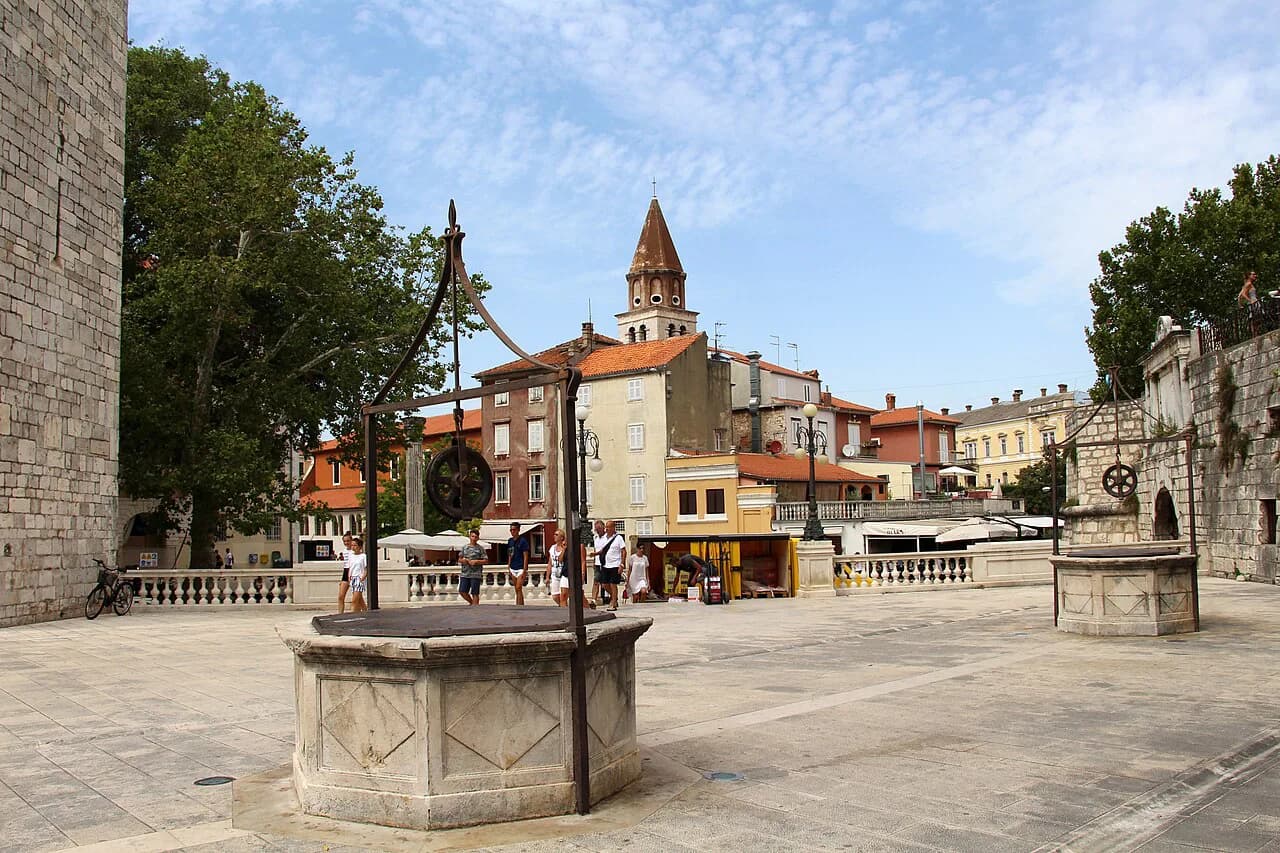
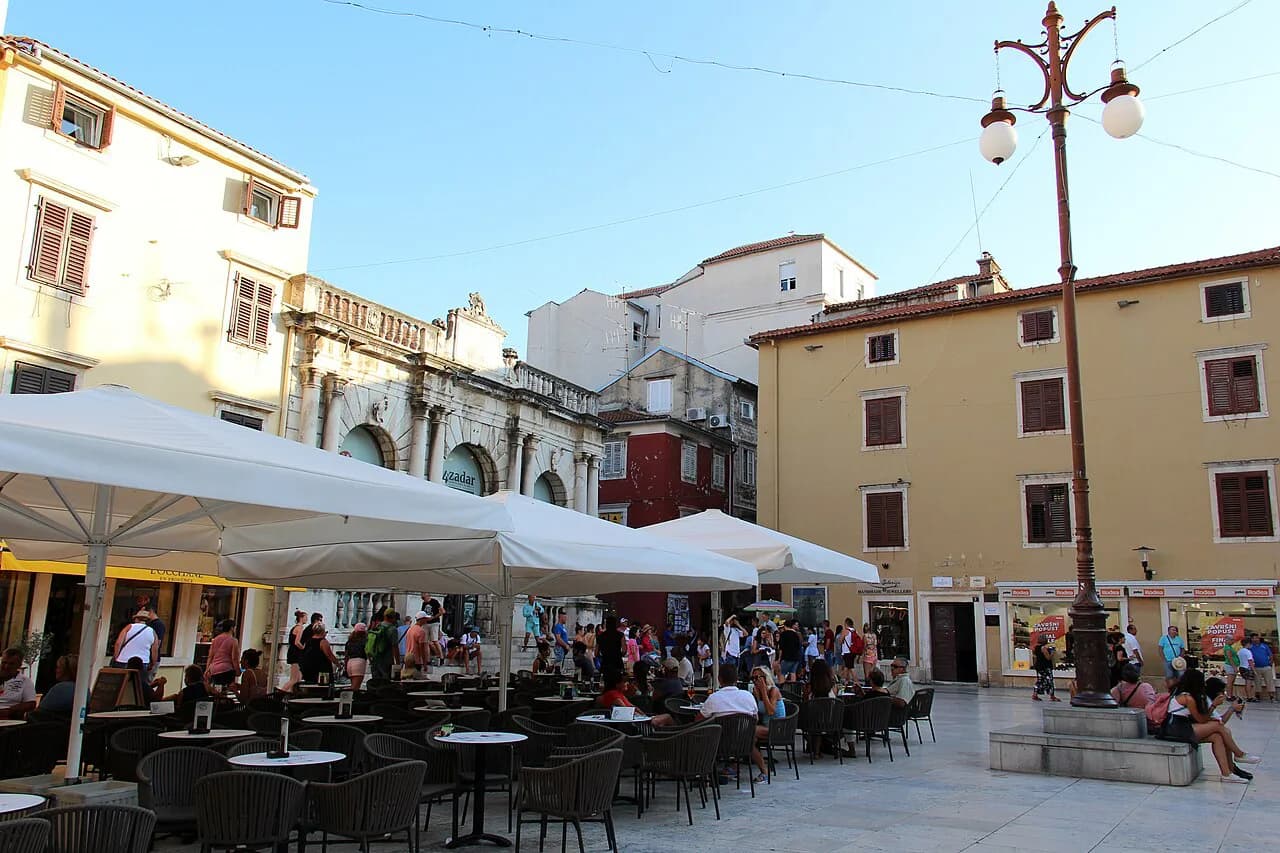
The Culinary Croatia half day can open with an espresso at a long-standing café on the main square, a very Croatian way to begin, before a licensed guide takes over. The walk covers the old town's heritage and then turns to the market, where the guide explains the produce before you choose your lunch ingredients. Zadar Cooking Class, run by Terra Travel, describes its own separate combination as a short orientational city tour followed by the cooking class.
If you want the walking part of your day with a food focus instead of a general history tour, a Zadar food tour is the alternative. The cooking class suits travellers who prefer to end the day sitting down to a meal they made.
Matching the class to your trip: half day, all year, family groups
Pick by the time you have. A two-and-a-half-hour private lesson fits a normal holiday day and leaves the evening free. The half-day market-and-cooking format asks for more from your schedule but gives you the market, the old town and lunch in one block, and Culinary Croatia presents it as running all year round.
Families and larger parties should take the group format, which is built for up to fifteen and welcomes children. Couples and solo travellers who want a straight kitchen session should look at the private lesson. The Zadar food landmarks page has a short guide to each named market and konoba.
Which Zadar cooking class should you book?
Book the shorter private lesson with Terra Travel's Zadar Cooking Class if you want a hands-on Dalmatian cooking session and nothing else; ask Culinary Croatia about its market-and-cooking half day if you want the old town and the stalls explained on the way to the kitchen. For both formats, raise the group size and any dietary needs with the relevant operator when you enquire, because the market-driven menu changes with the season.
Explore more Zadar guides
Frequently Asked Questions
How long does a Zadar cooking class last?
The private cooking lesson runs about two and a half hours, which fits an afternoon. The Culinary Croatia market-and-cooking format takes a half day, because it adds a café stop, a guided old-town walk and the shop at the market before the cooking begins.
Do you cook with ingredients bought at Zadar market?
On the Culinary Croatia market-and-cooking format, yes. A licensed guide takes your group through the open-air market, where you choose seafood, lamb, Pag and Velebit cheeses, honey or spirits, and those ingredients become lunch in the kitchen with your chef.
Are Zadar cooking classes private?
The Culinary Croatia market-and-cooking format is private: it is booked for your own group only, so guests outside it do not join. It caps numbers at fifteen guests and runs on request. The shorter private lesson is likewise booked for your party, with Terra Travel's Zadar Cooking Class rather than the market-and-cooking operator.
Can children join a Zadar cooking class?
The Culinary Croatia market-and-cooking format is listed as children friendly, which makes it a good family activity, and the private lesson is easier for younger children to sit through. State ages and any dietary restrictions to the relevant operator when you enquire.
Sources
Notes on eating well in Croatia
Optional updates to our food guides.
You might also like
Continue reading
More guides you'll find useful