Zagreb Fish Market: Dolac, Amfora and Buying Seafood
Zagreb's fish market sits beside Dolac, where the Adriatic catch arrives. Here is how the fish hall works and where to eat simply cooked seafood nearby.
On this page
The Zagreb fish market is the fish hall at Dolac, the city's central farmers' market, a short walk uphill from Ban Jelačić square. It is a working market rather than an attraction: whole fish and shellfish laid out on ice, sold by the stall to shoppers who cook at home, with a handful of seafood kitchens around it. This guide covers how that hall fits into Dolac, why good Adriatic fish reaches the capital at all, what to look for, and where to eat the catch across the city.
Where the fish hall sits inside Dolac
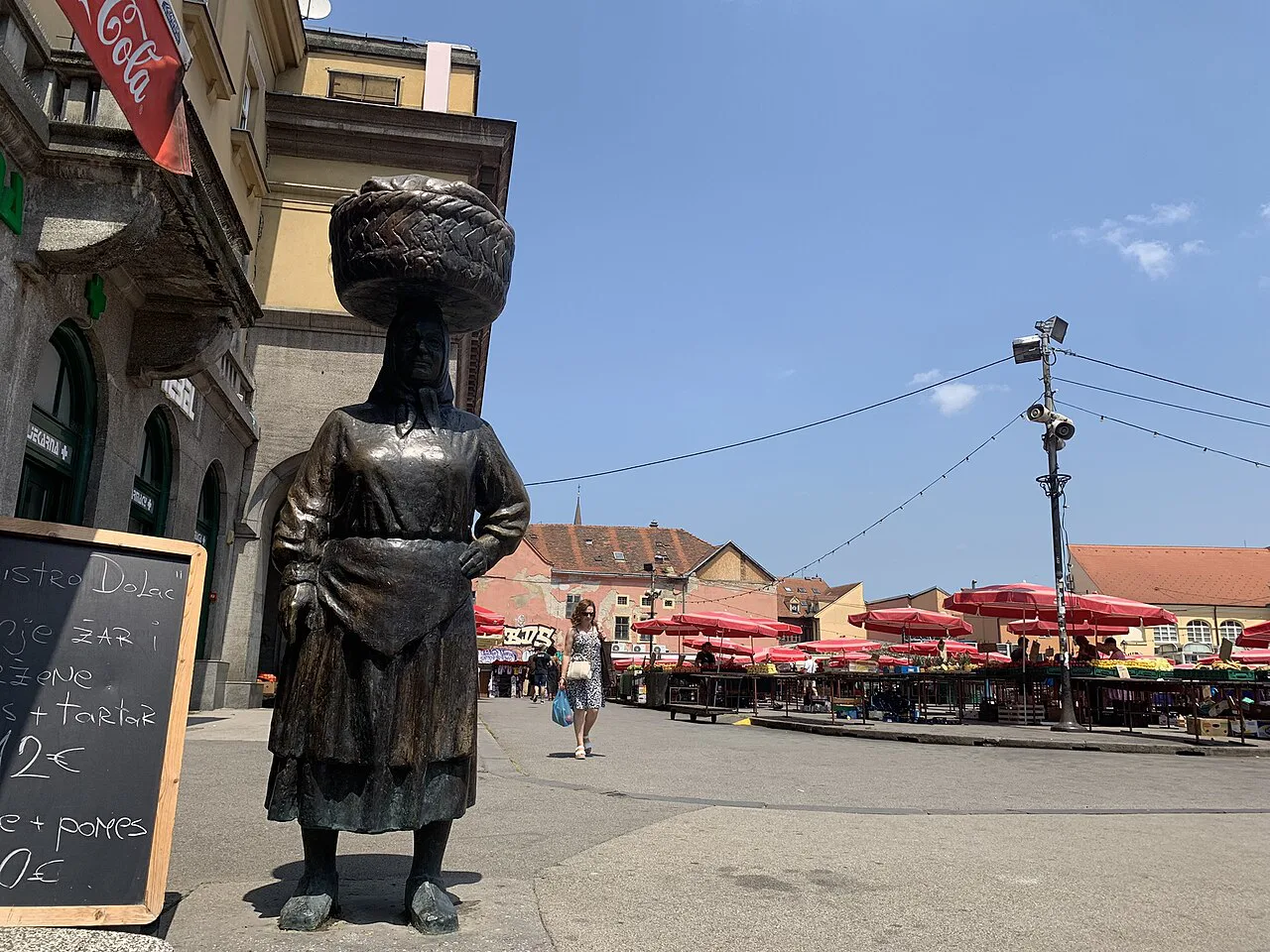
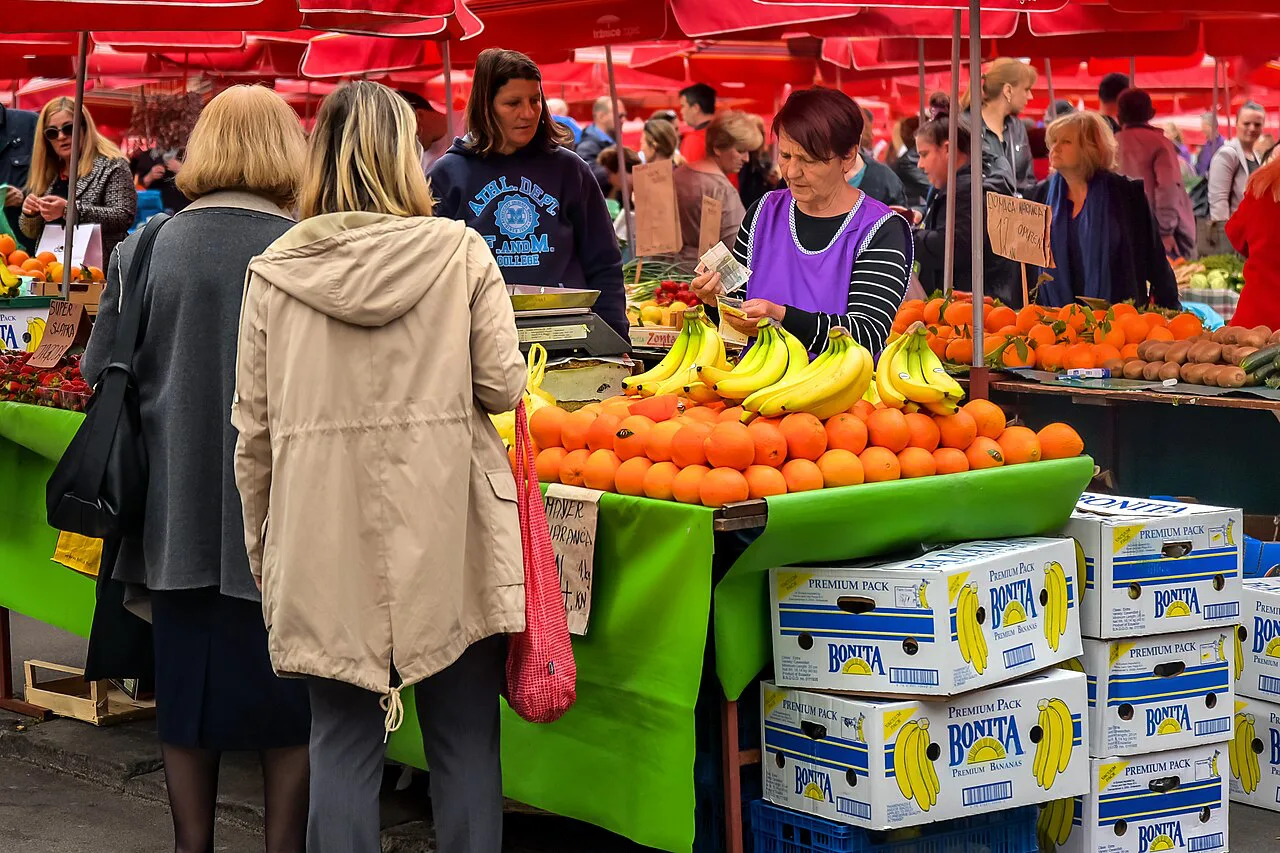
Dolac is Zagreb's main farmers' market, and the city's fish trade runs through it rather than through a separate hall across town. The open-air produce stalls fill the square, while the covered part of the market below is where the Adriatic catch turns up on ice, feeding both home cooks and the city's seafood kitchens. Start with the fish and then work back up through the produce stalls.
The fish arrives at the market from the Adriatic coast, and from Dolac it moves on to homes and to seafood restaurants across the city. That flow is the reason Zagreb, despite being inland, has a serious fish scene at all.
Why Adriatic fish reaches Zagreb at all
Zagreb is inland, but it has a well-developed seafood scene because the Adriatic is close enough for the catch to travel. Outside the high season, from autumn to spring, coastal restaurants close and seaside demand falls, so much of the good fish heads for the capital's markets and from there to kitchens across the city.
That is the practical point for a visitor: the shoulder months, when the coast is quiet and more of the catch comes inland, are when the capital's market and kitchens are most worth building a morning around. In the peak of summer much of the best fish stays by the sea, where the demand is.
How the fish hall works
Dolac is a working market where you talk to the stallholder and buy by weight, so a whole fish is priced on the scales rather than by the plate. Look at what is on offer, decide what you want, and treat the stall as a conversation with the person selling rather than a shelf to pick from.
Whole fish on ice is the thing to look at first: clear eyes, firm flesh, red gills, and a clean sea smell rather than a sharp one. Shellfish should be closed and heavy, and any open shells should close when tapped. Buy fish for the same day or the next, and ask the stallholder which species is best for grilling if you are unsure, since the answer changes with the season.
Fish to look for: white fish and shellfish for the grill
For a simple grill, look at the white fish rather than the steaky or oily species: sea bream (orada) and sea bass (brancin) are the small whole fish most often cooked over coals along the Adriatic, and they are forgiving for a first attempt. Have them scaled and gutted if you can, rub with olive oil, salt and a little lemon, and grill them whole. Shellfish such as mussels and clams are even easier: a pot with garlic, parsley and white wine is all they need.
If you would rather not cook, the market also sells things to carry away: good table wine, cheese, pršut (dry-cured ham), olives and salted anchovies are the staples of a Dalmatian-style spread and travel far better than fresh fish. Pair them with bread from a bakery and you have a decent inland version of a coastal snack.
Amfora, the seafood kitchen beside the market
Amfora sits right next to the fish market at Dolac, and it is a fishmonger's kitchen rather than a restaurant in the polished sense. A city food writer calls it a neglected little gem that has barely changed its interior for decades, with very basic service and old-fashioned presentation, but genuinely fresh seafood cooked in the simplest ways. It serves fish and seafood only, and it is a lunch stop: open through the day and closed by early evening.
Its position makes it the obvious first stop if you want to eat what you have just been looking at, and it is a lunch place rather than a dinner destination. Expect a plain room and a short, fish-led offer rather than a long menu, and treat it as a market meal rather than a night out.
Black risotto and the cuttlefish menu staple
Black risotto, or crni rižot, is rice cooked with cuttlefish and its ink, which gives the dish its dark colour and a deep, savoury sea flavour. It is a standard item on seafood menus across Zagreb, not a speciality of one kitchen, so it is a reliable order when you want something more substantial than grilled fish. Cuttlefish, squid and octopus turn up in salads, stews and risottos throughout the city.
Order it where the rest of the fish looks serious, since the ink masks nothing if the seafood underneath is tired. A konoba, the Dalmatian term for a traditional tavern, is the natural setting: casual, short menu, grilled fish, good table wine, cheese, pršut (dry-cured ham) and salted anchovies. Konoba Dida is one of the city's places in that mould, and neighbourhood eateries such as Jadera and Marenda carry a similar spirit.
Where else in Zagreb to eat the catch
For oysters, Bota Šare is the name to know: a branch of the original restaurant in Mali Ston, the shellfish town on the Pelješac peninsula, and especially known for its oysters. It sits in the more polished tier of seafood restaurants, where classic recipes are cooked with care and the shellfish is first-rate.
For a cheap, fast fish fix, Mimice buffet on Jurišićeva Street has been serving heaps of fried fish and calamari for more than 70 years and has barely changed. It is a Zagreb institution rather than a fine meal, and that is the trade-off: low prices and speed instead of delicate cooking. Tip-top and Korčula have lasted decades as downtown seafood options, better for lunch than a grand dinner.
At the modern end, Dubravkin put is an upscale Zagreb restaurant where seafood is the forte, treated with a creative, international approach rather than classic recipes. Ribice i tri točkice takes the bistro route, with simple, unpretentious dishes built on the catch of the day at value-for-money prices. Between them they cover the special-occasion and the quick-lunch ends of the city's seafood spectrum.
Market fish or restaurant fish by the kilo
Restaurant fish in Croatia is usually sold by the kilo rather than as a fixed plate, so the bill depends on the weight of the fish you choose. That makes the market a genuine alternative: you buy a whole fish by weight, cook it simply, and control both the size and the cost. Ask the stallholder to weigh and clean it in front of you, and you know exactly what you are paying for.
The trade-off is work and equipment. A market fish needs a grill or a decent pan, oil, salt and lemon, and a kitchen you can use; a restaurant gives you the same fish cooked and cleared away, at a price that reflects the labour. If you are in an apartment with a hob, buy at Dolac and cook; if you are in a hotel, eat at Amfora or one of the konobas and let the market be a morning's browse.
Dolac is not the only place to stock a kitchen in Zagreb; the city's supermarkets, including Konzum Zagreb branches, cover the basics if the market is closed or you are short of time.
Market first, then lunch at Amfora
Start at the Dolac fish hall in the morning, look at the whole fish on ice, and decide whether you are cooking or eating out. If you are cooking, buy a small whole sea bream or sea bass, have it cleaned, and keep the meal simple. If you are not, walk to Amfora beside the market for a plain plate of grilled fish, and save Bota Šare or Dubravkin put for an evening when you want more.
For the rest of your eating in the city, from coffee to breakfast, the cafes Zagreb guide and the Best Breakfast in Zagreb picks cover the hours around a market morning.
Explore more Zagreb guides
Frequently Asked Questions
What is the best fish to eat in Croatia?
For a simple grill, look for small whole white fish such as sea bream (orada) and sea bass (brancin), which are the ones most often cooked over coals along the coast. Shellfish such as mussels and clams are equally good cooked with garlic, parsley and white wine. Oily fish and larger species suit the oven or the pan rather than the grill.
Where is the fish market in Zagreb?
The fish market is part of Dolac, Zagreb's central farmers' market, a short walk uphill from Ban Jelačić square. The open-air produce stalls fill the square and the covered part of the market below is where the Adriatic fish and shellfish turn up on ice, feeding the city's home cooks and seafood kitchens.
When is the best time to buy fish at Dolac?
Fish reaches the Dolac market from the Adriatic coast and from there moves to homes and restaurants across the city. Outside the coastal high season, from autumn to spring, coastal restaurants close and seaside demand falls, so more of the good fish comes to Zagreb; that shoulder period is the strongest time to build a market morning around.
Can you eat at the fish market in Zagreb?
Yes. Amfora sits right next to the fish market at Dolac and is a fishmonger's kitchen serving fresh seafood cooked in the simplest ways, in a plain, old-fashioned room. It serves fish and seafood only and is a lunch stop rather than a dinner destination, closing by early evening.
Sources
Notes on eating well in Croatia
Optional updates to our food guides.
You might also like
Continue reading
More guides you'll find useful