Zagreb Food: The Dishes to Order and Where to Eat Them
What to eat in Zagreb, from zagorski štrukli and kotlovina to kremšnita and Dolac market produce, with the restaurants, bistros and pastry shops to order them.
On this page
Zagreb food is inland Croatian cooking with Austrian, Hungarian and Balkan threads running through it, and the dish to order first is zagorski štrukli: rolled dough baked with cottage cheese, sour cream and eggs. The city rewards a proper sit-down meal rather than eating on the move, so this guide sets out what to eat, which venues serve it and how to work the markets and pastry shops into a day.
Unlike the coast, the capital leans on cheese, cream, cured meat and stewed dishes, with seafood appearing as one influence among several. Café culture is strong here, which means a coffee and a slice of cake count as a proper part of the eating day, not an afterthought.
What Zagreb food is: Central European, Balkan and coastal currents on one table
Centuries of Austrian and Hungarian rule left schnitzel, goulash and strudel in the repertoire, while Balkan cooking brought grilled minced meat, flatbread and spit-roasted dishes. Coastal fish and seafood turn up too, as is appropriate for a country with a long coastline, which is why a Zagreb menu can move from a creamy baked dish to a plate of grilled squid without feeling disjointed.
The practical consequence for a visitor is that you should not treat Zagreb as a lighter version of Split or Dubrovnik. Plan at least one meal around the inland classics, and save the seafood and peka-style cooking for the coast or for a konoba that specialises in it; our guide to konobas in Zagreb covers the traditional route.
It is not Greek food, despite the shared Balkan geography. Expect dairy-rich baking, paprika, cured pork and Central European pastry rather than the olive oil, tomato and grilled fish pattern most travellers associate with Greece.
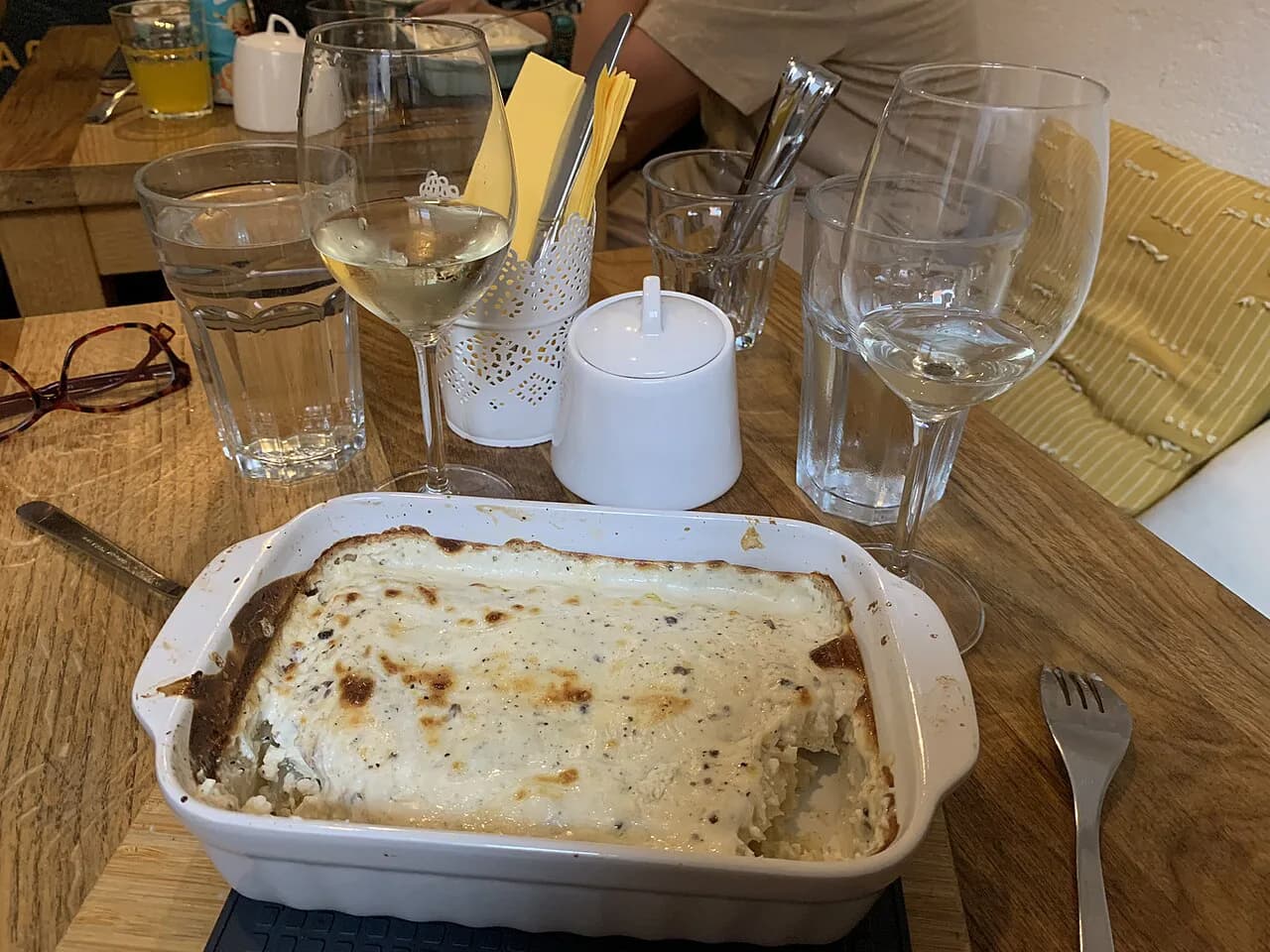
Zagorski štrukli: layers of dough with cottage cheese, sour cream and eggs
Zagorski štrukli are a northern Croatian speciality: thin dough spread with a cottage-cheese, sour-cream and egg filling, then rolled and baked. They can be served savoury as a starter or alongside soup, or sweet as a dessert, so one dish can open and close a meal in different forms.
Order them early in the trip if you only have a couple of days, because they are filling and best shared. A half portion works well as a starter before a meat main, and the sweet version is worth trying once if you have room.
Kotlovina and grill plates: meat stewed in a metal pot, plus ćevapi, pljeskavica and lepinja
Kotlovina is chunks of meat and sausage stewed slowly with vegetables and wine in a metal pot, traditionally over an open fire, and it is a sharing dish built for cold weather. It sits on the heavier end of the menu, so pair it with something sharp or a simple salad rather than another rich starter.
The grill side of the menu brings ćevapi (small grilled minced-meat rolls), pljeskavica (a large flat minced-meat patty) and lepinja (a soft flatbread used to mop and wrap). Add ajvar, the red pepper relish, and chips if you want the full plate. Our guide to ćevapi in Zagreb narrows down where to find a good plate.
Bečka šnicla, goulash and paprikash: the Austrian and Hungarian thread
Bečka šnicla is the local name for a Vienna-style breaded cutlet, and it is the clearest sign of the city's Austrian inheritance. Goulash and paprikash arrived through the Hungarian connection and now appear across the menu, from simple lunch places to more polished dining rooms.
These are the dishes to order at lunch, when a breaded cutlet or a bowl of goulash makes more sense than a long evening meal. They also tend to be the safest choice for cautious eaters or children, since the flavours are mild and familiar.
Winter food: sausages, pork knuckle with cabbage and bean soups
From late autumn, Zagreb kitchens turn to sausages in various styles, pork knuckle with cabbage and thick bean soups. These are warming, unfussy dishes that suit the city's colder months and go well with a glass of local red.
If your visit falls in summer, Don't force the winter menu: choose lighter starters, grilled dishes and the vegetable-led plates instead. The seasonal Split is a useful way to decide what to eat based on when you arrive rather than on a fixed list.
Dolac market: the morning produce stalls in the centre
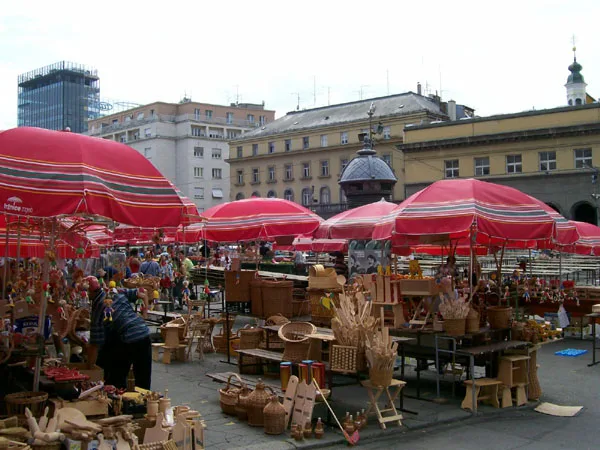
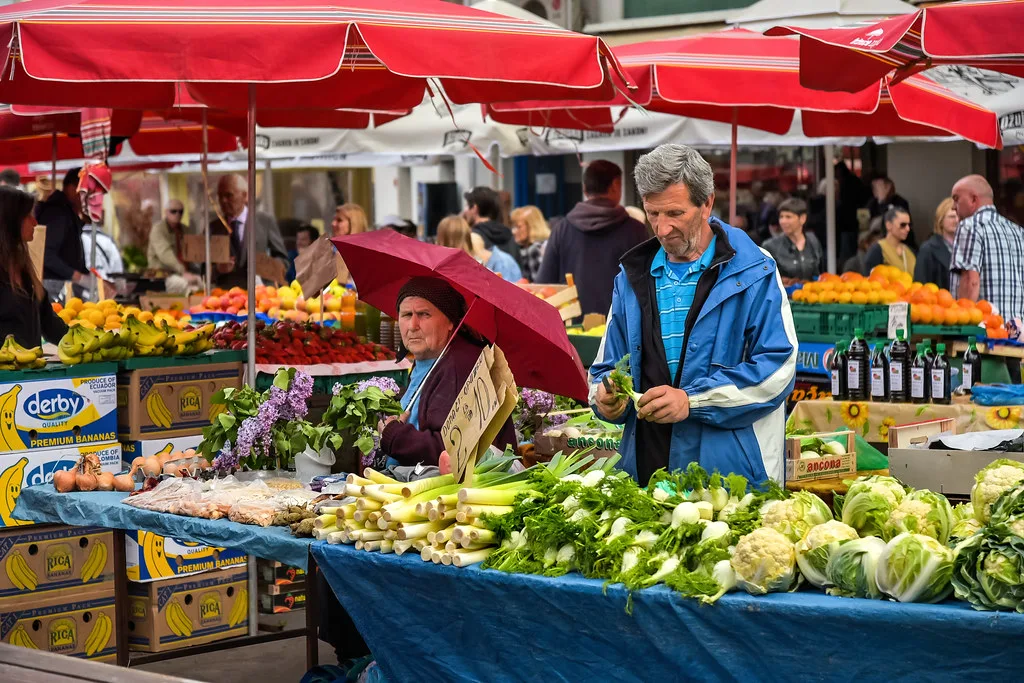
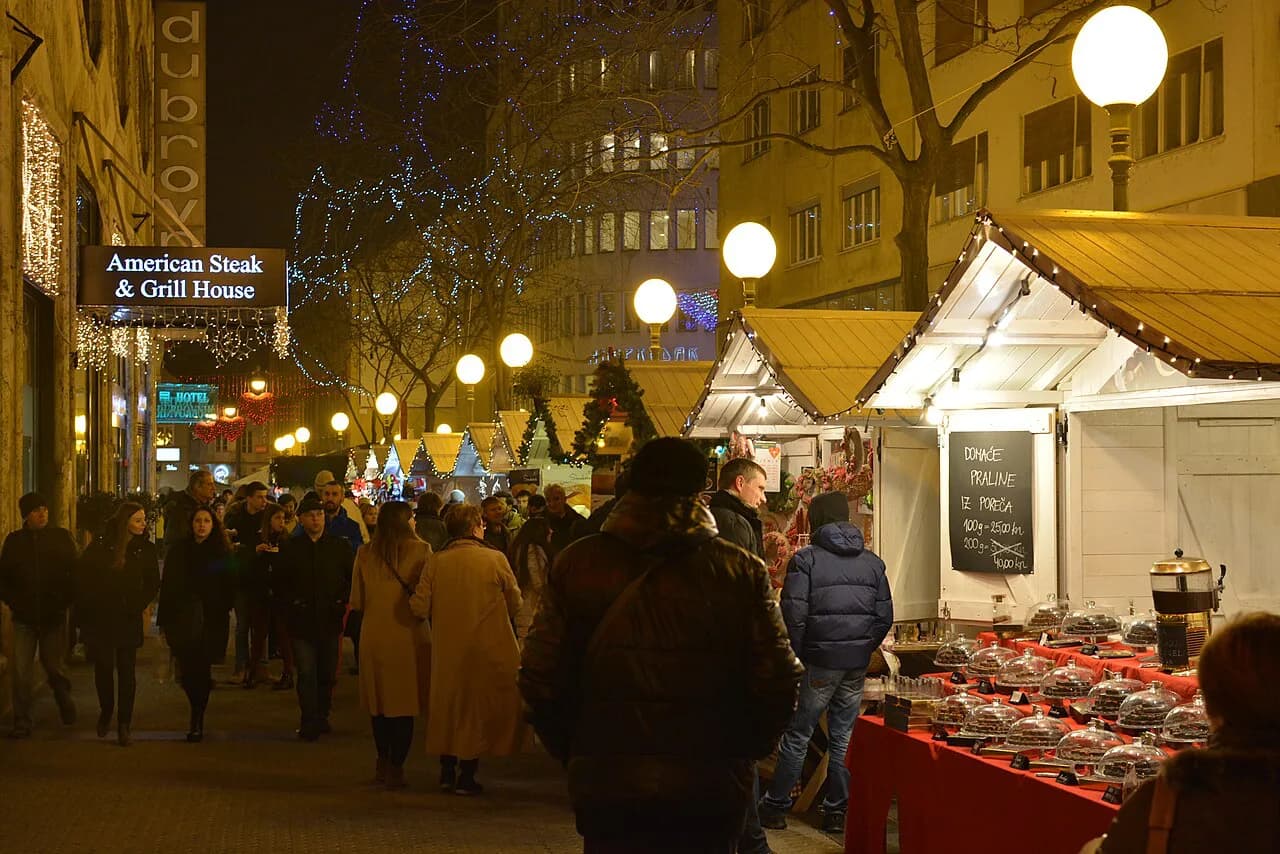
Dolac is the central market, with produce stalls in the middle and flowers around the edges, and it is where Zagreb shops for fruit, vegetables and seasonal ingredients. Go in the morning, when the stalls are at their fullest and the choice is widest, and bring cash for small purchases.
Buy what is in season rather than chasing a checklist: summer berries and stone fruit, autumn pumpkins and mushrooms, and the chestnuts that appear from late summer into winter. Cheese, cured meat and pantry staples make good picnic or self-catering buys.
Dolac is a working market, not a food hall, so treat it as a shopping stop and eat elsewhere. Pair it with a coffee nearby and you have a natural morning loop before lunch.
Britanski trg market and Vrutak: smaller markets for fruit and pantry staples
Britanski trg runs a smaller market that is easier to browse when Dolac is busy, and Vrutak is another option for everyday shopping. Both suit a short stop rather than a full morning, and both are best visited early.
Use these smaller markets when you are staying in an apartment and want fruit, bread and cheese without the crowds. They are also a cheaper way to assemble breakfast than ordering it in a café every day.
Where to eat traditional Croatian food in Zagreb
For the classic Zagreb repertoire, look at Pri Zvoncu, Vinodol, Gostionica-Restoran Purger, Trilogija Fino & Vino and Stari Fjaker, which a detailed Zagreb restaurant round-up groups under traditional Croatian food. These are the places to order štrukli, kotlovina or a breaded cutlet in a proper dining room rather than a quick lunch counter.
The trade-off is pace: a traditional konoba meal takes longer and costs more than a bistro lunch, but it is the closest thing to eating the city's own cooking. Book ahead for dinner, especially at weekends and in the run-up to Christmas.
Bistro Zagreb: Lari & Penati, Mali Bar, Pod zidom and RougeMarin
Zagreb's bistro scene is where the city eats most often, and Lari & Penati, Mali Bar, Pod zidom and RougeMarin are the names to know for modern cooking built on fresh, locally sourced ingredients. Mali Bar, tucked into a courtyard off Vlaška Street, changes its menu daily and has a rooftop terrace for warmer months.
RougeMarin occupies a former light bulb factory on Folnegovićeva Street, keeps its industrial look and changes its menu monthly, with daily dishes on some weekdays. Its large outdoor terrace makes it a good summer lunch choice, though it is popular with the nearby business district, so reserve for lunch rather than turning up.
Choose a bistro when you want a quicker, more contemporary meal and a konoba when you want the traditional dishes. The two styles sit comfortably side by side, and mixing them across a few days gives a fairer picture of how the city eats.
Cheap eats: Pingvin, Heritage Croatian Food and pizzeria Karijola
For a low-cost lunch, Pingvin, Heritage Croatian Food and Pizzeria Karijola are the practical picks from a wider cheap-eats list that also includes burger and fries spots. They suit a mid-sightseeing stop when you want to spend your budget on dinner instead.
If you want something faster than a sit-down meal, our street food Zagreb guide covers the cheaper, grab-and-go end of the city's eating. Keep expectations simple: these are functional, filling meals rather than destination dining.
Pastries and desserts: Vincek Slastičarnica, Amélie, Meet Mia and Slatka Tvornica Medenko
Zagreb's sweet side runs from creamy cakes to fruit strudels, and Vincek Slastičarnica, Amélie, Meet Mia and Slatka Tvornica Medenko cover the range from traditional pastry shop to modern dessert counter. Look for kremšnita, a custard slice with a pastry lid, and bučnica, a rolled pastry filled with grated pumpkin and cream.
Two other cakes worth knowing are jelačić šnite, a creamy nut-and-chocolate slice, and the local strudels filled with apple, cheese or cherry. From late summer into winter, chestnut-based sweets appear as well, so the pastry window changes with the season.
Order cake with a mid-afternoon coffee rather than after a heavy dinner, which is how the city tends to do it. It also spreads the eating across the day, leaving room for a proper evening meal.
Coffee the Zagreb way: Cogito Coffee and the courtyard cafés
Coffee is a daily ritual, and Cogito Coffee is a well-known name on the city's speciality scene. Café U Dvorištu is a courtyard café, and the café at the Museum of Broken Relationships is a central stop, both good for a sit-down break between meals.
Order a small, strong coffee and take your time; nobody will rush you off the table. This is the moment to try a slice from the pastry counter, which is how most locals combine the two.
What to drink with the meal: Croatian wine, local beer and rakija
Croatian wine by the glass is the easy pairing for štrukli, grilled meat and stewed dishes, and many bistros list several by the glass. Local beer is widely available, and rakija, a fruit spirit usually taken in small measures, is the traditional opener.
Keep it moderate: a glass of wine with the main course is enough to enjoy the pairing without turning the meal into a session. If you are driving or pacing yourself, the coffee culture is a perfectly good substitute.
Prices, booking and paying: planning a Zagreb food budget
Zagreb is generally cheaper than the Dalmatian coast, but the gap depends on where you eat: a cheap-eats lunch, a bistro dinner and a traditional konoba meal sit at noticeably different levels. Set a budget per meal in euros rather than per day, and put the saving into one good dinner.
Book dinner at the traditional restaurants and popular bistros, especially for Friday and Saturday, and reserve lunch at RougeMarin if you want a terrace table. Walk-ins work better at lunch and at the cheaper spots. Croatia uses the euro, and card acceptance varies by venue, so carry some cash for markets and smaller places.
Our Zagreb food prices guide breaks down what to expect across the categories. If you would rather have someone else handle the ordering, a food tour Zagreb is a straightforward way to taste several specialities in one walk, and our Food Tours in Zagreb page has more detail.
Eating in Zagreb with dietary needs and children
The inland menu is heavy on dairy, pork and breaded dishes, so vegetarians should lean on the markets, the pumpkin pastry, cheese plates and the vegetable soups rather than expecting every konoba to have options. Kids usually take to bečka šnicla, grilled meat with lepinja and the pastry shops without much encouragement.
If you want to cook rather than just eat, a Zagreb cooking class is the practical way to learn štrukli or a stew properly. For a more hands-on market-to-table day, pair Dolac with a class and you cover shopping and cooking in one go.
Order the štrukli, then work outwards
Start with zagorski štrukli and a plate from the grill, add a kremšnita with afternoon coffee, and you have covered the essentials of Zagreb food in two meals. Build the rest of the trip around one traditional konoba dinner and one bistro lunch, and use Dolac for a morning of fruit, cheese and picnic supplies.
Beyond the capital, the coast offers a different register of cooking, from Dubrovnik food to Hvar food, so treat Zagreb as its own culinary stop rather than a warm-up.
Explore more Zagreb guides
Sources
Notes on eating well in Croatia
Optional updates to our food guides.
You might also like
Continue reading
More guides you'll find useful