Gluten-Free Pula: Where to Eat and How to Order
Eating gluten free in Pula: restaurants with gluten-free menus, Istrian dishes that work naturally, market mornings and the Croatian phrases to order with.
On this page
Gluten-free eating in Pula works best when you build meals around grilled fish, cured meat, cheese and vegetables, because the Istrian kitchen is generous with all four. Bread, pasta, pastry and the flatbread served with ćevapi are the usual gaps. This guide names the restaurants worth knowing, lists the dishes that help and hinder, and gives you the Croatian phrases that get the point across.
Padela is reported to run a gluten-free menu without being a dedicated gluten-free kitchen, and Restaurant Amfiteatar is described as covering special diets including gluten-free needs. Everything else is a case of choosing a simply grilled plate and asking clear questions.
What gluten-free eating in Pula looks like
Pula is a working port city rather than a polished resort, and that helps: menus lean on fish, shellfish, grilled meat and seasonal vegetables, with truffles and olive oil doing the flavouring. A plate of grilled fish with blitva, the Croatian side of chard and potatoes, needs no adaptation at all. The friction comes at the start of the meal, when bread arrives unbidden, and in the pasta and pizza sections.
Small konoba kitchens work within tight spaces, so a shared grill, a shared fryer and a single pot of pasta water are normal. That does not rule them out, but the safest order is usually the one cooked on a clean grate: whole fish, squid, a steak or plain grilled chicken, with salad and potatoes on the side.
Restaurants in Pula with gluten-free options
Bistro Alighieri on Danteov trg serves Istrian and Croatian cooking with indoor and outdoor seating, and its menu runs through pršut, local cheeses, grilled fish, Adriatic squid and blitva. Several of those plates suit a gluten-free order if you ask for bread to be left off.
Bistro Romantic Alley on Maksimijanova ulica is the place for traditional Istrian cooking, with boar alongside homemade gnocchi and octopus with blitva. The octopus is the gluten-free-friendly pick, since the gnocchi and the bread that comes with most plates are where the wheat sits.
Orfej, a short walk from the Forum, runs grilled meats, seafood, salads and pizza, which makes it practical for a mixed group where one person avoids gluten. Grilled meat and seafood plates with salad are straightforward to order; the pizza is not.
Padela is reported to offer a gluten-free menu, with risotto and steak among the dishes that fit. It is not a dedicated gluten-free kitchen, so questions about shared surfaces and cooking water still matter.
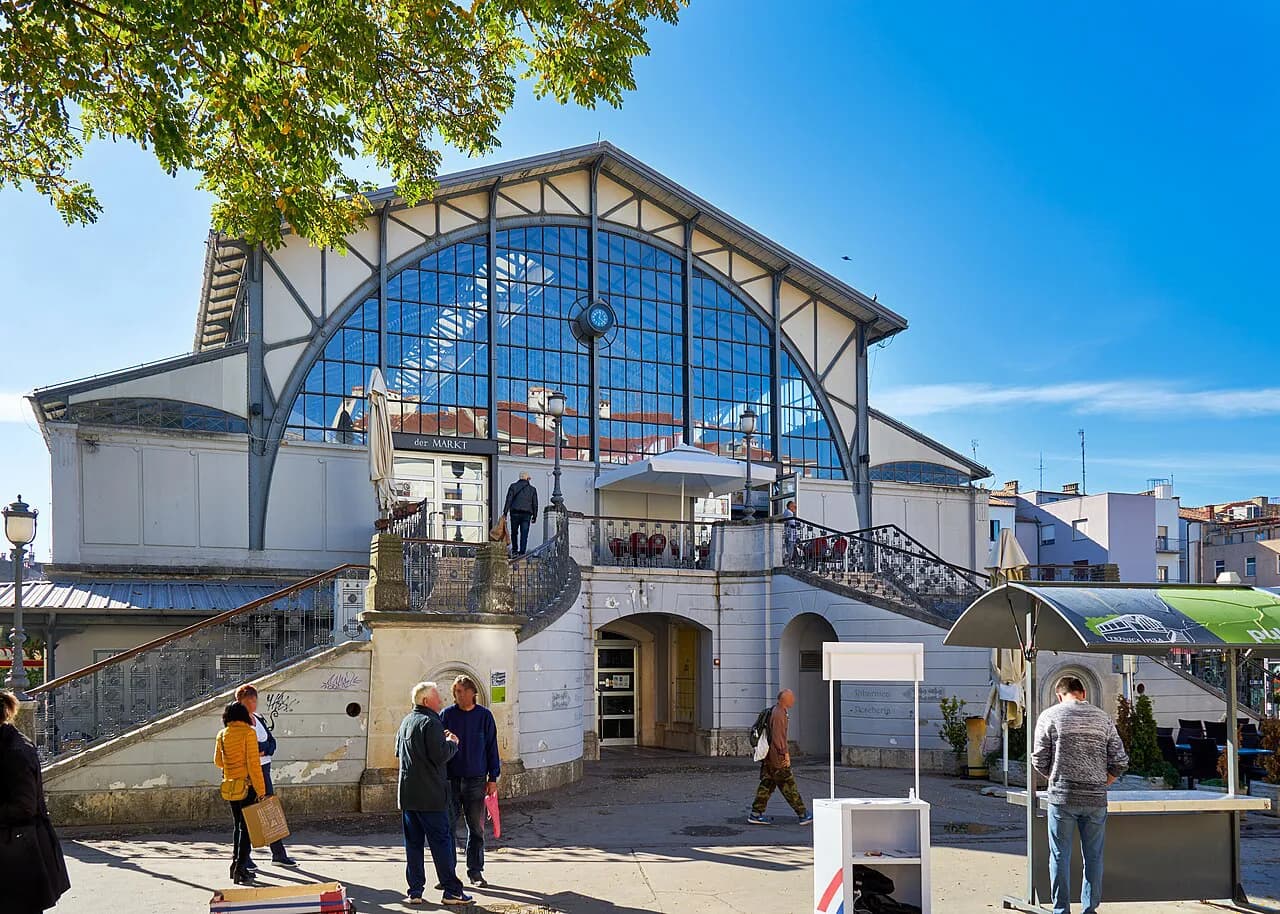
For a seafood-led meal, La Vita sits on the upper floor of the indoor food market close to the fish hall, with a balcony and an indoor room, and its menu is mostly seafood, including mixed grilled plates of white fish, squid and prawns. A trio of grilled seafood suits a gluten-free diner once you confirm the seasoning and the sides.
For cheap, filling lunches, Pečenjara Brod near the markets turns out Croatian meat and seafood plates, and its ćevapi come with flatbread, onions and relish. The grilled meat is fine for many gluten-free eaters, but the flatbread is not, so order it without and ask for extra salad instead.
How to order gluten free in Croatian
Start with bez glutena, which means without gluten. Bez brašna means without flour and bez kruha means without bread. Croatians in tourist areas are used to dietary requests, but be explicit rather than assuming the kitchen has read your mind.
Ask about the grill and the fryer, because that is where cross-contamination happens in small kitchens: whether the fish is grilled on a clean grate, whether the fries share oil with breaded items, and whether the potatoes are boiled or roasted in flour. For pasta, ask whether the kitchen can cook gluten-free pasta in fresh water, and accept a no gracefully.
For a coeliac diner, the simplest strategy is to order dishes that are assembled rather than cooked to order: pršut and cheese to start, a grilled fish or steak as a main, and a plain salad. Saying you are a coeliac changes the tone of the conversation and pushes the kitchen to take the request seriously.
Istrian dishes that are naturally gluten free
Grilled fish, pršut and paški sir, the firm sheep's cheese from the island of Pag, are the backbone of a gluten-free Istrian meal, along with blitva. Mussels cooked in white wine and garlic, and lightly grilled squid, are also routinely safe if you confirm they are not dusted in flour first.
The dishes to be careful with include fuži, the rolled Istrian pasta, njoki (gnocchi) and fritule, the small fried doughnuts on dessert menus. Flatbread served with grilled meat and ćevapi, and the bread basket before your order, are the other frequent offenders. Risotto works well if the kitchen confirms a clean pan.
Morning and market shopping at the Pula market
The city market on Narodni trg runs morning sales from 7:00 AM to 1:30 PM and an afternoon session from 1:30 PM to 8:30 PM, with shorter hours of 7:00 AM to 12:00 PM on Sundays and public holidays, and a longer Sunday and public-holiday window in June that runs to 3:00 PM. That early window is a good time to buy cheese, cured meat, fruit and vegetables for a gluten-free picnic or a self-catering lunch.
For fish, Ribarnica Sardelina on Tomasinijeva ulica opens Monday to Saturday from 8 AM to 1 PM and stays closed on Sundays. Buy a whole fish and ask for it cleaned; grilled at home with olive oil, lemon and blitva, it makes a gluten-free meal with no label reading at all.
Tržnica Veruda, also on Tomasinijeva ulica, opens Monday to Friday from 6 AM to 7 PM, Saturday from 6 AM to 1 PM and Sunday from 7 AM to 1 PM, so weekend shopping is possible there too. The Eco Market at Šijana runs on Tuesdays only, with different summer and winter evening times.
Caffe Bar "M", on the upper level of the market hall, has a balcony over the outdoor stalls and a simple offering of coffees and beers. A bakery breakfast is harder to arrange gluten free, so fruit, cheese and cured meat from the stalls are the more reliable morning plan.
Pizza, pasta and the gluten-free menu question
A printed gluten-free menu signals that a kitchen has thought about the issue, and Padela is reported to offer one. It does not guarantee a separate preparation area, so treat the menu as a starting point for questions rather than a promise of coeliac safety.
A kitchen that adapts dishes can work just as well, provided you ask about the specific plate: whether the chef can grill fish without flour, serve the risotto without a wheat thickener, or swap pasta for potatoes. The trade-off is predictability: a printed menu is easier to read, while an adaptable kitchen depends on how busy the service is.
Pizza is the hardest request in Pula, because gluten-free dough needs its own oven space and most pizzerias work with a single wheat-based dough. If pizza is the goal of the evening, plan around a venue that states it offers a gluten-free base; otherwise choose a grilled-meat or seafood restaurant. Our dinner in Pula guide is a useful next stop for weighing up the evening options.
Breakfast, coffee and the morning plate
A Croatian breakfast in a café usually means bread, pastries or a toasted sandwich, so a gluten-free morning is easier from a market stall or a cheese counter where you can see what you are choosing. Coffee is safe by default: ask for a kava or a bijela kava, an espresso with milk, and skip the pastries on the counter.
Cafés around the Forum and near the Arena are convenient for a morning stop, though the desserts and sweet pastries alongside drinks are not for a gluten-free plate. If you want a sit-down breakfast, look for eggs and grilled vegetables on the menu and ask for bread to be left off.
A practical cross-contamination check for coeliac visitors
Small kitchens in Pula are not set up as allergen-controlled environments, and a request for gluten-free food is a request for care rather than a guarantee. Shared grills, shared fryers, shared pasta water and the same boards for bread and fish are normal, so the safest orders are cooked on a clean surface with minimal handling.
To keep the risk low, choose grilled fish or meat, boiled potatoes, plain salads, pršut, paški sir and fresh fruit, and leave anything breaded, battered, flour-dusted or served with flatbread to the rest of the table. If a kitchen cannot confirm a clean grill, pick a cold plate over a cooked one. Where the meal has to be quick, our lunch in Pula guide shortlists places by what they do best.
If you are staying near the sea and want a relaxed plate after a swim, a beach restaurant in Pula with grilled fish on the menu is often easier than a busy old-town terrace at peak time. A quiet mid-afternoon service gives the kitchen more room to answer questions properly than a full Saturday night.
Which Pula meal should you build around gluten free?
Build your stay around one meal where a gluten-free menu is reported, one market morning at Narodni trg or Ribarnica Sardelina, and one grilled-fish dinner where you ask about the grate and the fryer before ordering. That combination keeps the negotiation short: buy what you can see at the market, and let the kitchen confirm the plate before it reaches you.
For the rest of the trip, choose bistros and grill houses that cook simply and keep the bread on the side, and lean on Istrian cheese, cured meat and vegetables when you want a meal with no negotiation.
Each named market and konoba has its own short guide, collected under Pula food landmarks. Pair that with a shortlist of seafood places and you have a gluten-free plan that does not depend on luck.
Explore more Pula guides
Sources
Notes on eating well in Croatia
Optional updates to our food guides.
You might also like
Continue reading
More guides you'll find useful