Hvar Market: Buying Fish and Island Produce in Hvar Town
A morning at Hvar Town's market: how to buy the day's fish and island vegetables, and when to let a konoba cook gregada or peka for you.
On this page
Shop the market early in the morning in Hvar Town: the tourist board's suggested local day pairs a market visit with fresh ingredients for a simple Mediterranean meal of fish and vegetables. The town market is a small, everyday affair rather than a grand hall. This guide covers what to buy, what is in season, and when it makes more sense to let a konoba cook it for you.
The Visit Hvar tourist board's own suggested local day sets the rhythm: a light breakfast, a coffee on the Riva or in the backstreets, then the town market to buy fresh ingredients for a simple Mediterranean meal of fish with vegetables from the island's gardens. That order is worth following, because the market is a morning stop and not an afternoon one.
Where the market is in Hvar Town
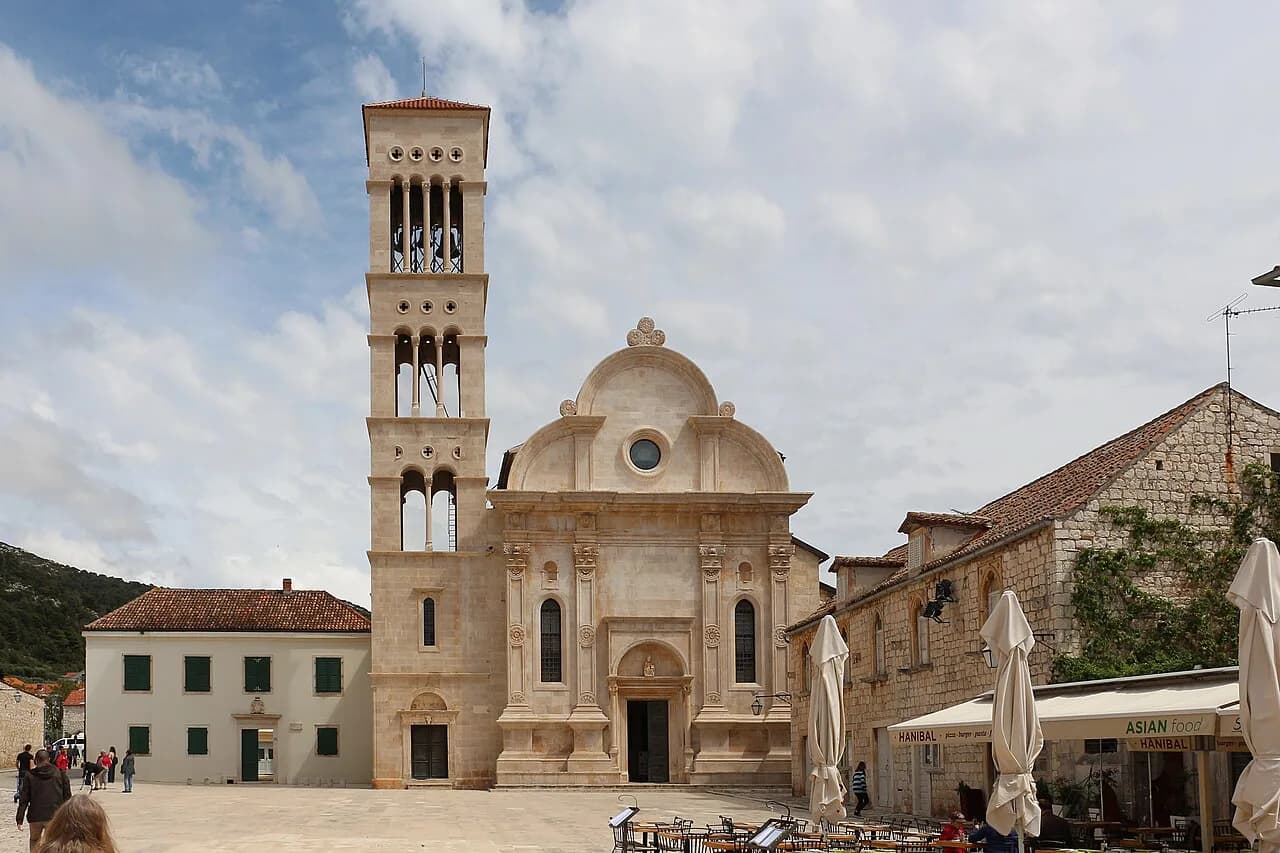
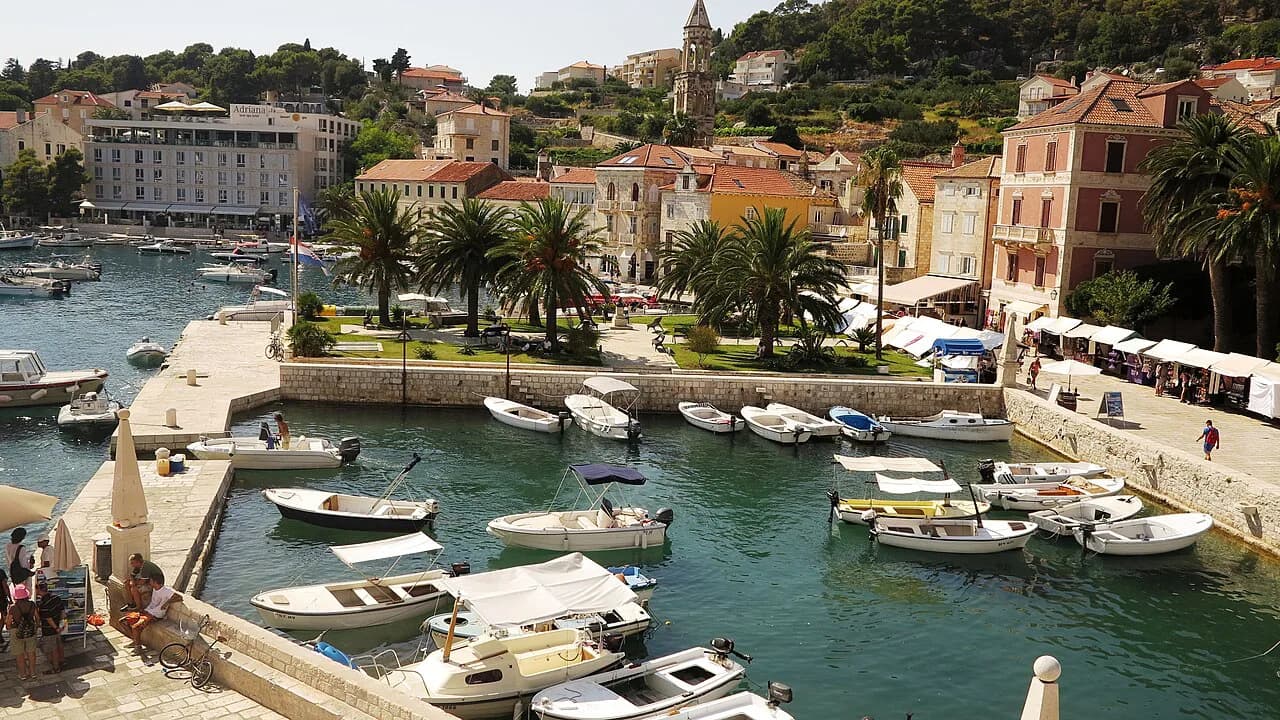
The market sits in the heart of Hvar Town, an easy first stop on the way to breakfast or coffee. Arrive on foot, since the old town's lanes are pedestrian and parking is on the edge of the centre rather than beside the stalls.
Treat the market as part of the town's daily life rather than a sight in itself: the tourist board's local-day itinerary pairs a morning market visit with cooking at home or in your apartment. If you are staying elsewhere on the island, shop locally rather than trekking to Hvar Town.
How the morning works
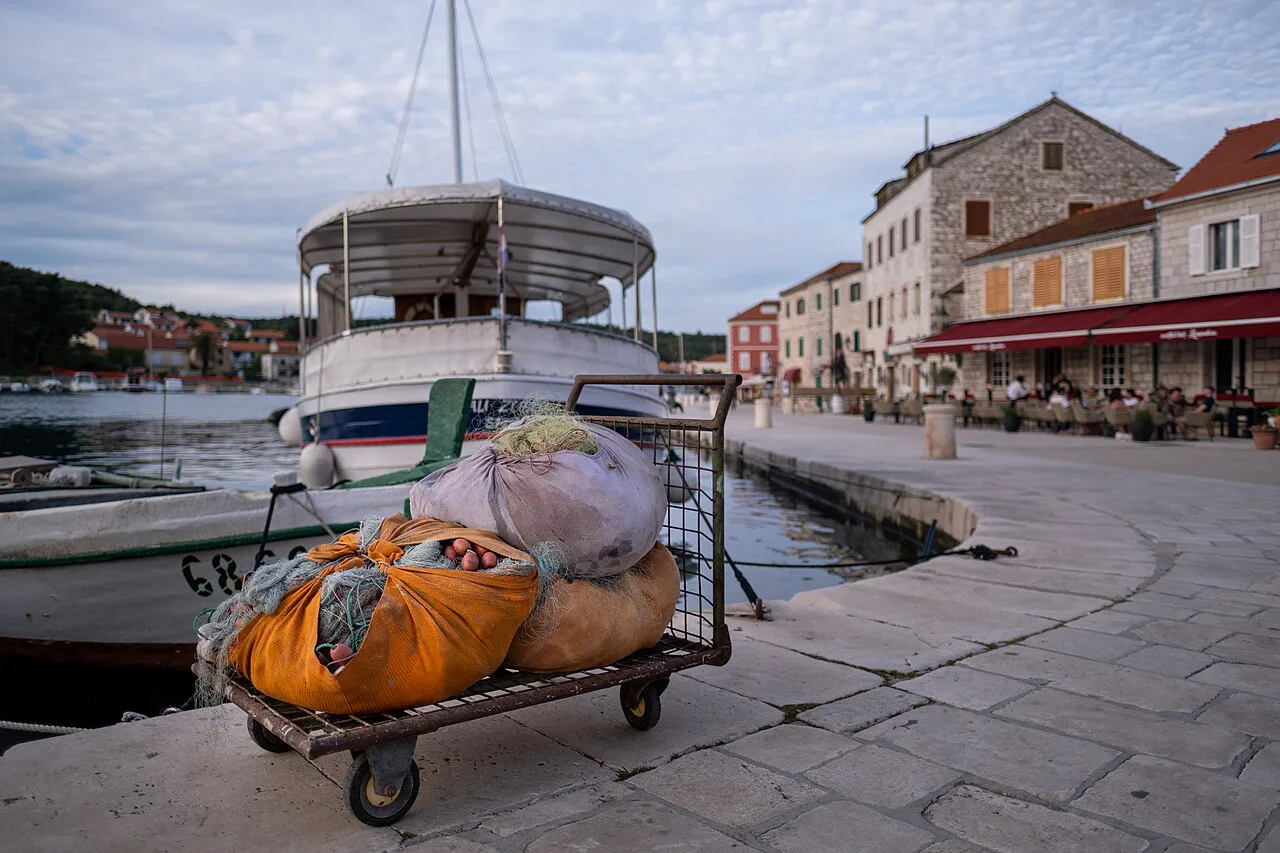
Go early. Produce is laid out for the morning trade, and the island's own rhythm has people shopping for the day's meals rather than for the week. Bring cash in euros and a sturdy bag, and expect to point rather than browse at speed.
If you are not cooking, buy only what you will eat that day. For bread to go with it, the island's bakeries are a separate morning stop.
What produce and seafood to look for
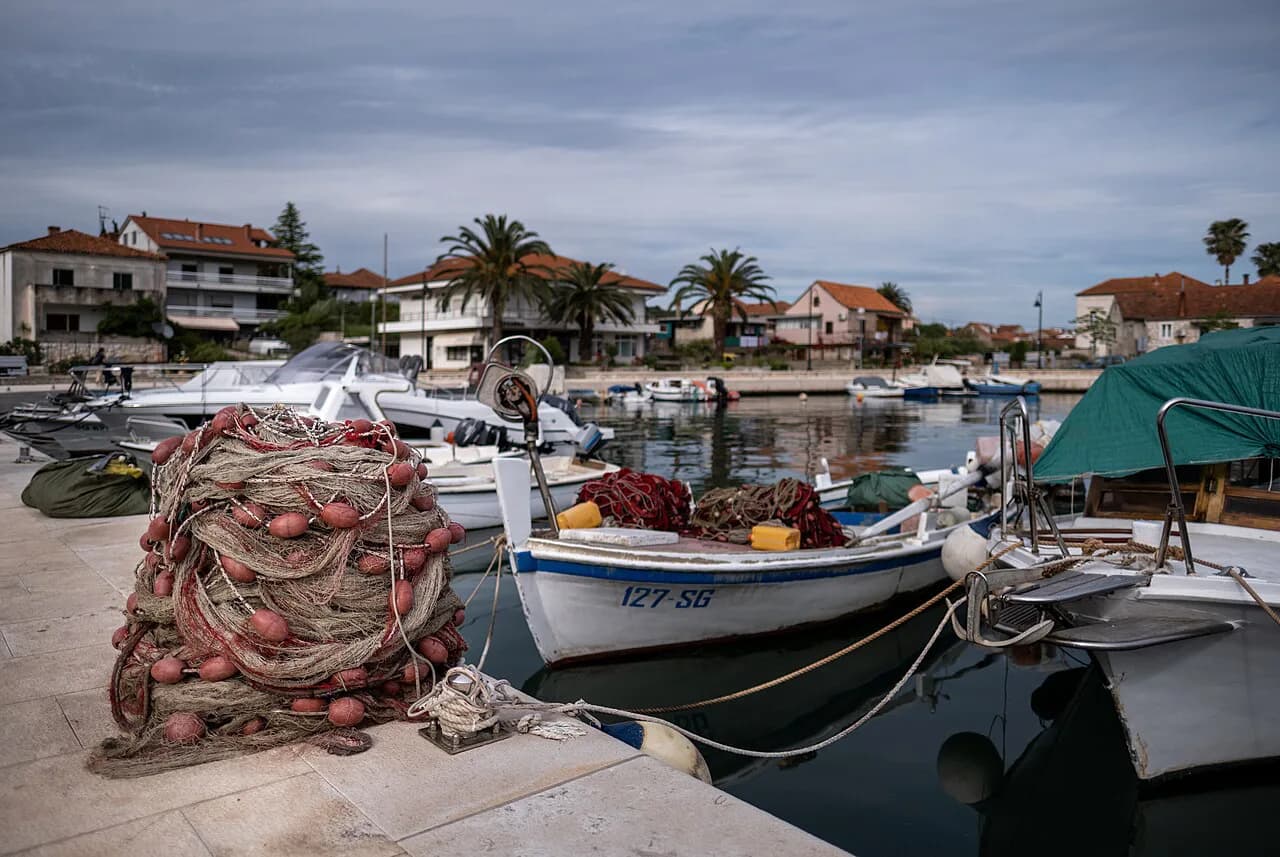
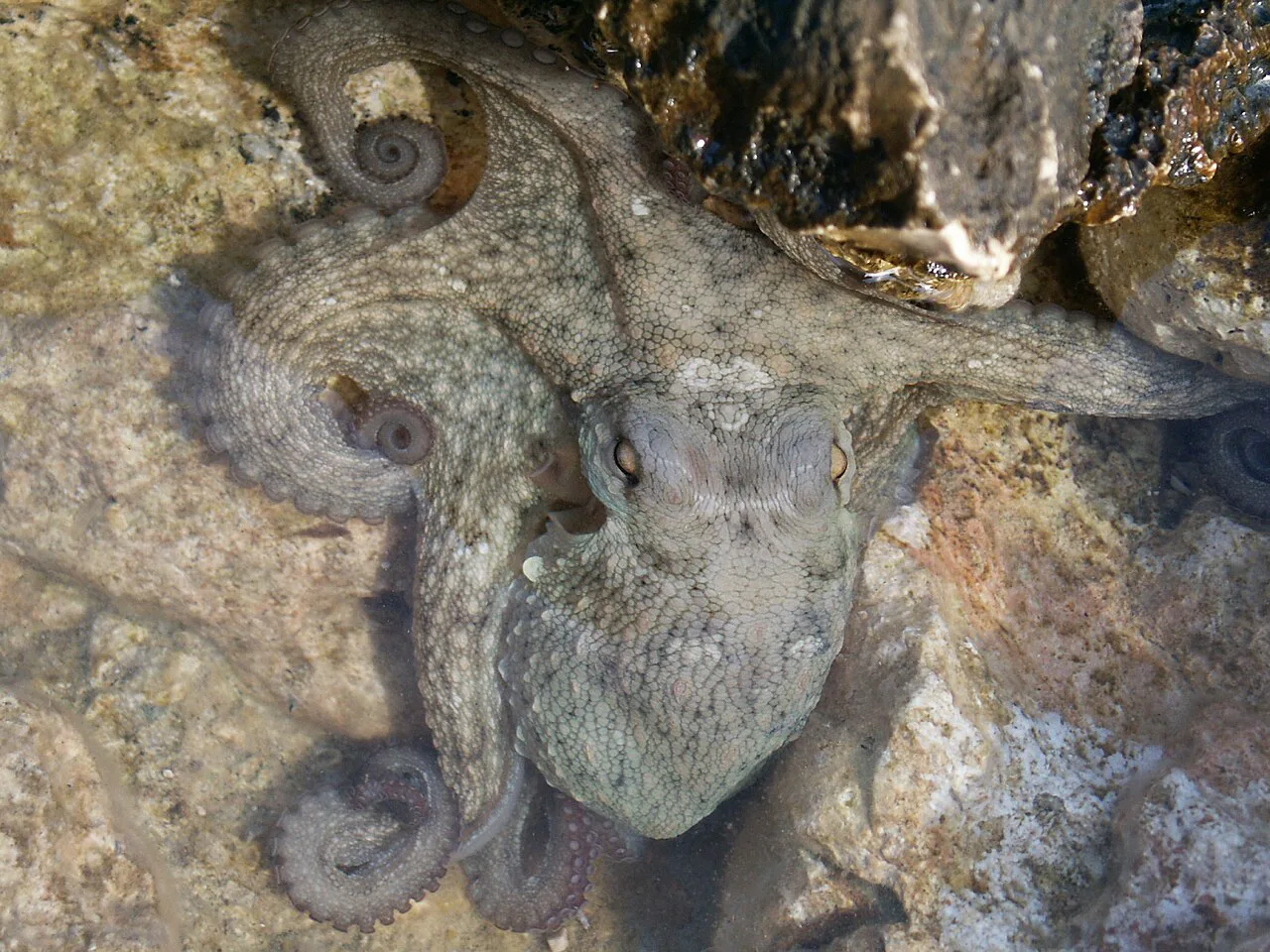
Look for fish and seafood you can cook simply: fresh catch and shellfish are the backbone of Dalmatian home cooking and are forgiving for a first attempt on an apartment hob. Octopus appears across Dalmatia, including on Hvar, most often as boiled octopus salad, and it rewards slow cooking.
Judge freshness by the same signs you would at home: clear eyes, red gills, firm flesh and a clean sea smell. Ask what came in that morning, and be guided by it rather than by a fixed list, because the catch changes with weather and season.
How fish is sold and priced by the kilo
Fish is sold by weight, so the price you agree depends on the size of the fish you choose. Point at the one you want, ask the price per kilo, and let the vendor weigh it before it is cleaned, because you pay for the whole fish and lose weight to heads, bones and trimming. A larger fish costs more in total even at the same kilo rate, so decide how many people you are feeding first.
Do not assume market fish is automatically cheaper than a restaurant portion: cleaning, waste and cooking all add to the real cost per plate, and a konoba buys in volume. The same kilo logic applies when you order fish in a restaurant, where the price per kilo is agreed before cooking. If you want a figure before you buy, ask at the stall rather than relying on a guide written months earlier.
Buying to cook: the simplest Mediterranean meal
The tourist board's own suggestion is the best recipe you need: simply seasoned fish with vegetables from the island's gardens. Buy tomatoes, peppers, onions and greens in season, cook the fish whole on a grill or in a pan with olive oil, and finish with lemon. Local olive oil is worth buying at the market and is a better souvenir than anything from a gift shop.
The island's vegetable cycle governs what you find. Tomatoes are a summer thing here, wild asparagus and spring onions arrive in spring, and mandarins dominate in November, so build the meal around what is actually on the stall rather than a recipe written for a supermarket. Simple supplies such as salt, bread and oil come from the local shops if the market does not cover them.
Eating the catch instead: what to order in a Hvar konoba
If you would rather not cook, order the fish. Hvar has its own signature fish dish, gregada, a slow-cooked fish stew, and the wider Dalmatian repertoire runs to peka, pašticada and octopus salad. In high summer, book a table for dinner rather than turning up at nine, and agree the price per kilo on any whole fish before it goes on the grill.
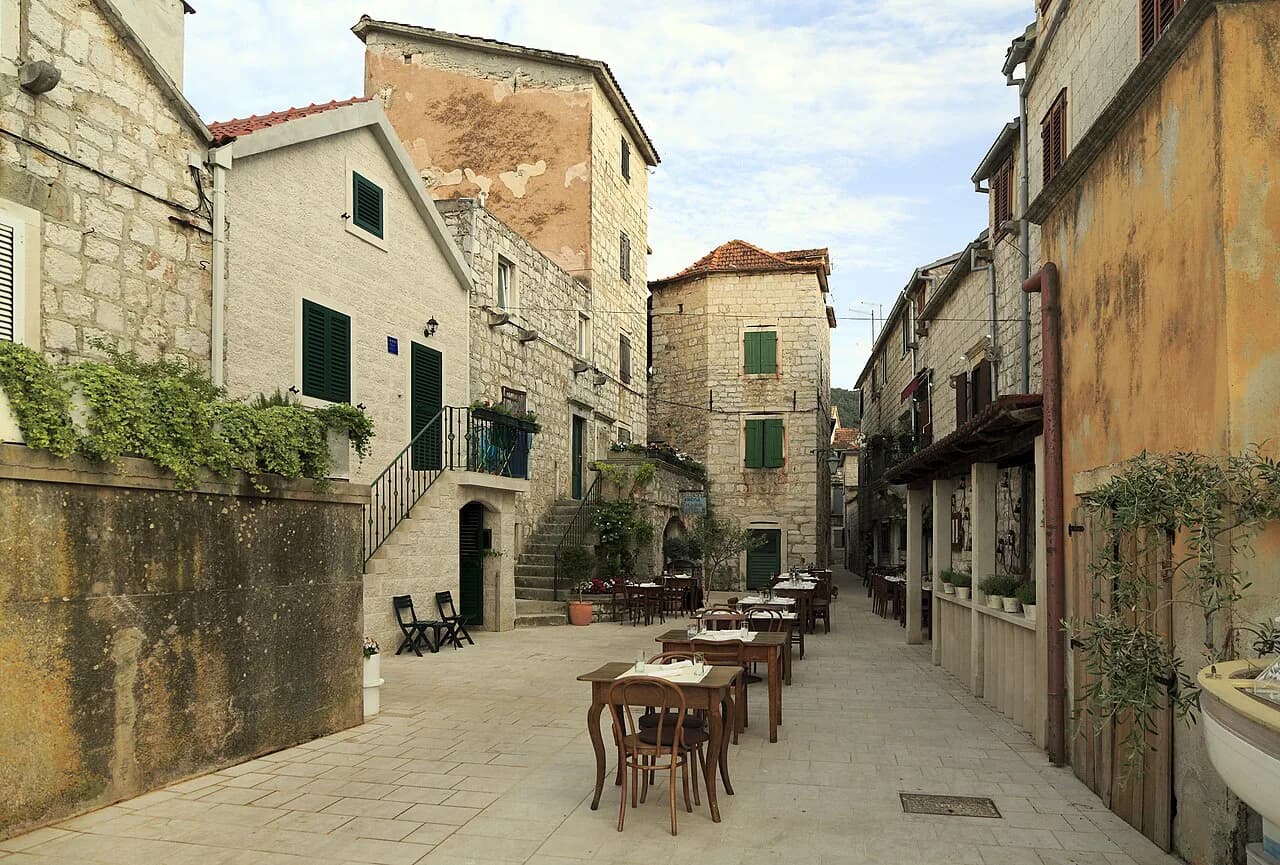
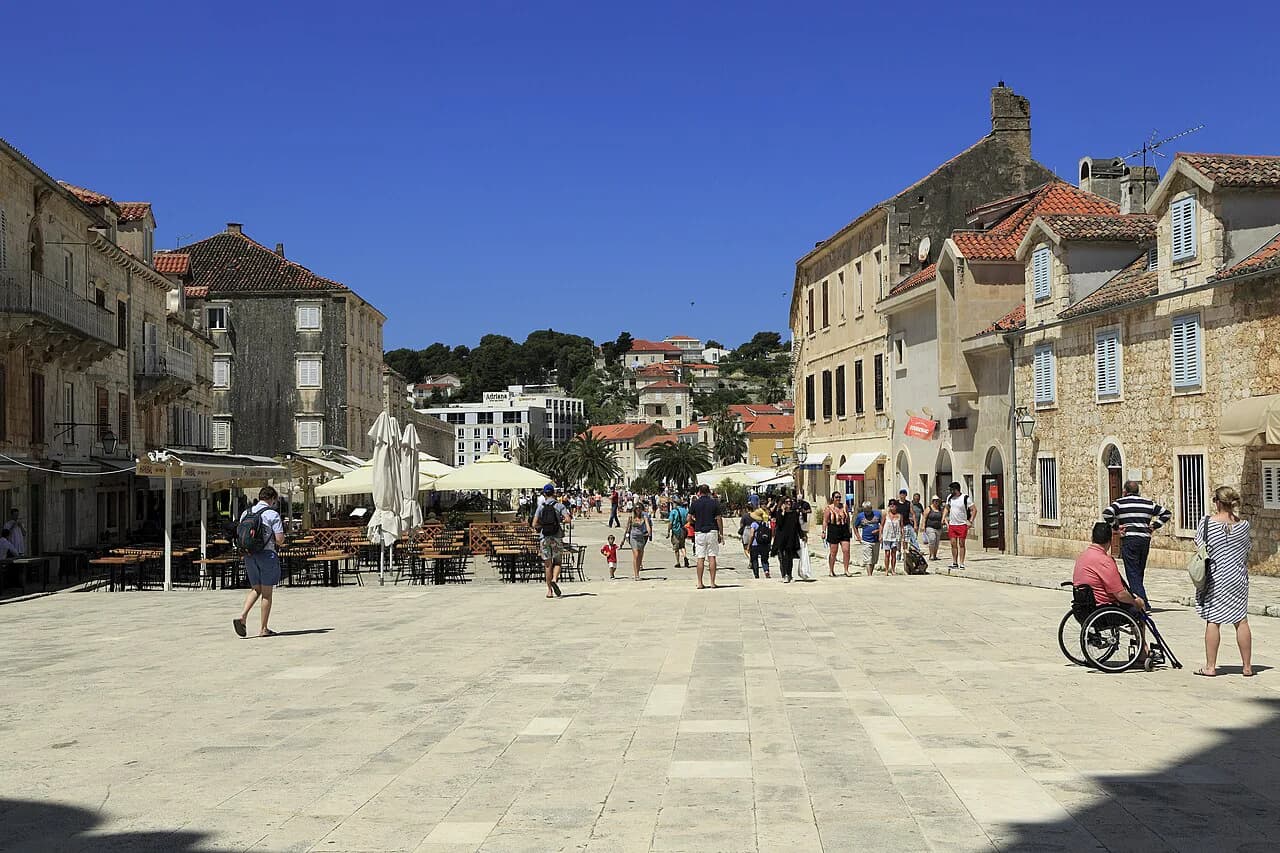
Hvar Town's old-town terraces in July and August fill with day-trippers, and the trade-off is atmosphere against value and pace. For a quieter meal, look at the side streets off the main square, where small kitchens with a handful of tables outside are the norm; Konoba Fig, on a side street a short walk from the square, is one such spot, with a menu built around local produce.
Inland village konobas and the seasonal rhythm
For the most traditional Dalmatian cooking, head inland to village restaurants in Velo Grablje, Dol, Svirce, Vrisnik, Pitve and Humac, where peka and pašticada are the staples. These villages are a short drive from Hvar Town and Stari Grad, and the trade-off is simple: fewer crowds and slower service in exchange for food closer to the island's own kitchen.
Hvar's food culture is tied to the seasons rather than the calendar, and in 2013 the island's Mediterranean diet was inscribed on UNESCO's Intangible Cultural Heritage list alongside Brač and other Mediterranean sites. That means menus shift through the year, and a dish you loved in September may not exist in May. Finish a long lunch with a coffee rather than another glass of wine, and take a walk instead of a siesta.
Cook what you buy or let a konoba do it?
Buy at the market if you have a kitchen, a grill and the patience to gut and cook a whole fish: you will eat the freshest possible version and learn what the island actually tastes like. Eat in a konoba if you are on a short stay, in a hotel, or simply want gregada and peka without the washing up. Either way, start the morning with coffee, go to the market early, and let what is on the stall decide the meal.
Explore more Hvar guides
Frequently Asked Questions
What should I buy at Hvar's market?
Buy the day's fish and vegetables from the island's gardens, the ingredients the tourist board's local-day suggestion builds a simple Mediterranean meal around. In practice, that means choosing what is in season: tomatoes and peppers in summer, wild asparagus and spring onions in spring, and mandarins in November. Keep the meal simple and let the stall decide.
Can I buy fish and have a konoba cook it?
Do not assume so. Some kitchens may agree case by case, but it is not a standard service, so ask when you book or arrive. If you want fish cooked for you, ordering it from the menu and agreeing the price per kilo before it goes on the grill is the straightforward route.
Is the market open in winter?
Hvar Town is quieter outside summer and the market shrinks with demand, so a January visit will not look like a July one. Ask at your accommodation on arrival about what is trading that week rather than planning a shopping trip around it, and expect to cook with whatever is in season.
Sources
Notes on eating well in Croatia
Optional updates to our food guides.
You might also like
Continue reading
More guides you'll find useful