
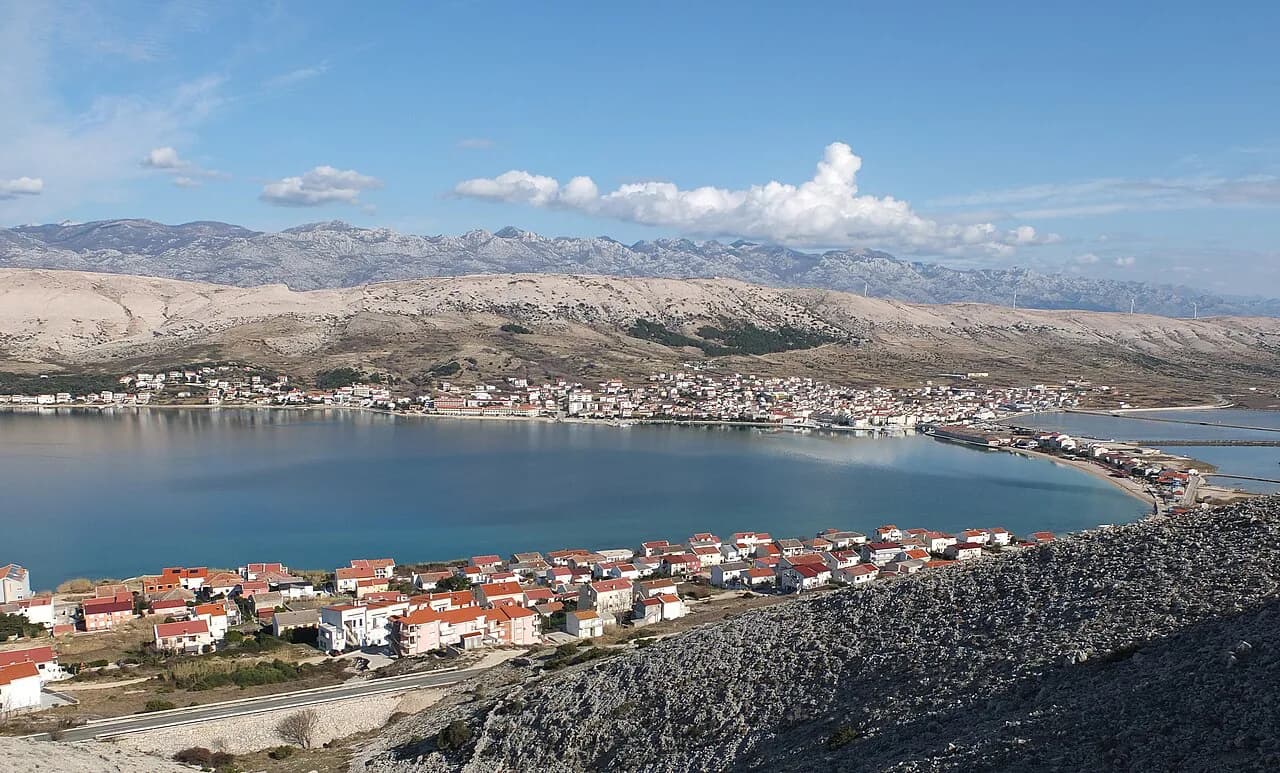
Restaurants in Pag, Croatia: Where to Eat Seafood and Local Cheese
Restaurants in Pag range from seafood konobas to pizzerias and bistros in Pag Town, with Pag cheese and lamb on local menus. Here is how to plan a meal.
On this page
Most of the island's restaurants cluster in Pag Town, where seafood konobas, pizzerias and bistros sit within a few minutes of each other. Eat there for a proper sit-down dinner of grilled fish or lamb, and treat Novalja as a separate base with its own places. This guide covers which venues to pick, what a Pag meal looks like from starter to bill, and where the local produce fits in.
The single most useful thing to know is that Pag Town has a small, walkable restaurant strip rather than a sprawling dining scene, so choosing well matters more than covering ground. Konobas in the town carry local seafood and Mediterranean cooking alongside pizza and bistro menus, and several are clustered along the waterfront and the lanes behind it. For the wider region's options, see northern Dalmatia restaurants.
Pag Town versus the rest of the island
Pag Town is the island's eating capital in practice: the concentration of konobas, pizzerias, bistros and seafood restaurants is highest here. Diners in Pag Town can choose between a local seafood menu, a Mediterranean grill or a quick pizza on the same evening without moving the car. Novalja, Povljana and Kolan each have their own places, but treat them as a smaller selection rather than a rival to the town.
If you are staying at the northern end, plan around Novalja rather than driving south for every dinner. Novalja restaurants are a short hop from the town centre and cover the resort trade, while Pag Town rewards a dedicated evening with its denser choice of konobas. Povljana and Kolan are villages where you eat what the nearest restaurant does well rather than shop around for cuisines.
On the mainland side of the same stretch of coast, Zadar and the towns south of it offer a similar seafood-and-konoba pattern with more volume. Nearby Biograd na Moru is the obvious mainland anchor, and Biograd na Moru restaurants run from konobas to pizzerias in the same way as Pag Town. If your trip combines the island with a mainland base, that is the place to look.
Seafood konobas in Pag Town
Seafood shows up across the town's menus, usually described as local, Mediterranean or Dalmatian cooking depending on the kitchen. Tavern Barcarola on Golija and Diogen on Uhlinac are two Pag Town names that list seafood as their specialty, and Dva Ferala on Katine is a third. These are the sorts of places to book for a sit-down evening rather than a hurried lunch.
A konoba meal usually follows the Dalmatian pattern: cold seafood or a shared plate to start, then grilled fish, squid or shellfish, with a vegetable side ordered separately. Check the fish price per kilo before you commit, because a whole fish is weighed and charged by weight rather than as a fixed plate. That single question is the difference between a sensible bill and a surprise.
Pag Town's waterside streets make for an easy evening promenade between venues, and several restaurants take tables outside in warm weather. Aim to eat earlier than you would in a large city; a table at a good konoba is easier to secure before the peak evening window. If the town is heaving, a smaller restaurant one street back from the waterfront is often the better trade.
Pizzerias and bistros for a casual meal
Pizza is the reliable casual option in Pag Town, and Revelin on Ljudevita Gaja is a pizzeriacum-Mediterranean restaurant, while Genius on Prosika lists Italian and seafood cooking. Trattoria Padre on Križevačka Ulica leans Italian and Mediterranean with seafood, and works when the group wants pasta as well as fish. These are the places to fall back on when a long konoba dinner is not what the evening needs.
Bistros fill the gap between a fast slice and a full dinner. Viktorija on Put Divičnjaka and Na Tale on Stjepana Radića are both labelled bistro in Pag Town, which usually means a shorter menu, quicker service and less formality. On a hot day or a late arrival, that is often exactly right.
Lunch in a pizzeria or bistro is the practical choice on a travel day: you eat well, pay less than at a seafood dinner and keep the afternoon free. Save the konoba for an evening when you can sit over two courses and a shared plate. Splitting your meals this way gives you both the local seafood experience and an easy, low-friction day.
Local Pag produce on the menu: Pag cheese, lamb and olives
Pag Town restaurants build their menus around the island's own produce, particularly cheese, olives and local wines. You will see hard sheep's cheese listed on starter and cheese-board sections, often as Paški sir, the island's hard sheep's-milk cheese. It is worth ordering a portion with olives and bread before the main course.
Pag lamb is the other local marker on these menus and is typically cooked slowly, either roasted or braised, which suits the island's sheep farming. If you want to taste what makes the island's cooking distinct, order lamb as a main and cheese to start, and ask what the kitchen does with its own olives. Restaurants across the northern Dalmatian coast follow the same larder, so the cooking in Pag Town feels of a piece with the mainland towns nearby.
If you are pairing cheese and cured meats, a plain local red or a light white is the moderate choice, and one glass alongside a meal is plenty for most people. The point is the produce rather than the drinking. Ask what comes from the island and what is brought in, and you will get a clear answer at the better places.
What to order: a dish-by-dish guide to a Pag meal
Start with Paški sir and olives, ideally with a few slices of pršut (dry-cured ham) if the menu has it. For a main, choose between grilled fish sold by weight, squid or shellfish, and slow-cooked lamb. Shared plates work well here: a cheese board, a seafood plate and a lamb main will feed two comfortably.
Fish is priced by the kilogram in Croatian restaurants, so a whole sea bass or bream costs according to its size on the day. Ask the waiter for the weight and the total before it is cooked; a reputable konoba will tell you without hesitation. Shellfish such as mussels and prawns are usually priced per portion instead, which makes the bill easier to predict.
For dessert, look for the island's sheep's cheese with honey or fig jam if the kitchen offers it, though a simple cake or ice cream is common. Keep it light: portions in Dalmatian restaurants are generous. If you are ordering for a family, one starter and one main per adult, plus a shared dessert, is usually enough.
How a meal works: courses, fish by the kilo and booking in high season
A Pag restaurant meal is structured in courses: cold or shared starter, then a main of fish or meat with a side of potatoes, chard or salad. Bread and olive oil often arrive without asking, and sides are ordered separately rather than plated with the fish. Ordering two courses each, plus one shared side, is a normal amount for two people.
In July and August, the good konobas in Pag Town fill up, and a table on the waterfront is the first to go. Book by phone or in person the day before, or shift dinner earlier in the evening. Outside high season, walk-ins are the norm and the pressure disappears.
Payment is usually in euros, and Croatia has used the euro since 2023, so there is no need to convert. Card acceptance varies by venue, from konobas that prefer cash to larger restaurants that take all cards. Carry some cash for smaller places and village restaurants, and confirm on the door if you are unsure.
Prices in Pag restaurants and what drives the bill
The big variables in a Pag bill are fish sold by weight, the number of sides you order and whether you take a full three courses. Seafood restaurants, labelled local, Mediterranean or barbecue on their own listings, sit at the higher end of the range, while pizzerias and bistros are the cheaper option. Most Pag Town restaurants in the town centre fall into mid-range pricing by Croatian coastal standards.
Pizza and pasta are the most predictable costs, because they are portion-priced rather than weighed. A lamb main costs more than a pizza but less than a large fish, and cheese and olives as a shared starter keeps the total down. If the budget matters, order the fish once, at the restaurant you care most about, and eat pizza or bistro food the rest of the week.
Compare menus at the door before sitting down; prices are usually displayed outside in Croatia, and the difference between two neighbouring konobas can be noticeable. Ask for the fish price per kilo and the weight before confirming the order. That two-minute conversation is the best budget tool you have.
Where to eat around Novalja, Povljana and Kolan
Away from Pag Town, the island's restaurant scene thins out, and you are eating close to where you stay rather than choosing between venues. Novalja has the second-largest cluster and covers resort cooking, pizza and seafood. Povljana and Kolan have a handful of places each, mostly oriented to holidaymakers, so plan dinner where you are based.
For the mainland at the foot of the island's bridge, Biograd na Moru is a straightforward stop before or after crossing. If you want a change of scene from the island, Biograd na Moru restaurants set out the konoba and pizzeria options in the town. Nin is a similar option to the north, and Nin Restaurants covers the core of its eating.
For a smaller, quieter option, Nin restaurants make a pleasant lunch stop between beach time and the drive back, and the town suits a slow meal rather than a rushed one. On either side of the water, the menus lean on the same fish, lamb and cheese. Which town you pick matters less than booking a table before the evening rush.
Pag restaurants for a rainy day or a late arrival
When the weather turns or you arrive after a long drive, choose a restaurant with an indoor dining room and a broad menu rather than a waterfront terrace. Trattoria Padre and Genius in Pag Town both list Italian and Mediterranean cooking, which usually means pasta, pizza and seafood under one roof. A bistro such as Viktorija is the other sensible late-arrival option.
Late in the evening, pizza is the safest order: it is quick, portion-priced and almost always available. Seafood kitchens may stop taking fish orders earlier than the front door suggests, so ask before you sit down if you have arrived close to closing. If you are staying in Novalja, the resort end of the island has more late tables in summer.
Which Pag restaurant should you book first?
Book one seafood konoba in Pag Town for your best evening: Tavern Barcarola, Diogen or Dva Ferala all fit the bill. Add Paški sir and olives to start, and choose between grilled fish by weight and slow-cooked lamb for the main. Eat pizza or bistro food the rest of the week, and you get both the island's cooking and a controlled bill.
If you are based in Novalja, keep your dinners local and save one night for Pag Town. Wherever you stay, order the cheese, ask the fish weight and carry a little cash. That is the whole plan for eating well on Pag.
Frequently Asked Questions
Is Pag, Croatia a party island?
Part of the island, chiefly the Zrće area near Novalja, has a large summer club scene, but Pag Town and the rest of the island are calmer. If you want quiet dinners and konoba food, base yourself in Pag Town or the smaller villages and treat the club strip as a separate part of the island.
Is it expensive to eat out in Croatia?
It depends on what you order. Pizza, pasta and bistro dishes are the most predictable costs, while whole fish sold by weight pushes the bill up. In Pag Town, pizzerias and bistros are the cheaper route and seafood konobas the higher one, so mix the two across your trip.
Do Pag restaurants take card?
Many do, but smaller konobas and village restaurants may prefer cash. Croatia uses the euro, so carry some notes for the places that do not take cards.
What food is Pag known for?
Pag is known for its hard sheep's milk cheese, Paški sir, and for lamb, both of which appear on local restaurant menus. Olives and local wines round out the island's produce.
Can you eat well in Pag Town without booking?
Outside July and August, walk-ins are usually fine. In high season, book a day ahead or eat earlier in the evening, especially for waterfront tables.
Sources
Notes on eating well in Croatia
Optional updates to our food guides.
You might also like



Continue reading
More guides you'll find useful





