Croatian Food: The Dishes to Know, Region by Region
Croatian food explained: peka, pašticada, crni rižot, štrukli, pršut, Paški sir and kremšnita, and how coastal and inland cooking differ.
On this page
Croatian food splits into two kitchens. On the coast and islands you eat fish, shellfish, olive oil, chard and pasta under Italian influence; inland you eat pork, paprika, freshwater fish and baked dough under Central European influence. This guide names the dishes worth ordering first, maps them to the regions where they make sense, and explains how a konoba meal works in practice.
The single most useful thing to know before you sit down is that the country rewards regional ordering. A reader in Zagreb should look for štrukli and ćevapi, while a reader in Rovinj should look for fuži with truffles and a reader in Split for crni rižot and buzara. The sections below follow that logic, then cover cheese and cured meat, desserts, drinks, breakfast and the mechanics of fish sold by weight.
Dishes to order first: peka, pašticada, crni rižot and buzara
Peka is the signature slow-cook: meat, octopus or fish with potatoes and root vegetables sealed under a metal dome and buried in hot coals for hours. It is traditionally a Sunday dish cooked at home, so in a konoba it is usually prepared to order and commonly needs a day or two of notice. Ask when you book rather than turning up and hoping.
Pašticada is Dalmatia's celebration stew: beef larded with garlic, cloves, carrot, celery and bacon, marinated overnight in wine vinegar, then braised for hours and served with fresh pasta or njoki (gnocchi). Black risotto, crni rižot, gets its colour and briny depth from cuttlefish ink and is a good test of a coastal kitchen. Buzara is the other essential — mussels or shellfish steamed in white wine, garlic and breadcrumbs, or in a red tomato version.
Fish and seafood: what the Adriatic puts on the plate
The Adriatic supplies sardines, mackerel, sea bass, prawns, octopus, squid and lobster, and coastal kitchens treat them simply — grilled, fried or stewed with olive oil, garlic and a side of chard or salad. Less common catches such as John Dory, grouper, monkfish and bluefin tuna tend to appear in restaurants rather than on market stalls. Fish is usually served whole, head and all, so ask for it filleted if that is not what you want on the plate.
What is Croatia's national dish? There is no single national dish, and Croatians themselves argue about it. The dishes most closely associated with the country are peka, pašticada, crni rižot, štrukli and the pršut-and-cheese platter, and each belongs to a region rather than the whole country.
What is a typical Croatian breakfast? Bread or a pastry from the local bakery with butter, jam, cheese or pršut, and coffee. Inland, sir i vrhnje or bread with pork crackling paste is common.
Is Croatian food vegetarian-friendly? On the coast, yes — chard with potatoes, grilled vegetables, pasta, risotto and soparnik are standard. Inland menus lean on pork and cured meat, so štrukli, cheese-only platters and vegetable stews are your best options.
Mali Ston oysters, farmed in the bay north of Dubrovnik since Roman times, are the country's best-known shellfish and a good reason to eat in that corner of the coast. Kvarner Bay is known for its scampi, and Novigrad on the Istrian coast for scallops called kapešante. Order them raw with lemon where offered, or lightly cooked, and keep the rest of the meal light.
Pršut, Paški sir and the cheese and cured meat platter
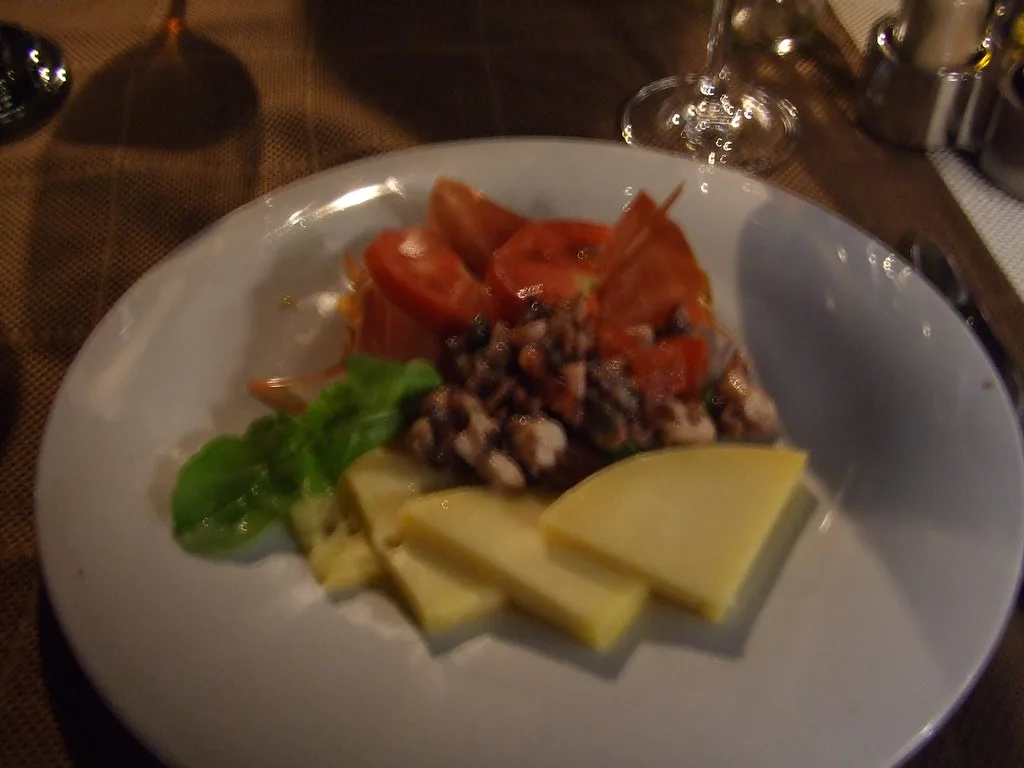
A plate of pršut i sir — dry-cured ham and cheese — is the standard opener, often with olives, figs and almonds. It works as a light lunch for two as well as a starter, and it is one of the few things you can order without thinking about cooking times. Order it with bread and a glass of local white and you have the simplest good meal in the country.
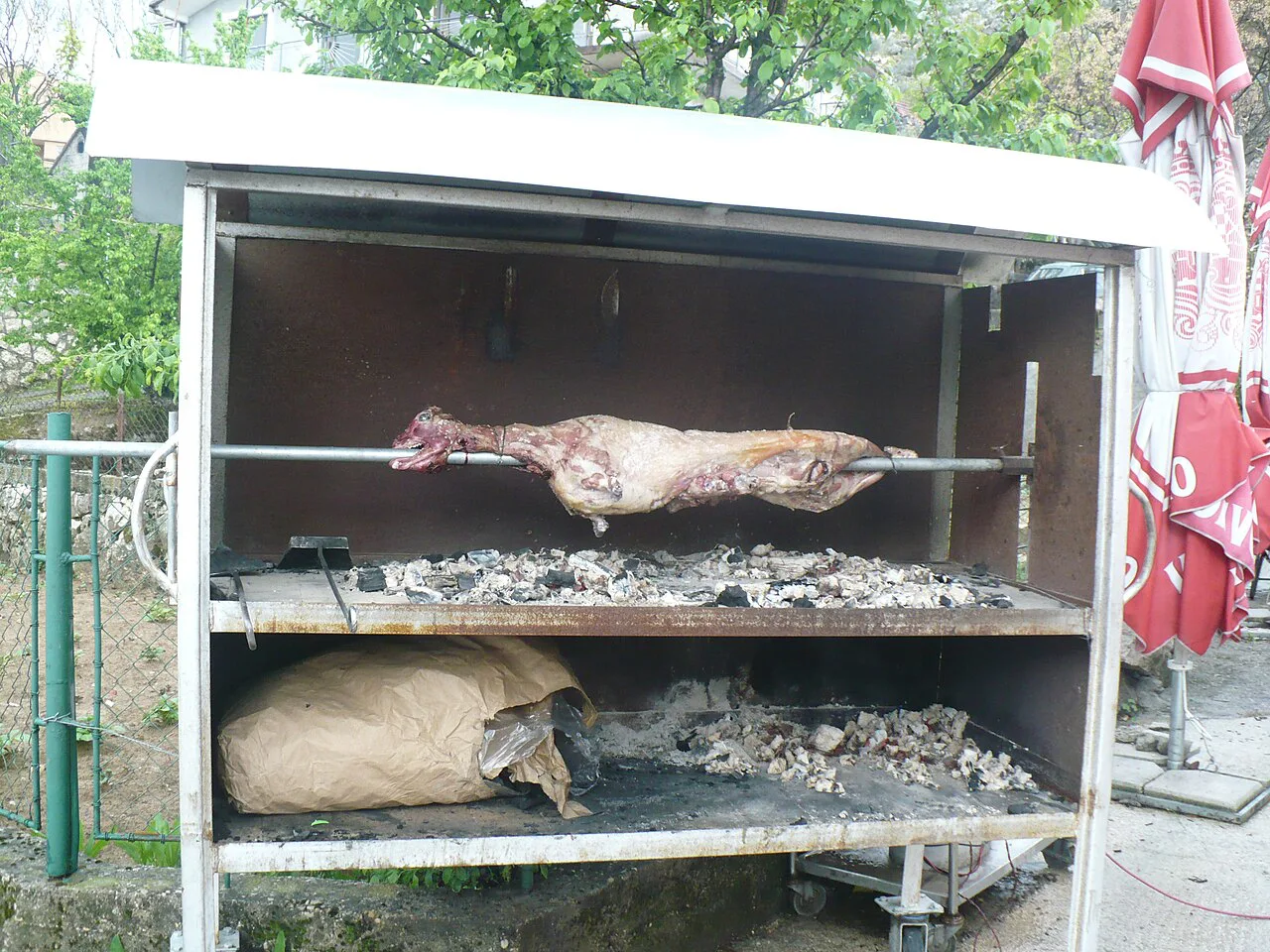
Paški sir is the hard sheep's milk cheese from the island of Pag, closer in texture to manchego than to a soft coastal cheese, and the sheep's diet of grass and aromatic herbs shapes its flavour. Pag lamb, from the same island, is usually spit-roasted or cooked under a bell. Both are the cheeses and meats to look for on menus in northern Dalmatia.
Istria: truffles, fuži pasta and olive oil
Istria cooks with truffles, pasta and olive oil in a way that feels closer to Italy than to the rest of Croatia. Look for fuži, the rolled pasta tubes, with truffles or with a meat sauce, and for fuži or pljukanci alongside game in autumn. Istrian olive oil from varieties such as Buža is cold-pressed by small family producers and often sold with the harvest year on the label, which is the mark of a serious bottle.
Malvazija is the white to drink with it, and Istrian Malvazija from Buje is the version most often named. Truffle dishes are rich, so one truffle course per meal is usually enough; pair it with something plain such as grilled fish or a simple salad rather than ordering three truffled plates in a row.
Dalmatia: pašticada, black risotto and coastal fish
Dalmatia runs from Zadar down through Split to Dubrovnik, and its menu is the one most visitors picture: grilled fish, calamari, mussels, prawns, pašticada with njoki and crni rižot. The cooking is plain by design, built on good oil, garlic, parsley and lemon rather than sauce. In Dubrovnik the fish and shellfish selection is the reason to sit down at all, and this Dubrovnik guide maps out the dishes and what they cost.
Split's Ribarnica, the city fish market, shows what the Adriatic is landing and is worth a morning look even if you are not self-catering. Prawn and courgette pasta or risotto turns up on almost every coastal menu, and it is a reliable, inexpensive order when you do not want to commit to a whole fish. If you want the wider picture of dishes across the country, this guide to the best food in Croatia covers the rest.
Inland Croatia: štrukli, kulen and river fish
Zagorski štrukli is the inland signature: a stretched dough filled with fresh cheese and baked or boiled, served savoury or sweet. In Slavonia, kulen is a smoked pork sausage with paprika and garlic, cured over winter and dense enough to slice thin. Continental menus lean on freshwater fish, pork and vegetables, which is why a Zagreb table looks nothing like a Hvar one.
Soparnik, the savoury pie of chard and red onion from the Poljica area near Split, sits between the two traditions and is popular with visitors. It is also the easiest vegetarian order in the country, along with pasta, pizza and risotto. For a fuller survey of the inland dishes, traditional Croatian food goes deeper on the regional Split.
Ćevapi, pljeskavica and the grilled meat menu
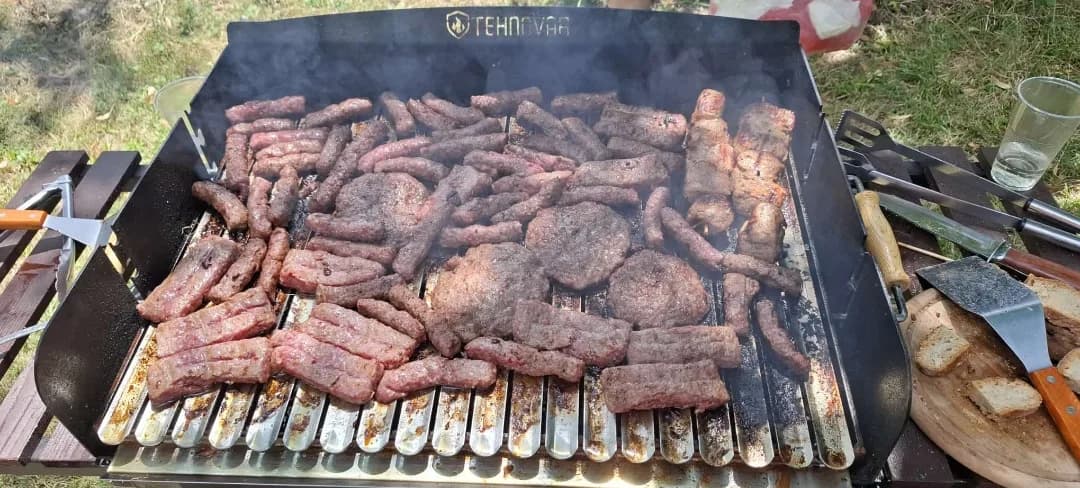
Ćevapi are small grilled minced-meat sausages, and pljeskavica is the flat grilled meat patty of the same Balkan family; both come with raw onion, kajmak or ajvar and flatbread. They are the cheap, filling order in inland towns and in the grill houses of Dalmatian cities. They are also the reason a vegetarian should read the whole menu rather than the specials board.
Grilled meat is where Croatian cooking is most generous with portion size, so one platter between two with a shared salad is usually plenty. If you are eating inland on a hot day, a light soup first — Manestra, the Istrian bean and pasta soup, is a good one — balances the meal.
Vegetarian food in Croatia: what works and where
Vegetarians eat well on the coast without much effort: Swiss chard with potatoes and tomato sauce, grilled vegetables with olive oil and wild herbs, pasta, pizza and risotto are all standard. Scrambled eggs with asparagus appear in spring, and soparnik is a reliable meat-free pastry. In cities such as Split and Dubrovnik, menus are usually clearly marked; in rural konobas you may have to explain that you do not want meat.
The inland kitchen is harder. Štrukli, sir i vrhnje (fresh cheese with sour cream) and vegetable stews such as čoravi gulaš, a meatless goulash of potato, onion and carrot in tomato base, are the dishes to look for. A cheese and cured meat platter can be ordered as cheese only.
Desserts: kremšnita, rožata, fritule and makovnjača
Kremšnita is the custard slice with a puff-pastry lid, and Samoborska kremšnita is the version from Samobor near Zagreb. Rožata is a Dalmatian caramel custard, close to crème caramel and usually served cold. Fritule, small fried dough balls, belong to festive and coastal eating, and makovnjača is the poppy-seed roll found in inland bakeries.
If you have room for one dessert after a fish dinner, take the rožata or a slice of kremšnita over anything with cream and chocolate sauce. In a pastry shop, fritule and makovnjača travel well and cost little. Order coffee afterwards and nobody will hurry you out.
What Croatians drink with a meal
Wine is the default: Pošip, the white from Korčula, with fish, and Malvazija in Istria. Maraschino is the cherry liqueur from Zadar, made from local Maraska cherries and normally served in a small measure after the meal. Rakija, the fruit brandy, is offered in tiny glasses and should be treated as a sip, not a round.
Rakija comes in many fruit versions: šljivovica from plums, grappa from grapes, višnjevac from cherries and kruškovac from pears. It is often homemade and strongly alcoholic, so one small glass is the civilised amount. Local wine by the glass or a small bottle is the better match with a long lunch.
Breakfast and the pekara counter
Breakfast is continental: bread or a pastry from the pekara, the bakery, with butter, jam, cheese or pršut, and strong coffee. Sir i vrhnje and kruh s čvarcima, bread spread with pork crackling paste, belong to the inland table. Eggs turn up in cafés and hotel breakfasts more reliably than in everyday homes.
Bakeries open early and sell savoury burek-style pastries and sweet rolls through the morning, but the freshest bread is gone by mid-morning in busy areas. The pekara is also the cheapest lunch on a travel day. If you want the detail on what to buy and when, Croatian breakfast sets it out.
How eating out works: konobas, menus and fish by the kilo
A konoba is a simple, family-run guesthouse restaurant, and it is where the regional dishes are cooked most plainly. Bread and olive oil usually arrive unasked; check the bill rather than assuming they are free, and ask whether a cover charge applies.
Whole fish is priced by weight, so the bill is set by the fish you choose rather than a fixed menu price. Ask the weight and the per-kilo rate before the kitchen cooks it, and a rough figure for the total. This is normal practice and a reasonable question to put to the waiter.
An old-town terrace and a village konoba may serve the same dishes at notably different prices, and the terrace buys you the view. For lunch on a hot day, a marenda — the Dalmatian mid-morning or lunchtime plate of what is cooked that day — is often better value than the evening à la carte.
Region by region: what to order where
In Dubrovnik order oysters from Mali Ston, grilled fish and a shellfish buzara. In Split, black risotto, pašticada and anything from the morning Ribarnica, with a marenda for lunch. On Hvar, fish and Pošip; in Rovinj, fuži with truffles, kapešante and Malvazija.
In Zadar, Maraschino with dessert and Pag cheese to start. In Zagreb and inland, štrukli, kulen and grilled meat at a konoba rather than a seafood menu. On the Kvarner coast, scampi are the local speciality and worth ordering simply grilled or in a risotto.
Croatian food compared with Italian and Greek cooking
Croatian coastal food resembles Italian cooking in its olive oil, pasta, risotto and grilled fish, because the Adriatic coast shares the Venetian and Mediterranean pantry. It is plainer than Greek cooking: less tomato, fewer herbs in the sauce, no moussaka tradition. The inland kitchen owes more to Austria and Hungary — paprika, pork, dough and freshwater fish — which is why the country can feel like two culinary nations in one.
The practical result for a traveller is that Croatian menus are easy to read if you know Italian or Greek food, but the portions and the grills are bigger and the sauces lighter. Expect whole fish rather than fillets, bread rather than potatoes with everything, and a coffee culture that slows the end of the meal down.
Which dish to order first on your trip
If you eat one meal in Croatia, make it a fish lunch by the sea with a plate of pršut to start and a rožata to finish. If you eat two, make the second an inland konoba with štrukli, kulen and grilled meat. That pairing tells you more about the country's cooking than any single menu.
Book a peka at the same time you book the table, ask the weight and rate for whole fish before it is cooked, and treat rakija and Maraschino as small after-dinner sips. For the wider dish list and regional detail, the Traditional Croatian Food guide and the best food in Croatia guide are the natural next reads.
Explore more Croatia guides
Frequently Asked Questions
What is Croatia's national dish?
There is no single national dish, and Croatians themselves argue about it. The dishes most closely associated with the country are peka, pašticada, crni rižot, štrukli and the pršut-and-cheese platter, and each belongs to a region rather than the whole country. Order by region and you get the best of it.
What is a typical Croatian breakfast?
Bread or a pastry from the local bakery with butter, jam, cheese or pršut, and coffee. Inland, sir i vrhnje or bread with pork crackling paste is common. Eggs appear more in cafés and hotels than in everyday homes.
Is Croatian food vegetarian-friendly?
On the coast, yes — chard with potatoes, grilled vegetables, pasta, risotto and soparnik are standard. Inland menus lean on pork and cured meat, so štrukli, cheese-only platters and vegetable stews are your best options. In rural konobas you may need to explain that you want no meat.
How much does a meal out in Croatia cost?
Prices vary by town, season and how close you sit to the old-town waterfront, and whole fish is charged by weight. Ask the per-kilo rate before ordering and compare a village konoba with a terrace; the difference is often large. There is no single useful national figure.
Sources
Notes on eating well in Croatia
Optional updates to our food guides.
You might also like



Continue reading
More guides you'll find useful