Supermarkets in Pula: Where to Shop for Self-Catering
A practical guide to food shopping in Pula, covering the city farmers' market and Croatia's main supermarket chains for a short self-catering stay.
On this page
For a self-catering stay in Pula, plan on two shops rather than one: the city farmers' market in the centre covers fresh produce, and one of Croatia's main supermarket chains covers the rest. Doing both in a single morning saves you a second trip across town later in the day.
The sections below cover the chains you will meet in Croatia, how the indoor and outdoor stalls of the farmers' market work, and how to Split your shopping between them depending on whether you are cooking fish, salad or breakfast. It is written for a short stay in a rented flat, where a big shop is more waste than convenience.
Which supermarkets and chains you will find in Pula
Croatia's grocery sector is dominated by a handful of chains, among them Konzum, Lidl, SPAR, Plodine, Studenac and Kaufland. Between them they cover the full range from small neighbourhood shops to large out-of-town stores, so you will almost always have one within easy reach of wherever you are staying.
Treat the names as a starting point rather than a ranking. Which one is cheapest depends on what you are buying and on the week's promotions, so it is worth comparing the shelf price on the few items you actually need rather than committing to a single chain for the whole stay.
Istarski Supermarketi, a small Istrian chain, is not a reliable option in Pula: the branch on Dinka Vitezića Street is marked as permanently closed, so plan around a national chain instead.
The city farmers' market in the centre of Pula
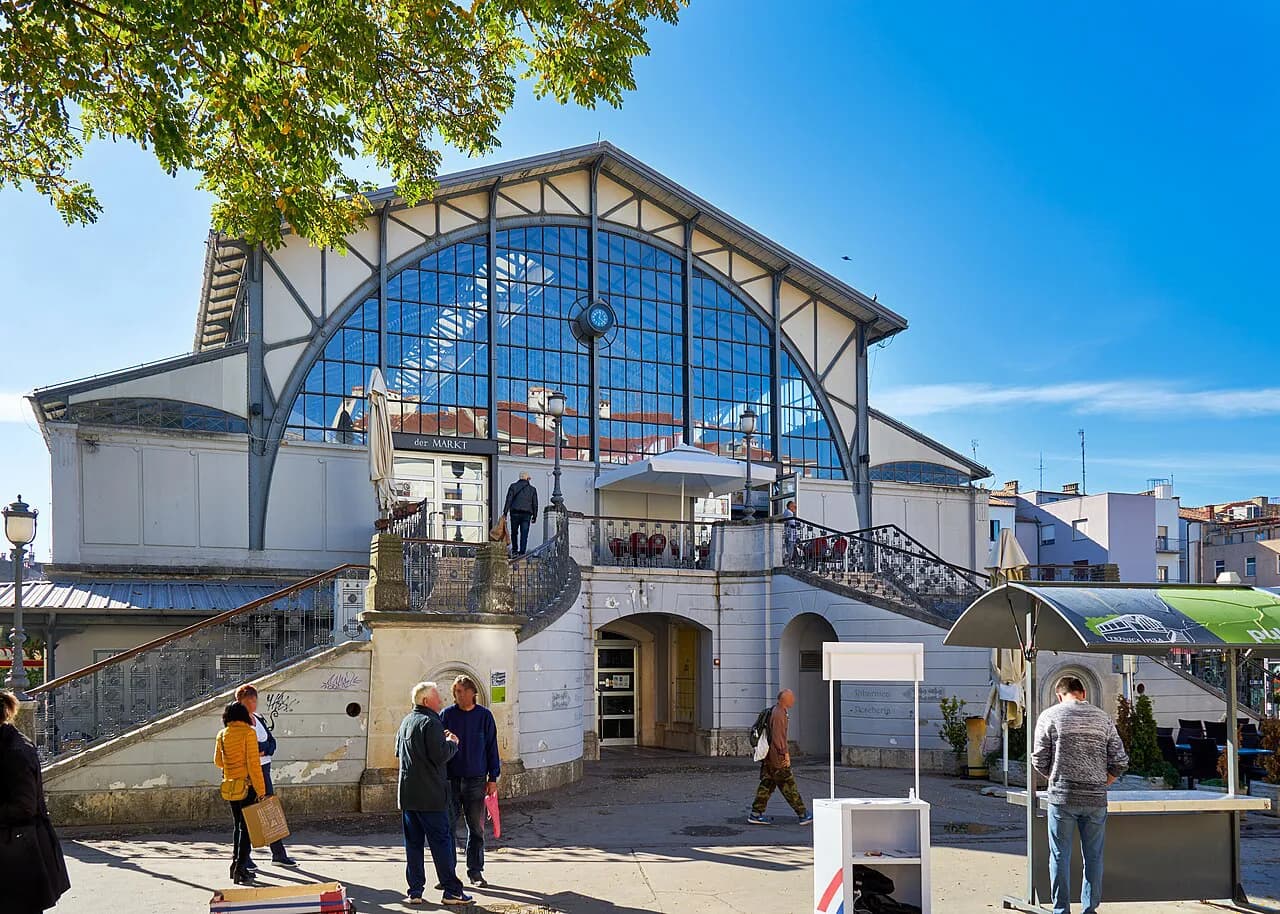
Pula's city farmers' market sits in the heart of town and runs both indoor and outdoor stalls. The indoor hall holds the permanent traders, while the open-air pitches outside are where seasonal produce appears. That mix makes it the most useful single stop for anyone cooking with fresh ingredients.
The market's indoor hall and outdoor pitches give you flexibility, and its central position makes it an easy stop before a coffee nearby.
For a longer stay, the market is worth visiting more than once rather than doing one enormous haul. Buying produce every couple of days keeps the fridge manageable and means you cook with what is actually in season that week.
Supermarket versus market: what to buy where
Split your list by what you are cooking. Fish, salad leaves, tomatoes, soft fruit and anything you plan to eat within a day or two belong to the market, where you can buy small quantities and choose each piece. Store-cupboard basics, dairy, cleaning supplies and drinks belong to the supermarket, where the packaging and pricing suit a bigger basket.
Bread is the one category worth deciding by timing rather than loyalty. If you are shopping in the morning, the market and a local bakery will serve you better for that day's loaf; if you are topping up in the evening, take whatever the supermarket has left and plan around it.
For breakfast, a supermarket shop of eggs, yoghurt, fruit and coffee covers most mornings in a flat, with the market supplying the fresh top-up. If you would rather eat out for the first meal of the day, the same morning market run puts you within easy reach of the city's cafés and restaurants.
Shopping for a short self-catering stay
Buy for three or four days at a time, not for the whole week. A short-stay flat usually has a small fridge and limited cupboard space, and a large supermarket shop tends to leave you carrying food home rather than eating it. Market quantities are easier to control because you can ask for a handful rather than a pre-packed tray.
Think about what keeps before you fill a trolley. Hard cheese, cured meat, eggs, onions, potatoes and dried pasta will hold for the length of a normal holiday, while fish, shellfish, cut salad and berries need eating quickly and are better bought on the day. That distinction is what makes the market-plus-supermarket Split work.
Packaging adds up on a short trip. Loose produce from the market stalls reduces the bags and trays you end up throwing away, and you can carry a cloth bag for the supermarket run rather than buying one at the till each time.
Paying in euros and what to expect at the till
Croatia uses the euro, so prices in Pula are marked in euros. Bring a card as well as some cash: supermarkets generally take cards, while market stalls vary, and small purchases are easier to settle in notes and coins.
Prices differ by shop, by season and by what you buy, so there is no single figure worth planning around. Check the shelf price and the unit price per kilo on the label, which is the quickest way to compare two chains on the same item.
One morning, two shops
The simplest routine in Pula is a single morning loop: market stalls first for produce and fish, then a supermarket for the cupboard items and anything you will need later in the week. That covers a short self-catering stay without a second expedition across town.
If the cooking is not the point of the trip, keep the supermarket stop small and put the budget into eating out instead. Either way, the market in the centre is the one stop worth making properly rather than rushing through.
Explore more Pula guides
Frequently Asked Questions
What are the biggest supermarkets in Croatia?
The main chains you will see are Konzum, Lidl, SPAR, Plodine, Studenac and Kaufland. They range from small neighbourhood stores to large out-of-town supermarkets, and the mix in any one town varies.
Which supermarket in Pula is actually the cheapest?
There is no fixed answer, because it depends on the item, the week's promotions and the size of the store. Compare the unit price per kilo on the shelf label for the few things you actually need rather than choosing one chain for the whole stay.
Sources
Notes on eating well in Croatia
Optional updates to our food guides.
You might also like


Continue reading
More guides you'll find useful