Ćevapi in Hvar: Where to Find the Grilled Balkan Favourite
A practical guide to ćevapi in Hvar, how they are served, where the grill culture lives on the island, and the Hvar dishes to order when you find none.
On this page
Ćevapi are not a Hvar staple, so treat them as a find rather than a guarantee. The island's own table is built on fish, goat cheese, wild boar and lavender, and the grill houses that do serve ćevapi are scattered rather than clustered on the waterfront. This guide explains what ćevapi are, how they arrive on a plate, and which island dishes to order when a menu has none.
The practical route is to scan the grill section of menus in Hvar Town and the inland villages for the word ćevapi, and to keep gregada, goat cheese and wild boar in reserve. Hvar food rewards that flexibility, because the inland village kitchens cook dishes the old-town terraces rarely do.
What ćevapi are
Ćevapi are small rolls of minced meat, usually a mix of beef and pork or lamb, shaped by hand and grilled over charcoal. They are served with somun, a soft flatbread that soaks up the juices, plus raw chopped onion and ajvar, a roasted red pepper relish. The bread is part of the dish, not a side, so a portion is a sandwich-style meal rather than a plate of meat with potatoes.
The closest relative on a menu is pljeskavica, a wide grilled meat patty made from the same minced mixture. A pljeskavica arrives as one thick disc, while ćevapi come as a row of small rolls, so the former suits a knife-and-fork order and the latter is eaten with the bread. Both work with the same accompaniments.
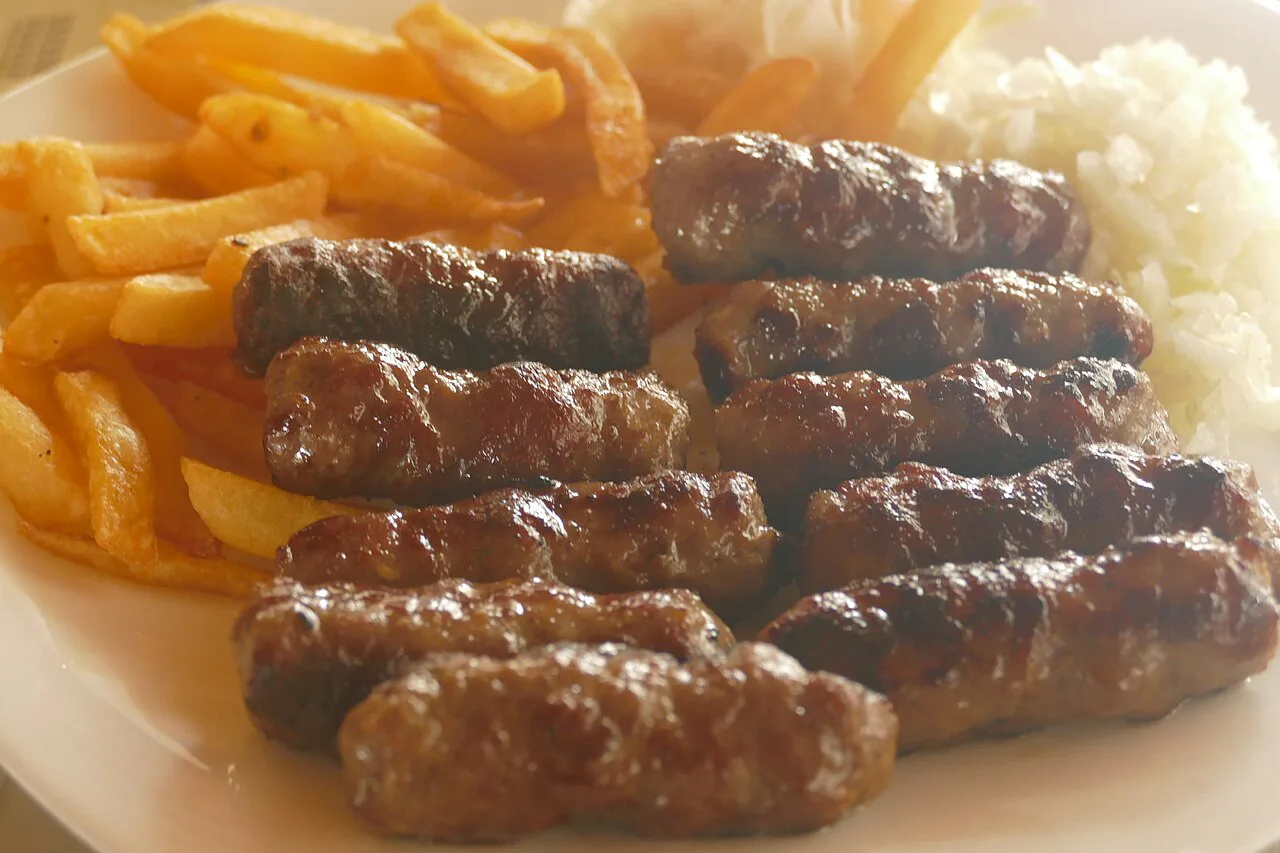
Whether ćevapi appear on Hvar menus
The Balkan grill is not the island's signature, and no Hvar restaurant is confirmed as a ćevapi specialist, so walk in with an open mind. Look for ćevapi under grill or roštilj sections, often alongside pljeskavica and sausages, and read the bread line to see whether somun or a plain roll comes with it. A menu that lists ajvar and raw onion as accompaniments is a strong sign the kitchen knows the dish.
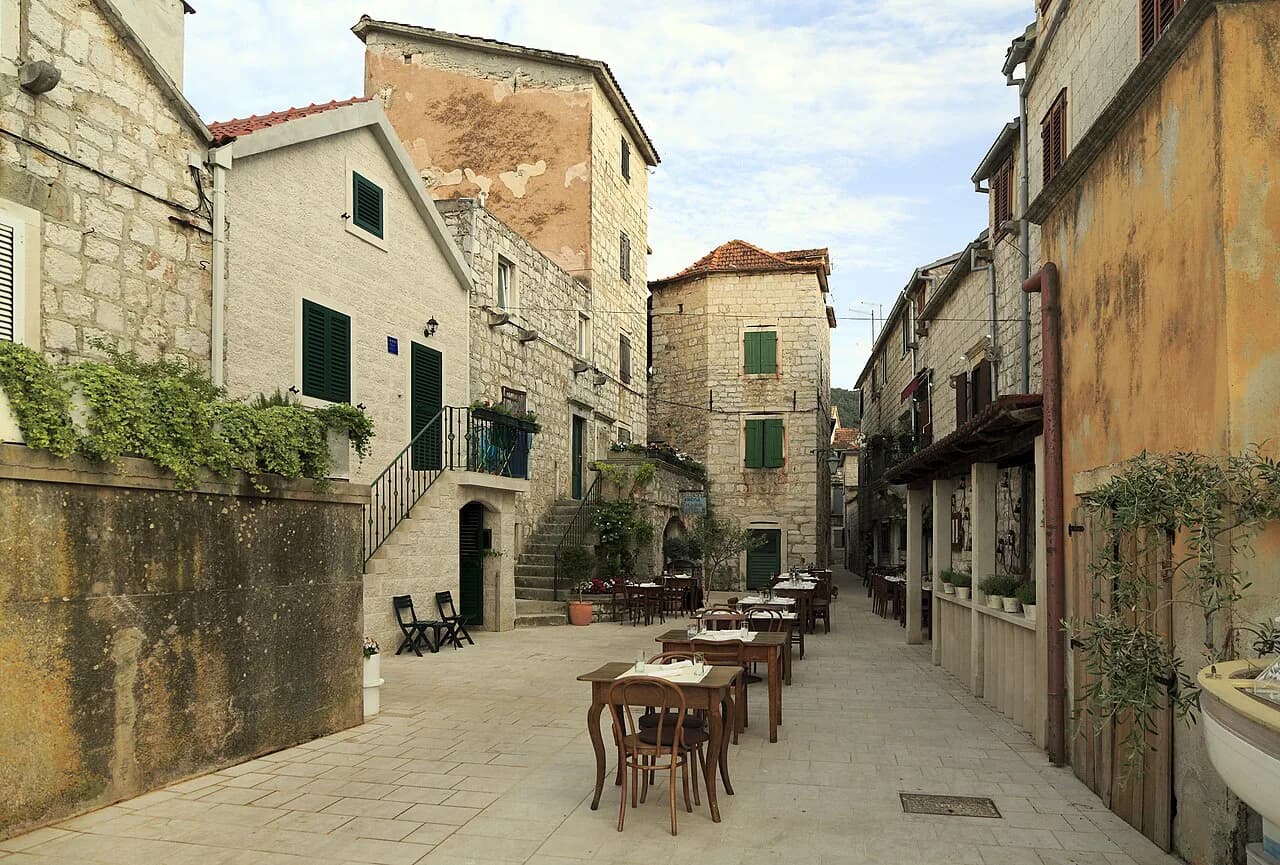
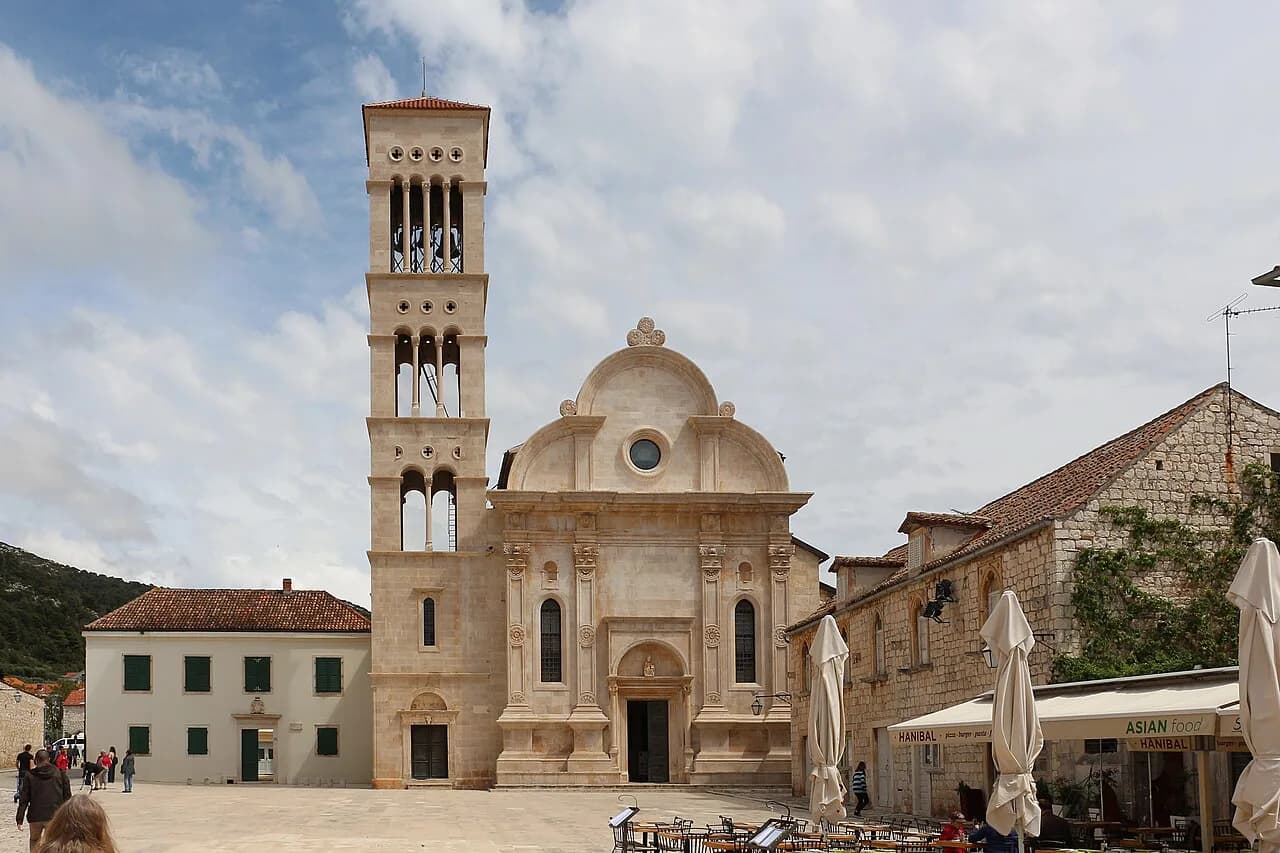
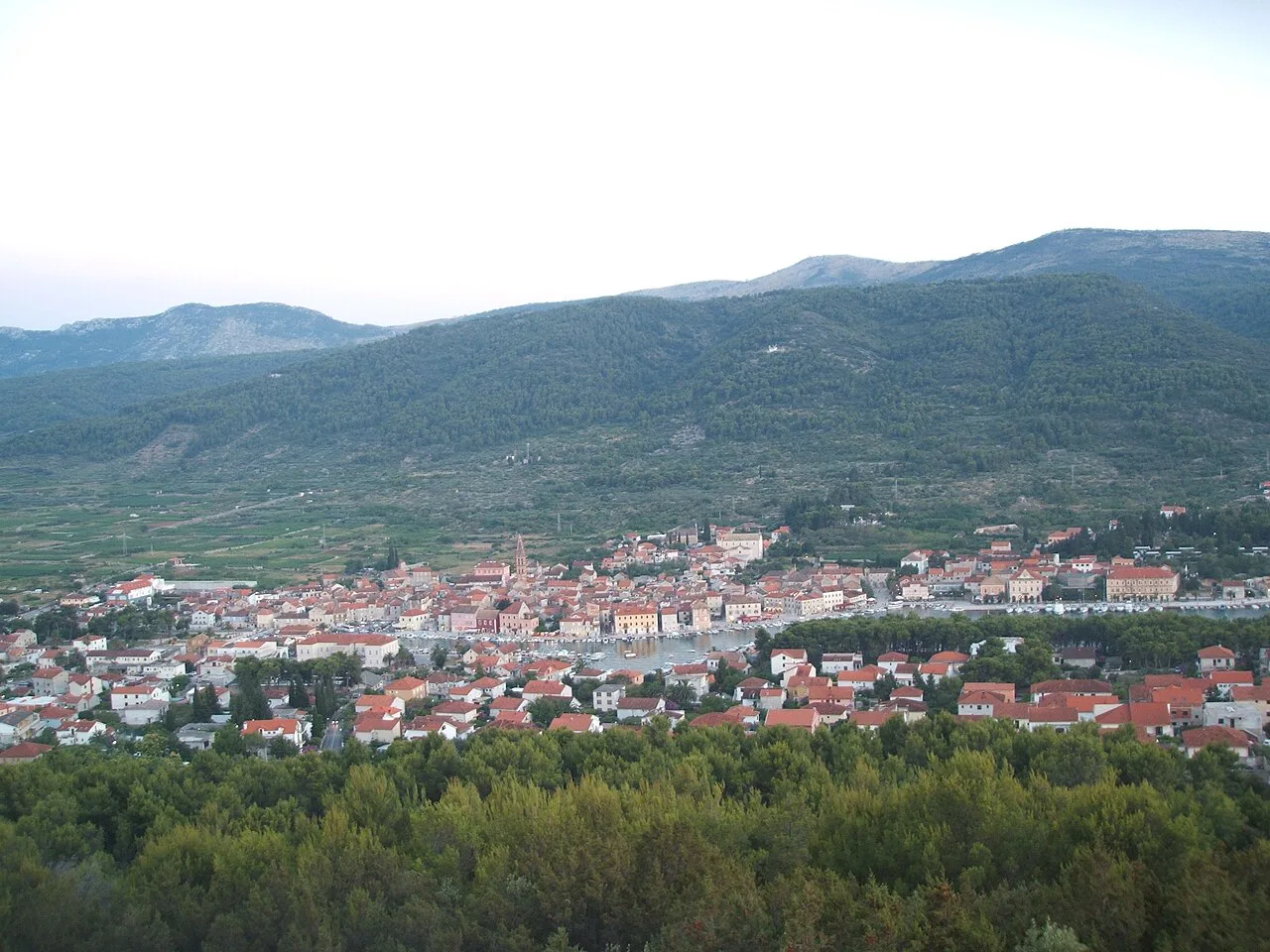
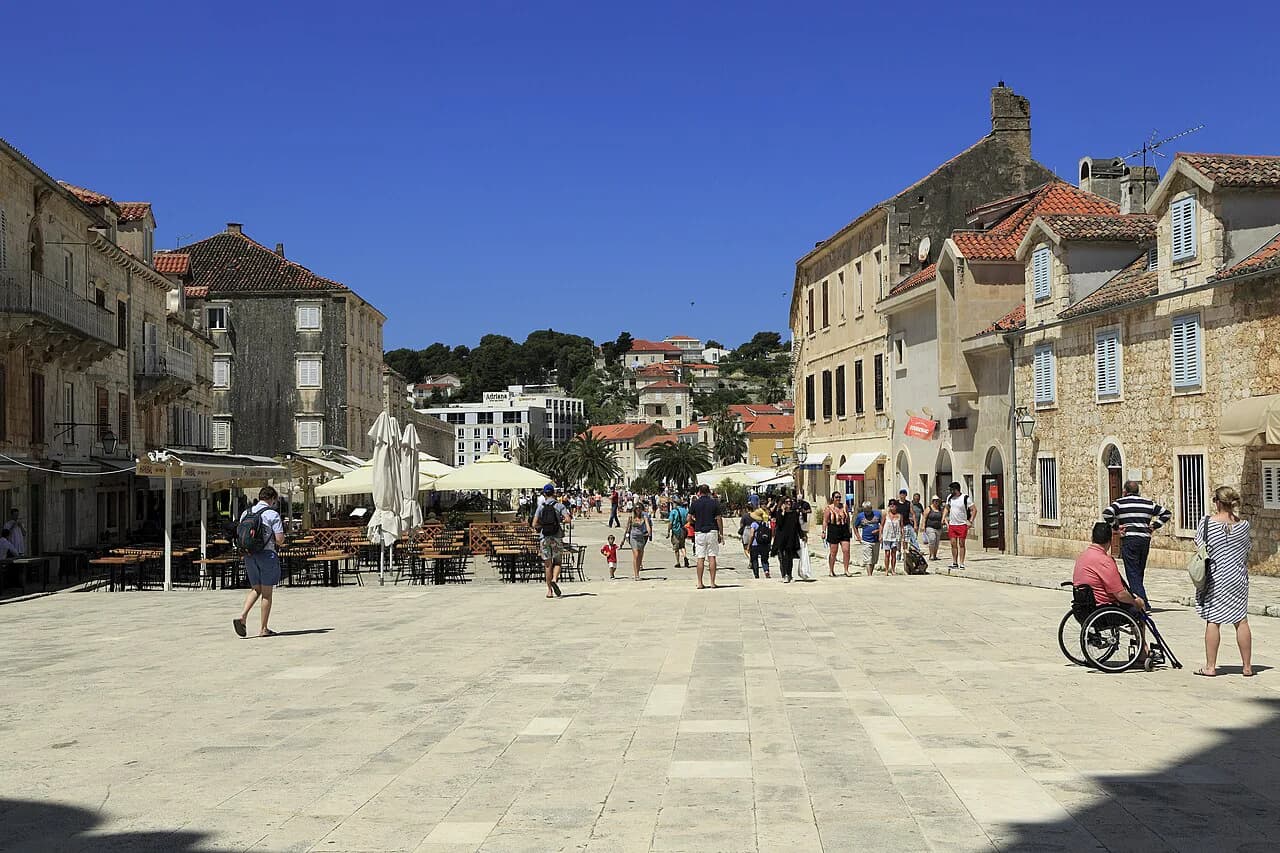
Old-town terraces on St Stephen's Square lean towards Italian-style dining and seafood, so a dedicated ćevapi order is more likely at a casual grill than a formal terrace. If the priority is a sit-down meal with local cooking, look at the konobas in Hvar and book a table with that in mind, ordering the island dishes the kitchen does best.
Ćevapi in a summer bread roll
The version most travellers meet on Hvar is the snack-roll format: a few grilled rolls tucked into a Split bread roll with onion and sauce, eaten standing or on the move. This is the beach-and-ferry-port style, built for speed and heat, and it is a different proposition from the plated ćevapi in somun with ajvar. Knowing which you are ordering stops the disappointment of expecting a full meal and receiving a sandwich.
For a quick lunch, the roll version is the right size; for a sit-down dinner, ask whether the kitchen serves ćevapi in somun with the full accompaniments. Street food Hvar options shift with the season, so the snack format is worth seeking out on the day rather than planning around a particular vendor.
Grill houses and old-town terraces in Hvar Town
Hvar Town splits between the polished terraces around St Stephen's Square and the simpler grills a street or two back, and the two deliver different meals. La Bocca, on St Stephen's Square, describes Italian-inspired dining, which tells you the register of the square rather than what a grill kitchen does. If you want charred meat and bread, look away from the square's seafood-and-pasta menus.
A practical move is to eat one sit-down meal at a Hvar Town terrace for the setting and one at a grill for the food, rather than expecting a single kitchen to do both well. Hvar food is at its most rewarding when you match the venue to the dish instead of ordering against the house style.
Island dishes to order when there is no ćevapi
Hvar gregada is the island's signature fish stew, a fisherman's dish of white fish, potatoes, onion and olive oil, and it is believed to have been cooked here since Greek colonisation, with the name coming from Grego, meaning Greek. Order it when the grill has nothing for you: it is a proper Hvar meal and a better introduction to the island than a generic plate of meat.
Goat cheese from Hvar's family farms is another strong alternative, sold at the Lupi family stall at the Hvar market and from the Mate Vranković family farm in Svirče, with homemade cheese served at the Kod Kućera farm in Zastražišće. For a fuller table, a konoba that cooks under the bell is worth booking: Peka on Hvar is the island's slow-cooked centrepiece.
Dol and the inland village grill culture
Inland from the coast, Dol has a grill culture of its own, and Konoba Kokot there serves wild boar burgers and sausages, wild boar pâté, grilled octopus and homemade cheese. The wild boar is the point: the village kitchen cooks meat with more character than the old-town waterfront, and the place is popular with locals. Make the trip inland if you want the island's grilled-meat side rather than another seafood terrace.
For dessert in the same inland spirit, the lavender cheesecake is served at Zbondini tavern in Velo Grablje and at the Sweet Pastry Shop in Hvar, a cake that grew out of the lavender village itself. A short menu of wild boar and cheese at a village konoba is a better sign than a long one.
How to order ćevapi
Portions are usually counted in rolls, so ask how many come in an order before committing a family to one plate. For two people, a shared portion of ćevapi plus a salad or a plate of cheese is usually enough, and for a hungry group order two portions rather than one large. The bread is filling, so factor somun or a roll into the count.
Drink-wise, a light lager or a glass of local white works with charcoal-grilled meat, and sparkling water is the sensible choice in summer heat. Keep the meal moderate: ćevapi are rich, and the point is the flavour rather than the volume. If you want to cook the island's dishes yourself, an Hvar cooking class is a better use of an afternoon than chasing a menu that may not exist.
Prices and booking in high season
Hvar food prices climb sharply in July and August, when terrace tables on the square carry a premium over inland village grills. Rather than guessing at a figure, read the menu board before sitting down and check whether bread and cover are charged separately, which is common in Croatia. What Food Costs in Hvar sets out the general levels for a casual grill, a konoba meal and a terrace dinner.
Booking matters most for evening tables in Hvar Town in high season, especially for groups and for any konoba known for slow-cooked dishes. For a casual ćevapi roll at lunch, walk-up is usually fine. An Hvar food tour can be a useful way to cover several small stops in one go if your time on the island is short.
Should you chase ćevapi or eat Hvar's own dishes?
Order ćevapi if you spot them on a grill menu, but do not build a Hvar trip around them: the island's own table, from gregada to goat cheese to wild boar in Dol, is the better meal. The roll version suits a quick lunch, while the plated somun version is a sit-down order.
If the grill has none, switch to gregada or a plate of island cheese and book a konoba table for the evening. That way the day still ends with the food Hvar actually cooks, and the ćevapi become a bonus rather than the plan.
Frequently Asked Questions
Do Croatians eat ćevapi with bread or with potatoes?
With bread. Ćevapi are served in somun, a soft flatbread, along with raw onion and ajvar, the roasted red pepper relish. Potatoes are not the standard accompaniment, so if you want them, order them as a separate side.
What is the difference between ćevapi and pljeskavica?
Ćevapi are small rolls of minced meat, while pljeskavica is one wide grilled patty made from the same mixture. Both are charcoal-grilled and served with bread and onion, but the shape changes how you eat them, with ćevapi tucked into the bread and pljeskavica eaten with a knife and fork.
Sources
Notes on eating well in Croatia
Optional updates to our food guides.
You might also like
Continue reading
More guides you'll find useful