Street Food in Hvar: Quick Bites, Bakeries and Small Plates
Street food in Hvar means bakery pastries, small café plates and side-street flatbreads rather than food trucks. Here are the quick bites worth knowing.
On this page
Street food in Hvar is bakery-counter food and casual café plates, not a row of food trucks. The realistic quick lunch is a burek or pastry from a pekara (bakery), a flatbread at a side-street café, or a plate of small bites with a drink. This guide covers where those stops are, what to order, and how the town's eating rhythm shifts between the square and the riva; for the island's dishes and markets more broadly, see our Hvar Food guide.
Hvar Town packs its narrow lanes in July and August, so the practical move is to eat early or eat away from the harbour front. The town works best on foot: buy breakfast at a bakery counter, walk the lanes, and sit down only when you want a proper table.
What street food in Hvar actually looks like
Hvar does not run on street-food stalls. The quick-bite layer of the island is made up of bakeries, café bars and small kitchens serving flatbreads, salads and breakfast plates, which means you eat standing at a counter or at a handful of pavement tables rather than queuing at a window.
The island's food culture is built on very fresh, seasonal ingredients, and that shapes what quick food looks like. The local rhythm described by the Hvar tourist board is a light breakfast, a coffee, a market visit for fish and vegetables, and a relaxed dinner, with the market acting as the day's real food hub rather than a snack strip.
Hvar's Mediterranean Diet, shared with Brač and several locations in other countries around the Mediterranean, was inscribed as UNESCO Intangible Heritage in 2013. In practice that means olive oil, fish, vegetables and legumes dominate, so a fast lunch of grilled vegetables, a salad or a flatbread fits the local pattern better than a fried snack.
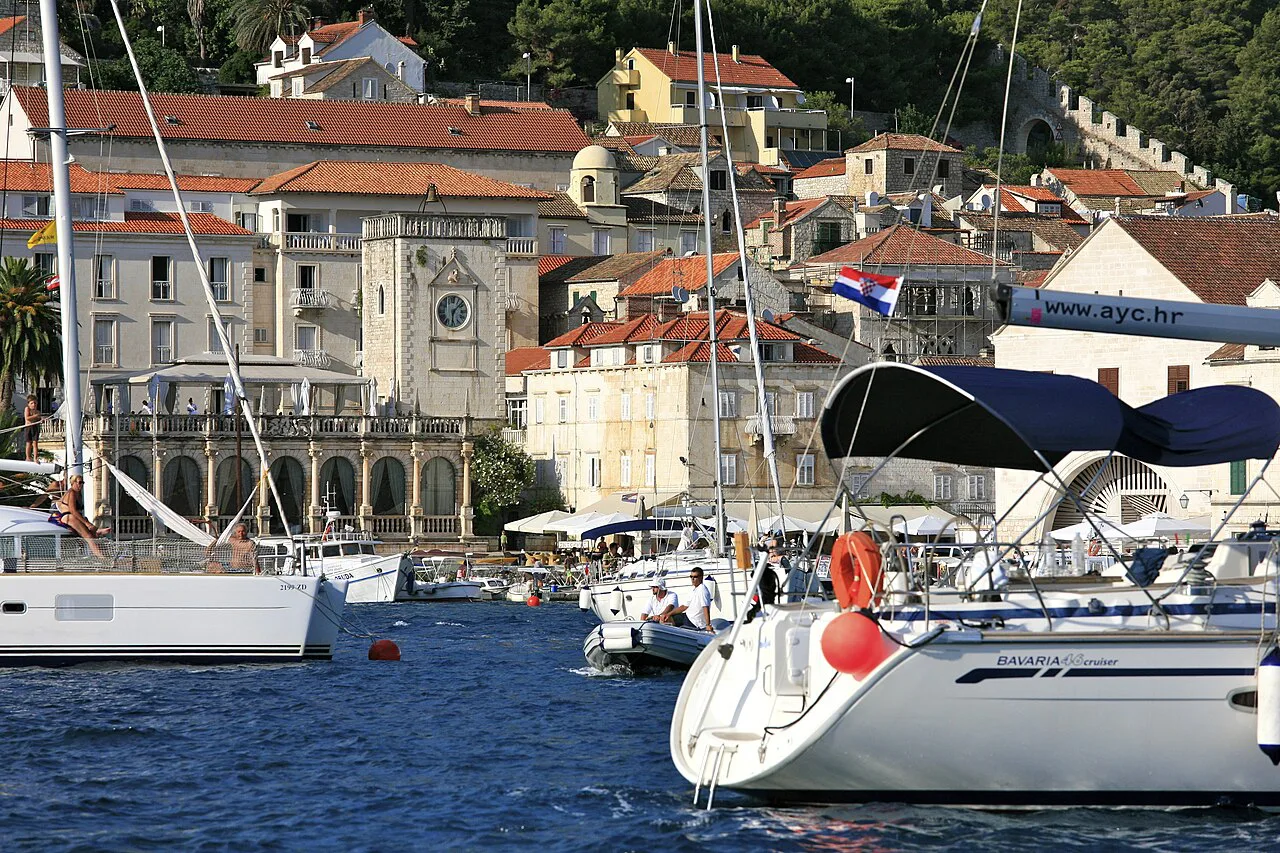
Pekara stops for a morning burek or pastry
The bakery is the closest thing Hvar has to a street-food counter. A burek, a cheese or spinach pastry, or something sweet with coffee is the standard local breakfast eaten on the move, and buying it early is the way to have it warm and to be on the lanes before the day-trippers land.
Bakeries sell savoury and sweet in the same case, so a small savoury pastry plus a sweet one makes a cheap, quick lunch on the move rather than two separate stops. Buy it in the morning, when the cases are freshly filled and the lanes are still quiet.
Morning is also when the town market is worth a detour. The tourist board's outline of a local day puts a market visit straight after breakfast, buying fresh ingredients for a simple fish-and-vegetable meal, which tells you the market is a morning place rather than an all-day one.
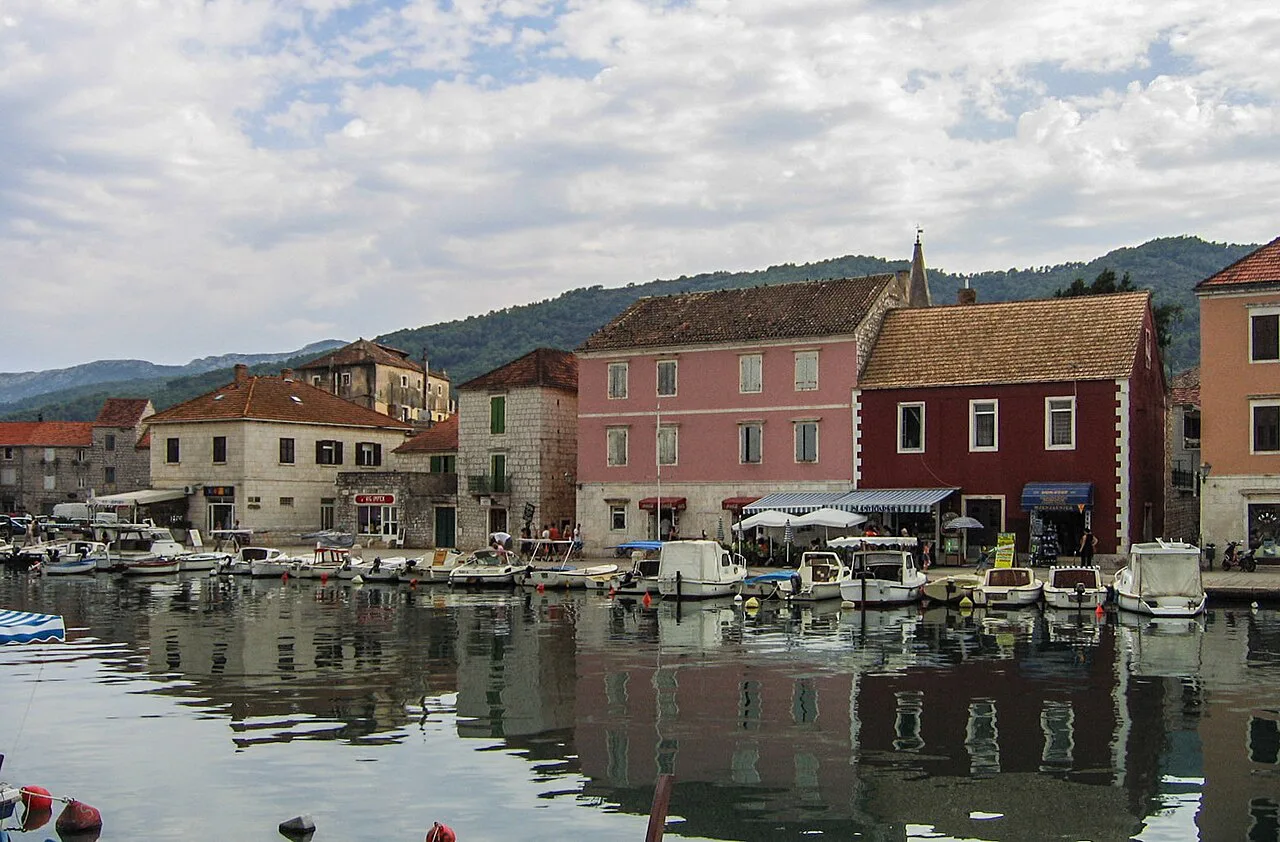
Konoba Fig: a side-street café off the main square
Konoba Fig is the clearest example of Hvar Town's casual eating: a small café-restaurant on a side street, opened in 2015, with a handful of tables and a short menu of flatbreads, breakfast plates, salads and burgers. The venue describes its cooking as inspired by its owners' travels and by locally grown produce, with plenty of vegetarian and vegan options marked on the menu.
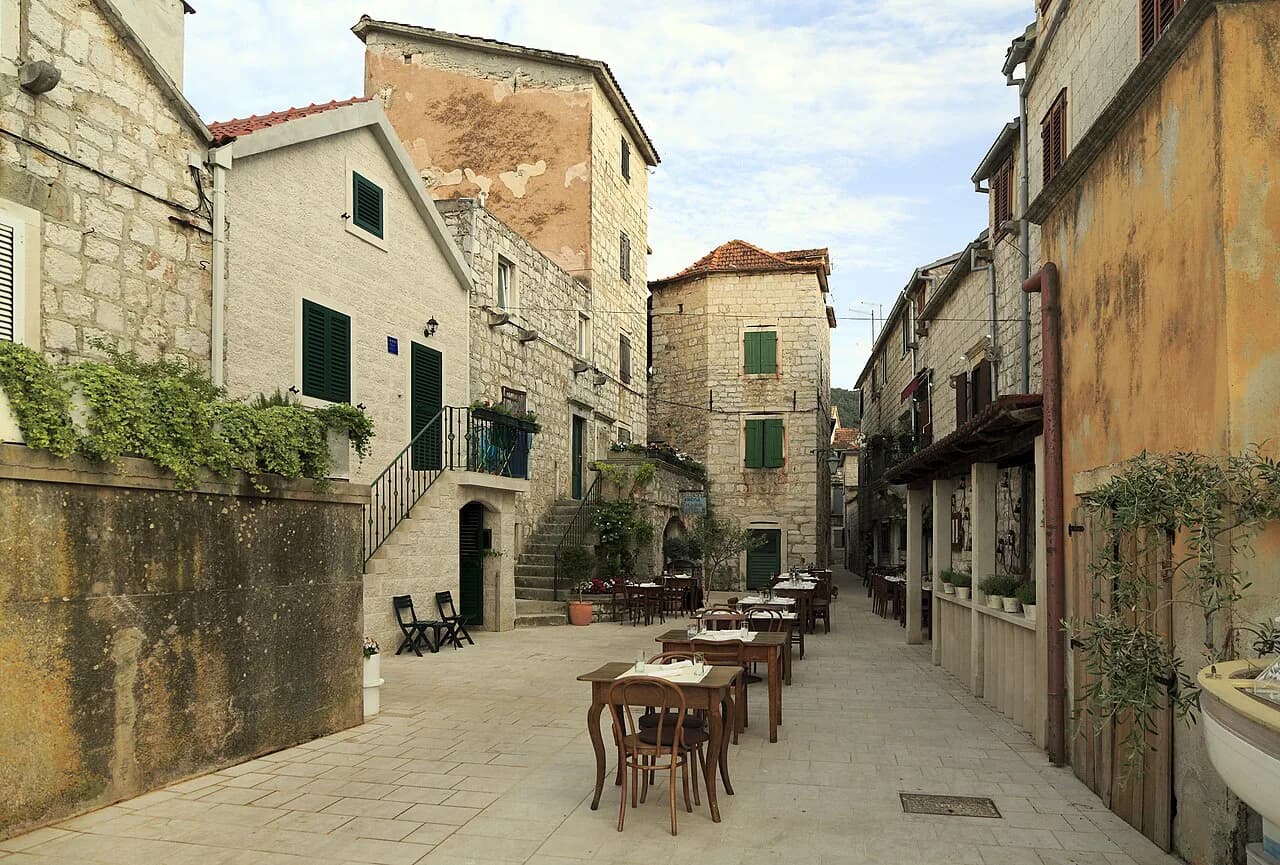
Finding it is the main test. From the main square, the entrance is about 20 metres down a narrow alley between Pizza Kogo and La Bocca, marked by the Fig logo at the end, so walk past the square's terrace frontage and look for the gap rather than a signboard on the square itself.
The venue's own price list, dated 10 September 2026, shows breakfast dishes from 12 to 14 euros, flatbreads from 14 to 15.50 euros, salads around 15.50 to 17 euros and mains from 17 to 22.50 euros, with breakfast served from 9am to noon and lunch and dinner from noon to 10pm. Treat these as the café's listed prices at that date and expect the menu to move with the season.
The dishes to order are the ones the café is known for: the spicy poached eggs at breakfast, the fig and farm cheese flatbread with local figs, walnuts and fresh cheese, and the vegetarian burger if you want something substantial without a full sit-down meal. A flatbread and a salad between two people makes a light lunch.
Hvar's own sweet: Starigrojski Paprenjok
Starigrojski Paprenjok is Hvar's signature biscuit, a spiced pepper-cake made to a recipe traditionally described as around 800 years old. It is the one sweet worth buying deliberately rather than grabbing at random, and it travels well as a small edible souvenir.
The name ties it to Stari Grad rather than Hvar Town, so buy it there if your route passes through the old harbour town. It is a firm spiced biscuit rather than a soft pastry, which makes it a better companion for coffee or a walk than a cream-filled dessert that wilts in the heat.
Small plates and casual eating in Stari Grad and the inland villages
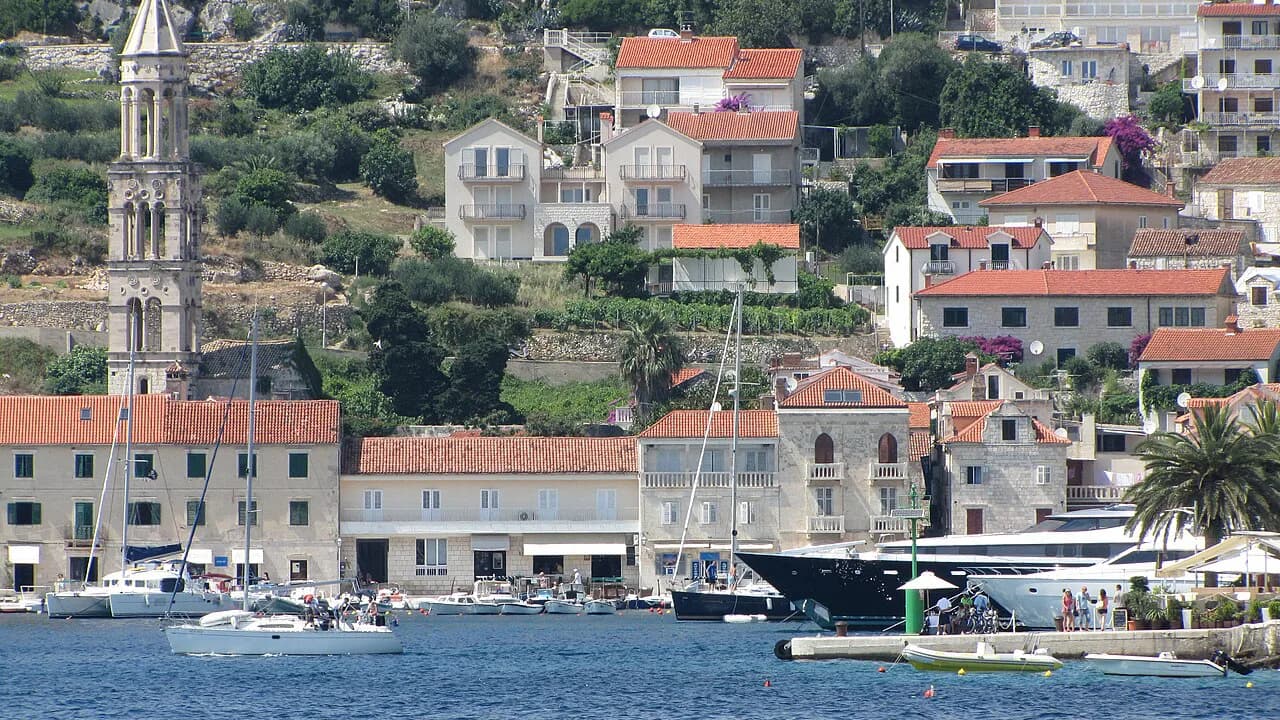
Stari Grad is the quieter base for casual eating, with limestone lanes and an old harbour that reward wandering between small stops rather than committing to one long lunch. It is also the better place to slow down when Hvar Town is at its busiest in July and August; our Hvar Food guide covers what to eat across the island.
For homestyle cooking, head inland. The villages of Velo Grablje, Dol, Svirce, Vrisnik, Pitve and Humac are where the island's traditional dishes are taken seriously, including peka (meat or octopus cooked under a bell-shaped lid), pašticada (slow-braised beef in a sweet-sour sauce) and octopus salad.
Hvar also has its own fish stew, gregada, made with white fish, potatoes, onions and wine. If you want the island's cooking rather than a quick bite, a village table serving gregada or peka is the right call, and those are sit-down meals that need booking in high season rather than a walk-in snack.
If a sit-down konoba is what you're after, our guide to Konobas in Hvar covers how to pick between old-town terraces and village tables when the town is full.
What you'll pay for a quick bite and how to order at a bakery counter
Expect bakery food to be the cheapest eating on the island and café plates to sit in the middle: at Konoba Fig, the venue's own list puts breakfast and flatbreads in the low-to-mid teens of euros, with main dishes a few euros more. Prices elsewhere vary with how close you are to the square, so a bakery two streets back will undercut a café on the riva.
At a bakery counter, order by pointing and saying the number of pieces, and check whether the item is sold by weight before you commit to a large one. Take a napkin, eat outside, and pay in euros; Croatia has used the euro since 2023, so there is no need to convert kuna.
At a café, the menu usually marks vegetarian and vegan dishes with letters, as Konoba Fig does, so scan for those if you Don't eat meat. Coffee is the default purchase at a café table, and a long sit with one coffee is accepted in the morning rather than rushed.
Eating on the go around the square and the riva
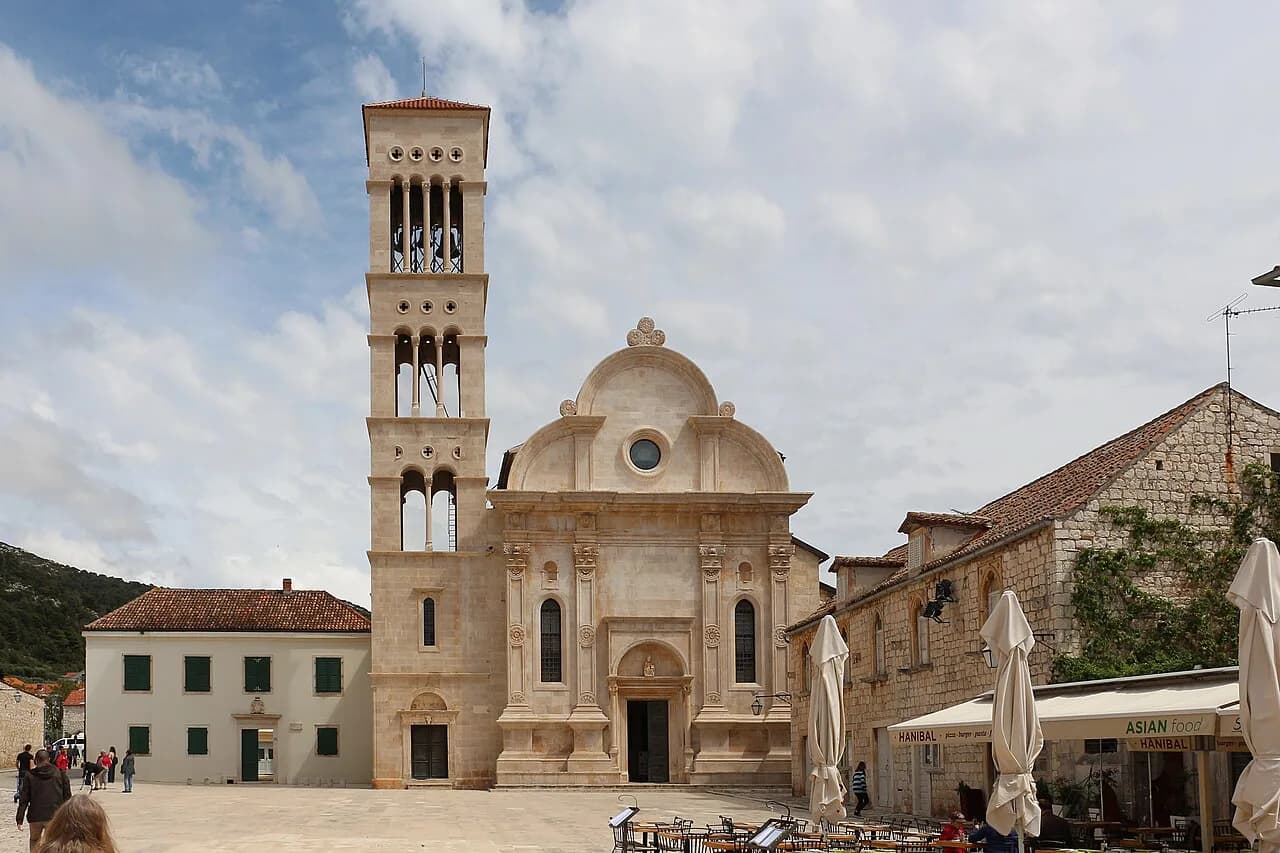
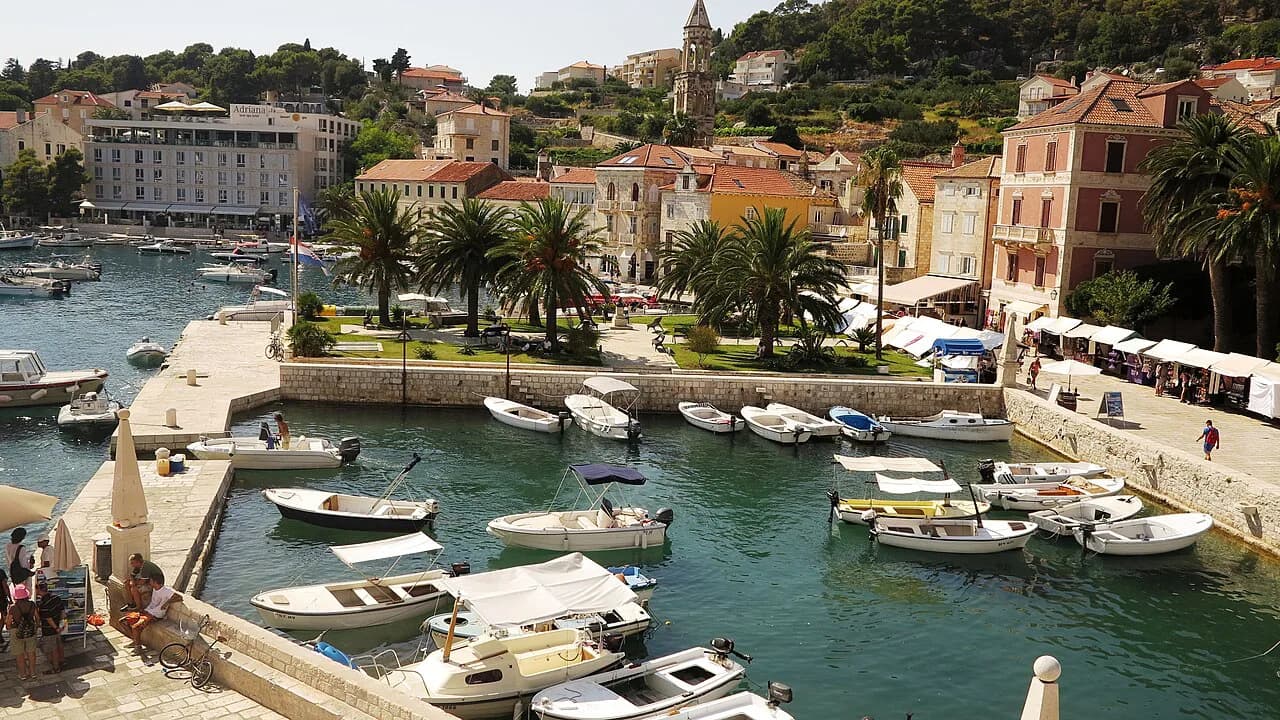
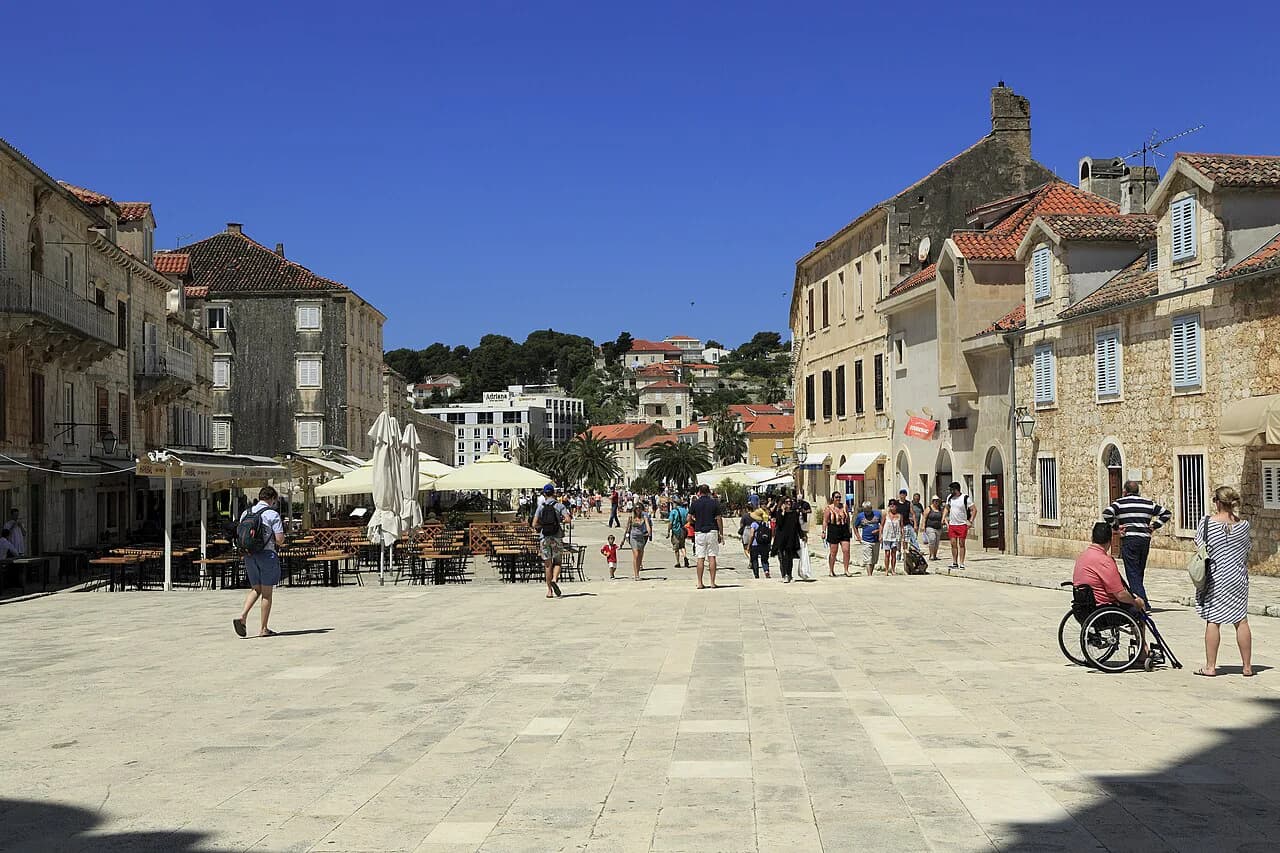
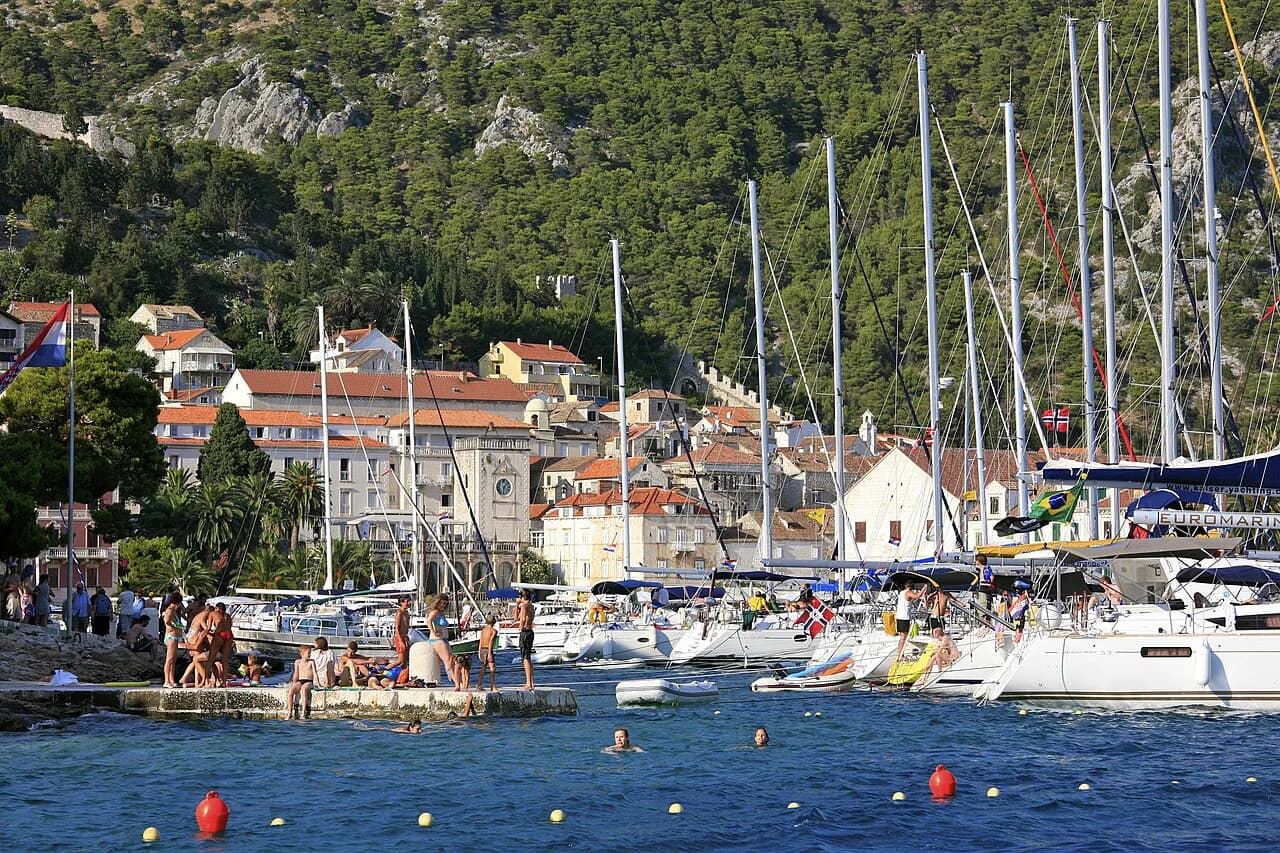
The riva and Trg sv. Stjepana are the busiest places to eat outside a table, and the tourist board's own local-day sketch has coffee on the riva or in the narrow streets before moving on to the market. Use the square for a coffee stop and the side streets for actual food.
Hvar Town is at its most overwhelming in July and August, when the lanes fill and the harbour front is packed. Eat early in the morning or after the day-trippers leave, and treat the middle of the day as a time to be moving between stops rather than queuing at a counter.
If you want the market-to-table version of Hvar's cooking rather than a bought pastry, an Hvar food tour or a cooking class in the quieter months gives you the market visit and the kitchen side of the same ingredients.
Is Hvar's Quick-Bite Scene Worth Planning Around?
Plan around bakeries and one good café rather than expecting a street-food strip. A morning pastry, a flatbread at Konoba Fig and a Paprenjok to take away covers the casual side of Hvar comfortably, and leaves your appetite for a village table inland.
The main adjustment is timing: eat before the ferry crowds fill the lanes, and move to Stari Grad or the inland villages when Hvar Town gets tight in high season. If you want seafood rather than pastry, oysters in Hvar are a different, more deliberate kind of stop.
Explore more Hvar guides
Frequently Asked Questions
Does Hvar have street food trucks or stalls?
No organised street-food stall scene exists in Hvar Town. Quick eating is done at bakery counters, café bars and small kitchens serving flatbreads, salads and breakfast plates, so plan around those rather than a food-truck market.
What is Starigrojski Paprenjok?
It is Hvar's traditional spiced biscuit, made to a recipe traditionally described as around 800 years old and linked to Stari Grad. It is firm and peppery rather than creamy, so it travels well and suits coffee or a walk.
What should I eat for a quick lunch in Hvar Town?
A flatbread or salad at a side-street café such as Konoba Fig, or a savoury pastry from a bakery counter, is the standard quick lunch. Vegetarian and vegan dishes are marked on café menus, and a flatbread plus a salad works well between two people.
Where can I find Konoba Fig in Hvar Town?
From the main square, walk about 20 metres down the narrow alley between Pizza Kogo and La Bocca. The entrance is marked by the Fig logo at the end of the alley, so watch for the gap rather than a sign on the square.
Sources
Notes on eating well in Croatia
Optional updates to our food guides.
You might also like
Continue reading
More guides you'll find useful