Konobas in Hvar: Where to Eat Traditional Croatian Food
Two konobas in Hvar for traditional Dalmatian food, from a cheese and pršut platter on Groda's old steps to a modern menu down a side alley.
On this page
Hvar has two konobas worth planning a meal around: Konoba Menego, a family-run house on the old stairway between the pjaca and the fortress, and Konoba Fig, a small side-alley restaurant off the main square with a modern, produce-led menu. Menego is the traditional choice for a shared platter of local cheese and pršut; Fig is the lighter, more contemporary option for flatbreads, bowls and breakfast.
This guide explains what a konoba is, how a Dalmatian meal is paced from a cold shared platter to mains, and what to order at each place. It also sets out how to find both in the tangle of alleys and steps behind the harbour.
What a konoba is and what to expect in Hvar
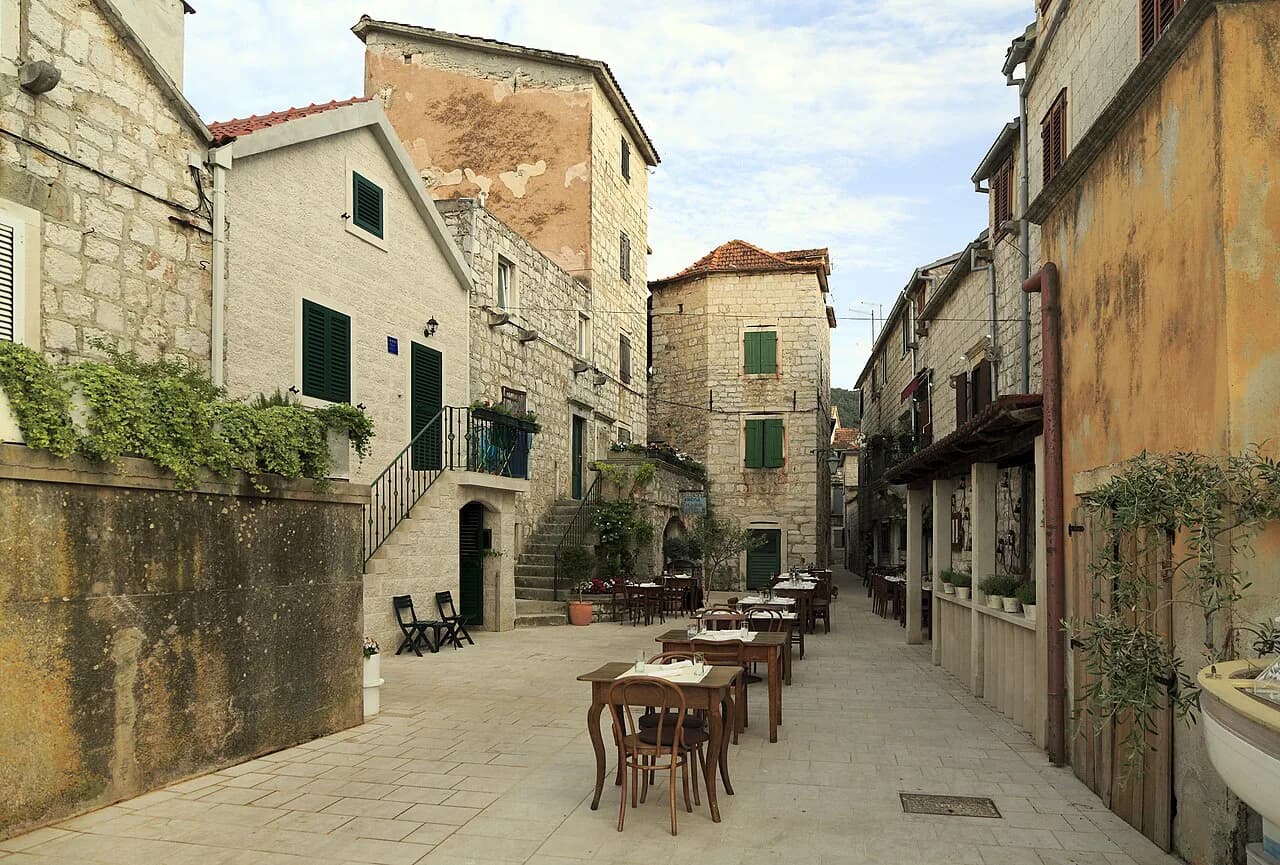
A konoba is a small, family-style tavern, traditionally a stone room with simple wooden tables where the cooking is Dalmatian and the pace is slow. On Hvar that usually means a menu built on local produce: cured ham, cheese, olive oil, fish and vegetables grown nearby. Menego describes its house as a konoba run by the family for generations, decorated to keep its authenticity and serving authentic Hvar and Dalmatian products.
The pattern of a konoba meal is worth knowing before you sit down. You start with a shared cold platter, typically pršut (dry-cured ham) and local cheese with bread and olive oil, then move to a main of fish or meat. Ordering one platter between two and a single main each keeps the meal balanced rather than overfaced.
Hvar Town's konobas sit in the pedestrian lanes and stairways of the old town, which shapes the evening: you walk to dinner, tables are close together, and the best rooms are small enough to fill quickly in high season. For the wider picture of what is cooked on the island, see the Hvar food guide.
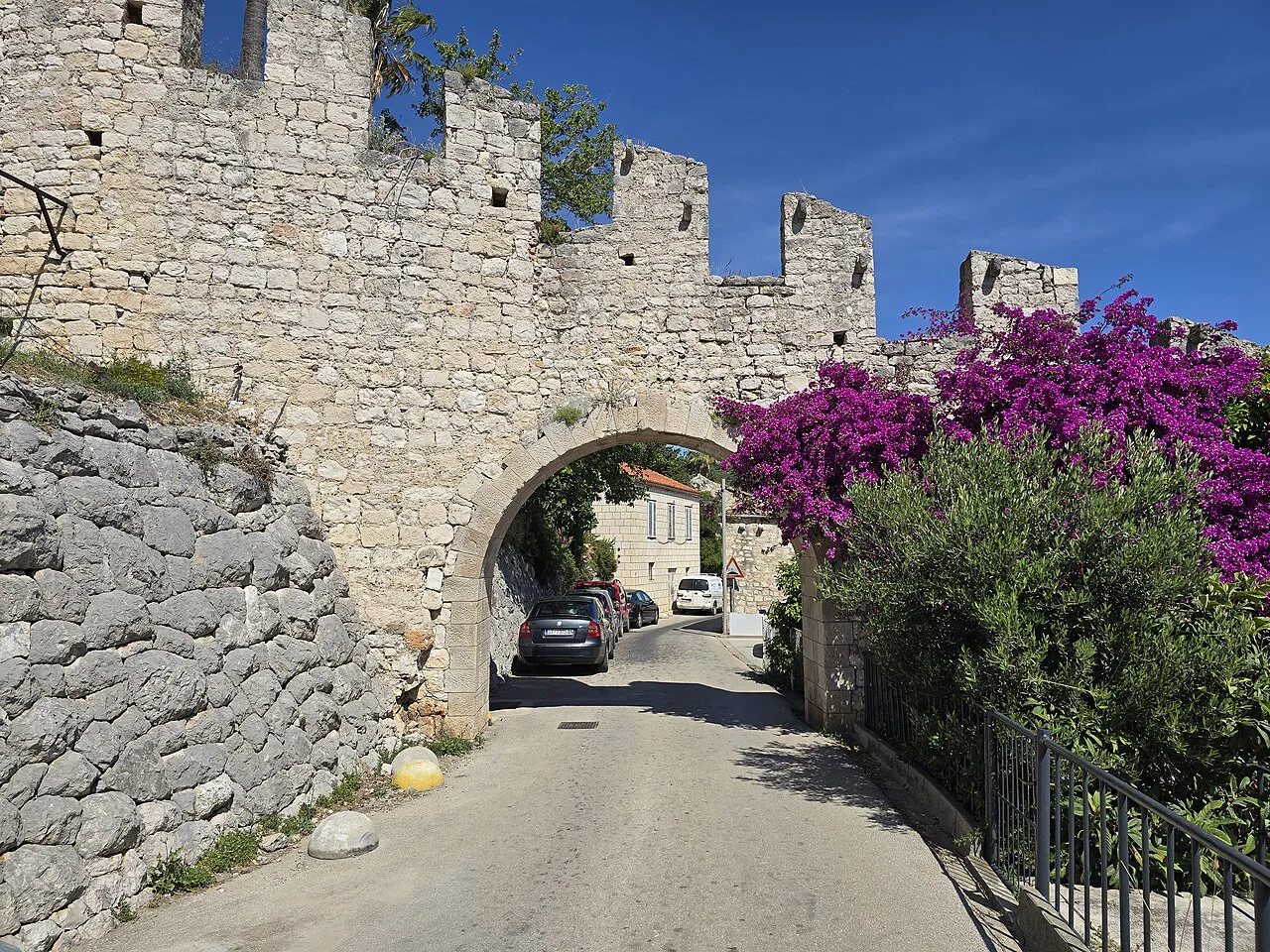
Konoba Menego: a family house on the Groda stairway
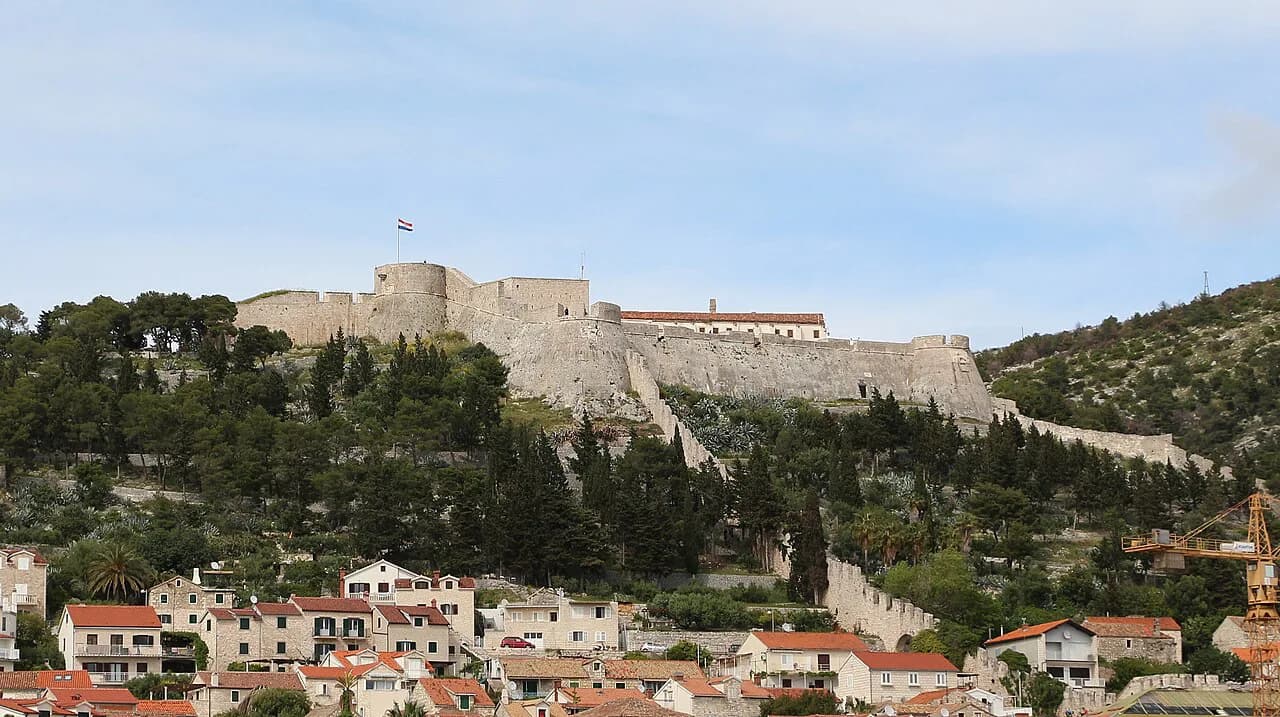
Menego sits in the old part of Hvar Town known as Groda, beside the main stairway that links the pjaca (the main square) to the medieval fortress above. It opened in summer 1999 and, by the owners' own account, has run each season from 1 April to 1 November since then. Treat those dates as the pattern the family describes rather than a guarantee for your travel dates.
The house belonged to the owner's mother's family, the Karković-Trentin, and stood abandoned and ruined before restoration; a coin from the 14th century was found set into the wall during the work. The name Menego is a form of Domeniko, chosen to honour the owner's grandfather Dinko, who was known locally as a good winemaker. Staff work in Hvar folk dress and the room carries Dalmatian klapa song, which gives the place its sense of occasion.
That history is the reason to book Menego rather than simply turn up: by the family's own account it opens each season on 1 April and closes on 1 November, and a small room on a famous stairway fills quickly in July and August. Outside high season the town is quiet enough that a same-day table is more realistic.
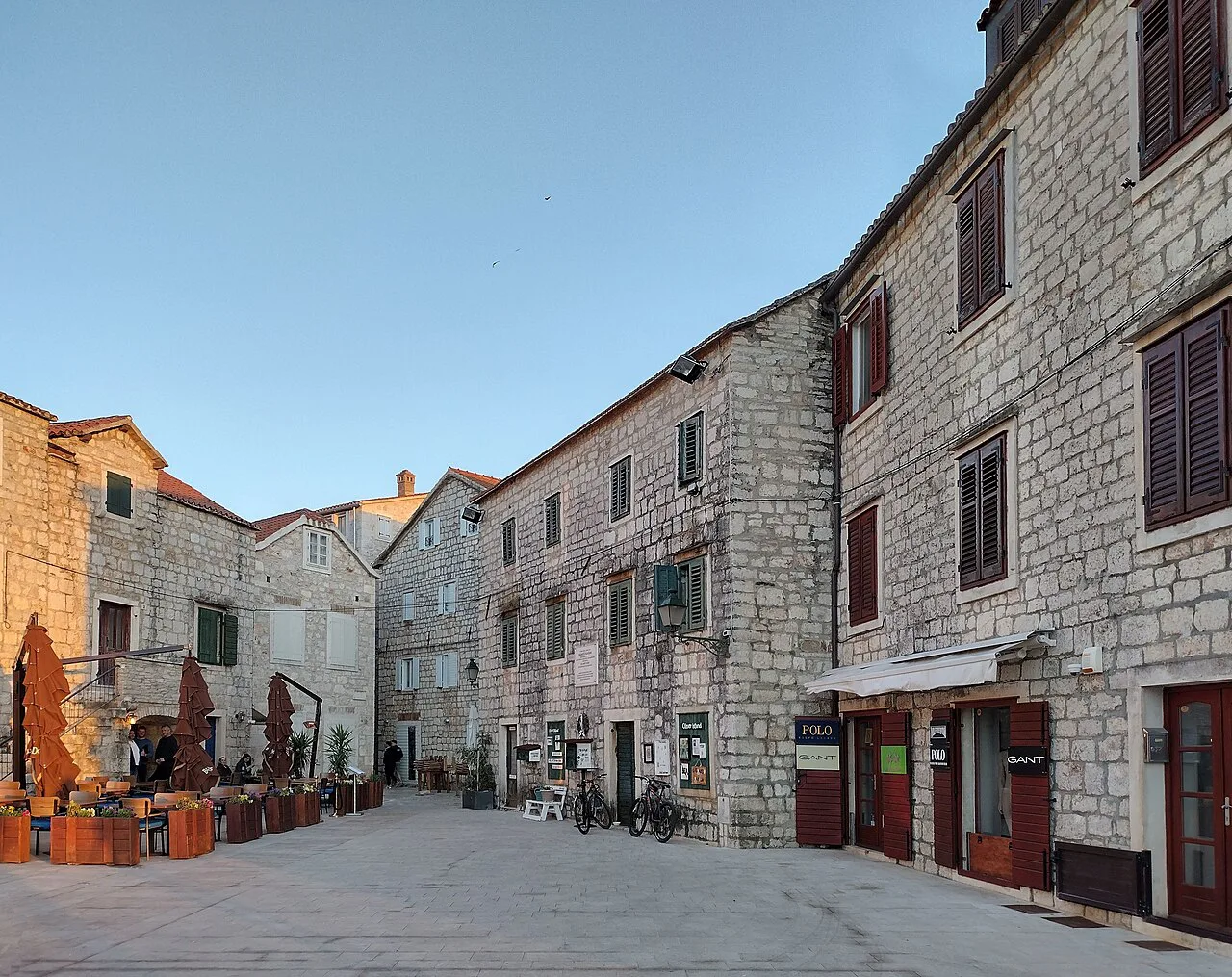
What to order at Menego: the Dalmatian mixed platter and local produce
Start with the mixed platter of local cheeses and pršut. It is built for sharing and sets up the rest of the meal: a few slices of cured ham, a couple of cheeses, bread and olive oil. It is the classic way into a Dalmatian konoba dinner, and Menego serves it as part of its authentic Hvar and Dalmatian produce.
After the platter, move to a main and keep it simple: grilled fish or a slow-cooked meat dish suits the room and the pace. Ask what came in that morning rather than defaulting to the menu's first line, and let the kitchen guide you on portion size if you are ordering for a group. Wine is served by the glass alongside the food; keep it moderate and let it accompany the meal rather than lead it.
If you want to understand the dishes before you go, a Hvar cooking class is a good way to learn how the cold platter and the fish courses fit together. It also makes you a sharper reader of any konoba menu on the island.
Konoba Fig: a side-alley table in downtown Hvar
Fig is a restaurant and café-bar on a side street of downtown Hvar, opened in 2015 with the aim of creating a fun, welcoming room. Its menu draws on the owners' travels and on locally grown produce, which is why the cooking runs from poached-egg breakfasts to curries, burgers and flatbreads. It is not a konoba in the traditional sense, and it does not pretend to be.
The setting is part of the appeal: a handful of tables on a quiet cobbled alley, a short walk from the main square. That makes it a good choice for a late breakfast or a lighter lunch when a long, structured konoba meal is more than you want. It also has a strong run of vegetarian and vegan dishes, which is not something every Hvar Town kitchen offers.
Its location is easy to miss, and the restaurant says as much: it sits about 20 metres down a little alleyway between Pizza Kogo and La Bocca, off the main square, with a logo at the end of the alley to guide you in.
What to order at Fig: flatbreads, bowls and breakfast
The flatbreads are the through-line of the menu, and the fig and farm cheese version is the one to try first if you have not eaten there: local poached figs, roasted walnuts, fresh farm cheese, fig jam and mache on grilled bread. The kitchen also serves a tomato and onion jam flatbread and a baba ganoush flatbread with mascarpone, mushrooms and grapefruit. The restaurant publishes its current menu and prices on its own site.
Breakfast runs from 9am to noon and covers steam-poached spicy eggs, a vegetarian breakfast burrito and a granola bowl with local yoghurt and seasonal fruit. Later in the day the kitchen shifts to bowls, salads and burgers, including a Buddha bowl with smoked tofu and a watermelon, feta and mint pesto salad in season. Prices on the restaurant's own menu run from around 12 euros for breakfast dishes to the low twenties for mains.
If your trip is built around eating your way across the island, a Hvar food tour is an efficient way to cover several stops in one day and to get your bearings in the old town before choosing where to book dinner.
Menego or Fig: which suits your meal
Choose Menego for a traditional Dalmatian dinner with a sense of place: a stone room in a family house on the old stairway, a shared platter of pršut and cheese, then fish or meat. It is the pick for a first evening in Hvar Town, a special meal, or anyone who wants the konoba experience the island is known for. Book ahead for summer.
Choose Fig for breakfast, a lighter lunch, or a dinner when you want vegetables, flatbreads and a quieter alley table rather than a long tavern meal. It suits mixed groups where some eat vegan or vegetarian, and it works well on a day when you have already had a large konoba lunch. If you simply want a rough sense of what a meal costs in town before deciding, the food prices guide sets out the range.
If you want a third option, the island's signature slow-cooked dishes are worth seeking out: Peka on Hvar explains how the domed-lid cooking works and what to expect when you order it. Between a konoba dinner, a modern side-alley meal and a peka lunch, you can cover the island's range in three sittings.
How to find Menego and Fig in Hvar Town
Both places sit in the old town, a short walk from the harbour and the main square. Menego is on the Groda side, along the main stairway that climbs from the pjaca towards the fortress; look for it as you go up rather than down. Fig is off the square in the opposite direction, down a narrow alley between Pizza Kogo and La Bocca, with its logo at the end of the passage.
Hvar Town is small enough to walk end to end, and the lanes are pedestrian, so leave heels and wheels at home for the evening. If you are arriving by ferry from Stari Grad, allow time to walk through the old town and find your table rather than booking tightly against the crossing. The wider Hvar food guide covers the island's other eating traditions if you are staying beyond the town.
Which Hvar konoba should you book first?
Book Menego first if you want the classic Hvar konoba evening: a family house on the old stairway, a shared pršut and cheese platter, and a slow main course. For breakfast, a lighter lunch or a vegan-friendly table in a quiet alley, Fig is the better fit.
Whichever you choose, eat early or book ahead in July and August, and keep one evening free for a simpler meal so the trip does not turn into a sequence of heavy dinners. The Hvar food tour is a useful first-day move if you want to see the old town and taste a few things before committing to a restaurant.
Frequently Asked Questions
What is a konoba in Croatia?
A konoba is a small, family-style tavern, usually with a stone room and simple wooden tables, serving Dalmatian cooking built on local produce such as cured ham, cheese, olive oil, fish and vegetables. Menego on Hvar describes itself as a konoba run by the family for generations.
Do I need to book a konoba in Hvar in summer?
Yes for the small traditional rooms, which fill quickly in July and August. Menego is a compact house on the old stairway that by the family's own account runs only from 1 April to 1 November, so plan ahead for a summer evening; outside high season, a same-day table is more realistic. Fig is a small alley restaurant too, so a booking helps at peak times.
Sources
Notes on eating well in Croatia
Optional updates to our food guides.
You might also like
Continue reading
More guides you'll find useful