Dubrovnik Fish Market: A Guide to Gruž Market and Its Seafood
Dubrovnik's fish market is the open-air Gruž Market by the ferry port, where stallholders sell the morning catch. Here's what to buy and how the stalls work.
On this page
Dubrovnik's fish market is Gruž Market, the open-air market on Obala Stjepana Radića beside the ferry terminal in Gruž, the harbour district northwest of the Old Town. It is the city's main morning market, and the seafood arrives before the rest of the trade. This guide covers where it sits, how the morning unfolds, what is sold and how a purchase works.
Come for the fish and you are buying an early slot: the seafood is at its best when the stalls first open, and most vendors wind down by late morning rather than trading all day. Come for the atmosphere and the produce and you have a slightly later window, though the market still finishes around midday. Either way, Gruž is a working neighbourhood rather than a postcard, which is part of the appeal.
Where the fish market sits in Gruž
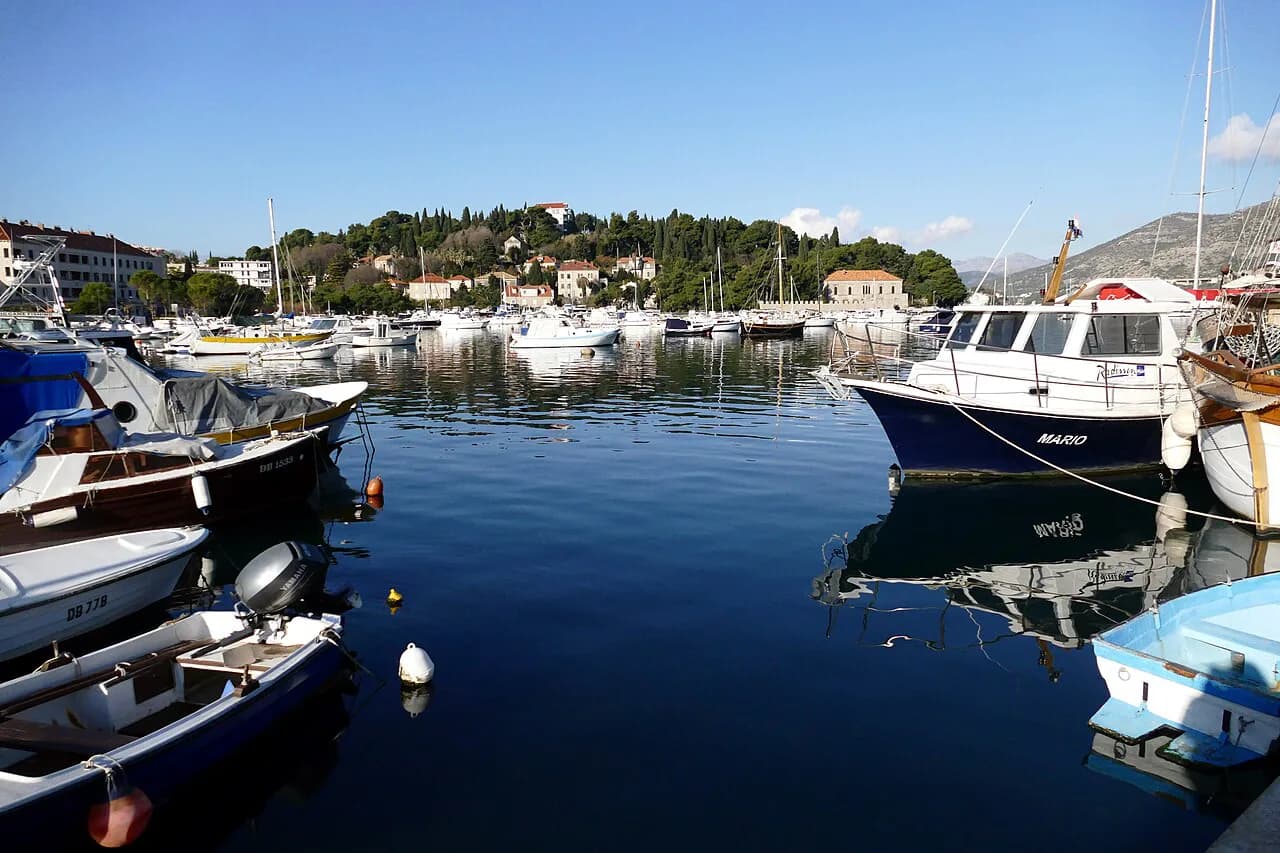
Gruž Market occupies Obala Stjepana Radića, the waterfront road that runs along the harbour, a short walk from the ferry terminal where boats leave for the islands and the coast. That position makes it the natural first stop if you are heading out to Korčula or Mljet, or the last stop before you sail. The address is worth noting because the market is a stretch of open-air stalls rather than a building with a door.
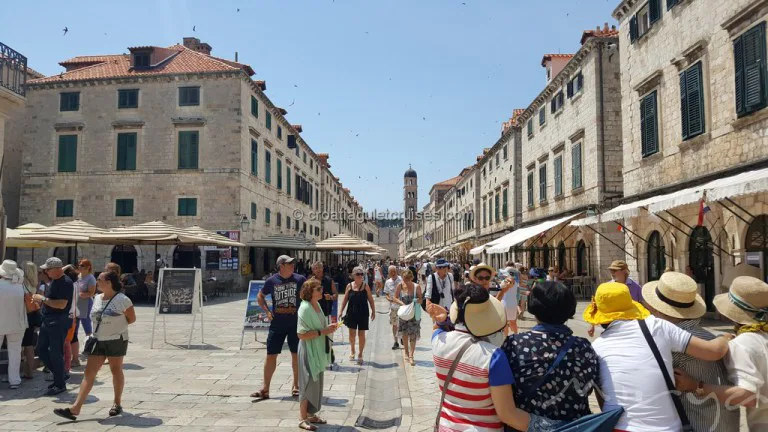
Gruž itself lies northwest of the walled Old Town, and the two feel different: the harbour district is where ferries, cruise ships and the market trade, with the promenade running along the coast towards Lapad. The district has drawn wider attention as a local neighbourhood worth exploring beyond the Old Town.
When to arrive
Treat this as a morning market. The seafood stalls are the first to fill, with fish on the slabs from around 6:00 and the widest selection before the early rush passes; the choice thins as the morning goes on and most vendors are winding down by around 10:00. If fish is the reason you came, arrive at opening rather than drifting in late.
The later part of the morning belongs to fruit, vegetables and flowers, and the pace is gentler once the fish trade has eased. Setting your alarm is the single decision that most changes what you find on the slabs.
What's sold: fish, seafood, produce and flowers
The market's core is fresh fish and seafood from the Adriatic, laid out for inspection alongside seasonal fruit and vegetables grown by local farmers, plus flowers and speciality items such as cheese, meat and olive oil. It is a shopping market first, so expect crates, scales and cool boxes rather than anything staged for photographs.
The produce is seasonal and the catch varies with the day's fishing, so buy what looks lively and bright-eyed on the day rather than arriving with a recipe already written, and let the stallholder tell you what came in that morning.
How the stalls work
This is a buy-by-eye market: you point at what you want, the vendor weighs it on the spot and you pay at the stall. Ask the price before you commit, particularly on fish, which is usually sold by weight rather than by the piece. Knowing the Croatian words helps: riba is fish, škampi are prawns, lignje are squid, kamenice are oysters and dagnje are mussels.
Bring a bag and, if you are buying fish for later, a plan for keeping it cold, since the market is an open-air stop rather than a shop that packs for travel. Small notes and coins make the transaction quicker.
Cooking your fish, or eating seafood in town
Buying raw fish only makes sense if you have a kitchen and can cook it the same day; a hotel room with a kettle is not the place. The simplest Croatian treatment is to grill or bake a whole fish with olive oil, garlic and lemon, or to make a brodet, the fish stew thickened with bread.
If you are in Dubrovnik for a short break with no cooking facilities, the market is still worth a look as a piece of local life, then eat seafood in town instead. The Old Town and the harbour both have restaurants built around the day's catch, and lunch is generally better value than dinner for fish. Pair the market visit with a slow start at one of the Cafés in Dubrovnik, and you have a decent half-day around Gruž.
Getting to Gruž from the Old Town
Gruž is roughly two miles northwest of the Old Town and easy to reach on foot along the harbour. Walking takes you past the ferry terminal and the cruise berths, so you see the working side of the city on the way. Allow more time than the distance suggests in high summer, when the heat slows everything down.
Pair the market with the harbour itself: the promenade towards Lapad runs about 2.5 km along the coast and makes a flat, shady walk after you have bought your fill. If you are travelling on to the islands, the ferry terminal next door removes any need for a separate trip. Start early enough and you can shop, walk and still be back in the Old Town before the midday crush.
Market vocabulary for buying fish
A handful of Croatian words turns a browse into a purchase. Riba is fish, plava riba means oily fish such as sardines and mackerel, bijela riba means white fish, and na kilo means by the kilo. Očišćeno means cleaned, so ask for it if you want the fish gutted and scaled.
For shellfish, look for škampi (prawns), lignje (squid), hobotnica (octopus), dagnje (mussels) and kamenice (oysters). Koliko košta is how you ask the price, and može li Malo manje is a polite request for a smaller amount. A notebook or phone with the words saved avoids pointing at the wrong crate in a busy queue.
Pairing the market with breakfast
An early market run fits neatly before breakfast, since Gruž and the streets around the harbour have a scattering of places for coffee and something baked. If you are staying in the Old Town, eat after you return rather than before, so you are at the stalls when the fish is best. A bakery stop on the way back is the classic cheap finish to a market morning, and The Best Breakfast in Dubrovnik covers your sit-down options.
Is the market worth an early start?
Yes, if you want to see how Dubrovnik actually shops and eat fish at its freshest; no, if you are after a leisurely lie-in and a late brunch. The market rewards timing more than most sights in the city, and a visitor who arrives at opening gets a different place from one who arrives at 10:00. Go early, bring cash and a bag, and treat the harbour walk as part of the outing.
Explore more Dubrovnik guides
Frequently Asked Questions
Is there a fish market in Dubrovnik?
Yes. Gruž Market on Obala Stjepana Radića, beside the ferry terminal in the Gruž district, is the city's open-air market for fresh fish, seafood, seasonal produce and flowers.
When is the best time to visit Gruž Market for fish?
Early in the morning. The seafood stalls are the first to fill, with fish on the slabs from around 6:00, and most vendors are winding down by around 10:00, so arriving at opening gives the best selection.
Where is Gruž Market in Dubrovnik?
Gruž Market is on Obala Stjepana Radića, the waterfront road in the Gruž harbour district, roughly two miles northwest of the Old Town and a short walk from the ferry terminal.
Sources
Notes on eating well in Croatia
Optional updates to our food guides.
You might also like
Continue reading
More guides you'll find useful