
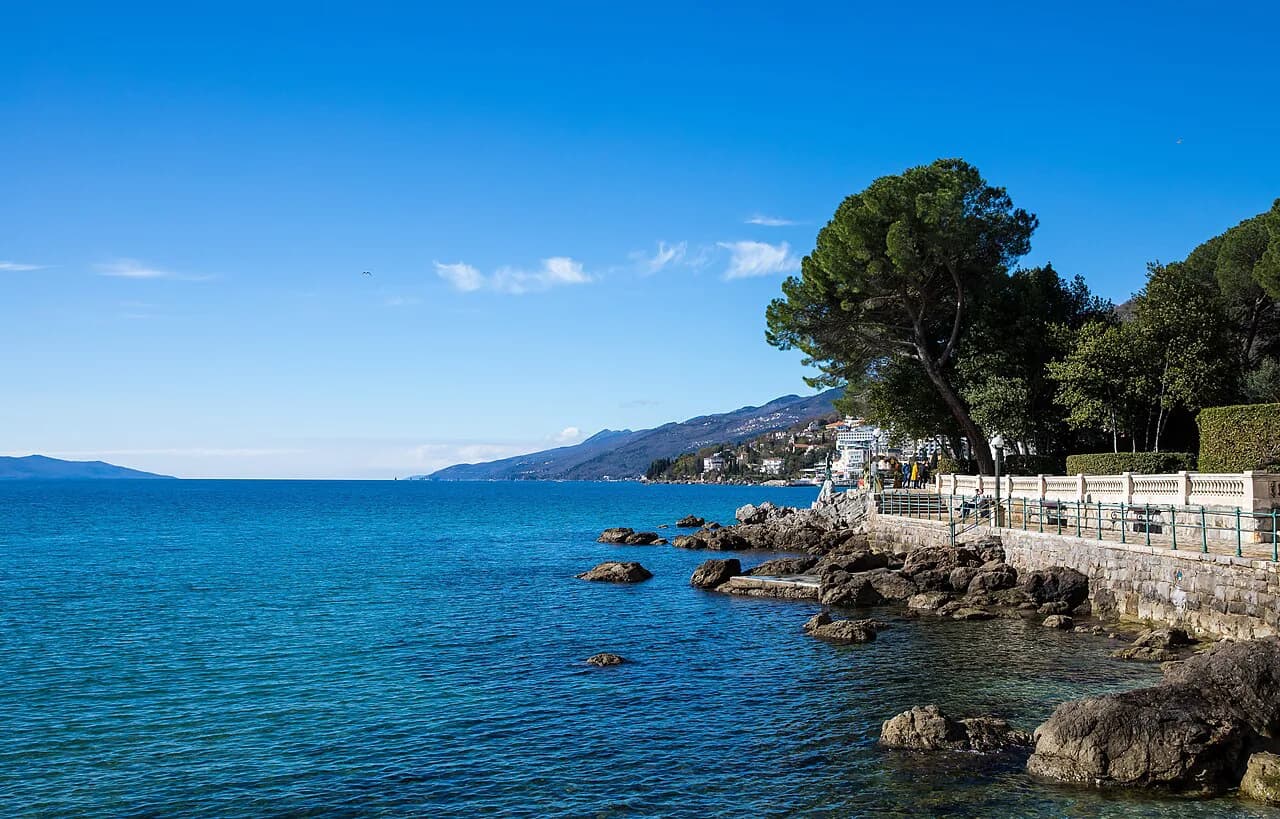
Kvarner Food: What to Eat in Opatija, Krk, Cres and Lošinj
Kvarner food mixes seafood and mountain cooking. Learn the dishes to order, from Kvarner scampi to Cres lamb, Krk šurlice and Rab cake, and where to find them.
On this page
Kvarner food is the cooking of Croatia's northern Adriatic coast and its islands, where seafood from the Kvarner Gulf meets mountain ingredients from the hinterland. The dishes to seek out are Kvarner scampi, fish boiled with olive oil or cooked in brodetto, Krk šurlice pasta and pršut, Cres lamb, Grobnički sir and Rapska torta. This guide runs through each one, explains how it is served, and points to the towns and islands where it belongs.
The region covers the Opatija and Crikvenica rivieras on the mainland plus the islands of Krk, Cres, Lošinj and Rab, and each has its own specialities rather than one shared menu. You can eat well in all of them, but the dishes change as you move from coast to island to the hills behind Opatija.
What Kvarner food is: a coastal and mountain cuisine in one region
Kvarner cooking combines Mediterranean and continental influences, so a single table can offer shellfish, lamb, pasta and chestnut desserts. The region's eating establishments can carry the Kvarner Gourmet and Kvarner Food quality labels, awarded since 2012 to help visitors find local cooking. Look for them when you are choosing between a seafront terrace and a village konoba.
As a rough rule, the mainland coast leans on fish, scampi and olive oil, while the islands add sheep's cheese, cured ham and lamb from grazing flocks. The hinterland around Opatija and Lovran contributes chestnuts and freshwater-influenced dishes. Knowing which side of that line you are on makes ordering much easier.
Kvarner scampi: raw, in risotto or à la buzara
Kvarner scampi are the region's most prized shellfish, served raw and marinated in extra virgin olive oil with lemon juice as a starter, folded through risotto, or cooked à la buzara, which means in a sauce. The buzara version is the best known, and it brings out the sweetness and aroma that make these scampi distinct. If you only order one shellfish dish in the region, make it this.
Ordering raw scampi is a decision worth making deliberately: they arrive cold, dressed in oil and lemon, and suit a light start to a long meal. A risotto makes them the centre of the plate, while the buzara preparation works as a shared middle course with bread for the sauce. Some of the strongest cooking with scampi sits in the restaurants in Opatija, where the shellfish is treated as a signature ingredient.
Fish on the Kvarner coast: boiled with olive oil or in brodetto
Fish here is often cooked plainly, either boiled and finished with olive oil or simmered in brodetto, a light fish stew. On the Crikvenica Riviera, restaurants can carry the Oily Fish Route label and serve the small oily fish that fed the coast for generations, including a local dish known as Crikveničke rupice. These are the dishes to order if you want to eat the way the coast actually eats.
Boiled fish with oil is the purist's choice, letting the freshness of the catch carry the plate, while brodetto gives you a soupy, tomato-based stew to mop up with bread. Crikvenica restaurants are the place to try either, with the oily fish preparations as the local speciality.
Krk: šurlice pasta, Krk pršut, sheep's cheese and olive oil
Krk's signature pasta is šurlice, an egg dough rolled on a weaving needle so each strand stays hollow, served with seafood sauces or rich lamb sauces. The island is also known for Krk pršut, salted with sea salt and spices and air-dried without smoking for at least a year, and for homemade sheep's cheese. Start a meal with the ham and cheese, then move to šurlice.
Extra virgin olive oil from Krk holds protected designation of origin status and is used across the island's cooking, so dress your salad with it or buy a bottle to take home. Around the island's main resort of Baška, Baška restaurants lean on Adriatic fish and the Palada promenade puts you within walking distance of several tables.
Cres lamb and udič, the island's dried leg of lamb
Cres lamb is the island's best-known dish, and its flavour comes from sheep grazing freely across the pastures rather than being penned. Island restaurants prepare it in various ways according to traditional recipes, seasoned with herbs and plants that grow on Cres. Order it as a main course and share a plate if the portion is generous.
Udič is a separate thing entirely: a salted leg of lamb or sheep dried in the bura wind, often served with sheep's or goat's cheese, and it is the sharper, more savoury experience. For a full picture of what Cres Island kitchens do with lamb and seafood, the restaurants in Cres and the tables around the harbour give you a starting point.
Rab: Rapska torta and its citrus and almond flavour
Rapska torta, the Rab cake, is a centuries-old sweet of almonds and citrus, originally made in the homes of Rab's patrician families for special occasions. The authentic version takes about three days to prepare, which is why it is treated as a celebration cake rather than an everyday dessert. On Rab, it is one of the most distinctive souvenirs you can carry home.
Rab's savoury side is straightforward Mediterranean cooking, with plenty of fish and meat prepared with local seasoning. Look for taverns and restaurants displaying the Kvarner Gourmet label when you want a table that takes the island's own cooking seriously. Finish with a slice of torta and a coffee.
Grobnički sir, the hard sheep's cheese of the Kvarner hinterland
Grobnički sir is one of the region's best-known cheeses and belongs to the hard, fatty sheep's cheese family, with a full flavour and a pleasant aroma. It takes roughly five litres of sheep's milk to produce a single kilogram, which explains its intensity. Order it on a cold platter with pršut, or buy a wedge from a producer or deli to eat later.
Cheese and cured ham are the right way to open a Kvarner meal, before pasta or fish arrives, because they set up the palate without filling you up. Ask what is local rather than what is imported, and you will usually get the island or hinterland version.
Maruni and other produce from the Opatija hinterland
Maruni are large chestnuts from the slopes of Učka between Opatija and Mošćenička Draga, bigger and sweeter than ordinary chestnuts with an easy-to-peel shell. They turn up in soups, sauces, cakes and desserts across the Opatija hinterland. If you are eating in the area in autumn, a chestnut dessert is the seasonal choice.
The hinterland also supplies herbs, wild asparagus in spring and truffles, which appear in Opatija's top kitchens alongside scampi. That combination of mountain and sea on one plate is the clearest expression of what Kvarner food is. Lovran restaurants sit right in this belt, where the chestnut slopes meet the coast.
Sweets: fritule and the cakes of the islands
Fritule are small fried dough balls, most associated with carnival time and served dusted with cinnamon or drizzled with chocolate sauce. They are street-and-fair food rather than restaurant dessert, and they are best eaten hot. On the islands, the cake tradition is the deeper one, with Rab's almond and citrus torta as the standout.
A cake and a coffee is a proper way to end a long lunch in Kvarner, especially when the cake is a local one rather than a generic dessert. If you are on Lošinj, the Mali Lošinj restaurants give you plenty of options for that closing course.
Which towns to base yourself in for Kvarner food
Opatija is the region's culinary centre, with several of Croatia's strongest restaurants and a concentration of Kvarner scampi cooking, so it suits a short, focused eating trip. Crikvenica is the place for oily fish and the Oily Fish Route, while Krk gives you šurlice, pršut and olive oil in a compact island.
For lamb and the dried udič, Cres is the island to choose, and Lošinj adds a more polished dining scene around Mali Lošinj. Rab rounds out the islands with its cake and Mediterranean taverns. A week split between Opatija and one island covers most of the region's signature dishes.
How eating out in Kvarner works: portions, sharing and fish by the kilo
A Kvarner meal usually opens with a shared cold plate of pršut and cheese, moves to pasta or a shellfish course, and finishes with fish or lamb as the main event. Portions are generous, so two people can share a pasta course without going hungry. Fritule or a slice of cake with coffee closes the meal.
Fish is sold by weight in many restaurants, so ask the weight and the total before it is cooked rather than after. In high season, book ahead for the well-known tables in Opatija and on the islands, and carry some cash as a backup. Croatia uses the euro, and card acceptance varies by venue.
Where to start with Kvarner food
Start with Opatija for scampi and the region's most ambitious cooking, then take a ferry to Krk for šurlice and pršut, or to Cres if lamb is the priority. Rab earns a stop for its cake alone, and the Crikvenica Riviera covers the oily fish dishes you will not find elsewhere. Rijeka, the region's largest city, is worth a meal of its own: our guide to the best restaurants in Rijeka picks the tables that follow the daily catch.
If you have only one evening, order raw scampi to start and a whole fish cooked plainly or in brodetto, with a shared cold plate before them. That single meal captures the coast-and-mountain character of Kvarner food better than any tasting menu.
Explore more Croatia guides
Sources
Notes on eating well in Croatia
Optional updates to our food guides.
You might also like



Continue reading
More guides you'll find useful





