
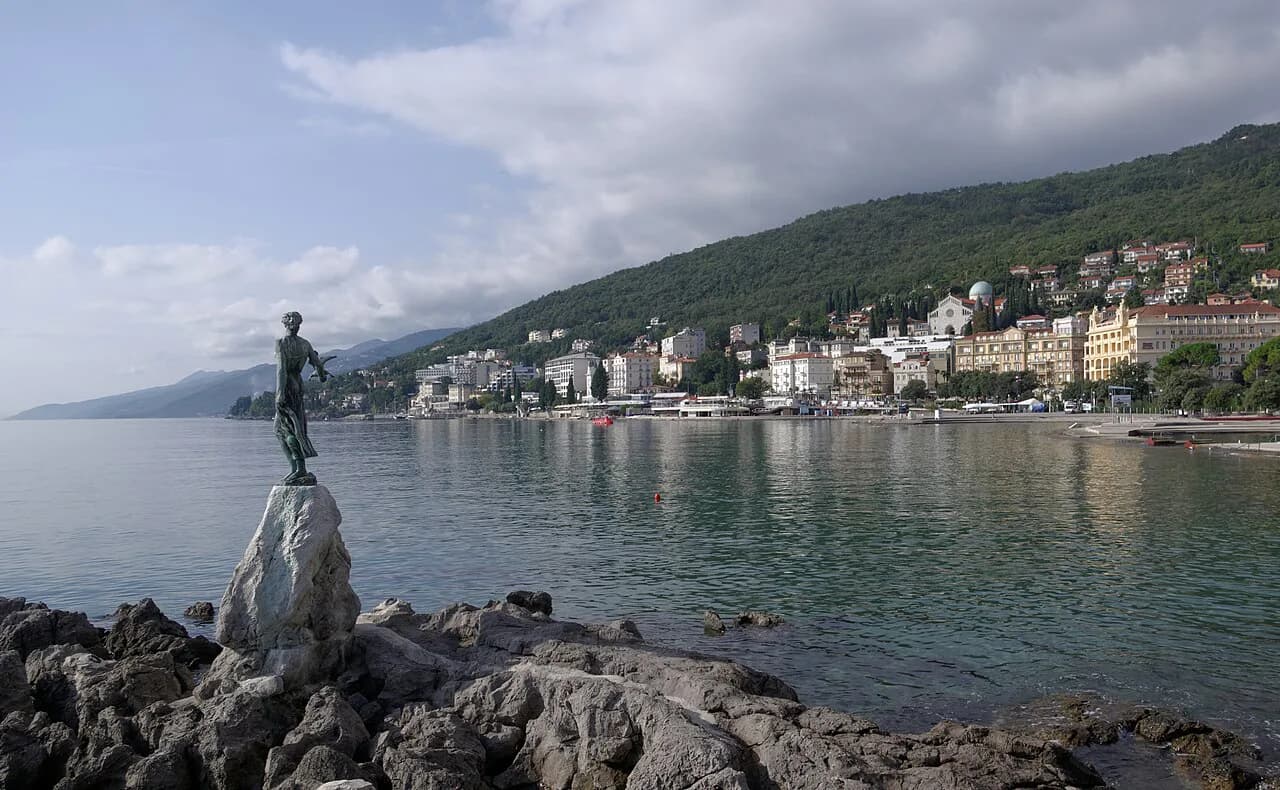
Restaurants in Opatija: Where to Eat on the Kvarner Riviera
Where to eat in Opatija: seafood, scampi and tavern cooking on the Kvarner riviera, the plates worth ordering and how to choose between the town's restaurants.
On this page
Opatija is the Kvarner riviera's polished dining address, where seawater-facing fine-dining rooms and small osterie and taverns sit within a short walk of one another. The Michelin Guide's Opatija listings include Plavi Podrum, Stancija Kovačići and Villa Ariston, and those three names set the scene: a seafood specialist, a Croatian kitchen and a restaurant in the Villa Ariston.
This guide explains what Kvarner cooking brings to the table, decodes the scampi preparations you will see on menus, and sets a route through the region's cured ham, sheep's cheese, lamb and fish. It also explains how the Michelin Guide's price bands work and how to weigh a single splurge meal against a budget lunch.
What Opatija cooking is
Kvarner cooking takes its bearings from both the mountains behind the coast and the sea in front. The region's tourist board describes the gastronomy as combining continental and Mediterranean influences, with first-class restaurants placing local ingredients at the centre of the plate. That dual character is what distinguishes an Opatija meal from a purely coastal one.
Scampi, wild asparagus and truffles are the recurring markers of the local kitchen. Kvarner scampi appears as a starter, in risotto and à la buzara, while asparagus and truffles turn up in dishes that mix mountain and sea. Any restaurant that builds a menu around these ingredients is speaking the Kvarner dialect.
The wider Kvarner food scene gives useful context for choosing within Opatija. The region's kitchens are not confined to the riviera; inland and island traditions bring lamb, cheese and cured meats to the same tables. Treat the town as one part of a broader Kvarner eating landscape.

Opatija's restaurant styles: fine dining rooms, small osterie and taverns
The practical choice in Opatija is between a polished dining room and a small tavern. The town has a reputation as a culinary centre with several of Croatia's best restaurants, and its top-quality kitchens lean on fresh local ingredients. That is where you go for a composed, multi-course evening.
Opatija's small osterie and taverns are the other half of the picture, and they suit a simpler, more spontaneous meal. Pair a tavern lunch with a plate of pršut or a bowl of scampi risotto, and save the long sitting for the dining room. Match the style to the occasion: a long dinner for the dining room, a quick lunch for the tavern.
The Michelin Guide's Opatija listings let you see the styles side by side. Plavi Podrum is listed under Fish and Seafood, Stancija Kovačići under Croatian, and Villa Ariston as a restaurant within the villa of the same name. Reading the guide's category alongside the euro-band symbol tells you more than a long menu ever could.
Kvarner scampi, three ways
Scampi arrives in three main guises, and knowing them before you order avoids surprises. As a starter, the shellfish can come raw and marinated in extra virgin olive oil with lemon juice. In a risotto, it provides the dominant flavour. The most appreciated version is à la buzara, cooked in a sauce that brings out the aroma.
The raw, marinated presentation is the one to order when you want the ingredient itself. The risotto is the safer choice if you prefer something warm and substantial, while à la buzara rewards anyone who wants the kitchen's sauce work. At a seafood-led restaurant such as a fish specialist, the scampi preparations are usually the most telling part of the menu.
Scampi also connects Opatija to the rest of the Kvarner coast. If your trip takes you further afield, the same shellfish logic applies in Lovran restaurants and along the riviera. Order it once in Opatija to learn the local version, then compare elsewhere.
Fish and seafood: what to order and how it fits the Kvarner menu
Fish is the backbone of a Kvarner seafood meal, and the region's fishing culture shapes how it is served. On the Crikvenica Riviera, the oily fish route celebrates fish that fed generations and remains a staple of local diets. In Opatija, the same respect for fresh fish runs through the seafood kitchens.
Order fish as a main course and let the scampi or a seafood starter open the meal. Oily fish is prized as a source of protein, vitamins, minerals and omega-3 acids, which is why it appears so often. A whole fish or a fillet is a better gauge of a kitchen than a mixed seafood platter.
Further down the coast, the fish traditions shift but the principle stays. If you plan to explore, Crikvenica restaurants reward a detour for their oily fish specialities. Build your Opatija ordering around what the Kvarner coast does best rather than imported seafood.
Where Opatija's top kitchens sit: Plavi Podrum, Stancija Kovačići and Villa Ariston
The Michelin Guide's Opatija page is the clearest starting point for a high-end booking. Plavi Podrum is listed as a Fish and Seafood restaurant, Stancija Kovačići as a Croatian restaurant, and Villa Ariston as a restaurant within the villa of the same name. The guide assigns euro-band price symbols to each, so you can compare expense before choosing.
Plavi Podrum suits an evening built around the catch of the day, while Stancija Kovačići's Croatian label points to a broader national menu. Villa Ariston is the one to consider when you want a restaurant attached to a hotel address. The euro-band symbols, rather than any quoted price, are the honest way to set your budget.
Treat these three as reference points rather than a ranking. Each occupies a distinct position on the seafood-versus-Croatian axis, which makes them easy to weigh against your own appetite. The guide's symbols do the rest of the work.
Cres lamb and other meat dishes worth ordering alongside the seafood
Cres lamb is the island's best-known speciality, and it is the meat order for a table that does not want fish alone. The island's sheep graze freely on the pastures, which gives the lamb its distinct taste and aroma. Restaurants on Cres prepare it in several ways, so asking for the house version is a fair way to start.
The lamb's character comes from the island's plant life and from the sea wind that carries onto the pastures. That is why the result tastes of the place rather than of a generic roast. If your itinerary reaches the island, restaurants in Cres specialise in this dish, and the nearby Cres Island kitchens make an obvious anchor.
Order lamb as a shared second course or as the main event when the table is tired of seafood. It balances a menu that might otherwise be scampi, scampi and more scampi. A single meat course is often the difference between a good and a great Kvarner dinner.
Istrian pršut and sheep's cheese to start
Istrian pršut is the cold starter that opens many Kvarner and Istrian meals. The ham is dry-cured with salt, pepper, garlic and natural aromas, then matured through a long drying period. It is served thinly sliced with homemade cow's or sheep's cheese and olives, which makes it a natural shared plate.
Order it for the table rather than as an individual portion, because the plate is built for sharing. The pairing with local cheese and olives is the point: the ham's saltiness needs the cheese's richness. It is also a useful way to eat lightly before a large seafood main.
The same cured-meat and cheese logic extends beyond Istria. Kvarner's island kitchens, Krk among them, turn out sheep's cheese and pršut of their own. Comparing an Istrian plate with a Kvarner one is one of the small pleasures of eating across the region.
Booking a table in high season
High summer is when Opatija's most sought-after tables fill, and booking ahead is the practical step. The Michelin Guide's listings for the town give you a shortlist for the fine-dining end; reserve those first and build the rest of the week around them. A midweek table is generally easier to secure than a weekend one.
Choose your splurge night before you travel and book it, then leave the remaining evenings flexible. That way a single strong booking anchors the trip without turning every meal into a reservation exercise.
Eating on a budget in Opatija versus one splurge meal
The euro-band symbols in the Michelin Guide are the simplest budgeting tool for Opatija. A restaurant marked with more symbols sits at the higher end, while the town's small osterie and taverns provide the lower-cost alternative. Use the symbols to decide which night deserves the bigger spend.
One well-chosen splurge meal at a seafood specialist such as Plavi Podrum or a Croatian kitchen such as Stancija Kovačići will do more for your trip than several mid-range dinners. Keep the other meals simple: pršut to share, a bowl of scampi risotto, a plate of fish. That approach stretches the budget without dulling the experience.
If you want to spread the eating across the riviera, Lovran restaurants and the wider Kvarner coast offer alternatives to Opatija's prices. A short excursion can deliver a strong meal for less. Plan the splurge in Opatija and let the surrounding towns handle the rest.
Which Opatija table should you book?
Book the seafood night at Plavi Podrum, the Croatian menu at Stancija Kovačići, or the villa setting of Villa Ariston, and let the Michelin Guide's euro-band symbols decide which fits your budget. Then fill the other meals with scampi à la buzara, a plate of Istrian pršut and a shared meat course such as Cres lamb.
That combination gives you the full Kvarner range without turning every dinner into an event. Reserve the splurge first, keep the tavern lunches loose, and use the coast beyond Opatija when you want a lower-cost day.
Explore more Croatia guides
Frequently Asked Questions
What is Opatija famous for?
Opatija is known as a culinary centre on the Kvarner riviera, with first-class restaurants built around local ingredients such as scampi, wild asparagus and truffles. The town also has a tradition of small osterie and taverns alongside its fine-dining rooms.
Is Opatija worth visiting for food?
Yes, if you want the range of Kvarner cooking in one place. The town pairs seafood specialists with Croatian kitchens and small taverns, and it is a sensible base for comparing scampi, fish, Istrian pršut and Cres lamb across the riviera.
Sources
Notes on eating well in Croatia
Optional updates to our food guides.
You might also like



Continue reading
More guides you'll find useful





