What Food Costs in Split: Eating Out Prices and Budgets
What food costs in Split, from a casual meal to a mid-range dinner for two, with typical price levels in euros and what pushes your bill up or down.
On this page
Expect to pay around £13 for an inexpensive restaurant meal in Split and roughly £59 for a three-course dinner for two at a mid-range place, according to cost-of-living averages for the city. Those are averages, not menu prices, but they set a sensible frame for budgeting. This guide turns them into everyday figures for coffee, casual plates, seafood and a full day of eating.
The biggest variable is where you sit. A terrace inside the old town and a konoba a few streets beyond the palace walls can serve comparable food at noticeably different prices, so the same day of eating can cost quite different amounts depending on your choices.
What food costs in Split: the short answer
Budget for a casual lunch or simple dinner at roughly the £13 mark, and a mid-range three-course dinner for two at about £59, based on Split averages. Neither figure is a promise for a specific restaurant, and the euro has been the currency in Croatia since 1 January 2023, so every menu you read is priced in euros.
Split is not the most expensive city on the coast, but it is a busy tourist centre in summer, so old-town and waterfront prices look more like Dubrovnik than like inland Croatia. For the dishes worth building meals around, the Split food guide covers what the city does well.
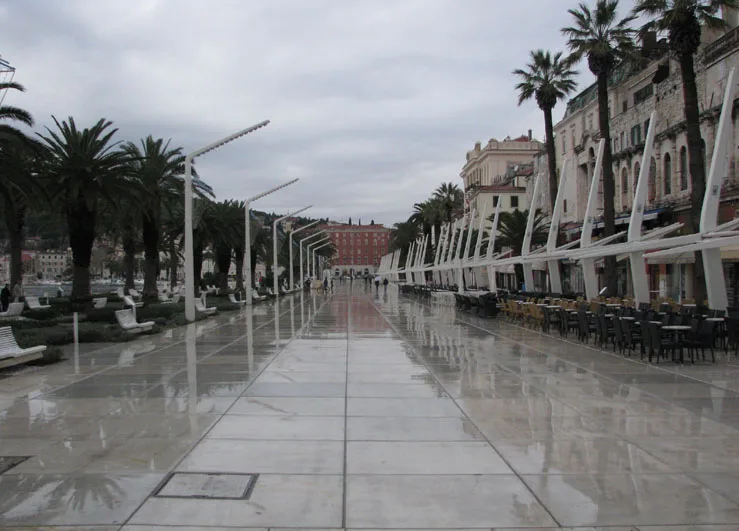
Typical price levels for a casual meal and a mid-range dinner for two
Picture a casual meal as a soup, a grilled dish or a pizza with a drink in a simple dining room. Compare that with a mid-range dinner for two: a starter, two mains, a dessert and some wine, in a restaurant with table service. The first sits around the inexpensive-meal living-cost average, the second around the three-course-for-two average.
These averages come from living-cost data rather than menus, so treat them as a shape rather than a quote. A full mid-range dinner with a starter, two mains, dessert and wine usually lands near the upper average, while a two-course dinner with a single glass of wine comes in well below it. The gap widens fastest when you add courses, wine and a central location.
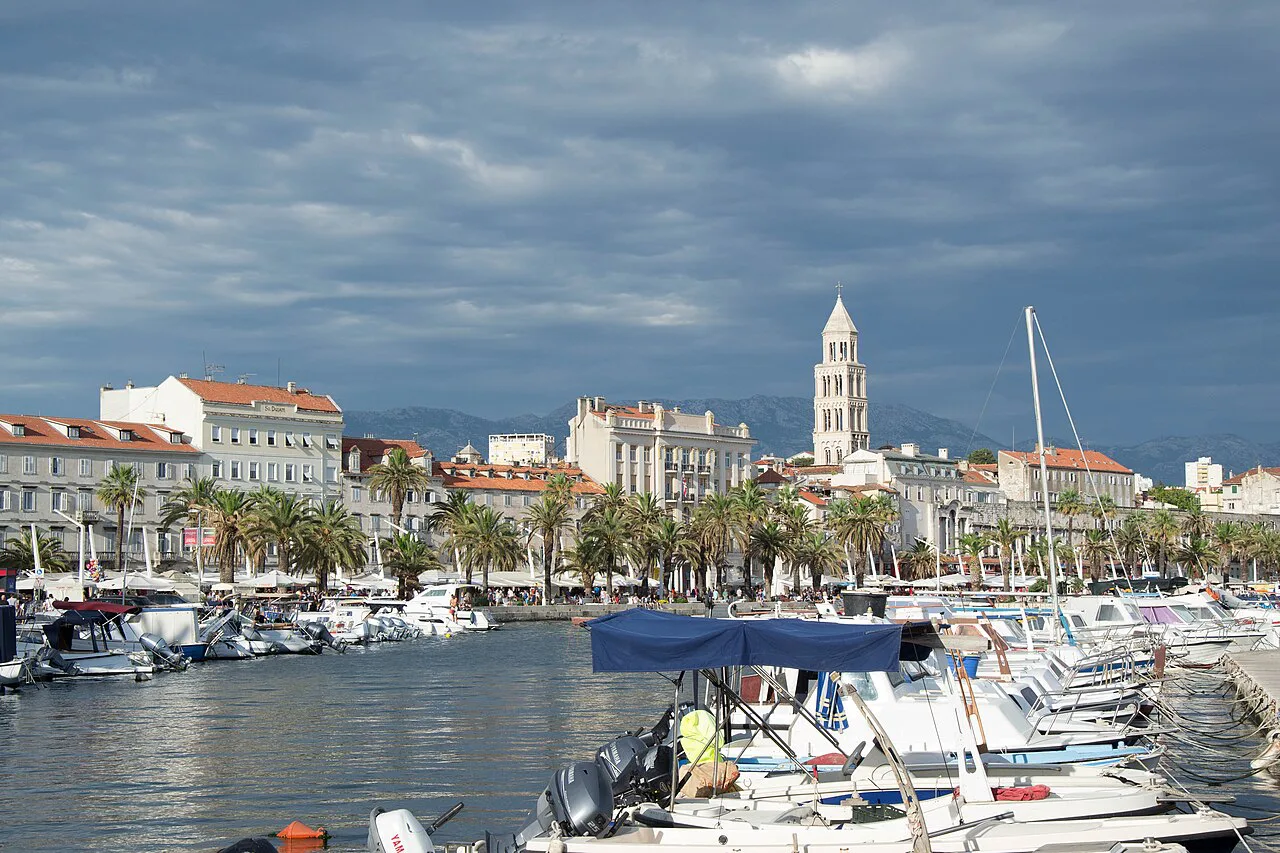
Coffee, drinks and small purchases
Coffee and a pastry from a bakery are an easy way to keep the day's food budget down, leaving more of the budget for a sit-down lunch or dinner.
Soft drinks, water and beer are the items that quietly inflate a bill. Buying water and pastries for the morning at a bakery keeps costs modest, and a single glass of house wine is cheaper than a bottle.
Why bills climb in the old town and ease outside it
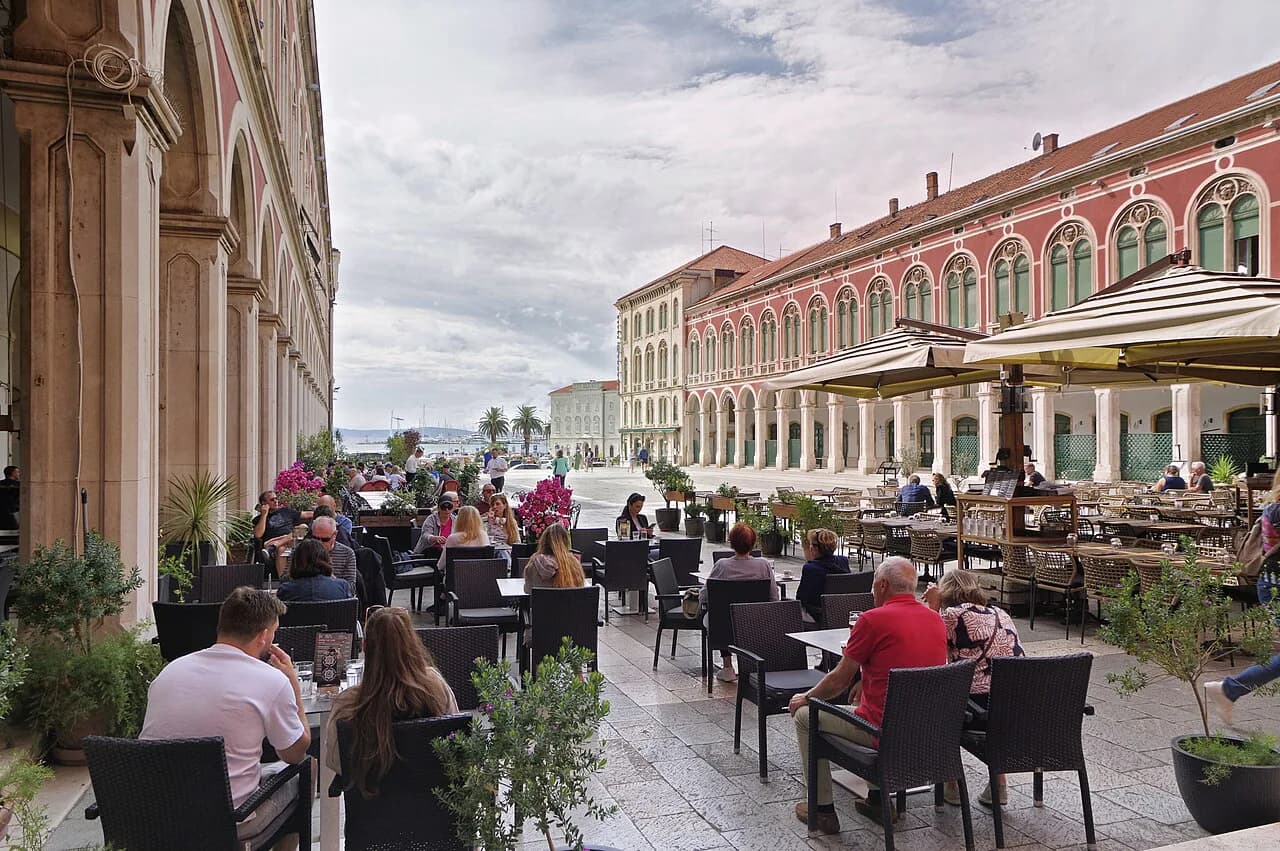
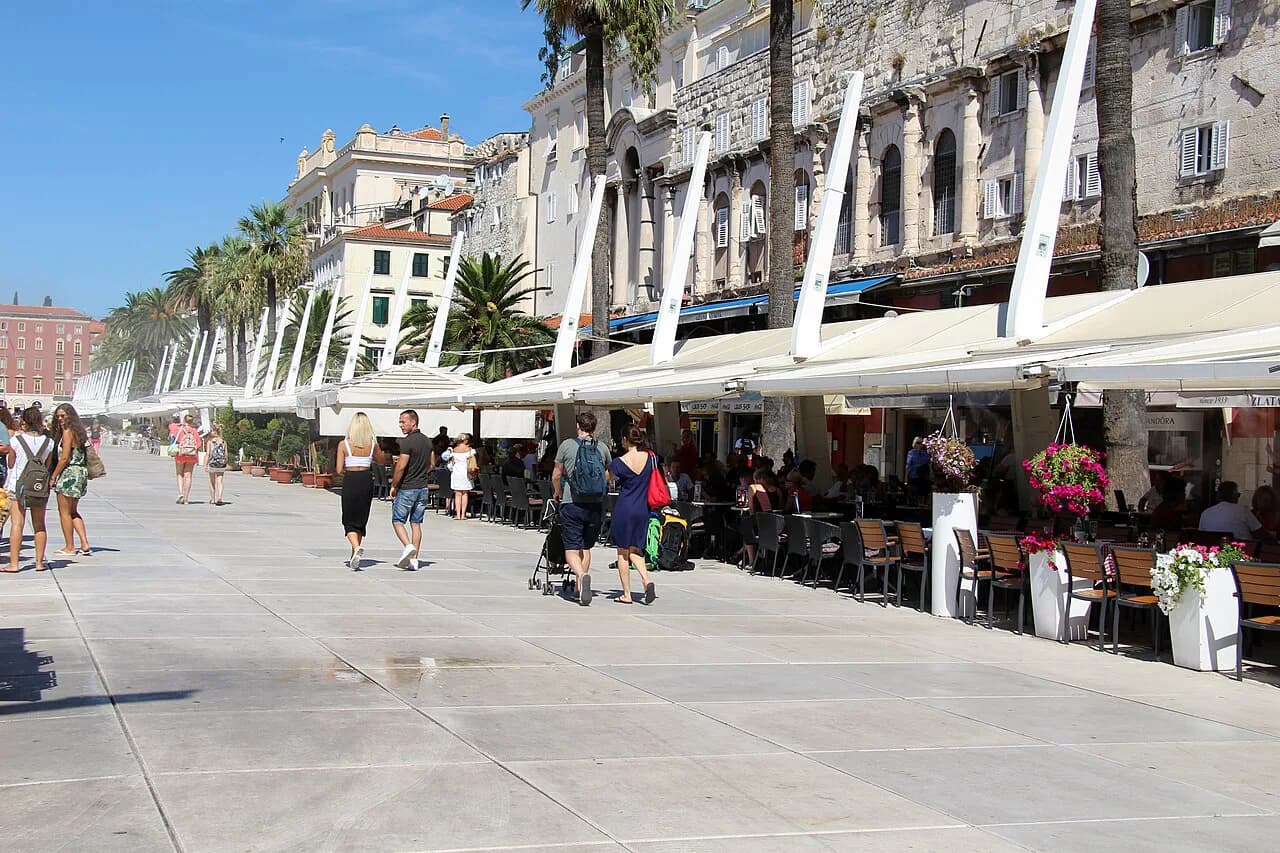
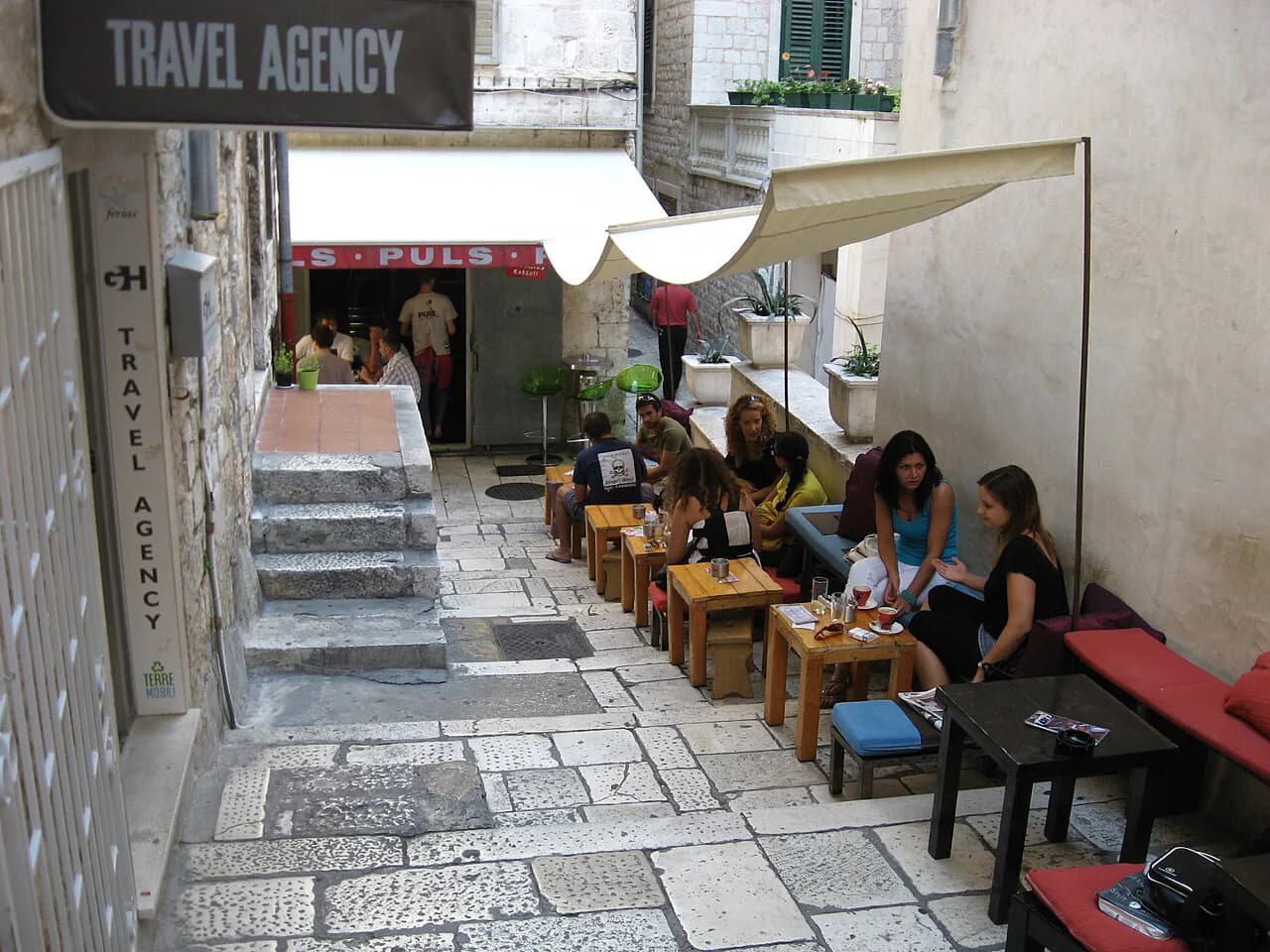
Location is the clearest price signal in Split. A table on a square inside the palace walls, or on the riva facing the harbour, carries rent and footfall in its prices. Atmosphere and convenience are real reasons to pay the premium, but a konoba a few streets into a residential neighbourhood often serves similar food for less, with a fuller room of local diners at lower prices.
Seafood priced by the kilo: how the fish price works on the bill
Fish sold by weight rather than as a fixed plate is why the same dish can cost wildly different amounts from one table to the next. When a whole fish is priced per kilo and weighed, a larger specimen or a prized species multiplies quickly. Ask for the weight and the per-kilo price before it is cooked.
Squid, octopus and shellfish are often easier to budget than a whole fish, and a mixed seafood plate can be better value than a large specimen. Oysters are usually sold by the piece, an easy add-on to a casual meal rather than the centre of a mid-range dinner, and the oysters Split guide covers where to order them.
Treat the fish counter like a butcher's counter: ask what is fresh, ask the weight of a whole fish for two, and do the multiplication before you agree. A shared grilled fish with blitva, the Swiss chard and potato side that comes with most Dalmatian fish, is often cheaper and better than two separate mains.
Tipping and card versus cash
Tipping is not compulsory: rounding up, or leaving about ten per cent for good service, is the usual approach.
Card and debit cards are widely accepted in the city, in tourist areas and on the mainland generally, including Split's restaurants, cafés and shops. Carry some euros for small purchases, markets and the odd moment when a card machine is out of action.
How to eat well in Split on a tighter budget
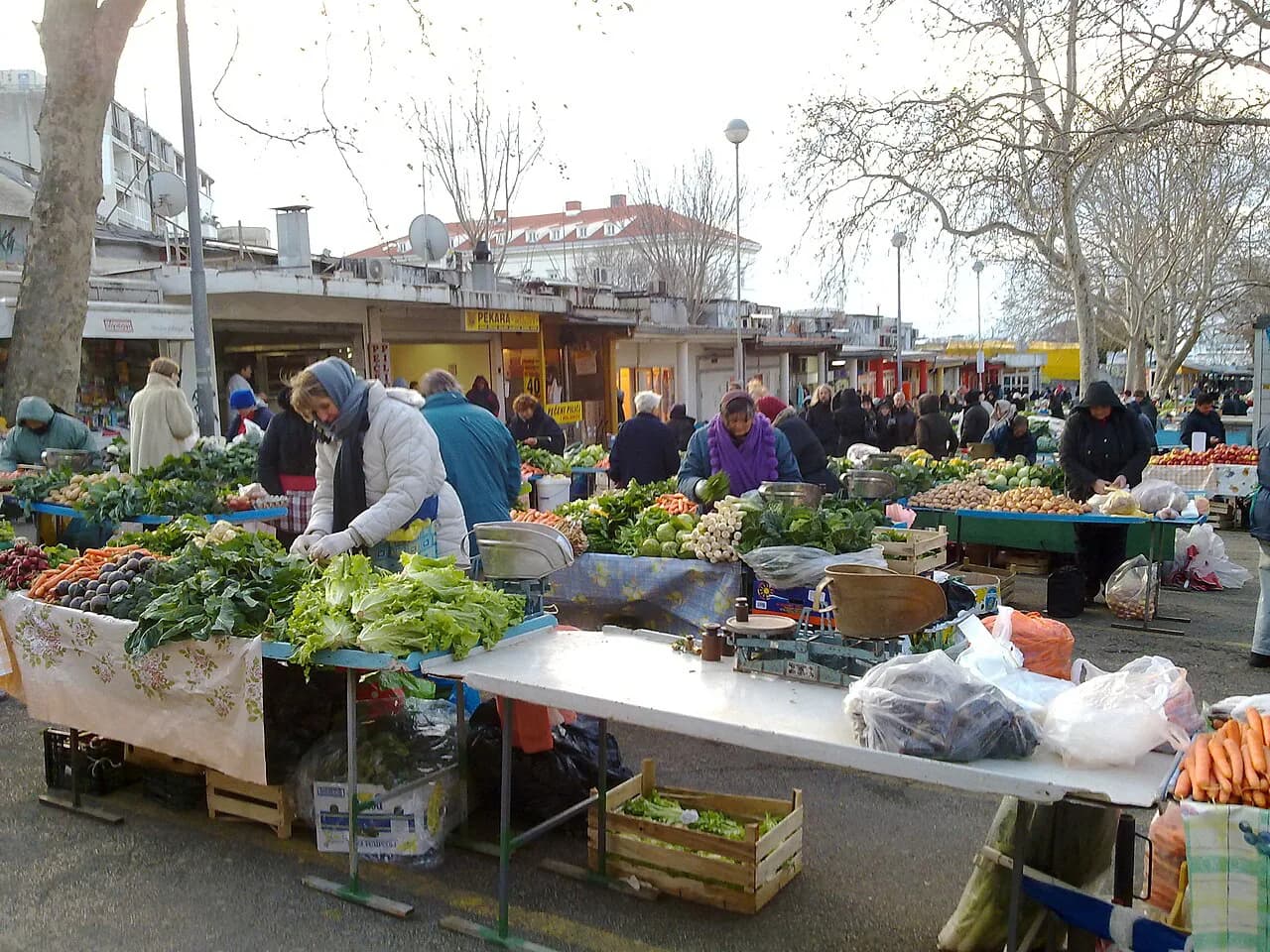
The cheapest way to eat well in Split is to Split your day between bakery food and one proper sit-down meal. A pekara, the Croatian bakery, sells burek, pastries and bread for a fraction of a restaurant lunch, and a morning market near the old town supplies fruit, cheese and pršut for a picnic by the water.
Street food is another way to keep costs low while eating something distinctly local. Ćevapi, small grilled minced-meat sausages in flatbread, are cheap and filling, and a street-food lunch leaves room in the budget for a seafood dinner; the ćevapi in Split guide tells you what to order and how it is served.
For a sit-down meal on a budget, choose lunch over dinner, when plates are often simpler and cheaper, and pick a konoba with a short menu rather than a long one. Sharing a starter slows the bill, house wine by the glass keeps the total predictable, and fish soup and simple pasta dishes are typically the best value in a seafood kitchen.
Truffle dishes and premium seafood push a casual meal into mid-range territory, so save them for the one dinner where cost matters less. A food tour can replace a meal and give you the market knowledge to eat cheaply for the rest of your stay.
Where the money goes across a day of eating
A low-cost day in Split looks like coffee and a pastry at a bakery, a market picnic or a slice of pizza for lunch, and a casual dinner with one drink. A comfortable day shifts one meal up to a full restaurant table with a shared starter and wine; the pattern across a day of eating is the same, with breakfast and coffee rarely the items that break a budget.
The biggest lever is the dinner bill: wine, a whole fish by the kilo and dessert move a day from casual to mid-range far more than breakfast or coffee ever will. If you are budgeting for a week, keep breakfast and lunch simple and put the money into two or three memorable dinners.
Split's restaurant prices sit in the same broad band as other Dalmatian coastal cities in high season, though the busiest central streets command a premium. How expensive the city feels depends on how many of your meals come with a view, a bottle of wine and a whole fish.
How to budget your Split meals
Plan around the two averages: a casual meal in the region of £13 and a mid-range three-course dinner for two around £59, with a day's eating falling between the two depending on where you sit and what you drink. Spend on one seafood dinner with a shared fish, keep the rest of the day in bakeries, markets and simple konobas, and you will eat very well without overshooting.
Start planning with the dishes, then choose the places that fit your budget. The Split food landmarks page has a short guide to each named market and konoba.
Explore more Split guides
Frequently Asked Questions
Is Split expensive for food and drink?
Split sits in the middle for the Croatian coast: a casual meal is modest, but old-town and waterfront restaurants with table service and views push dinner towards mid-range prices. Whether it feels expensive comes down to how often you choose a view, a bottle of wine and a whole fish.
How much should I budget per day for food in Split?
Plan around a casual-meal figure for most meals and allow one mid-range dinner during your stay. Breakfast at a bakery, a market or street-food lunch and a simple dinner keep a day modest; adding wine, dessert and a seafood main moves it up.
Is Split cheaper than Dubrovnik for eating out?
Both cities charge a premium on the busiest central streets, and choosing restaurants a short walk from the main squares in either city keeps prices more moderate. How the two compare depends heavily on which places you choose, so compare menus directly.
Can I use a card for food in Split?
Cards are widely accepted in Split's restaurants, cafés and shops, including in the old town. Carry some euros for markets and small purchases, and confirm card payment when you book a food tour or cooking class.
Sources
Notes on eating well in Croatia
Optional updates to our food guides.
You might also like
Continue reading
More guides you'll find useful