Peka in Split: What It Is and Where to Order It
Peka is a Dalmatian one-pot dish of meat and vegetables cooked under a metal lid in hot embers. Here is what to expect in Split and how ordering it works.
On this page
Peka is a Dalmatian baked dish of meat and vegetables cooked in a pot or tray that sits in the embers of a fireplace, usually with a domed metal lid placed over it to hold the heat. In Split you order it as a shared pot for a group rather than a single portion, so it shapes the whole meal. This guide covers how the method works, what goes into the pot, and how to pick a konoba for it.
The dish is a konoba staple along the Dalmatian coast, which means it turns up on traditional tavern menus rather than on every à la carte list in the city.
How peka is cooked
The defining feature is the embers. A pot or tray of meat and vegetables goes into the fireplace, and a domed metal lid is set over the top so the food bakes from above and below at once. That is why peka tastes slower and smokier than an oven roast, and why the pot arrives at the table covered.
Because everything cooks together in one vessel, the potatoes and vegetables take on the meat juices and the meat stays moist. The trade-off is timing: the method rewards patience, and the result is a shared centrepiece rather than a quick plate for one.
What goes into the pot
The usual versions combine meat with potatoes and vegetables, and octopus is the standard seafood alternative. Lamb gives the strongest flavour and the most fat to baste the potatoes; veal is milder and suits a mixed table; octopus is the lighter option and the one to choose if part of the group does not eat meat.
Potatoes are not a side here. They sit under and around the meat, soak up the juices and often come out as the part everyone fights over, so a pot that looks meat-heavy on the menu is usually a balanced meal in practice.
How peka is ordered in Split
Expect to order by the pot or tray, sized for two, four or more people, rather than as a single plate. That makes peka a poor choice for a solo diner and a very good one for a group that agrees in advance.
Because the dish bakes slowly, the practical move is to ask when you book or when you arrive whether the kitchen can take the order that day. Leaving it to a busy dinner service is the usual way groups end up disappointed.
Where peka sits on a Split menu
Peka belongs to the konoba end of the menu, alongside grilled fish, stews and simple grilled meat, rather than to the polished à la carte restaurants around the old town. Look for it on the house list rather than among the pasta and risotto.
If you want the full picture of what else to order alongside it, our guide to Split food covers the dishes that make up a Dalmatian table: pršut (dry-cured ham), paški sir (hard sheep's cheese from Pag), seafood risotto and rožata (a caramel baked custard).
Peka versus other Dalmatian meat dishes
Grilled meat and stews are cooked over direct heat or on a hob, so the flavours stay separate and the cooking is quick. Peka is the opposite: a sealed, slow bake in embers where meat, potatoes and vegetables trade flavours for hours. That is the whole difference, and it is why the dish is worth planning a meal around rather than treating as another line on the menu.
For a sense of how differently Split prices and portions its everyday meat dishes, our breakdown of what food costs in Split is the useful comparison before you commit a group to a pot.
Old-town terrace or neighbourhood dining room
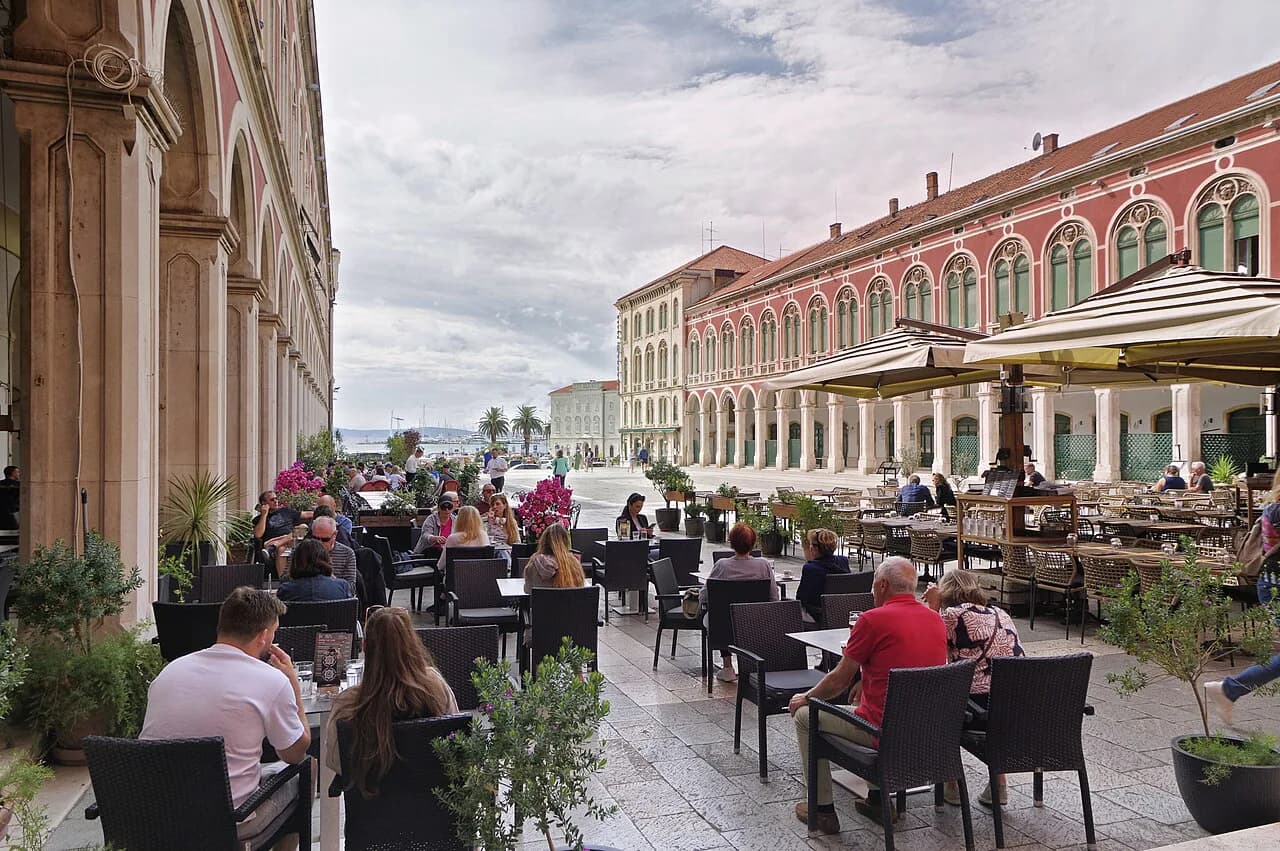
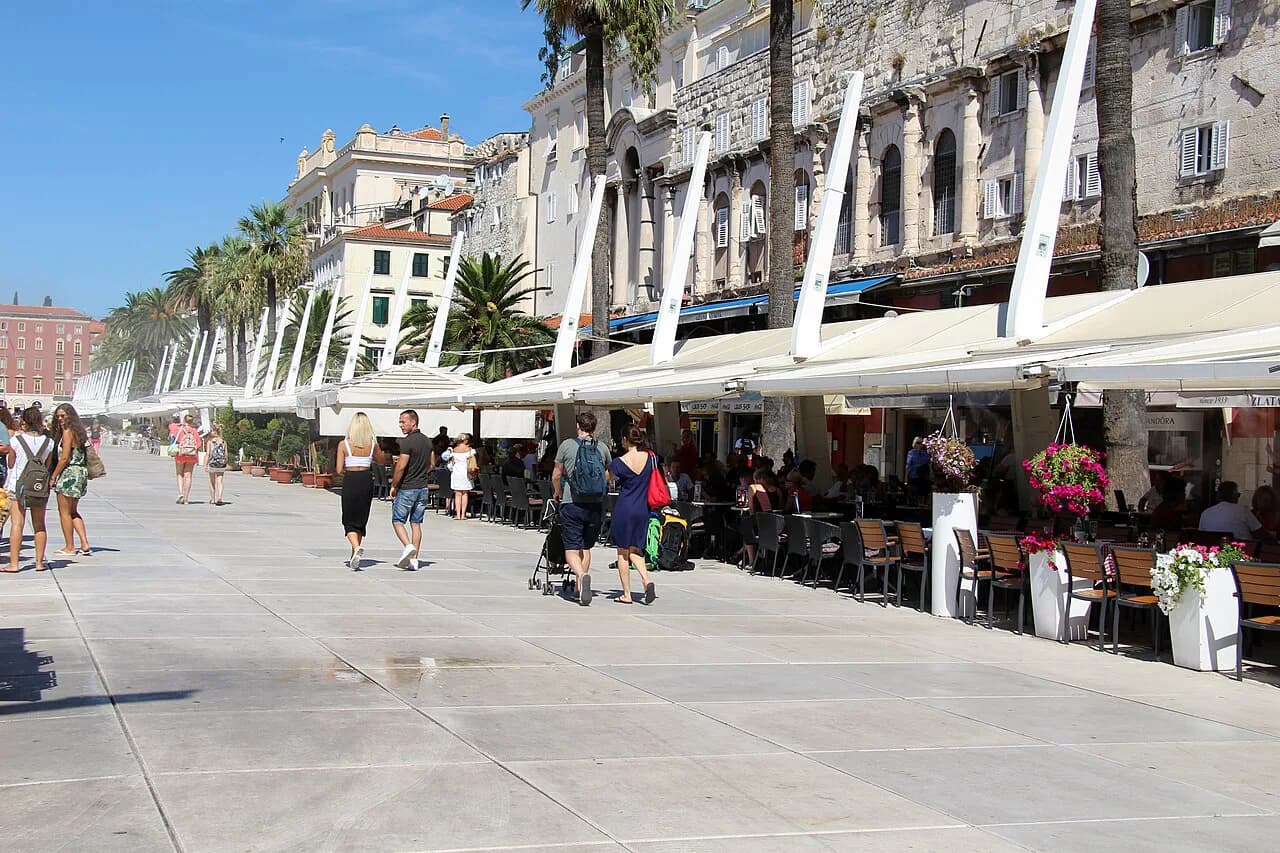
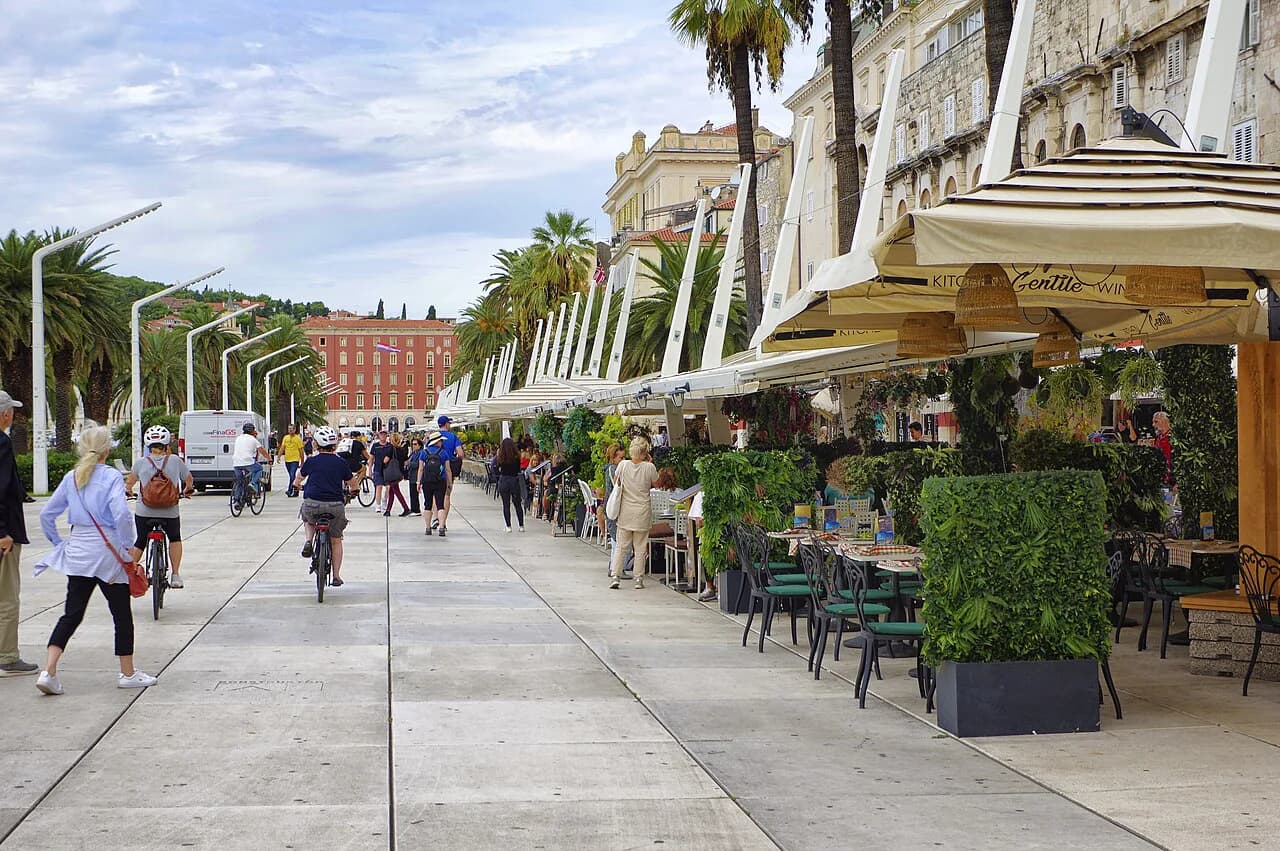
An old-town terrace puts you in the middle of the city, and you pay for the setting rather than for the cooking. A neighbourhood dining room further from the centre usually gives you more space at the table, a quieter room and a kitchen that treats peka as a regular dish rather than an occasional one.
For a group sharing a pot, the neighbourhood option is usually the better trade: fewer passing crowds, more room for a long meal and staff who can talk you through the size of the tray. Choose the terrace when the location matters more than the food.
Peka and fish by the kilo at the same table
Fish in Split is often sold by weight, priced per kilo and charged on the weight of the fish you choose, so the bill depends on the size of the specimen rather than a fixed plate price. Peka works the other way: a set pot for a set number of people. At a mixed table, agree before ordering whether the fish is one shared centrepiece or a portion per person.
One clean arrangement is peka as the main event with a shared fish starter, or the reverse, so the table has one centrepiece rather than two competing ones. If you want to keep seafood as the focus, our guide to oysters in Split is the place to start.
Booking peka in high season
In July and August, Split fills up and a dish that needs hours in the embers is exactly the kind of order a kitchen limits. Reserving in advance and mentioning peka when you do is the single most useful step for a group. Outside high season the pressure eases and many places can take the order with a shorter run-up.
Coastal kitchens also slow down from late autumn into spring, and some close for the winter altogether, so a konoba that serves peka in summer may not be open in February. Build your shortlist around places that stay open in the months you travel.
Getting to know the dish before you order it
A Split cooking class is a practical way to see how Dalmatian dishes are put together before you commit a group to a pot, and it makes the menu easier to read for the rest of the trip.
If you would rather let someone else handle the ordering, a Split food tour takes you through the city's food in a structured way and leaves you better placed to judge which konoba suits your group.
Is peka worth planning a Split meal around?
Yes, if you are eating as a group of three or more and you book ahead. Peka is a shared, slow-cooked centrepiece that turns a meal into an occasion, and a konoba dining room away from the old town is where it makes most sense.
Skip it if you are dining alone, eating on a tight schedule or want a quick plate before an evening out. In those cases, fish by the kilo or a simple grilled dish suits the table better.
Explore more Split guides
Frequently Asked Questions
Where can I order peka in Split?
Peka is a konoba dish, so look for it on the house menu of traditional Dalmatian taverns rather than on the à la carte lists of the polished old-town restaurants. Because the pot bakes for hours in the embers, many kitchens need advance notice: ask when you book, especially for groups in July and August. Some coastal kitchens close or slow down from late autumn into spring, so check a place is open in the months you travel before committing a table.
How many people does a peka serve?
Peka is ordered by the pot or tray rather than by the plate, typically sized for two, four or more people, so it suits a group that agrees in advance. It is a poor choice for a solo diner.
What meats are used in peka?
The usual versions are veal, lamb or pork with potatoes and vegetables, and octopus is the standard seafood alternative. Lamb gives the strongest flavour, veal is milder, and octopus is the lighter, meat-free option.
Sources
Notes on eating well in Croatia
Optional updates to our food guides.
You might also like
Continue reading
More guides you'll find useful