
Croatian Food Culture: What to Order and How Eating Out Works
Croatian food culture explained: the coast and inland Split, dishes to order, fish priced by the kilo and how a konoba meal runs from bread to coffee.
On this page
Croatian food culture is built on two kitchens: a coastal one of Adriatic fish, shellfish, olive oil and vegetables, and an inland one of pork, dairy, river fish and paprika. That single Split explains why the menu in Zagreb looks nothing like the one in Hvar. This guide covers the dishes to order first, how fish is priced by the kilo, the difference between a konoba and an old-town terrace, and how a meal runs from bread to coffee.
What Croatian food culture is built on
Croatian cooking is regional rather than national, shaped by geography and history rather than a single canon. On the coast, the Adriatic supplies sardines, mackerel, sea bass, prawns, octopus and lobster, and olive oil from Istria and Dalmatia does much of the seasoning. Inland, the cooking leans on pork, dairy, river fish, root vegetables and paprika, with a heartier, more central-European register.
The everyday structure is simple: bread with most meals, a small glass of something before eating, and coffee afterwards rather than a dessert course in the British sense. A meat and cheese plate with dried figs, raisins and almonds turns up on menus across the country, useful as a lunch for two or as an after-dinner plate instead of something sweet. Portions are generous, so two courses plus a shared starter is usually plenty for two people.
Coast versus inland: why Dalmatia, Istria and continental Croatia eat so differently
Dalmatia, the southern coast and its islands, cooks around the sea and the hillside: grilled fish, shellfish, lamb from high pastures and vegetables dressed in olive oil. Istria, in the north-west, sits closer to Italy in its pantry, with truffles, cured ham, pasta and olive oil at the centre. Continental Croatia, including Zagreb and Slavonia, is a world of štrukli, cured pork, freshwater fish and paprika-led stews.
What food is Croatia famous for? Croatia is known for Adriatic seafood such as grilled fish, prawns and black risotto, for peka cooked under a domed lid, for Dalmatian pašticada and for inland štrukli and ćevapi. Istria adds truffles, pasta and olive oil, and the cheese and cured ham plates are a constant across the country.
Does Croatia have a national dish? There is no single official national dish, because the cooking is regional. Peka, pašticada, black risotto, štrukli and ćevapi are all treated as signature dishes, but each belongs to a region rather than to the country as a whole.
What does a typical Croatian breakfast look like? An everyday breakfast is light: bread or a pastry from the pekara, cheese or pršut, and coffee. In hotels and larger cities you will find eggs and cooked breakfasts, but the local pattern is a bakery stop and a coffee rather than a full cooked meal.
This matters when you plan where to eat: a seafood-heavy menu in inland Zagreb is possible but the stronger choices are the inland dishes, and the reverse applies on the islands. If you are moving between regions, use the local speciality as your ordering signal rather than the dish you already know. The broader picture of how restaurants in Croatia vary by region is worth reading before you book.
The dishes to order first
Start with peka, a dish cooked under a domed metal lid with hot coals heaped on top, holding lamb, beef, octopus or fish with potatoes for hours until everything stews in its own juices. It is a Sunday, family-style dish and a konoba will usually ask you to pre-order it a day or two ahead, so it is not something to expect off the menu at short notice. Pašticada is a Dalmatian braised beef dish in a sweet-sour sauce, typically served with gnocchi or pasta. Crni rižot, black risotto, is coloured and flavoured by cuttlefish ink and usually carries squid or cuttlefish through the rice.
Inland, štrukli are baked or boiled parcels of dough with a soft cheese filling, and ćevapi are small grilled minced-meat sausages served with flatbread and onion. Pršut is dry-cured ham, sliced thin and served as a starter, and it appears in both an Istrian and a Dalmatian version. Order a plate of pršut and a cheese to share while you decide on the main course.
Peka, pašticada, black risotto and štrukli are widely treated as the traditional dishes to try, alongside regional specialities such as Istrian truffle pasta and Dalmatian seafood.
Fish and seafood: what arrives fresh from the Adriatic
The Adriatic delivers a wide spread: sardines and mackerel for simple grilling or frying, sea bass and prawns for the table, and less common catches such as John Dory, grouper, monkfish, bluefin tuna, ray, octopus and lobster in local restaurants. Fish is often served simply with a side salad rather than a heavy sauce, so the quality of the fish is the point. In Split, the city's ribarnica, the fish market, is where that supply is visible in the morning.
The practical trap is how fish is sold: often by weight, priced per kilo, with the whole fish weighed before cooking. That means the number on the menu is a rate, not the price of your plate, and a large fish for two can cost several times what you expected. Ask for the weight and the total before it goes on the grill, and consider sharing one fish between two with a starter and a side. For the wider picture of menu pricing and how bills work, the guide to food prices in Croatia sets out the patterns.
Istria and the north: truffles, Istarski pršut, fuži and olive oil
Istria's food identity rests on truffles, cured ham, pasta and olive oil. Istarski pršut is the region's dry-cured ham, and fuži is a rolled pasta shape that holds a rich sauce well. Istrian olive oil is a serious product in its own right: the region's oils regularly rank highly in international competitions, and among the local olive varieties is Buža.
If you want to understand the difference between good and ordinary olive oil, taste before you buy at a market stall rather than choosing by label alone. The same applies to truffle products: a jar of truffle paste and a fresh truffle are different purchases with different uses. For the wider context of how the region's tables work, see what a konoba is and how these taverns operate.
Dalmatia and the islands: Paški sir, hill lamb, prawn pasta and risotto
Paški sir is a hard cheese from the island of Pag, similar in taste and texture to Spanish manchego, and it often appears on a cheese or meat-and-cheese plate. Lamb from the coastal hills is cooked on a spit, low and slow, until it falls apart, and is served with potatoes and a green salad. Prawn pasta and prawn risotto, often with courgette, are among the most common dishes on Dalmatian menus and a safe order when you want something lighter than a whole fish.
On the islands, the menu narrows with the season, and the strongest meals tend to be the simplest: grilled fish, a plate of cheese and ham, and whatever vegetables are in the market that morning. Order the local cheese with a glass of white rather than a cream-based dish, and let the ingredients do the work.
Continental Croatia: štrukli, Slavonski kulen, river fish and paprika stews
Inland cooking is heavier and more layered: štrukli baked in a dish, freshwater fish from the rivers, and paprika-rich stews that sit somewhere between Hungarian and Balkan cooking. Slavonski kulen is a cured, paprika-spiced pork sausage from Slavonia, sliced thin as a starter or eaten with bread. The register is closer to central Europe than to the Mediterranean, so expect more cream, more pastry and more pork.
Zagreb is the practical base for this food, and the city's markets and old-fashioned restaurants are where to find it. If you are coming from the coast, give yourself a day to adjust to the change of style rather than judging the first inland meal against a seafood one.
The konoba and the restaurant: what a konoba is and when to book
A konoba is a traditional tavern, usually smaller and more plainly furnished than a restaurant, with a menu built around local cooking and whatever the kitchen has that day. A restaurant in Croatia can be anything from a family place to a polished dining room. In tourist centres, an old-town terrace is a reasonable choice for the setting and convenience, but the trade-off is often a higher price than a place one street back, so decide which you want before you sit down.
In high season, book a table for dinner, especially for a group or for a peka, which needs notice. For a clearer picture of the differences between the two kinds of place, the guide to restaurants in Croatia sets out what to expect, while the explanation of what a konoba is goes deeper on how these taverns work.
How a meal runs: bread, cover, ordering by weight and coffee
A Croatian meal tends to start with bread and a small plate of pršut or cheese, move to a main course of fish or meat with a simple side, and end with coffee rather than a heavy dessert. Bread may come with a small cover charge; it is normal and small, not a scam. If you order fish by weight, ask for the weight and the total before cooking, and if you order peka, confirm the pre-order when you book.
Sharing is common: a peka is served in its pot for the table, and starters are usually large enough for two. Card payment is widely accepted in cities and tourist areas, but smaller konobas and markets may prefer cash, so carry some euros. Tipping is not obligatory but is appreciated; the guide to tipping in Croatia explains the usual practice.
What Croatians drink with a meal
Wine is the default with food on the coast, and Pošip, a white from Korčula, is one of the best-known local varieties. Maraschino is a cherry liqueur from Zadar, and rakija is a fruit brandy served in small measures before or after eating rather than as a drink through the meal. The pattern is moderation: a glass with food, a small measure to finish.
If you are ordering fish, a crisp local white is the usual pairing; with inland meat dishes, a red or a small rakija works better. Ask for the local wine by the glass rather than committing to a bottle you do not know.
Sweet things: kremšnita, rožata, fritule and makovnjača
Croatian desserts are straightforward and rich: kremšnita is a custard slice with a thick layer of cream, rožata is a caramel-topped baked custard, fritule are small fried dough balls, and makovnjača is a poppy-seed roll. Savijača is a fruit-filled strudel, and the pastry shops, slastičarnice, do these well. Have one between two rather than ordering a dessert each, and follow with coffee.
In inland towns, the poppy-seed and fruit rolls are the stronger choice; on the coast, the custard-based sweets and fritule are the local ones. Order at the counter and eat standing if the shop is busy.
Markets and bakeries: the ribarnica, the pekara and the morning shop
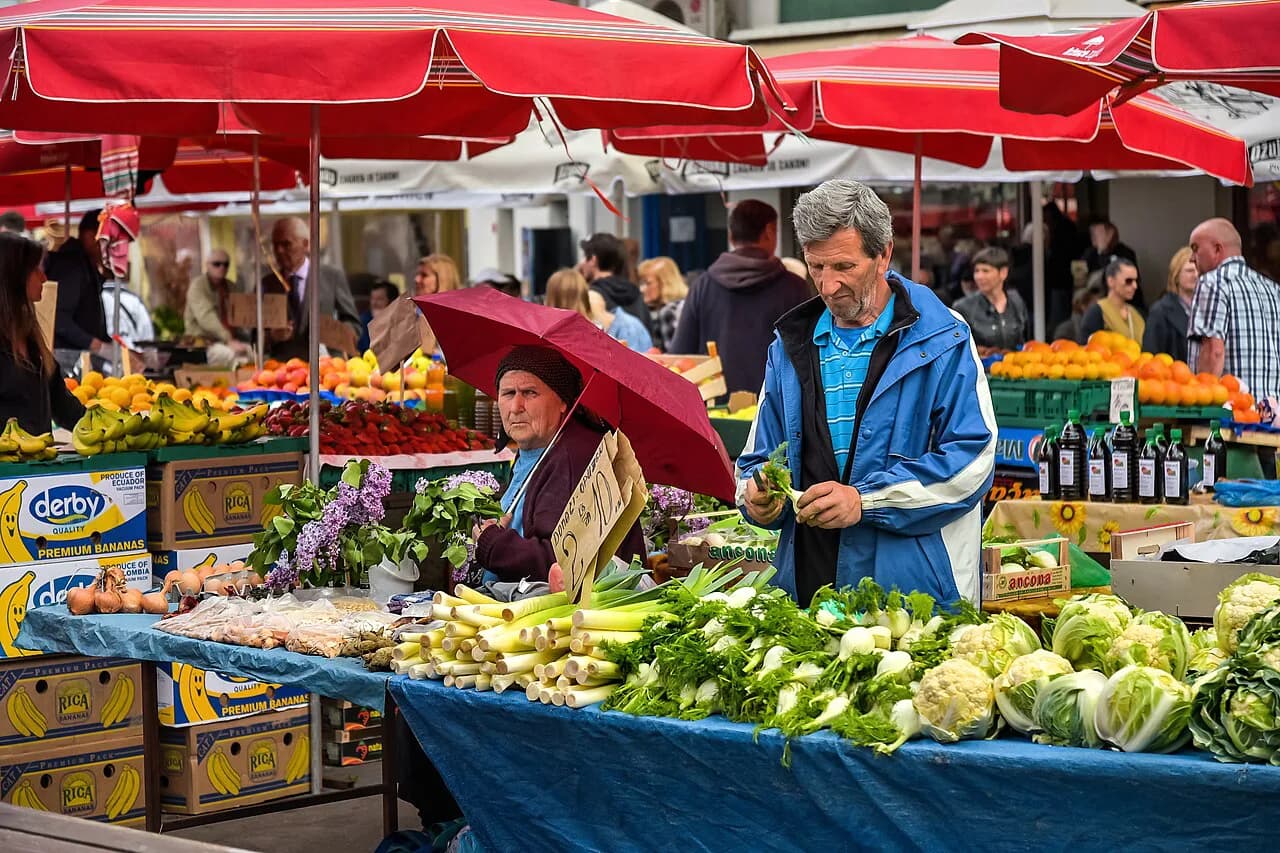
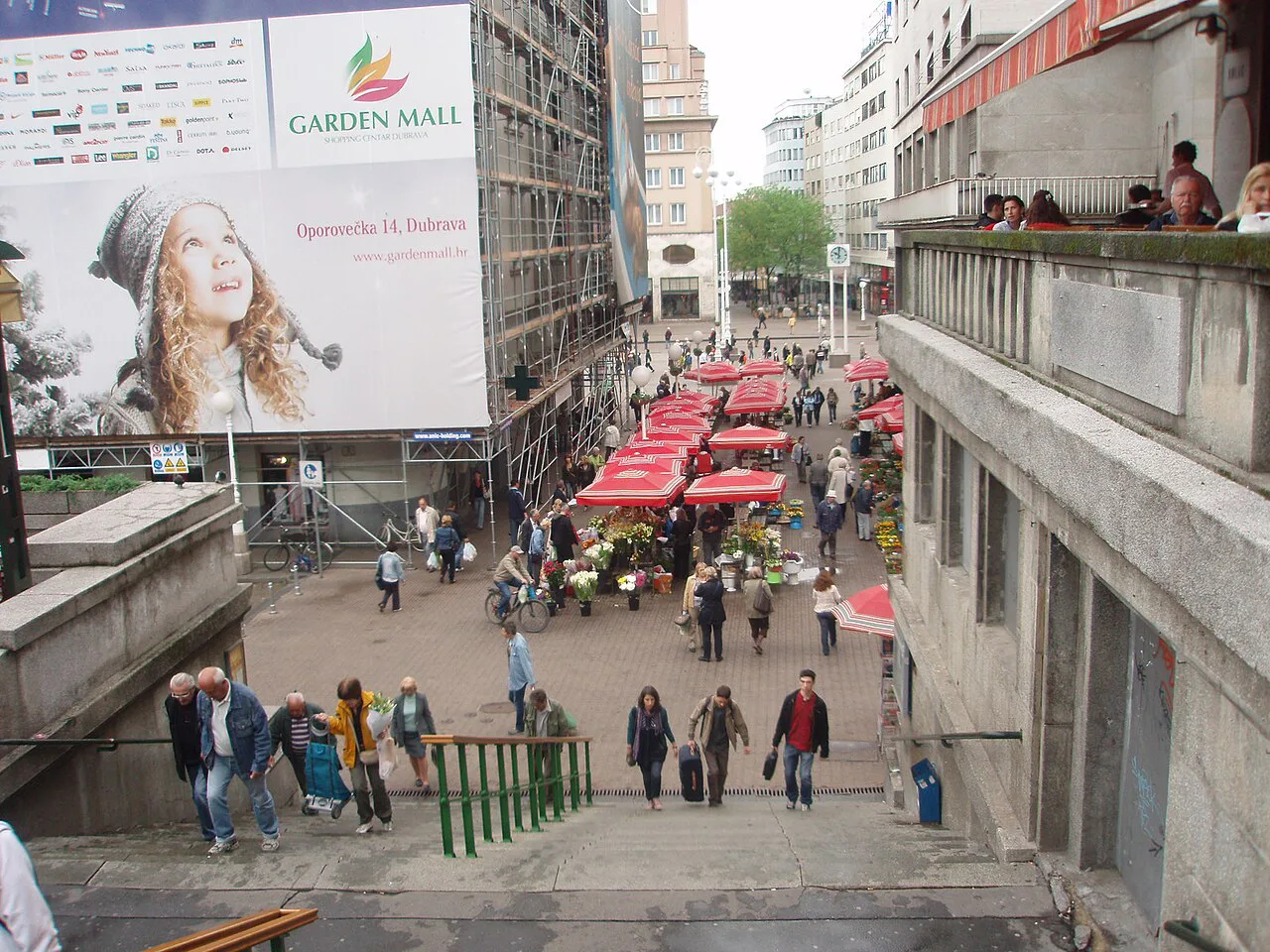
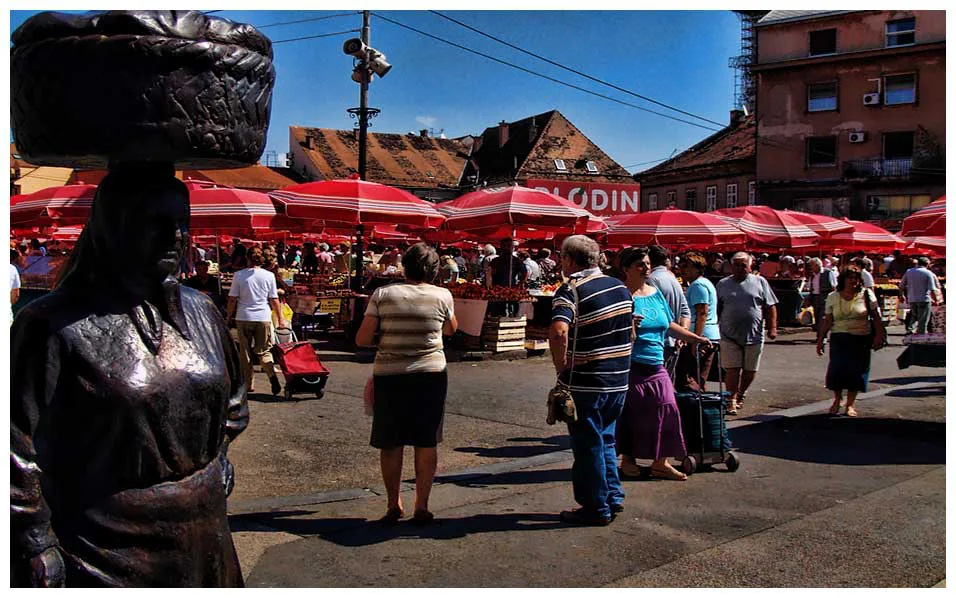
Markets are where Croatian food culture is most visible: the ribarnica for fish, the produce stalls for vegetables and olive oil, and the pekara, the bakery, for bread and pastries in the morning. In Split, the ribarnica in the city centre is the reference point for fish, and olive oil stalls at markets in Split and Zadar often offer tastings, which is the best way to choose a bottle. The wider guide to Croatian markets explains the layout and what to buy.
Go early, buy what is in season, and treat the market as a place to assemble a picnic rather than a sightseeing stop. For supermarket shopping in between, Konzum is the largest chain in the country and useful for water, bread and picnic basics; the guide to Konzum: Croatia's largest supermarket chain explains what it stocks. If you want to learn the cooking rather than just eat it, Croatian cooking classes are the practical route.
Vegetarian eating in a seafood-and-meat culture
Croatian cooking is built around fish and meat, so vegetarian eating needs a little planning. The reliable orders are the side dishes and starters: grilled or roasted vegetables, blitva (chard and potato), a cheese plate, a simple pasta with truffles or tomato, and the vegetable soups and stews inland. In coastal restaurants, ask for a plate of grilled vegetables with olive oil rather than expecting a dedicated vegetarian main.
In Zagreb and larger cities, the choice widens, and some restaurants will make a vegetarian version of a pasta or risotto on request. Peka is not usually available in a vegetarian version, so plan around it rather than asking for it.
Where Croatian food culture changes across the country: a short regional map
Use the map this way: Istria and the north-west for truffles, pasta, pršut and olive oil; Dalmatia and the islands for fish, shellfish, lamb and Paški sir; Zagreb and Slavonia for štrukli, kulen, river fish and paprika. Rijeka and the Kvarner coast sit between the two, with seafood and a central-European edge. Pula and the Istrian coast follow the Istrian pattern, while Split, Hvar, Dubrovnik and Šibenik follow the Dalmatian one.
The practical result is that you can eat a different cuisine every few days without leaving the country, and that the best value is usually the local dish in the region that produces it. Pick one region per trip if you can, and order the thing that region is known for rather than a generic international menu.
Which regional menu should you order from?
Start where you are: if you are on the coast, order fish by weight with a starter of pršut and cheese, and book a peka a day ahead; if you are inland, order štrukli, kulen and a paprika stew. Use the konoba for local cooking and the old-town terrace only when you want the setting, and keep one meal for the market and the bakery rather than a restaurant.
The single most useful habit is to ask the weight and the total before a whole fish goes on the grill. After that, order the regional speciality, share a dessert, and finish with coffee. Croatia uses the euro, so read the menu at the table on the day rather than relying on an old figure.
Explore more Croatia guides
Frequently Asked Questions
What food is Croatia famous for?
Croatia is known for Adriatic seafood such as grilled fish, prawns and black risotto, for peka cooked under a domed lid, for Dalmatian pašticada and for inland štrukli and ćevapi. Istria adds truffles, pasta and olive oil, and the cheese and cured ham plates are a constant across the country.
Does Croatia have a national dish?
There is no single official national dish, because the cooking is regional. Peka, pašticada, black risotto, štrukli and ćevapi are all treated as signature dishes, but each belongs to a region rather than to the country as a whole.
What does a typical Croatian breakfast look like?
An everyday breakfast is light: bread or a pastry from the pekara, cheese or pršut, and coffee. In hotels and larger cities you will find eggs and cooked breakfasts, but the local pattern is a bakery stop and a coffee rather than a full cooked meal.
Sources
Notes on eating well in Croatia
Optional updates to our food guides.
You might also like



Continue reading
More guides you'll find useful





