
Tipping in Croatia: How Much to Leave at Restaurants and Cafes
Tipping in Croatia is voluntary, and around 10% is the usual guide in restaurants. Here is how to tip in cash, on a card bill or at a cafe counter.
On this page
Leave around 10% in a Croatian restaurant when the service was good, and round up small change at a café counter. Nothing obliges you to tip: the national tourist board describes extra payment for service as voluntary, so the figure is a customary guide rather than a rule. This guide covers how much to leave, how to tip when the bill goes on a card, what happens at bakeries, and how to handle a konoba bill built around fish sold by weight.
How much to tip in a Croatian restaurant
Around 10% of the bill is the working figure for table service. Tipping is a customary gesture in Croatia rather than a fixed charge, and the national tourist board treats any extra as voluntary, so the percentage is a starting point you adjust for good service or a large group. On a long lunch that comes to a few euros, which is why most diners simply round the total up.
Is tipping in Croatia compulsory or rude to skip. It is not compulsory, and skipping it is not a breach of etiquette.
Tipping when you pay by card versus cash. Cash is the cleaner route. Hand over notes with the bill and say how much you want back, or leave the change on the tray as you go. Croatian waiters handle this constantly, and it keeps the tip separate from the total.
Rounding up and small tips at cafes and bakeries. At a café the habit is quieter than the restaurant 10% norm.
In practice the 10% is added on top of the food and drink total, which is why the customary guide is a separate small extra rather than part of the price. Croatia has used the euro since 2023, so the notes in your hand are euro and the arithmetic is straightforward. If the food and service were ordinary, a smaller amount or none at all is a legitimate choice.
A customary guide of roughly 10% on top of the bill is what most visitors work from, and it holds across the range from a simple grill house to a smarter seafood place. Treat it as an upper reference rather than a tax: a party of six and a party of two both leave something proportionate to what they spent. It also makes the tip easy to explain to a waiter who asks whether you want the card charged with or without it.
Is tipping in Croatia compulsory or rude to skip
It is not compulsory, and skipping it is not a breach of etiquette. Extra payment for service in Croatia is voluntary, so a bill settled exactly with no addition is a normal transaction rather than an insult. The custom matters, but it sits in the same territory as rounding up a taxi fare at home.
What does read badly is the wrong gesture rather than no gesture: counting coins back out of the change in front of a waiter, or leaving a couple of cents on a table after a long meal. If the service was poor, leave less or nothing and say so at the till. If it was good, a note left with the bill is the simplest signal.
The rest of the eating-out decision matters more than the tip itself. Choosing where to eat, understanding how a bill is built and knowing when to book are what shape a meal, and the guide to restaurants in Croatia sets out the practical side of ordering, fish by the kilo and high-season tables. Sort that out first and the tip becomes the last small step.
Tipping when you pay by card versus cash
Cash is the cleaner route. Hand over notes with the bill and say how much you want back, or leave the change on the tray as you go. Croatian waiters handle this constantly, and it keeps the tip separate from the total the card machine will charge. Carry some euro coins and small notes for exactly this reason.
If you are paying by card, tell the waiter the amount you want charged before the machine comes over. Staff can key in a total above the bill, and that is the usual way to add a tip on a card payment. Say the number out loud, check the figure on the screen and keep the printed slip.
Split bills are worth thinking about in advance. Many Croatian restaurants will run one card per table, and asking for four separate transactions can slow service in a busy old-town dining room. Nominate one card, add the tip once, and settle the difference between yourselves afterwards.
Rounding up and small tips at cafes and bakeries
At a café the habit is quieter than the restaurant 10% norm. A coffee taken at the bar is a small transaction, and most people leave the coins from the change rather than calculate a percentage. If you sat at a terrace table for an hour, leaving something closer to a euro is the polite version of the same gesture.
A pekara, the neighbourhood bakery, is a counter transaction. You name what you want, pay, and take the paper bag; leaving the odd small coin is common, but nobody expects a percentage on a loaf of bread. Keep a few coins loose so you are not searching pockets with a queue behind you.
Bakeries, cafés and small shops are also where the everyday side of Croatian food shows up, and understanding the counter routine helps more than any tip. The guide to Croatian markets and the piece on Konzum: Croatia's Largest Supermarket Chain explain how buying bread, produce and picnic food works, from morning market stalls to the checkout.
Tipping on a konoba bill where fish is priced by the kilo
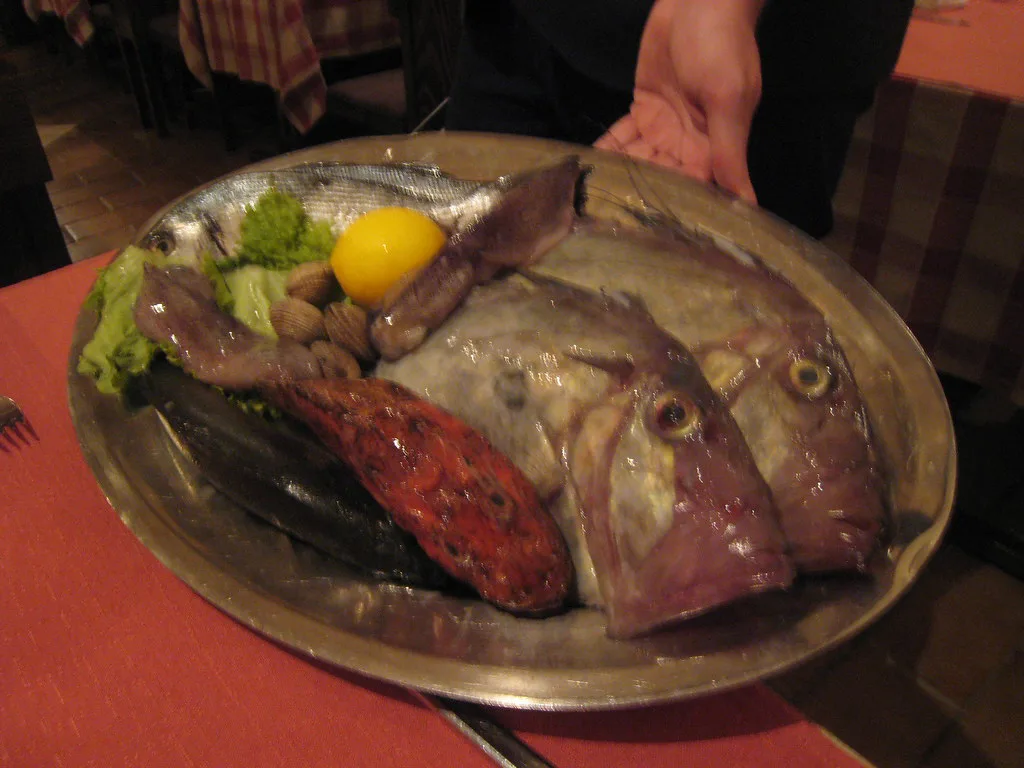
A konoba often prices fish by weight, so the bill is not the number you had in mind when you sat down. You pick the fish or let the waiter recommend one, it is weighed, and the total reflects the kilos rather than a menu price. That makes the tip a percentage of a figure that arrived late in the meal.
Decide before you order whether the weight is within budget. Ask the price per kilo and roughly what the whole fish will come to, and if the answer is higher than you want, choose a smaller specimen or a different dish. This is a normal conversation in a Croatian seafood restaurant, and it is easier to have it at the start than to look at the bill afterwards.
When the bill lands, calculate the tip on the final total including the weighed fish, not on the side dishes you remember ordering. If the total is already at the top of your budget, a rounded-up amount is a fair compromise. For the broader picture on what a meal costs before you add anything, see the food prices Croatia guide.
Who else you might tip on a Croatian trip
Hospitality staff are the main recipients, but the same voluntary logic applies elsewhere. Taxi drivers, hotel staff who carry bags or arrange things, and tour guides are all people for whom a small extra is an appreciated gesture rather than an expected one. Round the fare up in a taxi and keep it simple.
At a food market, tipping is not part of the transaction. You pay the stated price for produce at a stall, and the friendlier gesture is to buy from the same stallholder more than once. The same goes for a Croatian cooking class, where the fee covers the session and any extra is discretionary.
Context helps you judge the gesture. Croatian food culture runs on seasonal work in hospitality, and a small tip in summer carries more weight than the same amount in a city café in February. Knowing what is on the table, from Paški sir to a plate of pršut, also tells you when a meal has been worth more than the bill suggests.
What to leave on the table tonight
For a restaurant dinner, leave about 10% on the total, in cash if you have it, and say the figure out loud if the card machine is coming. At a café, leave the coins. At a bakery, pay the price and keep the queue moving.
If the meal is a konoba spread with a weighed fish at the centre, ask the price per kilo before you commit and work the tip from the final bill. That one question removes most of the awkwardness, and what you leave after it is a straightforward judgement about how the evening went.
Explore more Croatia guides
Sources
Notes on eating well in Croatia
Optional updates to our food guides.
You might also like



Continue reading
More guides you'll find useful


