
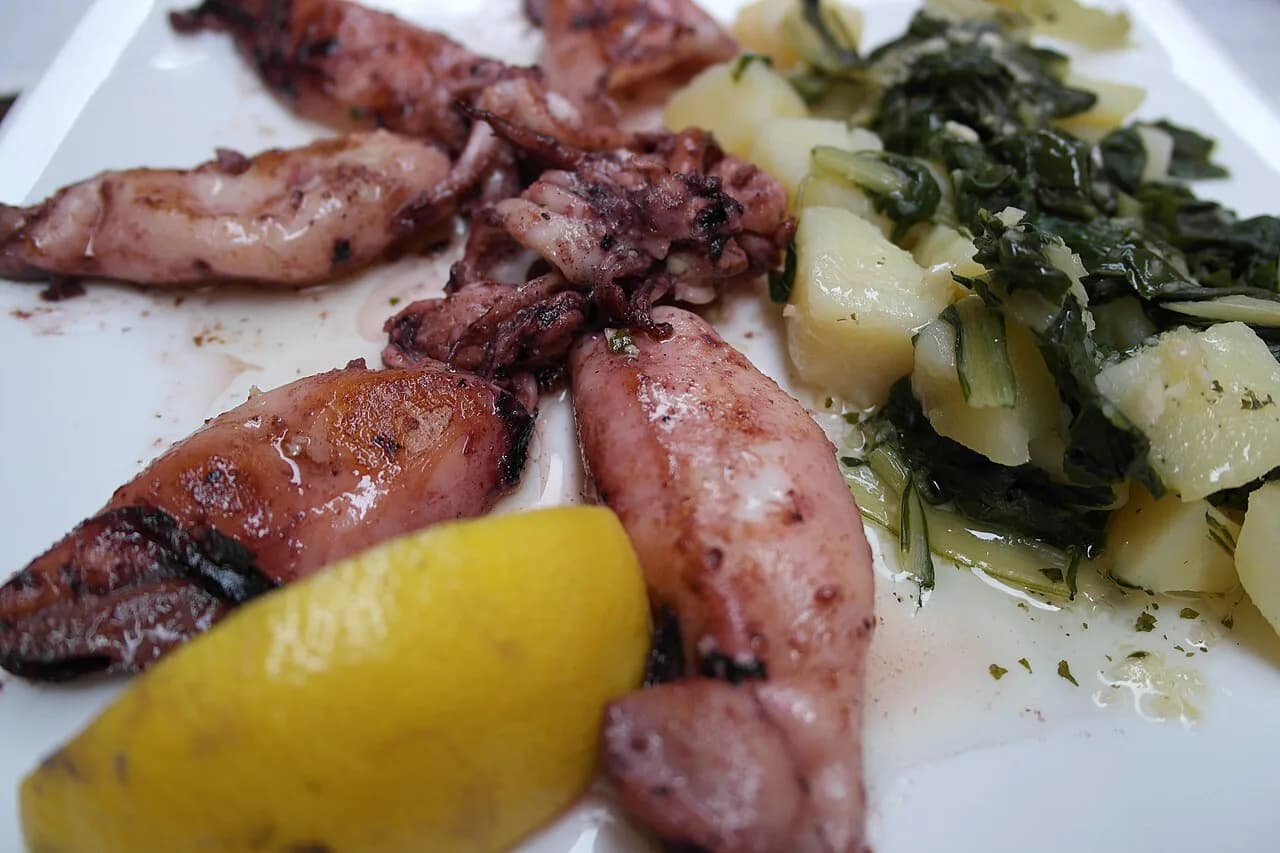
Dalmatian Food: The Dishes to Order on Croatia's Coast
Dalmatian food means grilled fish, black risotto, seafood buzara, peka and pašticada. These are the dishes to order and what each one actually is.
On this page
Dalmatian food means seafood first: grilled fish, black risotto, shellfish in wine sauce, fish stews and octopus salad, cooked with olive oil, garlic and herbs. Meat still matters here, from pašticada beef stew to lamb turned on a spit, so the coast is not a one-note menu. This guide runs through the dishes worth ordering in a konoba, what each one is, and how the coastal repertoire differs from Croatian cooking further inland.
What Dalmatian food is
The Dalmatian coast and its islands cook from the Adriatic and from the garden. The base is olive oil, garlic, rosemary, parsley and fresh vegetables, with fish, shellfish and octopus appearing across the menu. This is the Mediterranean edge of Croatian regional cuisine, and it tastes lighter and saltier than the inland cooking you meet around Zagreb or in Slavonia.
Crni rižot: black risotto. Crni rižot is a risotto coloured black by cuttlefish ink, which also gives it the dark, briny flavour that sets it apart from a plain seafood risotto.
Buzara: shellfish in a wine sauce. Buzara is shellfish cooked in a sauce of white wine, olive oil, garlic and breadcrumbs, usually with prawns, mussels or clams.
Riba s gradela: whole grilled fish and the price by the kilo. Riba s gradela is whole fish grilled over charcoal, usually dressed with olive oil, lemon and parsley and served with potatoes or chard.
The easy way to read a Dalmatian menu is by cooking method rather than by main ingredient. Grilling, gentle simmering in wine and oil, baking under an iron lid and slow stewing cover most of the list, and the same methods turn up with fish, meat or vegetables. If you understand those four approaches, you can order confidently in almost any coastal konoba.
Crni rižot: black risotto
Crni rižot is a risotto coloured black by cuttlefish ink, which also gives it the dark, briny flavour that sets it apart from a plain seafood risotto. Like any good risotto it should come loose and creamy rather than stiff, and the rice is usually cooked with shellfish or cuttlefish pieces folded through. Expect a dish that looks dramatic on the plate and tastes of the sea rather than of the ink itself.
It works as a starter to share or as a main if you want one dish and nothing after it, and it is a good order for anyone nervous about bones in whole fish. Coastal kitchens treat it as a standard rather than a special, so it appears on most menus that lean on seafood. Ask whether it is made with cuttlefish or squid if the distinction matters to you.
Buzara: shellfish in a wine sauce
Buzara is shellfish cooked in a sauce of white wine, olive oil, garlic and breadcrumbs, usually with prawns, mussels or clams. The breadcrumbs thicken the liquid into something you want to mop up with bread, so keep a plate of it at the table. It arrives in a shallow dish or pan, and fingers are part of the deal.
Order it as a starter for two or as a light main, and check which shellfish is in the pan that day rather than assuming prawns. This is a dish where freshness shows: the shells should smell clean and the sauce should taste of wine and garlic rather than of salt. It pairs with a simple green salad or a plate of chard, and needs nothing else.
Riba s gradela: whole grilled fish and the price by the kilo
Riba s gradela is whole fish grilled over charcoal, usually dressed with olive oil, lemon and parsley and served with potatoes or chard. It is the dish that most clearly shows what Dalmatian cooking is about: good fish, little interference, and a squeeze of lemon rather than a sauce.
The critical thing to understand is that on much of the coast a whole fish is priced by weight, not per plate. The waiter often brings the fish to the table so you can see it before it is cooked, and the final charge follows the weight, so ask for the price per kilo and the weight before you agree. This is a normal conversation, not an awkward one, and it protects you from a bill that is larger than you expected.
For anyone who wants fish without the head and bones, a fillet or a simpler grilled plate is the safer order. If you do take the whole fish, eat along the spine from the top down, lift the skeleton away and finish the flesh underneath. Smaller fish tend to be served whole with nothing to negotiate, which makes them an easy choice for a first evening.
Brudet and gregada: the fish stews
Brudet is a fish stew cooked with wine, tomatoes, garlic and herbs, sometimes with a little vinegar, and it is often made with mixed fish. The sauce is sharper and more tomato-led than a buzara, and bread is the correct instrument for finishing it.
Gregada is the other stew to know, built on fish and potatoes cooked together with olive oil, garlic and white wine. It is gentler and more potato-heavy than brudet, closer to a one-pot meal than a sauce with fish in it. Order gregada when you want something substantial rather than a plate you finish quickly.
Both are dishes a konoba makes in a pot rather than to order, which is why they can arrive faster than a grilled fish and why the fish inside may vary with the day's catch. Ask what is in it if you have a preference, and treat either stew as a good choice for a table sharing bread and a bottle of something local. They are also forgiving for anyone unsure about whole fish on the bone.
Peka: the iron bell you need to order ahead
Peka is not a dish so much as a method: meat or seafood with potatoes and vegetables, cooked slowly under a heavy iron bell heaped with embers. Veal, lamb, octopus and chicken are common versions, and the result is tender, smoky and rich with the fat and juices that collect underneath.
Because it takes hours to cook, a peka is usually best arranged in advance, often earlier in the day or when you book the table, and larger versions are built to share. That makes it a poor choice for a spontaneous late lunch and an excellent one for a planned evening with a group. When you book, ask directly whether peka is available and how many people it serves.
If you want the flavour without committing a whole evening to it, look for dishes cooked ispod peke, or under the bell, which can include octopus or lamb in smaller portions. Either way, this is the most theatrical thing to order on the coast, and the one most worth arranging rather than hoping for.
Pašticada s njokima: the celebration beef stew
Pašticada is a slow-braised beef dish, marinated ahead with wine, vinegar, garlic and dried fruit, then cooked for hours until the sauce is dark and sweet-sour. It is served with njoki, the small potato dumplings known in English as gnocchi, which soak up the sauce.
It is the dish Dalmatian families cook for celebrations rather than a quick weekday supper, and it tastes like it: deep, rich and slightly sweet. Order it instead of fish one night, especially if the weather has turned or you have had two seafood meals in a row. It also gives you a reason to drink a heavier red rather than the white that suits grilled fish.
Pršut and Paški sir to start
Pršut is Croatian cured ham, air-dried and sliced thin, and on the coast it is the standard opener with bread, olives and cheese. Paški sir is a hard sheep's-milk cheese from the island of Pag, salty and firm, often served in shavings or wedges alongside the ham.
A shared plate of pršut and Paški sir with olives and a carafe of local white is a sensible way to begin before a main of fish, and it lets you taste two of the coast's signature products without committing to a full course each. Order one plate between two and see how it goes. It is also the best answer for a picky eater at the table who does not want seafood.
Octopus salad and the vegetable sides
Salata od hobotnice is cold octopus salad: boiled octopus cut into pieces and dressed with olive oil, vinegar, garlic, parsley and often potato, onion or capers. It is fresh and sharp, and it makes a good light starter on a hot day.
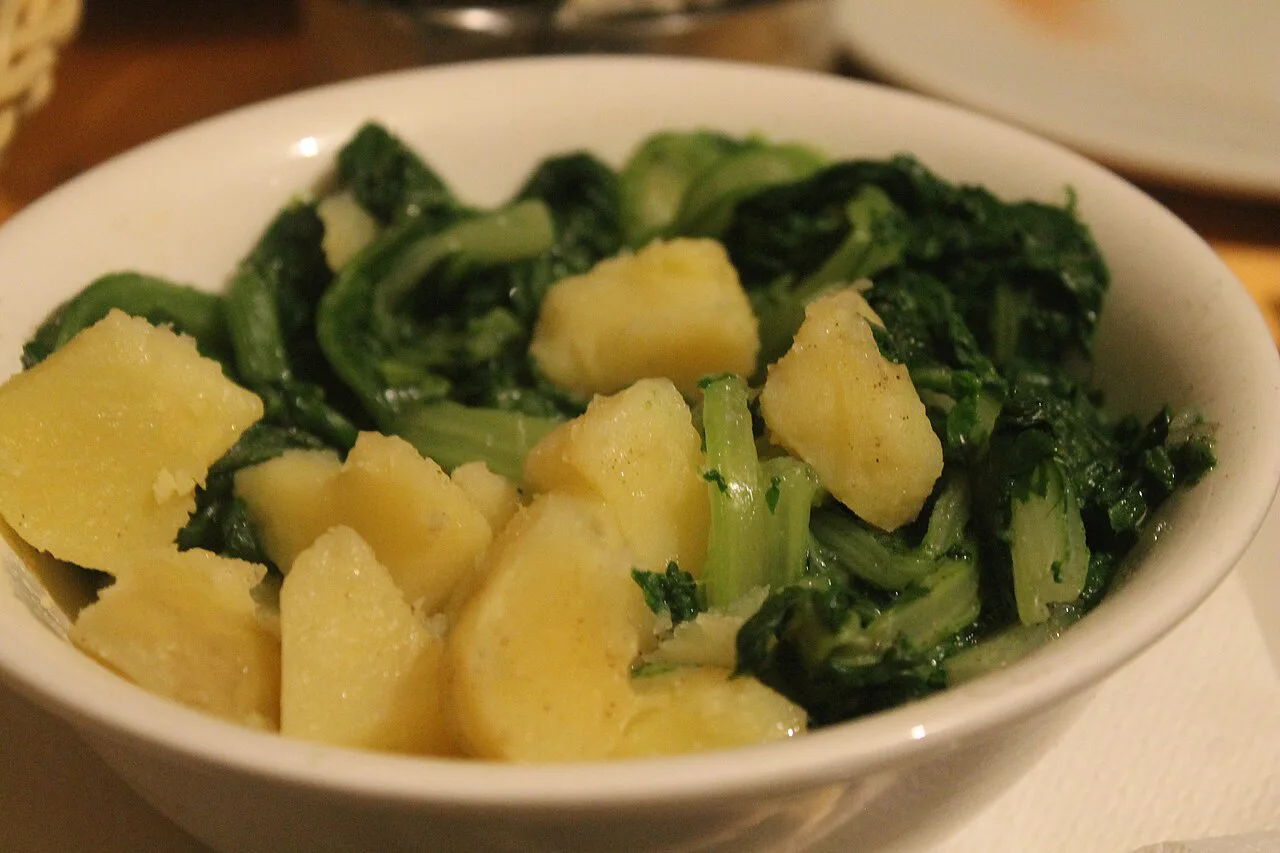
With a fish main, expect sides of blitva, which is chard cooked with potatoes and olive oil, or simply boiled potatoes and a green salad. Order one or two between the table rather than one per person, because portions are generous and the fish is the centre of the meal. These vegetable dishes are where the Dalmatian kitchen shows its Mediterranean side most plainly.
Janjetina na ražnju and miješano meso for meat eaters
Janjetina na ražnju is lamb roasted on a spit, usually over an open fire, and it arrives in pieces with potatoes or bread rather than as a plated dish. It is the coast's main answer to anyone who does not want fish, and it is often available where a grill is already running.
Miješano meso translates as mixed meat and is exactly that: a plate of grilled sausages, small skinless rolls and cutlets, usually with onions and potatoes. It is not refined, but it is generous and a solid value order when you are hungry. For a family table with mixed tastes, pairing one lamb or mixed grill order with fish keeps everyone happy.
How Dalmatian food differs from Istrian and continental cooking
Dalmatian cooking is the seafood and olive-oil end of the Croatian spectrum, while Istrian food leans on truffles, pasta and the same coastal ingredients with a different accent. In Istria you look for fuži, the rolled quill-shaped pasta, served with truffles or game sauces, and for Istrian pršut alongside Dalmatian cured ham.
Continental Croatia is a different kitchen again, built on pork, paprika, cabbage and freshwater fish. There is Slavonian food with its spicy fish soup and stuffed peppers, and Zagorje cuisine with its roast turkey and flatbread, neither of which reads like a coastal menu at all.
The practical takeaway is that Dalmatian menus are the easiest to navigate for anyone who wants fish and vegetables cooked simply, while Istria is the place to go for truffles and pasta. Knowing the Split stops you ordering a heavy meat stew when what you wanted was the sea on a plate.
Fritule and the sweet finish
Fritule are small fried dough balls, light and slightly chewy, usually dusted with icing sugar and sometimes flavoured with lemon zest, orange or a little rum or rakija. They are served hot and in a pile, which makes them ideal for sharing at the end of a meal.
Order one plate for the table rather than one per person, and take them with an espresso or a small glass of something local. They are a better bet than a heavy layered cake after a big fish dinner, and children will eat them without negotiation. If nobody wants fried dough, fresh figs or a slice of cheese make a quieter ending.
What to drink with a Dalmatian meal
The coast's local whites are the obvious partner for grilled fish, buzara, crni rižot and octopus salad, and they are usually available by the glass or in a carafe rather than only by the bottle. Red suits pašticada and spit-roast lamb better than white, so split the table's order by main course if you can. Drink moderately, keep water on the table and treat the wine as part of the meal rather than the point of it.
Konoba or old-town terrace: where to eat Dalmatian food
A konoba is the traditional style of coastal eating house, often family-run, with a smaller menu and an emphasis on what was caught or bought that day. In Dalmatia, they are the places to look for peka, brudet and gregada rather than a glossy list of international dishes. The trade-off is simple: a konoba may be further from the main square, may have fewer tables, and may close outside the season, while an old-town terrace gives you the setting and charges for it.
The working rule is to eat on the terrace for the view once and to spend the rest of your meals a street or two back, where the menu is shorter and the cooking is less hurried. Look at what other tables are eating rather than at the photographs outside, and favour places where the fish is shown rather than listed. A short menu that changes with the catch is a better sign than a laminated book of photographs.
How to order a Dalmatian meal
Start with pršut and cheese or octopus salad, share one crni rižot or buzara between the table, then take a whole fish priced by the kilo or a stew such as brudet or gregada as your main. Leave room for fritule, and book ahead if you want peka, because it cannot be produced on demand.
For everything else, the sensible approach is to ask what is in the pot or on the grill that day, and let the coast decide your order rather than the menu's longest description.
Explore more Croatia guides
Sources
Notes on eating well in Croatia
Optional updates to our food guides.
You might also like



Continue reading
More guides you'll find useful





