
Zagorje Cuisine: Štrukli, Purica s Mlinci and Other Dishes to Order
Zagorje cuisine explained dish by dish: purica s mlinci, boiled or baked štrukli, bean and maize soup, and what to order on Zagreb and Zagorje menus.
On this page
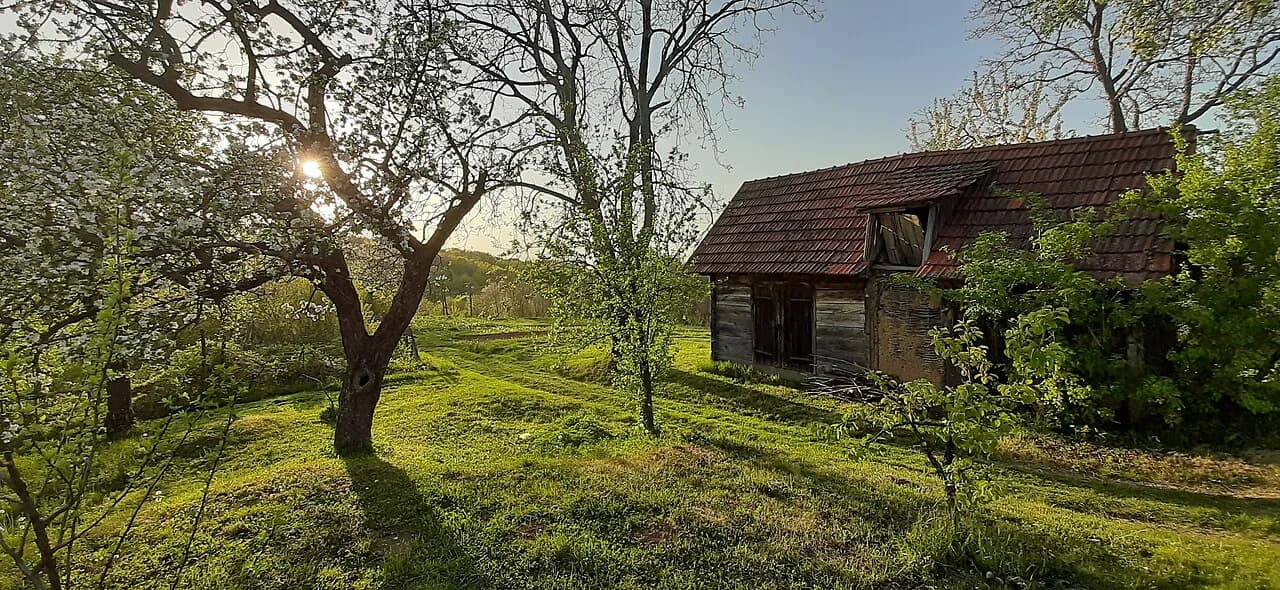
Zagorje cuisine is the hearty, meat-led cooking of Hrvatsko Zagorje and the Zagreb region, and the dish to order first is purica s mlinci: slow-roasted turkey with baked noodles. Around it sit cheese štrukli, bean and maize soup, creamy potato soup, mushroom strudel and breadcrumbed veal, with delicate pastries showing a clear Austrian streak in the north.
This guide explains each dish in plain English, how it is served and how the courses fit together, so you know what will arrive when you order. It sticks to the cooking of the north; for the fish-and-olive-oil cooking of the coast, Dalmatian food is a different register altogether.
Zagorje cuisine in a nutshell
Cold winters and chilly springs shape the food: hearty meat dishes, beans, thick soups and cabbage-based salads, with bread often made from maize or barley or both. The overall character is filling peasant cooking rather than refined restaurant fare, and portions are built for appetite rather than picking.
Austrian influence is most obvious in the delicate pastries, so leave room for something sweet even after a heavy main. Homemade cheese, polenta, game and local freshwater fish are staples of the region, and spit-roasted pork, duck or lamb is another part of the northern table.
Purica s mlinci: the turkey dish that leads most menus
Purica s mlinci is slow-roasted turkey served with mlinci, a sort of baked noodle that soaks up the roasting juices. It is the dish most associated with the region and the one to order if you order only one thing.
What food is Zagreb known for? Zagreb shares the cooking of Hrvatsko Zagorje: purica s mlinci (slow-roasted turkey with baked noodles), štrukli in boiled or baked form, bean and maize soup, creamy potato soup, mushroom strudel and steak à la Zagreb, which is veal stuffed with ham and cheese and fried in breadcrumbs.
Is Croatian food similar to Greek? Only loosely, and less so in the north. Zagorje cooking is meat-led and built on bread, mlinci, beans and cabbage, with Austrian-influenced pastries, while the coastal Croatian kitchen leans more on olive oil and fish.
What is a typical breakfast in Croatia? The sources here describe the region's main dishes rather than a set breakfast, so there is no single northern breakfast to point to. Sir i vrhnje — fresh cheese with cream — served with bread is a plain dairy option in the same tradition as the region's cooking.
Mlinci are listed among the traditional foods of Krapina-Zagorje County in their own right, as zagorski mlinci, which tells you how central they are to the local table. Expect them thin, soft once moistened, and served in quantity alongside the meat rather than as a token side.
Štrukli: boiled or baked, savoury or sweet
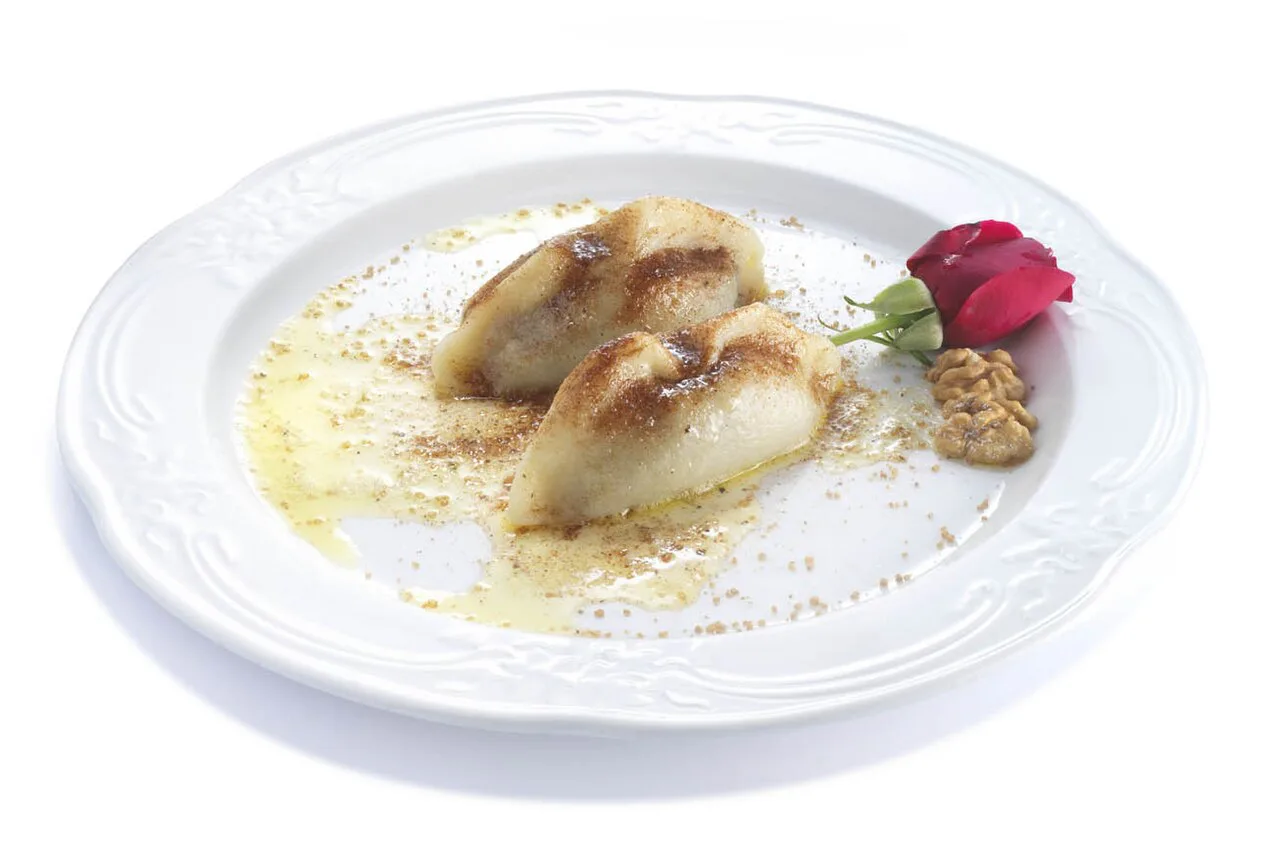
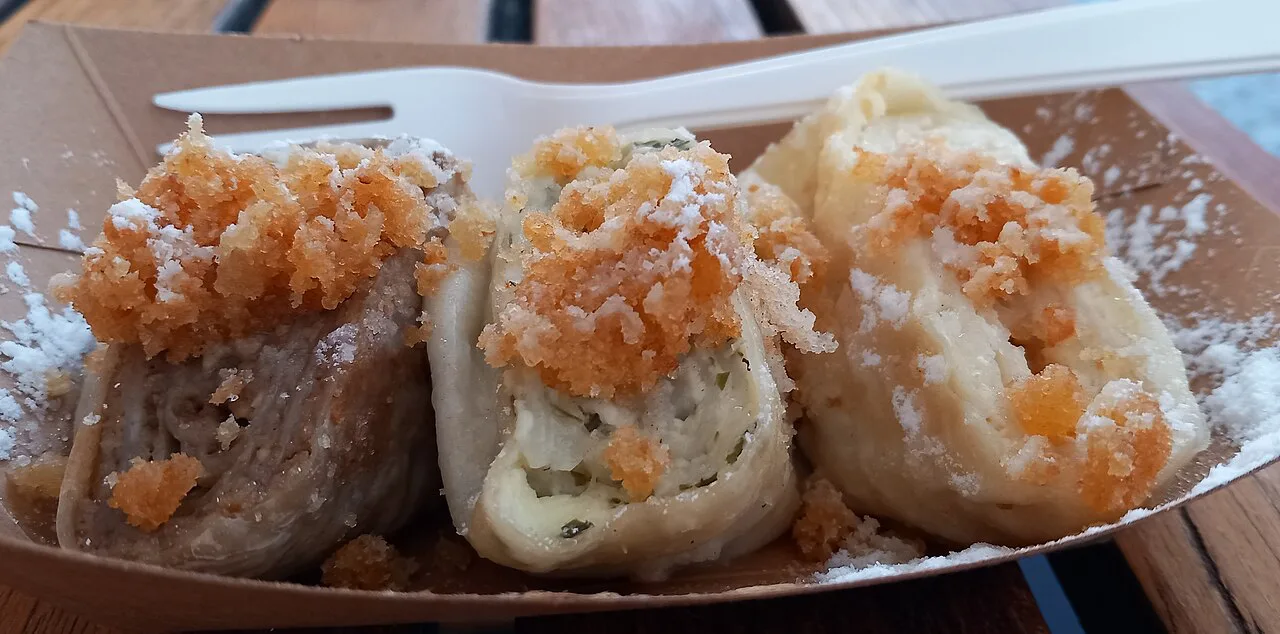
Štrukli is a cheese pastry, boiled or baked, served salty as a starter or sweet as a dessert — the one reliable vegetarian option in this meat-heavy cooking. The boiled version is soft and plain; the baked version, zapečeni štrukli, comes out of the oven with a browned top and is the more substantial of the two.
Zagorski štrukli are a traditional dish served in households across Hrvatsko Zagorje and the Zagreb region, which is why you meet them on city menus as readily as in the countryside. Order a savoury portion as a starter to share, then decide whether you want the sweet version later — ordering both at once is usually too much.
Sir i vrhnje: fresh cheese with cream
Sir i vrhnje is fresh cheese with cream, a simple dairy pairing that appears among the traditional foods of the Krapina-Zagorje area. It works as a cooling counterweight to roast meat and mlinci, and it is the sort of thing served plainly rather than dressed up.
Treat it as you would a cheese course: order it alongside bread at the start, or after the main if you want something lighter than pastry. The cream is thick and unsweetened, so do not expect a dessert.
Soups: beans, potato and mushrooms
Manistra od bobica is a hearty soup of beans and fresh maize with bacon and smoked meat, thick enough to count as a course rather than a prelude. Juha od krumpira na zagorski način is a creamy potato soup — filling and smooth, and best in cold weather.
Mushroom soup, zagorska juha s vrganjima, is another standard opener and the lightest of the three. If you plan to finish with štrukli or strudel, a bowl of soup and one main is usually enough food for two courses.
Savijača sa šampinjonima: mushroom strudel as a main
Savijača sa šampinjonima is a strudel made with bacon and mushrooms instead of apples, served as a main course rather than a dessert. It is the northern habit of pastry-as-savoury-food at its clearest, and a good choice if you want something other than roast meat.
Sweet strudels follow the same pastry logic and are where the Austrian influence shows most plainly. If you have ordered the mushroom strudel as a main, Split a sweet one rather than taking a whole portion each.
Steak à la Zagreb: veal with ham and cheese
Steak à la Zagreb is veal stuffed with ham and cheese, then fried in breadcrumbs — a breaded, filled cutlet rather than a grilled steak. It is a substantial plate, so the trade-off is real: order it and you may not have room for a sweet štrukli afterwards.
If the pastry matters more to you than the main, take a soup and a smaller meat dish and save the appetite. If you want the full northern experience in one sitting, order the steak and share a dessert between two.
Krvavice and spit-roasted meat
Krvavice, blood sausages, are among the traditional foods of the Krapina-Zagorje area and belong to the plainest end of the region's cooking. Spit-roasted pork, duck or lamb is the other straightforward option, roasted over fire and served without much adornment.
These are the dishes to choose when you want the cooking without the pastry and cream — meat, salt and smoke, with bread and a cabbage salad on the side. Portions are generous, so a shared mixed plate is often the sensible route.
How a Zagorje meal is built
A typical meal runs soup, then a meat main with mlinci or another side, with bread — often maize or barley — and a cabbage-based salad alongside. Starters such as štrukli or sir i vrhnje sit before the main, and pastry closes the meal if you still have room.
The practical rule is to choose one heavy element: either a breaded main like steak à la Zagreb, or a plate of purica s mlinci with a dessert, not both. Two lighter courses plus a shared štrukli is a comfortable way through the menu.
Where Zagreb menus overlap with Zagorje cooking
Zagreb menus carry the same cooking as the countryside: purica s mlinci, štrukli, manistra od bobica, the creamy potato soup, mushroom strudel and steak à la Zagreb all appear in the city. Look for the northern dishes first in Zagreb, since they are the ones the capital shares with Hrvatsko Zagorje.
If you have eaten your way through Istrian food on the coast, the north will feel like a different country: heavier, breadier and built on smoke and cream rather than olive oil. Order a single baked štrukli and a plate of purica to see the difference.
What to order on your first Zagorje meal
Order purica s mlinci as the main, a baked štrukli to share as a starter, and one soup between two — that covers the region's signatures without over-ordering. If you prefer pastry over meat, take the mushroom strudel as your main and finish with a sweet štrukli.
For a wider map of how the north fits with the rest of the country, the Croatian regional cuisine guide sets the other regions alongside it.
Explore more Croatia guides
Frequently Asked Questions
What food is Zagreb known for?
Zagreb shares the cooking of Hrvatsko Zagorje: purica s mlinci (slow-roasted turkey with baked noodles), štrukli in boiled or baked form, bean and maize soup, creamy potato soup, mushroom strudel and steak à la Zagreb, which is veal stuffed with ham and cheese and fried in breadcrumbs.
Is Croatian food similar to Greek?
Only loosely, and less so in the north. Zagorje cooking is meat-led and built on bread, mlinci, beans and cabbage, with Austrian-influenced pastries, while the coastal Croatian kitchen leans more on olive oil and fish. Treat the Greek parallel as a general contrast rather than a like-for-like match.
What is a typical breakfast in Croatia?
The sources here describe the region's main dishes rather than a set breakfast, so there is no single northern breakfast to point to. Sir i vrhnje — fresh cheese with cream — served with bread is a plain dairy option in the same tradition as the region's cooking.
Sources
Notes on eating well in Croatia
Optional updates to our food guides.
You might also like



Continue reading
More guides you'll find useful





