
Vegetarian Food in Croatia: Where to Eat and What to Order
Vegetarian food in Croatia, city by city: meat-free restaurants in Zagreb, Split and Dubrovnik, plus Croatian dishes that are vegetarian by default.
On this page
Zagreb is the most rewarding Croatian city for a vegetarian, with Split and Dubrovnik close behind and smaller coastal towns relying on meat-free Croatian dishes rather than dedicated restaurants. This guide sets out where to eat in each city, which dishes are vegetarian by default, and what to order in a konoba that offers nothing beyond grilled vegetables.
Traditional Croatian cooking leans on pork, cured meats and fish, and many konobas still treat a vegetarian section as an afterthought of bread, pasta and grilled vegetables. Knowing the handful of dishes that are meat-free by default lets you eat properly almost anywhere on the coast, and knowing the cities with genuine vegetarian restaurants lets you plan your trip around them.
Which Croatian dishes are vegetarian by default
Several staples of the Croatian table were never built around meat. Blitva is Swiss chard cooked with potato and olive oil, typically served as a side but substantial enough for a light lunch with bread, while fuži or pljukanci with tartufi (pasta with truffles) are a mainstay of Istrian menus. Štrukli, the baked or boiled pastry parcels from the Zagorje region, come in a savoury cheese version and a sweet one, and both are meat-free.
How Croatian menus handle meat-free eating. Most menus carry a section for salads, sides and pasta, and some label dishes as vegetarijansko, but the label is applied loosely.
Zagreb: the strongest choice for vegetarian restaurants. Zagreb has a strong concentration of dedicated meat-free restaurants, several within walking distance of the main square.
Split: meat-free options in and around the Old Town. Split's advantage for a vegetarian is that the Old Town has a dedicated meat-free address.
Look for side dishes that make a meal: grilled or roasted vegetables, peka-baked potatoes, and salads of tomato, cucumber and onion dressed simply with oil and vinegar. Pastries and sweets are safe ground, including kremšnita (a vanilla custard slice) and rožata (a caramel custard), and the many slastičarnice sell them by the piece. On the coast, ask whether a risotto or pasta is made with fish stock or vegetable stock, because risotto alla marinara and similar dishes often are not.
How Croatian menus handle meat-free eating
Most menus carry a section for salads, sides and pasta, and some label dishes as vegetarijansko, but the label is applied loosely. A dish described as a vegetable risotto may be finished with fish stock, and a salad may arrive with anchovies or cured meat on top. The practical approach is to name what you do not eat rather than rely on a section heading.
A dedicated vegetarian restaurant removes the guesswork, and Croatia's meat-free addresses cluster in its larger cities. A directory is a useful planning tool for finding them, but listing counts do not vouch for any single kitchen, so check a shortlist against recent diner reports before you commit.
Zagreb: the strongest choice for vegetarian restaurants
Zagreb has a strong concentration of dedicated meat-free restaurants, several within walking distance of the main square. Nishta runs an entirely meatless menu of international dishes including falafel, curry, cracker pizza and homemade desserts in a calm setting away from the street, and it has branches in both Zagreb and Dubrovnik. For the full picture of the capital's tables by neighbourhood and price, see our Zagreb guide.
Vegehop, in the backstreets of central Zagreb, takes a modern, health-minded approach to vegetarian cooking, with dishes such as moussaka, zucchini cannelloni and vegan chocolate mousse, and it has vegetarian and gluten-free choices. Njummy in central Zagreb is a contemporary café with quinoa veggie bowls, corn tacos and a Caprese salad, and it is notably gluten-free friendly, which makes it useful if you are eating gluten free alongside a vegetarian diet; our guide to Gluten-Free Croatia sets out the wider picture.
Zrno bio bistro, set in a hidden city courtyard off Medulićeva ulica in Zagreb, is a vegan and organic restaurant. It is one of the older vegan and macrobiotic restaurants in Zagreb, and therefore one of the capital's most established meat-free addresses.
Split: meat-free options in and around the Old Town
Split's advantage for a vegetarian is that the Old Town has a dedicated meat-free address. Makrovega, in the Old Town, serves vegetarian, vegan and gluten-free food for breakfast, lunch and dinner, with veggie wraps, burritos and strudels on the menu, and it works as a lunch stop before heading back out to the sights.
Toto's Burger Bar in Split is not a vegetarian restaurant, but it runs a set of meat-free dishes alongside its burgers — zucchini noodles, vegan cakes, sandwiches and salads — which makes it a useful option for a mixed group. It is a casual, self-service spot rather than long-dinner territory, so it suits a quick plate.
Dubrovnik: vegetarian eating inside the Old Town
Dubrovnik's walled centre has just a handful of dedicated vegetarian kitchens, so the workable strategy is to pick restaurants with broad menus and order the meat-free dishes deliberately. Mex Cantina Bona Fide, in the backstreets of the Old Town, serves vegetarian tacos, burritos, Greek salad and guacamole, and it is useful when the group wants something other than seafood.
Away from the main Stradun, broader menus are where the meat-free dishes sit, and a plate of pasta with vegetables or a simple risotto is straightforward to order. If your trip combines dietary needs with religious ones, our guide to Kosher Croatia covers what is available along the Adriatic Sea.
Coastal towns with fewer dedicated options
Outside Zagreb, Split and Dubrovnik, dedicated vegetarian restaurants become thin on the ground, and in smaller island and coastal towns you will mostly be eating from the side-dish and pasta parts of a conventional menu. This is where knowing the default vegetarian dishes matters most: a plate of blitva with potatoes, a truffle pasta in Istria, or a cheese štrukli will see you through a week without repetition.
Seafood towns can be surprisingly good for vegetarians if you ask, since the vegetable sides cooked alongside the fish are often excellent. Ask for a portion of the day's vegetables with olive oil and bread, and say clearly that you do not eat fish or meat, because a waiter may otherwise assume fish is acceptable.
Croatian dishes worth ordering when there is no vegetarian section
When the menu offers nothing labelled vegetarian, work through a short list of dishes that are meat-free as made: blitva s krumpirom (chard with potato), pasta with truffles in Istria, and the cheese version of štrukli.
For something hot in a traditional kitchen, ask for a vegetable risotto or a pasta with tomato and basil, and confirm the stock is not fish-based. Grilled peppers, aubergine and courgette are common side dishes and can be combined into a plate, particularly in Dalmatia in summer when the vegetables are at their best.
Bakeries and pastry shops for a meat-free lunch
Croatian bakeries, known as pekare, sell burek and similar pastries, but many of the savoury ones contain meat, so ask specifically for the cheese or spinach version. A cheese burek and a yoghurt drink make a cheap lunch, and the same shops sell bread, rolls and simple sandwiches that work for a picnic.
Slastičarnice, the pastry shops, are reliable ground for vegetarians: kremšnita, rožata and the many cream-and-pastry cakes contain no meat and are sold by the slice. Our guide to Tap Water in Croatia explains where to refill, which makes a bakery lunch easy to carry.
Markets and produce for self-catering
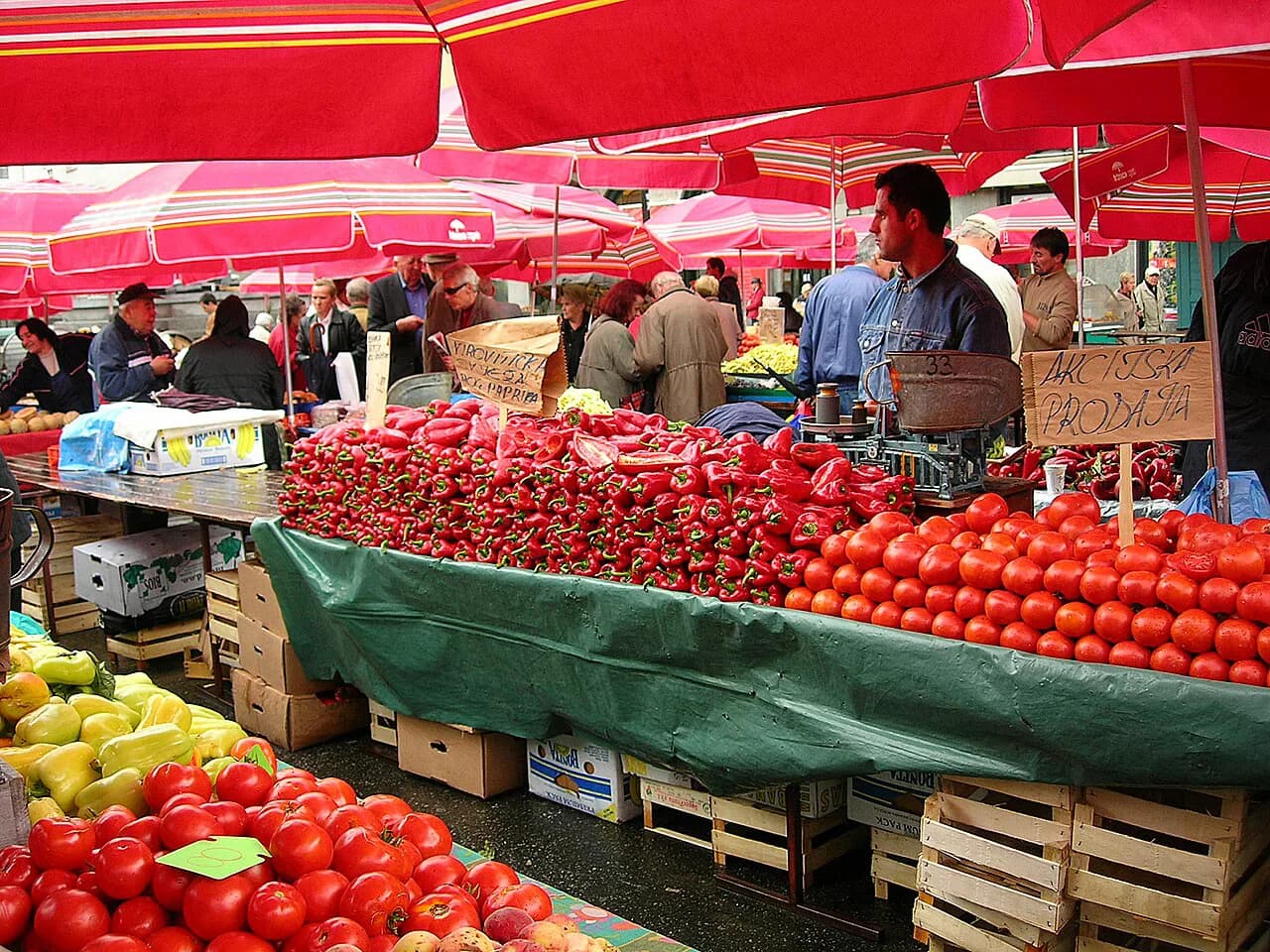
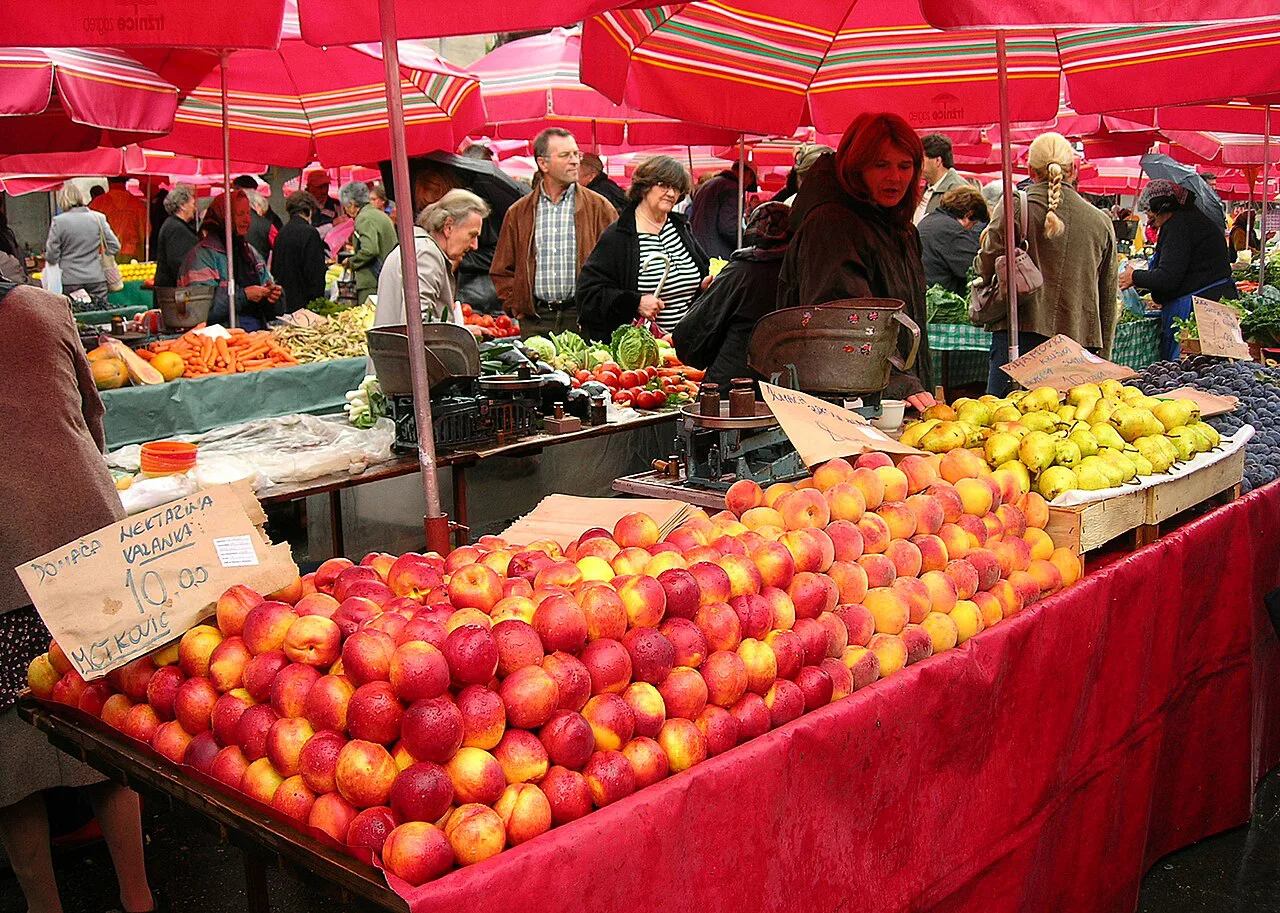
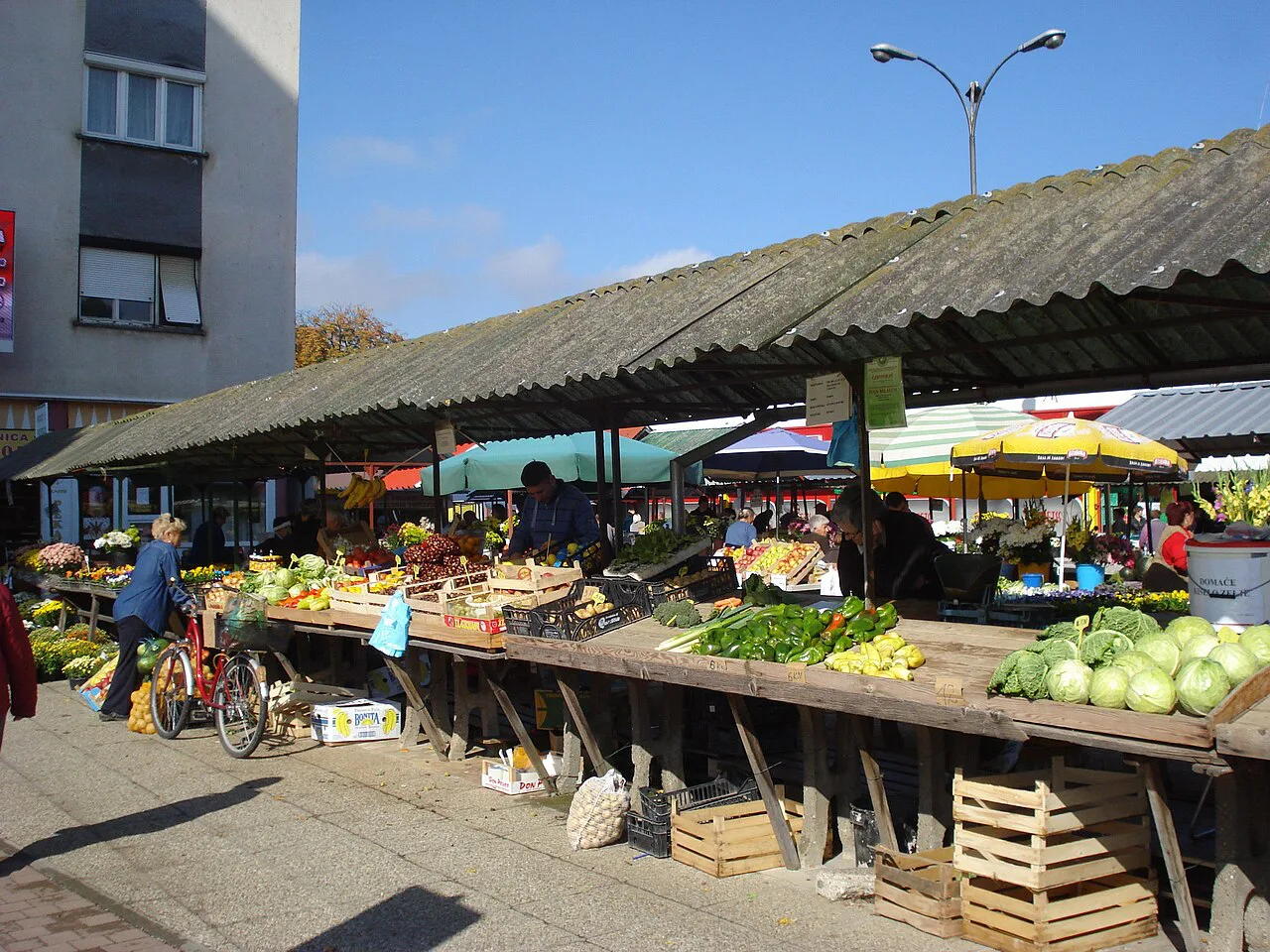
The morning markets, or placa, in Croatian towns are the best-value route to a vegetarian meal: buy tomatoes, peppers, courgettes and salad greens from the stalls and combine them with bread, cheese and olive oil from the same market. Every coastal town of any size has a morning market near its centre.
Markets generally trade in the morning, so plan to shop before lunch rather than after. Island and coastal markets sell produce from the surrounding countryside, and vendors are generally happy to sell small quantities, which suits a self-catering flat or a picnic.
How to order vegetarian food in a konoba
A few Croatian phrases do most of the work. Say bez mesa for without meat, bez ribe for without fish and bez životinjskih proizvoda for without animal products, and add da li je ovo vegetarijansko? to check a specific dish. Written down on a phone screen, these phrases will get you further than a long English explanation.
Expect a friendly but literal response: many konoba cooks will remove the meat from a dish rather than create a new one, so ordering side dishes and pasta is often more satisfying than asking for an adapted main. If your diet is part of a wider set of needs, our guide to halal food in Croatia explains how restaurants handle religious dietary requests, and the same plain-language approach works for both.
Which city should you plan around?
If vegetarian eating is a priority, base yourself in Zagreb for at least a couple of days and eat your main meals at Nishta, Vegehop, Njummy or Zrno bio bistro before heading to the coast. In Split and Dubrovnik, use Makrovega, Toto's Burger Bar and Mex Cantina Bona Fide as anchors and fill the rest of the trip with blitva, truffle pasta, cheese štrukli and market lunches.
Elsewhere, treat the menu as the strategy rather than the obstacle: ask for vegetable sides, confirm the stock, and buy lunch from a pekara or a morning market. That approach will carry you through the smaller coastal towns, where a dedicated vegetarian restaurant may simply not exist and the nearest good option may be a ferry or a bus ride away.
Explore more Croatia guides
Sources
Notes on eating well in Croatia
Optional updates to our food guides.
You might also like



Continue reading
More guides you'll find useful





