
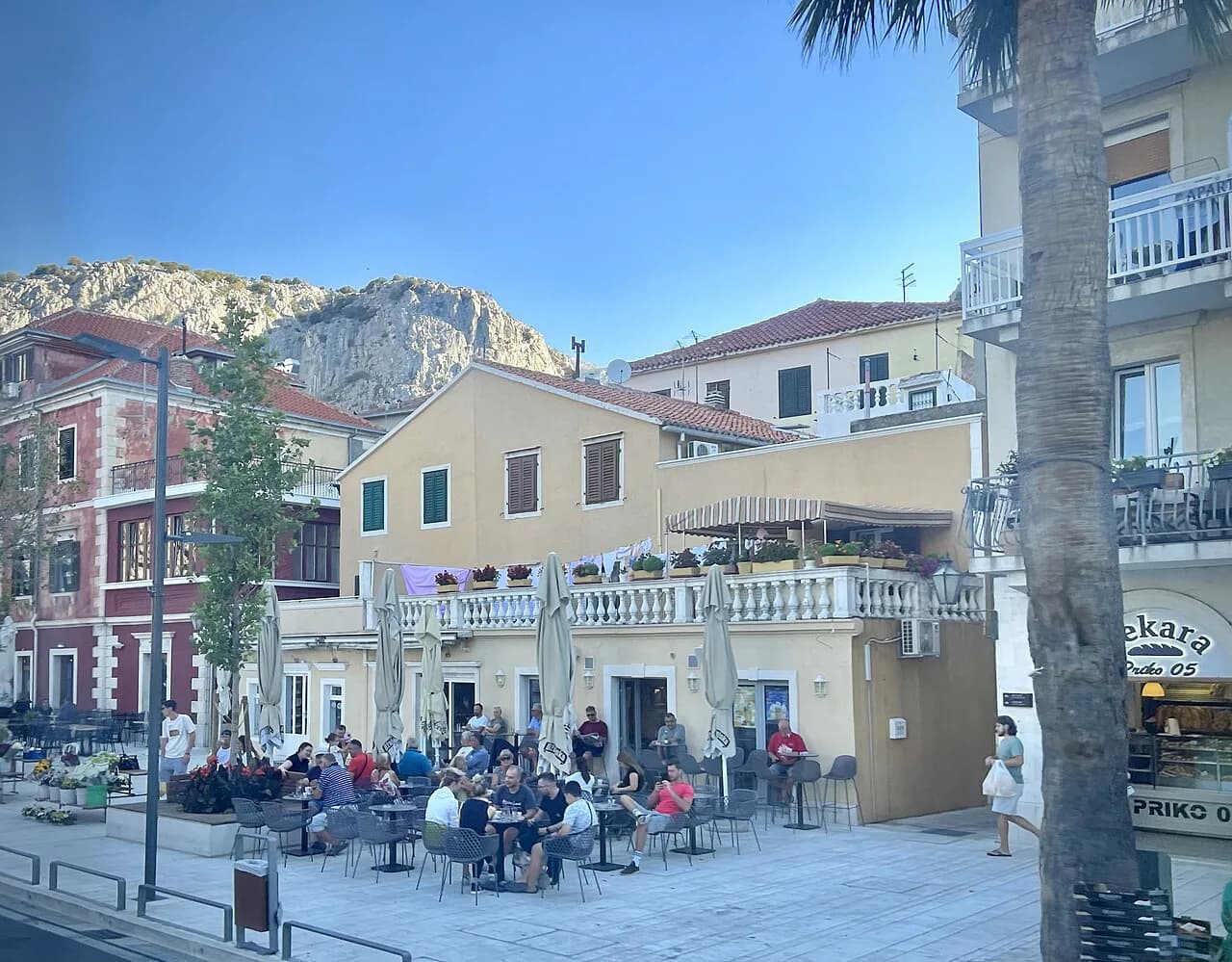
Omiš Restaurants: Where to Eat in the Old Town and Beyond
Plan where to eat in Omiš, from old-town terraces to riverside and inland kitchens, with the Dalmatian dishes worth ordering and how fish by the kilo works.
On this page
Omiš restaurants divide into three useful zones: the old-town centre between the narrow streets, the riviera either side of the Cetina mouth, and the inland Poljica villages on the northern side of Omiška Dinara. The cooking follows those zones, drawing on the sea, the river and the inland fields. This guide names the places worth planning a meal around, the dishes that make most sense, and the decisions that keep a fish dinner predictable.
What Omiš cooking looks like: sea, Cetina river and the inland Poljica villages on one table
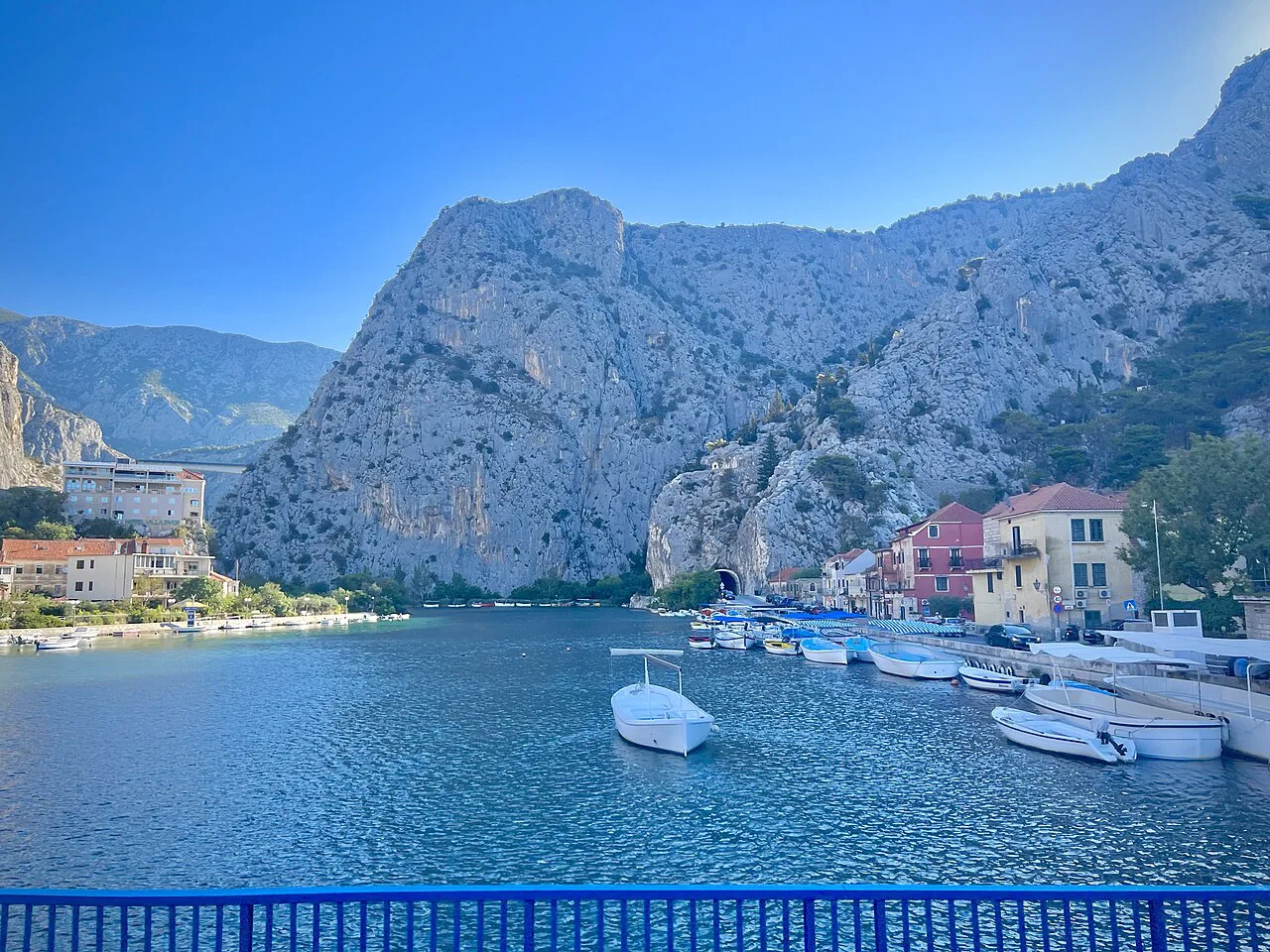
The town sits where the Cetina meets the Adriatic, and the surrounding area covers the Omiš Riviera, the river canyon and the inland villages of Poljica. That geography produces three connected cooking styles rather than one, which is why a menu in the centre can run from grilled fish to chard-and-dough inland dishes. Dalmatian cooking here belongs to the Mediterranean diet, inscribed on the UNESCO list of intangible cultural heritage, and the emphasis falls on seasonality and long, shared meals.
For a visitor, the practical consequence is that Omiš rewards eating at different altitudes and distances: a terrace in the centre for a first evening, a riverside table for fish, and a village kitchen inland for something you will not find on the coast. Give the trip at least two eating bases if you can, and spread the meals accordingly. If you are continuing south or north afterwards, the wider Dalmatian coast offers plenty of comparison.
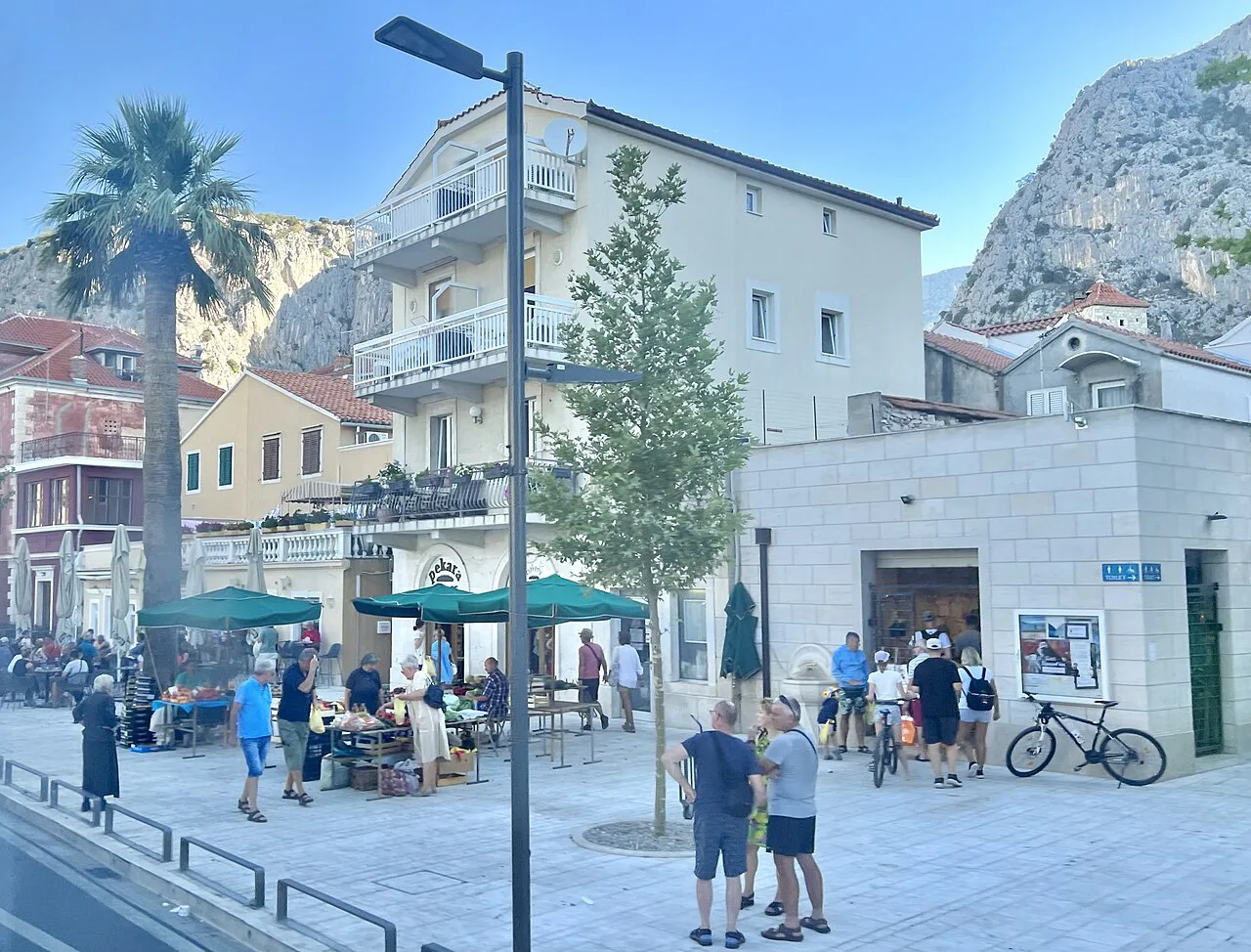
Old-town terraces: eating between the narrow streets in the centre
The centre is compact, with lanes running between stone buildings and tables squeezed into the spaces between them. It is the easiest place to eat on arrival, and the most atmospheric if you want a candlelit terrace rather than a view of the water. The trade-off is that central tables are the most exposed to passing trade, so look at the menu and the fish display before you sit down.
One address in the old town worth knowing is Pod Odrnom on Ulica Ivana Katušića, where you can eat inside in a decorated room or outside on the terrace. The kitchen covers Dalmatian and Mediterranean dishes, which makes it a fair first stop for a group with mixed appetites. It is a sensible base for a first evening in town before you head further out.
Pod Odrnom: Dalmatian and Mediterranean plates, inside or on the terrace
Set between the narrow streets of the old part of town, Pod Odrnom gives you a clear choice between an interior table and an open-air one. That flexibility matters in Omiš, where summer heat and sudden evening airs both change how a meal feels. Book the terrace when the evening is the point; take the interior when you want to hear each other talk.
The menu runs on Dalmatian and Mediterranean lines, so order the way you would in any coastal kitchen: grilled fish or meat, a vegetable or chard side, good bread and olive oil, and something cold to drink. Keep the fish conversation for the table rather than the menu board, and ask the weight and price before it is cooked. The address sits inside the tightest part of the centre, which makes it a natural first-night pick.
Puljiz: meat and fish specialities from a larger local restaurant
Puljiz takes the other role in town, serving meat and fish specialities in a setting that suits bigger groups and longer sittings. The kitchen draws on local and international cooking, so it covers both the fish eater and the one who wants a grilled steak. Treat it as the reliable, roomier option rather than the romantic one.
Because it handles both meat and fish, Puljiz is a good choice when your table is Split on what to order. Order fish from the display if you want it whole, or go for a meat plate if you would rather not negotiate by weight. Either way, agree on the main course before the wine list arrives.
Konoba eating around Omiš: what separates a konoba from a restaurant
A konoba is the informal end of Croatian eating: smaller rooms, simpler service, dishes closer to the domestic kitchen. Around Omiš that usually means fish, cured pork, chard, potatoes and whatever came off the grill that day, rather than a long à la carte list. The best of them feel like someone's dining room, which is exactly the point.
Use a konoba for a relaxed lunch and a restaurant for an evening when you want a proper terrace. For a wider sense of how Dalmatian coastal cooking and konoba-style eating play out across the region, the Best Restaurants in Dalmatia guide is a useful companion to this one.
Soparnik from Poljica: chard, onion, olive oil and garlic baked under embers
Soparnik is the inland dish to seek out in Omiš: a flat, round pastry of dough filled with chard, onion, olive oil and garlic, baked under embers and hot ashes. It comes from Poljica, the inland side of the Cetina, and it is not a generic Dalmatian starter but a specific village food with its own history. Order it to share at the start of a meal, ideally where someone has baked it that day.
The dish carries protection from the Croatian Ministry of Culture and an EU geographical origin label, which is why it appears on menus with a certain pride. If you are eating inland or at a konoba with Poljica connections, ask whether it is on; it is one of the few dishes that reliably ties Omiš to its hinterland rather than its harbour.
Fish priced by the kilo: how to read the price and order without surprises
In Omiš, as along the rest of the Dalmatian coast, whole fish is normally sold by weight rather than as a fixed plate. The price you see on the menu is usually per kilo, so the bill depends on the size of the fish you choose. Ask the waiter to weigh the one you want and tell you the total before it goes on the grill.
Two habits keep this simple: point at the fish you want in the display, and confirm whether the quoted figure covers one fish or the whole portion. A large fish shared between two people can cost more than two individual plates, so decide as a table rather than individually. If the answer is vague, choose a smaller fish or a different dish.
What to drink with the meal: Dalmatian varieties and the local Omiš rosé
Dalmatian whites like Pošip and Maraština suit grilled fish and lighter starters, while Plavac Mali gives a fuller red for meat and stronger sauces. Tribidrag, also known as Crljenak and the ancestor of Zinfandel, is a local variety worth trying if you see it by the glass. These are the wines to ask for by name in an Omiš restaurant.
Omiš also has its own rosé, a blend of Plavac, Ninčuša and Okatac produced locally in Svinišće on the northern side of Omiška Dinara. It is a fresh, easy partner for fish and vegetables, and a good choice for lunch when a red would be too much. Rakija, most often walnut, cherry or herb, is how many meals here finish rather than begin.
Craft beer from Dugi Rat: Barilo's Mila and Malduk on Omiš tables
Wine is not the only local drink worth ordering. The Barilo brewery in Dugi Rat, about five kilometres from Omiš, makes two craft beers named after local legends: Mila, a golden ale, and Malduk, a red ale. Both turn up on Omiš tables as a change from wine with a fish dinner.
Ask what is on draught or in bottle before you commit to a wine list, particularly at lunch. A golden ale handles grilled fish and fried food well, while the red ale stands up to meat and stronger cheeses. Keep the rest of the evening moderate and let the beer be the local curiosity of the meal.
Booking in high season and the old-town versus local trade-off
In July and August the old-town terraces are the busiest part of town, so booking ahead is sensible if you want a particular table at a particular time. The centre is where visitors cluster; the riviera and inland villages spread the same cooking over more space and quieter rooms. Decide which you want before you set out, because the two experiences are genuinely different.
A balanced stay gives you one atmospheric centre meal and the rest outside it, where the pace is slower and the cooking often closer to home. If you are driving, inland Poljica is the natural counterweight to the harbour. Neighbouring towns on the same stretch of coast offer more comparisons if you want a wider circuit, with Trogir restaurants a straightforward run up the coast.
Eating inland along the Cetina and in Poljica villages
Inland Omiš is Cetina country, where the river cuts a canyon and the villages on the northern slopes grow the ingredients behind dishes like soparnik. Eating here means fewer menus and more cooking tied to what the household or the village produces. The reward is food that tastes of the place rather than the harbour.
Make the inland meal the purpose of the outing rather than an afterthought, and head out for lunch rather than dinner so you drive back in daylight. Poljica is also where Omiš rosé is produced, in Svinišće, so a local bottle is part of the point. If you want a second inland reference point on the same river system, Skradin restaurants sit near Krka National Park and the Skradinski Buk falls.
Cash or card, and what a meal out in Omiš costs
Croatia has used the euro since 2023, and card payment is widely accepted in Omiš restaurants, though some smaller places may prefer cash. Carry a little cash as a fallback, especially inland and at smaller venues, and ask if you are unsure.
Rather than trusting a headline figure, build the cost from what you order: a shared starter, a whole fish weighed at the table, a side of chard or potatoes, and a local bottle. Fish by the kilo can push a meal up quickly, while a konoba lunch of soup, grilled meat and a beer stays modest. Ask for the price per kilo and the weight and you control the biggest variable on the bill.
Which Omiš table to book first
Book a terrace in the old town for your first evening, eat fish by the kilo with the weight confirmed, and put one inland lunch in Poljica for soparnik and Omiš rosé. Add a Barilo beer at some point and you have covered the town's three eating zones without repeating yourself.
Explore more Croatia guides
Frequently Asked Questions
Is Omiš worth visiting for the food alone?
Yes, if you treat the town as three eating zones rather than one. The old town gives you terraces between the lanes, the riviera and Cetina mouth give you fish, and inland Poljica gives you soparnik and village cooking. A short stay with one meal in each is a better introduction to Dalmatian food than a week of old-town menus.
Is eating out in Croatia expensive?
Omiš sits in the middle of the Dalmatian range: konoba lunches of grilled food and a beer are modest, while whole fish sold by the kilo can raise a dinner quickly. The price per kilo and the weight of the fish are the two numbers that decide the bill, so ask for both before the fish goes on the grill.
What dish should I order first in Omiš?
Order soparnik to share if you find it, then move on to grilled fish with chard and potatoes. Soparnik, from inland Poljica, is a flat pastry of dough, chard, onion, olive oil and garlic baked under embers, and it is the dish that most clearly distinguishes Omiš from the rest of the coast.
Sources
Notes on eating well in Croatia
Optional updates to our food guides.
You might also like



Continue reading
More guides you'll find useful





