
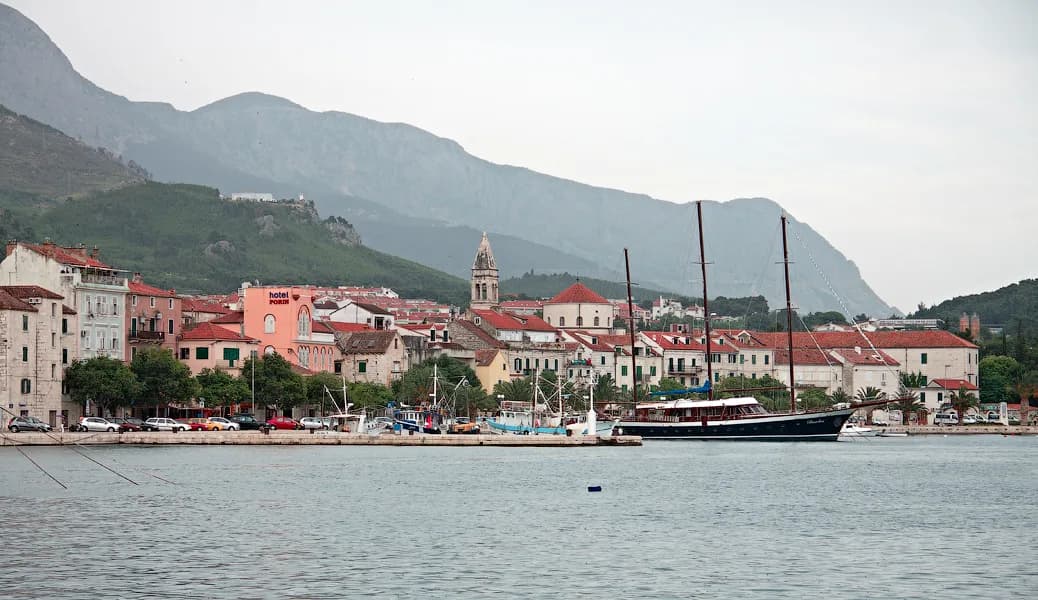
Makarska Restaurants: Konobas, Grilled Fish and Dalmatian Classics
Plan where to eat in Makarska: Dalmatian dishes to order, how peka and grilled fish work, and the trade-offs between old-town terraces and konobas.
On this page
Makarska restaurants are at their best when you order the Dalmatian staples rather than the international fallbacks. A traditional konoba on the Makarska Riviera will typically list pašticada (beef marinated and slow-braised in a sweet-sour sauce), peka (meat or octopus baked under a domed iron lid), baked lamb, octopus salad and black risotto made with cuttlefish ink. This guide sets out what those dishes are, which to choose first, how grilled fish sold by weight affects the bill, and where the old-town seafront terraces sit against quieter places inland.
Makarska is a working harbour town on the Dalmatian coast, so fish and seafood carry the menu rather than share it with steaks. The town sits on the Makarska Riviera, the strip of coast running from Brela and Baška Voda through Tučepi and Podgora down to Gradac. If you are basing yourself elsewhere on the riviera, the sibling guides cover the neighbours in the same style, from Brela restaurants to Tučepi restaurants further south.
What Makarska restaurants serve: the Dalmatian dishes to know
The core repertoire is short and worth learning before you sit down. Pašticada is a Dalmatian beef dish with Greek and Roman roots that was served in wealthy Venetian households, and it takes roughly two days of marinating and cooking before it reaches the plate. Peka is the domed iron lid itself, and the dish named after it is food baked under embers piled on top, so meat and potatoes cook together slowly for around an hour and a half. Baked lamb, usually with potatoes and spring onions, is the celebration dish of the region.
Seafood follows the same logic: simplicity and a hot grill. Black risotto is made from cuttlefish, fried squid is on almost every menu, and quality grilled Adriatic fish is the benchmark, with dentex and sea bream among the species to look for. Octopus appears twice over, once as a cold salad and once baked under peka with potatoes.
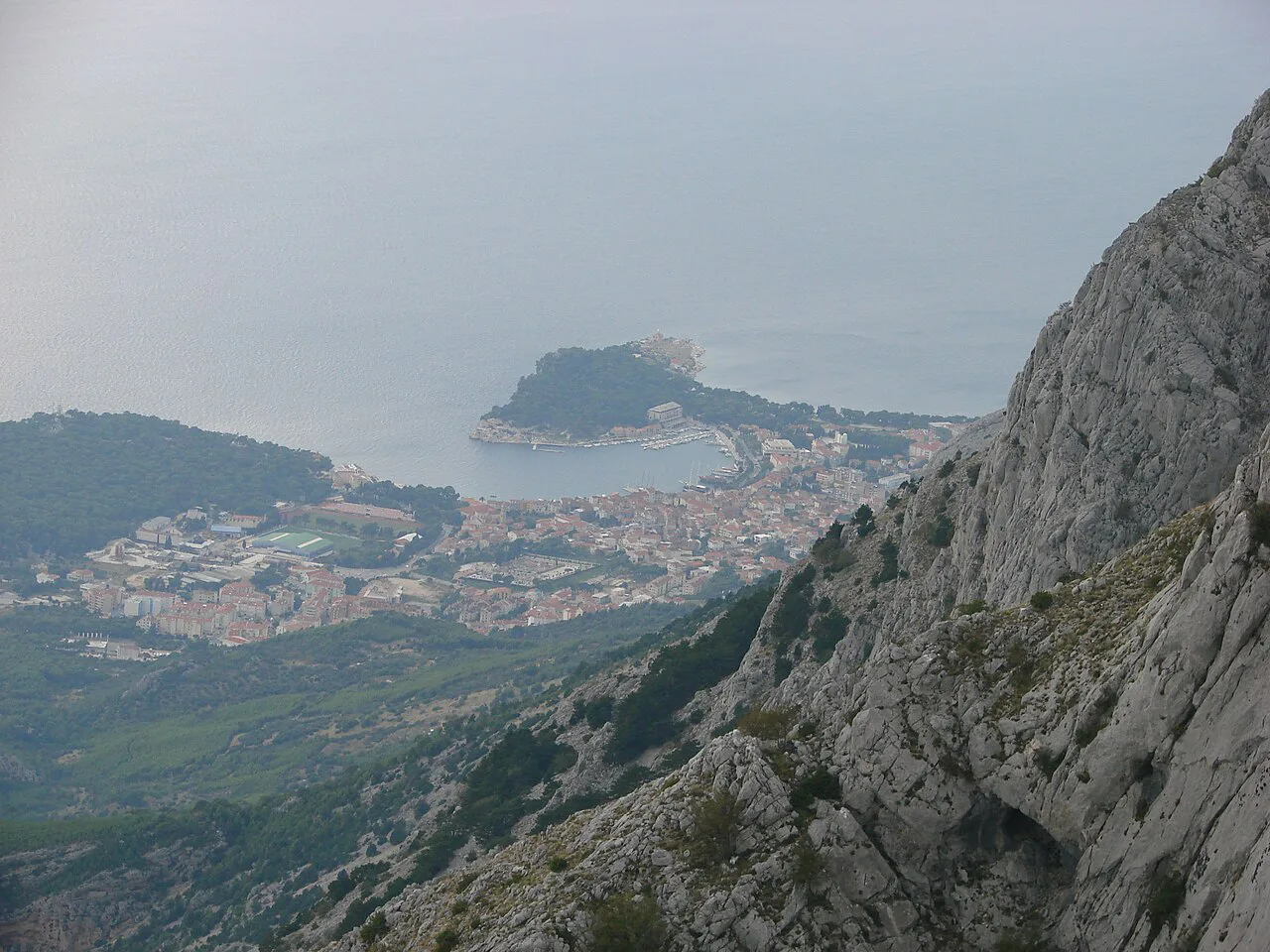
Konobas and traditional restaurants in Makarska and the riviera
The word konoba signals a traditional tavern rather than a formal restaurant, and on the Makarska Riviera it is where the Dalmatian menu above is most likely to appear intact. Expect plain rooms, paper tablecloths in the simpler places, and a menu built around the grill and the pot rather than around presentation. Outside Makarska itself, the neighbouring towns along the coast have their own clusters of konobas worth the short drive, including Baška Voda restaurants to the north and Podgora and Gradac to the south.
For a wider sweep of the same cooking along the coast, the guide to the best restaurants in Dalmatia puts Makarska in the context of Split, Hvar and the islands. Read it alongside this page if you are moving on after Makarska and want the same dish-by-dish approach elsewhere.
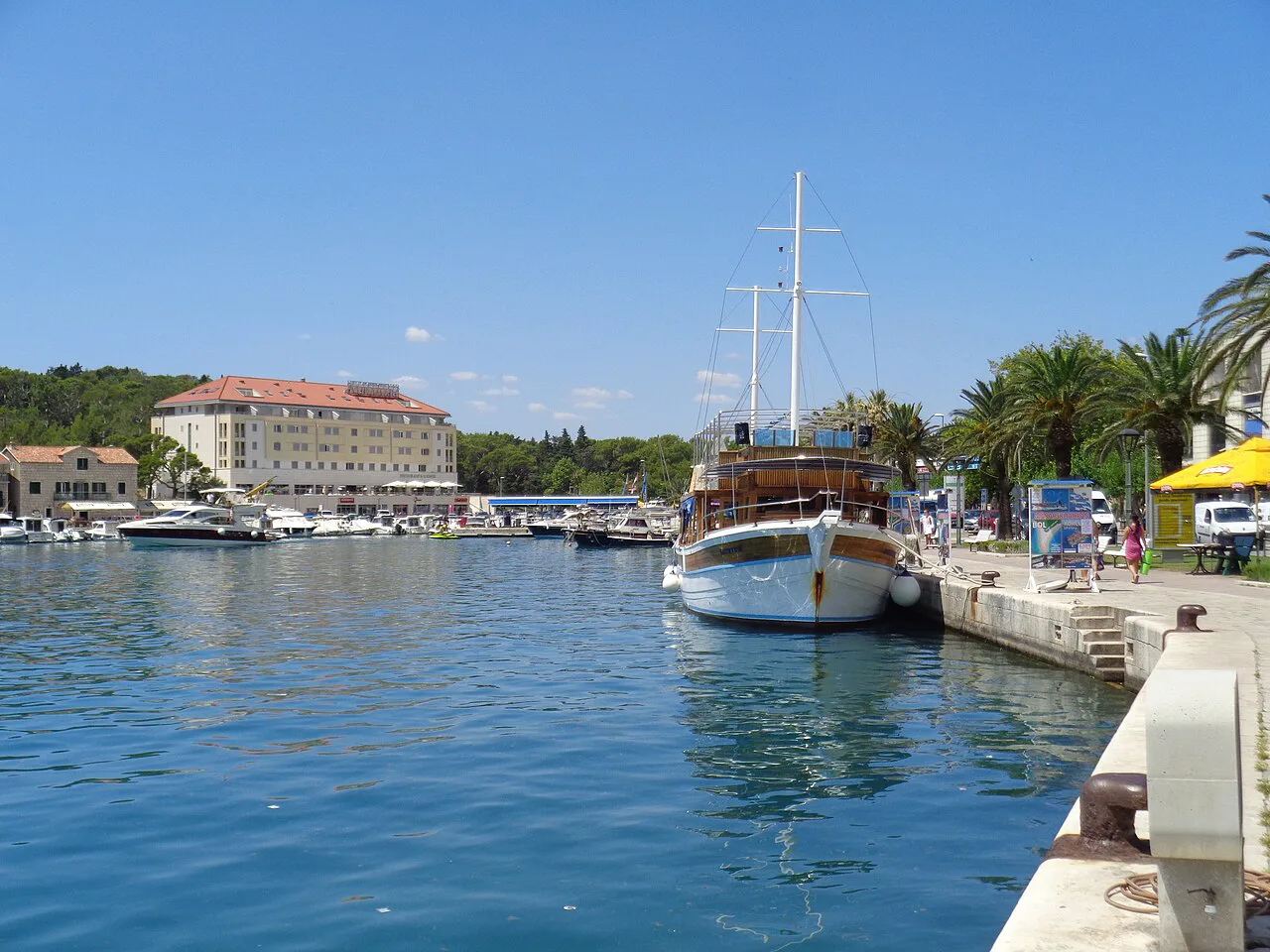
What to order first: pašticada, peka, baked lamb and black risotto
If it is your first Dalmatian meal, order pašticada. It is the dish that most clearly separates a kitchen cooking the regional repertoire from one assembling generic Mediterranean plates, and its long marinade is the reason it is worth seeking out at a konoba that does it properly. Pair it with a glass of Plavac Mali, the robust red from the Pelješac peninsula.
Black risotto is the quicker option if you do not want to wait for a slow-braised main, and it is a good way to judge a kitchen's seafood cooking. Baked lamb suits a table of several people sharing. Octopus salad works as a starter across the whole table, and fried squid is the reliable choice for anyone unsure about fish with bones.
Grilled fish and seafood: what to ask for and how fish is priced by the kilo
Grilled fish on the Dalmatian coast is commonly priced by weight rather than as a fixed plate price, so what you see on the menu can be a per-kilo rate rather than what you will pay. Ask which fish is available that day and what each weighs before you commit, so the total holds no surprises. Dentex and sea bream are the names to recognise, and both are judged on freshness rather than sauce.
The cooking is deliberately plain: olive oil, salt, a hot grill and lemon on the side. What usually pushes the bill up is the weight of the fish rather than the style of the restaurant, so a small whole fish shared between two can cost less than a large single portion. If the price matters, ask for the total before the kitchen starts.
Peka: what it is, why it is ordered in advance and which meats it suits
Peka is not a quick order. The iron lid is covered with embers that are added gradually, and the food steams and roasts at the same time for about an hour and a half, which is why konobas often ask you to request it ahead. The classic versions are veal, lamb or octopus with potatoes, and the appeal is the way the meat and potatoes take on the smoke from the fire without drying out.
Octopus under peka is the choice for a seafood-led table, while veal and lamb versions suit anyone who wants a substantial meat main. Because it is a shared, slow-cooked dish, peka is best planned for an evening when you are not in a hurry. Order it for the table rather than as a single portion, and expect the potatoes to be as much of the point as the meat.
Old-town terraces versus places set back from the seafront: the trade-offs
Makarska's old-town seafront is the obvious place to eat, and the trade-off is straightforward. A terrace on the waterfront gives you the harbour view and the convenience of walking home, but the setting is doing part of the selling. That is not a reason to avoid it; it is a reason to check whether the kitchen is cooking the Dalmatian repertoire or a broader international list.
Places set back from the promenade, on the streets behind the harbour or in the neighbouring towns, tend to be quieter and more focused on the grill and the pot. The trade-off runs the other way: less atmosphere, less passing trade, and a kitchen that has to earn its regulars on the food. On a busy summer evening the difference in noise alone can decide the meal. For travellers based further north, Trogir restaurants make a useful comparison, since Trogir old town is another Dalmatian eating centre you may pass on the way.
Bread, sides and vegetables that come with a Dalmatian main
A Dalmatian main rarely arrives alone. Grilled fish and grilled meat usually come with blitva, the Swiss chard and potato side that is the region's default vegetable, dressed with olive oil and garlic. Baked lamb comes with potatoes and young onions, and peka brings its own potatoes cooked under the lid with the meat.
Salads are simple: tomato, cucumber, onion and olive oil, or a mixed salad with cheese. Anyone watching the total should note that sides and extras quietly add to a modest main, so check what comes with the dish before ordering.
Desserts and coffee after a Makarska meal
Dessert on the Dalmatian coast is often fruit-led, with figs, grapes and melon in season, and the heavier pastry options tend to be the Croatian classics rather than a local Makarska speciality. Coffee is taken seriously, and a meal commonly ends with an espresso or a longer coffee rather than a dessert. If you want something cold, gelato along the seafront is the easy option.
What a meal in Makarska costs and how to judge value in euros
Croatia uses the euro, so Makarska menus are quoted in euros and you can compare prices directly with the rest of the eurozone. Fish sold by the kilo is the item most likely to surprise, because the per-kilo rate tells you little until you know the weight of the fish on offer. Grilled meat, peka for a table and pasta dishes are easier to budget for, since they are priced per portion rather than by weight.
Judging value in Makarska means looking at what comes with the main, not just the headline figure. A fish plate that includes blitva and potatoes is better value than a cheaper one where every side is extra, and a konoba cooking pašticada properly is worth more than a waterfront terrace serving a pale imitation. If you want a reference point further along the coast for how Dalmatian menus are priced and structured, the Omiš restaurants guide covers a town with a similar mix of grill houses and konobas.
Booking in high season and eating at quieter times
Makarska fills up in July and August, and the waterfront terraces are the first to go. Book ahead for dinner if you have a particular place in mind, especially for a table of more than four, and ask about peka when you book, since it needs notice. Lunch is the easier meal to arrange without a reservation, and it is also when fish is most likely to be at its freshest.
Eating earlier or later than the peak rush is the simplest way to avoid a wait without booking. In high summer many visitors eat late, so an early dinner can mean a quieter room and more attention from the kitchen. Shoulder-season visits are calmer again, though some coastal places scale back outside the main months, so it pays to have a second choice in mind.
Dietary needs, children and non-fish eaters at konobas
A Dalmatian konoba is a manageable place for a mixed group, because the menu splits cleanly between fish, grilled meat and vegetable sides. Non-fish eaters can order ćevapi (grilled minced meat fingers, usually with flatbread and onion), grilled chicken or a pašticada, while children are usually happiest with fried squid, pasta or a plain grilled meat portion. Vegetarians have a narrower choice, though blitva, salads and vegetable risotto are usually available.
If you have a serious allergy, particularly to shellfish, explain it clearly at the start, since fish and shellfish share the same grill and the same oil. It also helps to say what you cannot eat before ordering rather than after the food arrives. Children's portions are not always listed, so ask whether a half portion is possible.
Which Makarska meal should you book first?
Book one evening around peka or baked lamb, requested in advance, and one lunch around grilled fish weighed at the table. That pairing covers the two halves of the Dalmatian kitchen, the slow pot and the hot grill, and makes the best use of a short stay in Makarska. If you are moving along the coast, the Primošten restaurants guide carries the same approach south towards Šibenik-Knin County.
Keep the rest of the week flexible: pick a waterfront terrace for the view on a warm evening and a konoba set back from the promenade when the food matters more than the setting. Order pašticada at least once, ask for fish by weight so there are no surprises, and finish with coffee rather than a heavy dessert.
Explore more Croatia guides
Frequently Asked Questions
What is Makarska famous for?
Makarska is known as a harbour town on the Dalmatian coast with a mountain backdrop and a seafront old town. On the plate, it is associated with the wider Dalmatian repertoire: pašticada, peka, baked lamb, black risotto and grilled Adriatic fish.
Is Croatia expensive to eat out?
Croatia uses the euro, and coastal towns in high season are at the pricier end of the country. Fish sold by the kilo is the main variable, so ask the weight and the total before ordering; grilled meat, pasta and peka shared at a table are easier to budget.
Do I need to order peka in advance in Makarska?
Usually yes. Peka cooks under embers for roughly an hour and a half, so konobas commonly ask for notice when you book. Ask when you reserve; check current details on notice times with the konoba.
What should non-fish eaters order in a Makarska konoba?
Ćevapi, grilled chicken, pašticada or a plain grilled meat portion all work, and blitva with potatoes covers the vegetable side. Tell the staff about serious allergies before ordering, since fish and shellfish often share the same grill.
Sources
Notes on eating well in Croatia
Optional updates to our food guides.
You might also like



Continue reading
More guides you'll find useful





