
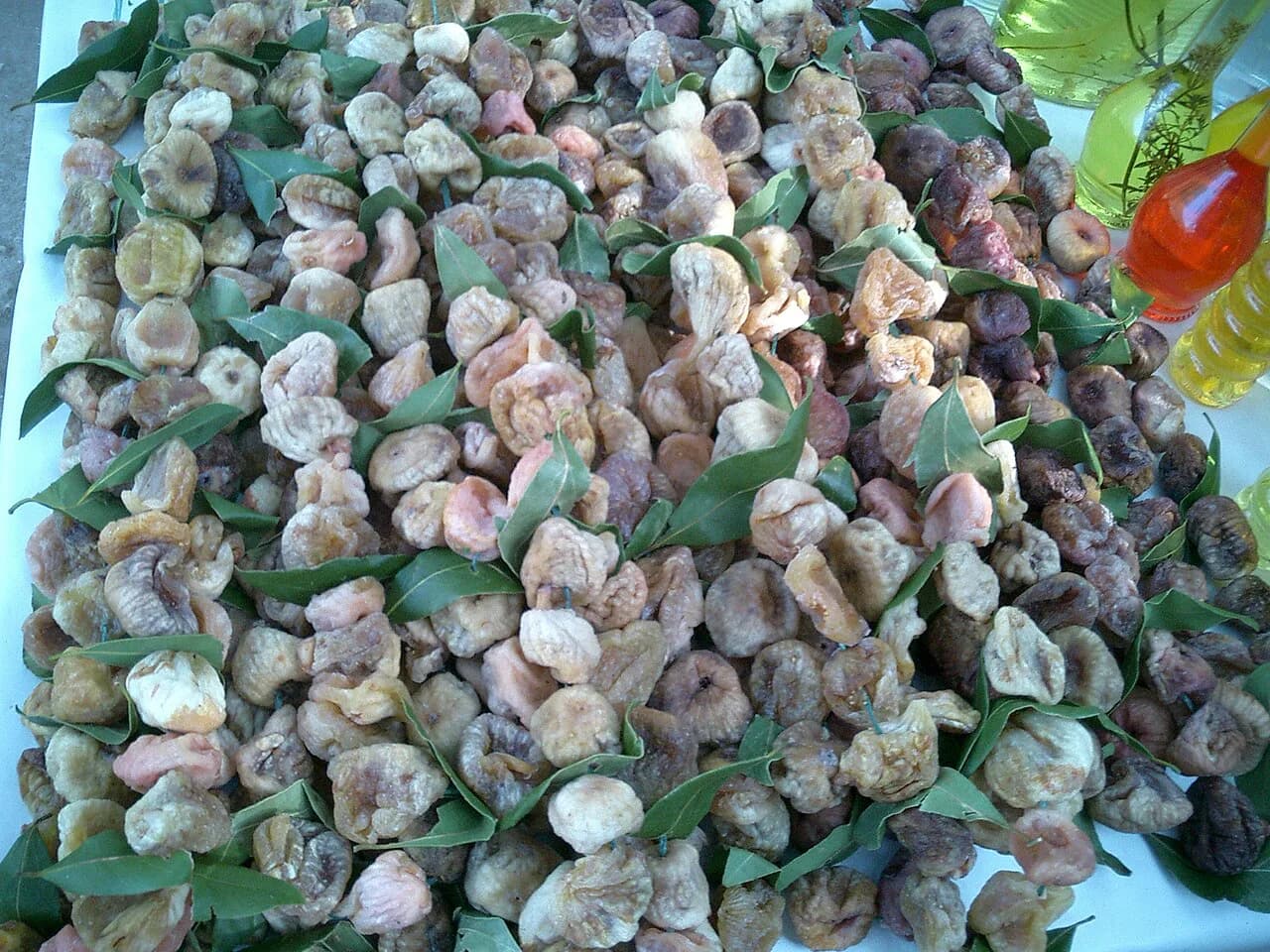
Croatian Figs: Season, Varieties and How to Eat Them
Croatian figs run from July to October, with the best fruit in late summer. Here is how to judge a ripe fig at a stall and how it is eaten with pršut and cheese.
On this page
Croatian figs are in season from July to October, with the most generous fruit arriving in late summer and running into early autumn. This guide covers the season month by month, how to judge a ripe fig at a market stall, how to eat one without embarrassment, and where figs turn up on Croatian tables.
Most figs you meet in Croatia are eaten fresh, straight from a stall or a garden tree, but the same fruit is also dried and pressed into smokvenjak, a traditional fig cake. Both versions are worth trying, and they taste nothing like each other.
When are figs in season in Croatia?
The Croatian fig season runs from July to October, which covers the whole of the coastal summer and the start of autumn. The larger, juicier crop tends to come later in that window rather than in the first weeks of July.
Treat that range as a guide to typical conditions rather than a fixed calendar. Weather and cultivation vary from year to year, so an early heatwave can push fruit forward and a cool start can hold it back.
In practical terms, plan a late-August or September trip if figs are a priority, and expect trees along the Dalmatian coast to be heavy with fruit while tomatoes are still at their peak. Earlier in the summer you may find fruit on stalls, but the quality is less consistent.
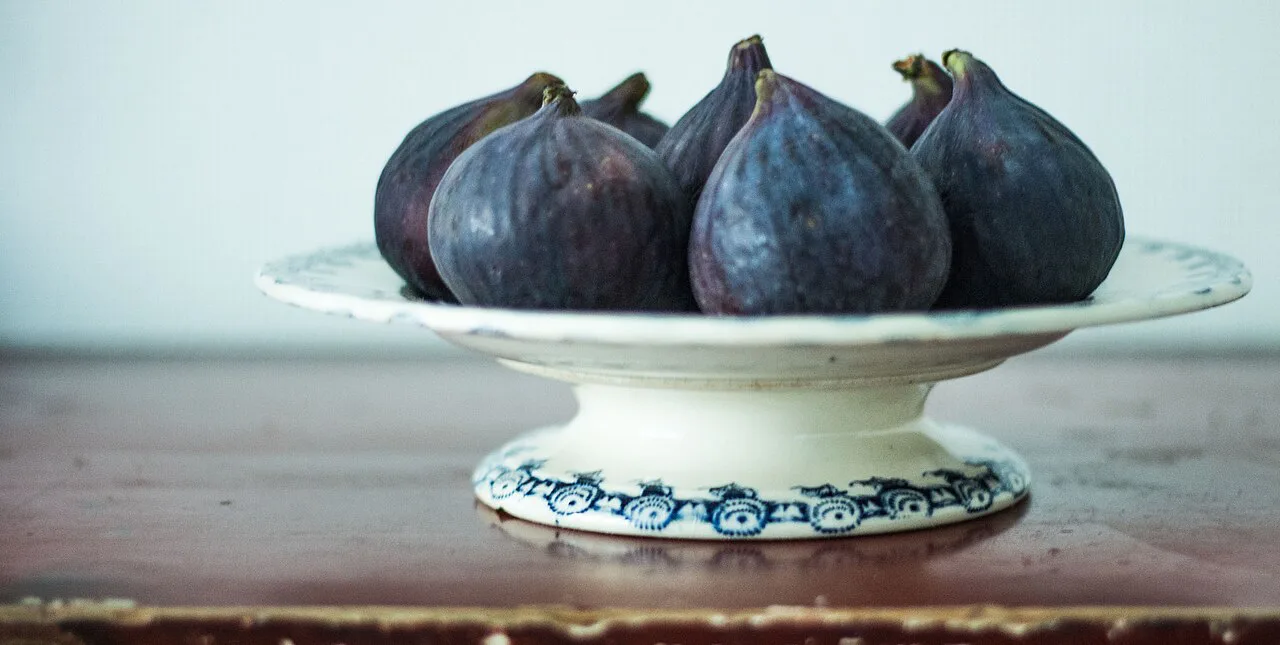
What a ripe fig looks and feels like at a market stall
A ripe fig gives slightly when you press it and feels heavy for its size, which tells you it is full of juice rather than dry inside. Look for a fruit with an intact, pliable stem and skin that is unbroken and free of damp patches.
What does Adriatic fig mean? Adriatic fig is a loose description rather than a protected name, used for figs grown along Croatia's Adriatic coast and islands. The fruit belongs to the species Ficus carica, and local growers do not regard it as a single registered variety.
When should you not eat a fig? Skip figs that are mouldy, Split and leaking, or smell fermented at the stem, since they are past their best. Underripe figs are firm and dry and are better cooked than eaten raw.
Are dried figs and fig cake easy to bring home? Yes. Dried figs and smokvenjak keep far better than fresh fruit and travel well in hand luggage, while fresh figs bruise quickly and rarely survive a flight.
The base of a very ripe fig often shows a bead of syrup, a reliable sign that the sugar has developed fully. Avoid fruit that is leaking from splits in the skin or smells fermented at the stem end, as it will be past its best.
Figs bruise easily and do not improve after picking, so buy only what you plan to eat within a day or two. At a stall, ask for fruit from the top of the crate rather than the bottom, where the weight of the pile does damage.
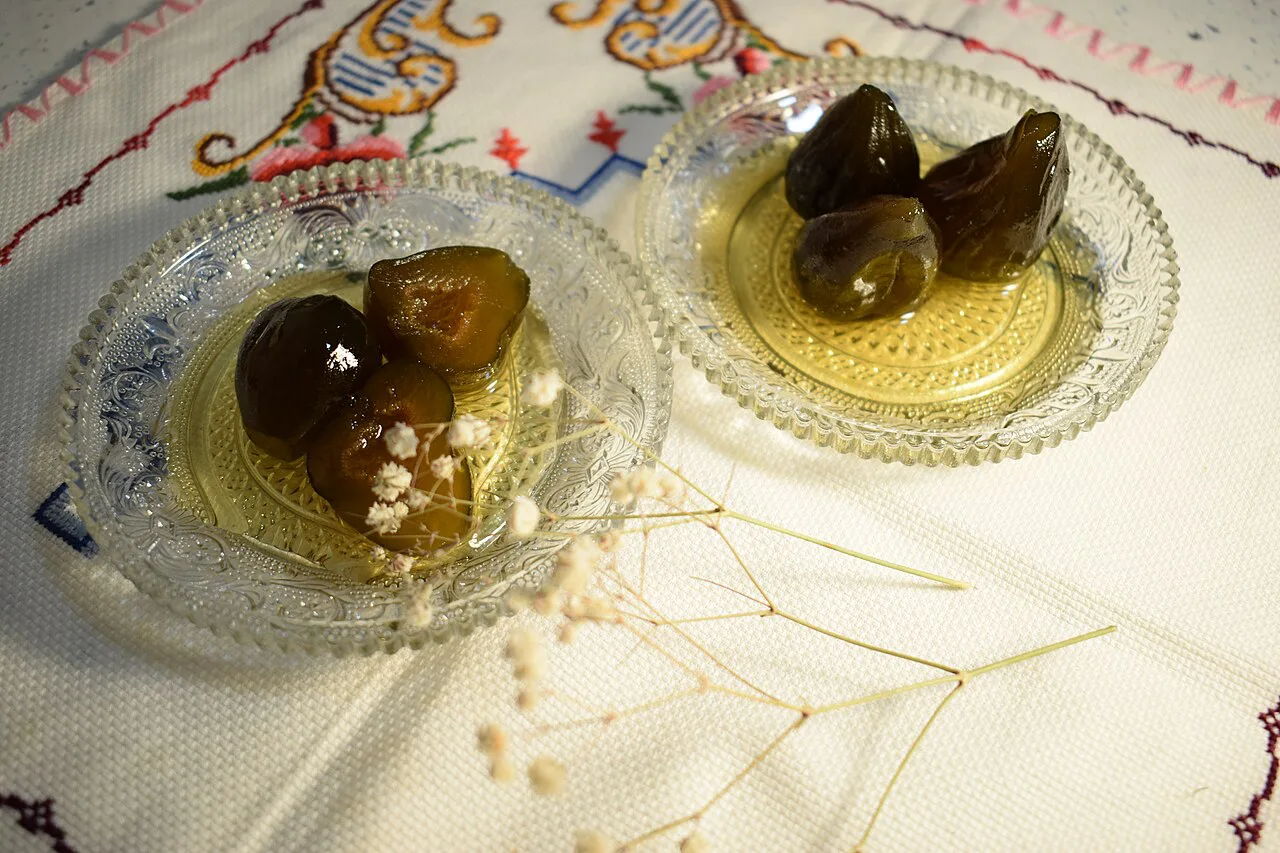
Fresh figs, dried figs and smokvenjak (a traditional fig cake)
Fresh figs are a soft, short-lived pleasure, best eaten within a day or two of buying and rarely improved by refrigeration. Dried figs are the opposite: firmer, sweeter and far more concentrated, they keep for months and travel well in a suitcase.
Smokvenjak is a traditional Croatian fig cake made from dried figs, often shaped into a dense loaf or small rounds and sliced thin. It is intensely sweet and a little chewy, closer to a confection than to a cake, and is usually eaten in small pieces alongside coffee or rakija.
Because dried figs and fig cake keep, they make sensible food gifts to carry home, while fresh figs should stay a holiday pleasure. Buy dried products from shops or stalls that sell a lot of them, so the stock turns over.
How figs are eaten in Croatia: with pršut, in desserts, on their own
On a Croatian table, fresh figs most often appear with pršut, the dry-cured ham sliced thin and eaten with fruit, or with a hard sheep's cheese. The combination works because the sweet, soft fig balances the salt and fat of the ham.
Fig cake and dried figs turn up on cold-weather tables and with coffee, and fresh figs are sometimes folded into desserts or served simply halved with a little honey. The fruit's sweetness also makes it a natural partner for cheese boards built around paški sir, the hard sheep's cheese from the island of Pag.
For a broader view of how fruit, cheese and cured meats fit into Croatian eating, the guide to Croatian delicacies covers the building blocks of a coastal table. Figs sit comfortably in that company rather than as a dish in their own right.
Buying figs at a pekara or market: what a portion looks like
At a market, figs are usually sold loose by weight rather than in fixed punnets, so you choose the fruit yourself and the vendor weighs it. Ask for a kilo or a smaller amount and expect to be handed a paper bag or a small plastic tray.
A pekara, the Croatian word for a bakery, is not the place to buy fresh figs, but it may stock dried figs, fig-filled pastries or fig cake around the autumn months. The same applies to small grocery shops along the coast, where dried fig products often sit near the dried fruit and nuts.
If you are buying for a picnic, a handful of figs per person is a generous portion, since the fruit is rich and soft. Buy a few more than you need for the walk home, as the ripest ones rarely survive the journey intact.
Figs alongside other late-summer fruit and produce
Figs ripen at the same time as tomatoes, grapes, pomegranates and the first olives, so a late-summer market stall reads like a map of the Mediterranean season. In September all of these can be on display at once.
Olive oil is the other pillar of the same season, and along the coast you will find growers selling oils straight from farmhouses and small shops. Tasting before you buy is common, with oils arranged from mild to peppery so you can compare, as on an Olive Oil Tasting in Istria.
A fig bought at a stall and eaten with bread, cheese and a drizzle of Croatian olive oil is one of the simplest and best things to assemble on a coastal trip. Keep the combination in mind for a picnic lunch rather than a restaurant meal.
Why figs appear on Croatian tables in autumn
Figs are a domestic, near-wild fruit in much of Dalmatia and Istria, growing in gardens and along paths with little fuss. That abundance is why they arrive at the table fresh in late summer and then reappear dried through the winter.
Drying and pressing the surplus into fig cake is a practical way of turning a glut into something that keeps. It is the same logic that turns autumn olives into oil and autumn grapes into wine, and it explains why fig products feel like autumn food rather than summer ones.
On a rural table, fresh figs may be offered alongside a glass of rakija or a piece of cured meat before a meal. In that context a fig is not a dessert but a small, everyday thing to eat while you sit outside.
How to eat a fig: skin, stem and ripeness
A ripe fig can be eaten whole, skin and all, once the stem is removed. The skin is edible and the flesh inside is soft and seedy, so there is no need to peel anything.
To eat one neatly, pinch or twist off the stem, then bite or cut the fruit in half and eat the interior with the skin. A very ripe fig can simply be pulled open and eaten from the shell.
Underripe figs are firm, dry and less sweet, and they are better cooked or left alone rather than eaten raw. Since figs are sugary fruit, eat them in sensible amounts rather than by the handful.
Should you plan a trip around fig season?
If figs matter to you, aim for late August or September rather than high summer, when the fruit is at its most abundant. In that window you can eat fresh figs with pršut, buy dried ones and slice a piece of smokvenjak to take home.
Outside those months, fresh figs largely disappear from stalls and the dried products take over. Buy what you can eat, keep the dried goods for the suitcase, and let the season set the pace.
Explore more Croatia guides
Frequently Asked Questions
What does Adriatic fig mean?
Adriatic fig is a loose description rather than a protected name, used for figs grown along Croatia's Adriatic coast and islands. The fruit belongs to the species Ficus carica, and local growers do not regard it as a single registered variety.
When should you not eat a fig?
Skip figs that are mouldy, Split and leaking, or smell fermented at the stem, since they are past their best. Underripe figs are firm and dry and are better cooked than eaten raw.
Are dried figs and fig cake easy to bring home?
Yes. Dried figs and smokvenjak keep far better than fresh fruit and travel well in hand luggage, while fresh figs bruise quickly and rarely survive a flight.
Sources
Notes on eating well in Croatia
Optional updates to our food guides.
You might also like



Continue reading
More guides you'll find useful





