
Croatian Beer: The Main Brands and What They Taste Like
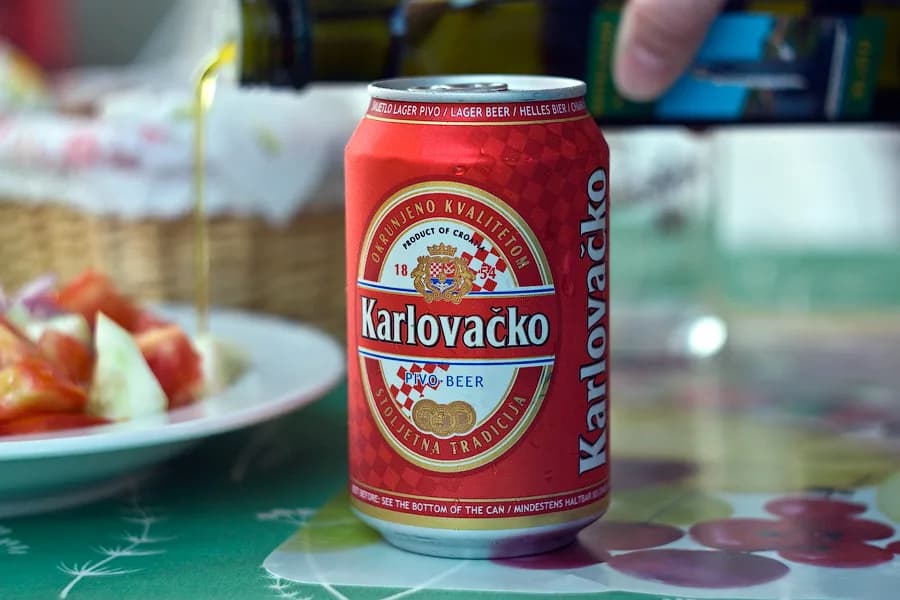
Croatian beer means pale lager: Ožujsko and Karlovačko dominate taps, and Osječko has brewed in Osijek since 1697. Here is how each is served and paired.
On this page
Croatian beer is overwhelmingly pale lager, poured cold and drunk as a table drink rather than a connoisseur's pursuit. The names you will meet most are Ožujsko and Karlovačko, which between them fill the majority of taps in konobas and cafés along the coast and inland. Osječko is the historic third name, brewed in the eastern city of Osijek since 1697. This guide sets out what each of them is, how beer is ordered and served, which Croatian dishes they suit, and what to look for when you want something darker or more bitter.
What Croatian beer is
Order a beer in Croatia without specifying a brand and you will get a pale lager: golden, lightly hopped, served thoroughly chilled and designed to be refreshing in summer heat. It is not a style built for complexity. The pleasure is in the cold, the carbonation and the way a clean lager cuts through salty fish, grilled meat or oily pršut. If you arrive hoping for cask ale, stout or a hop-forward IPA, the ordinary tap will disappoint; pale lager is the default everywhere from a village konoba to a city café.
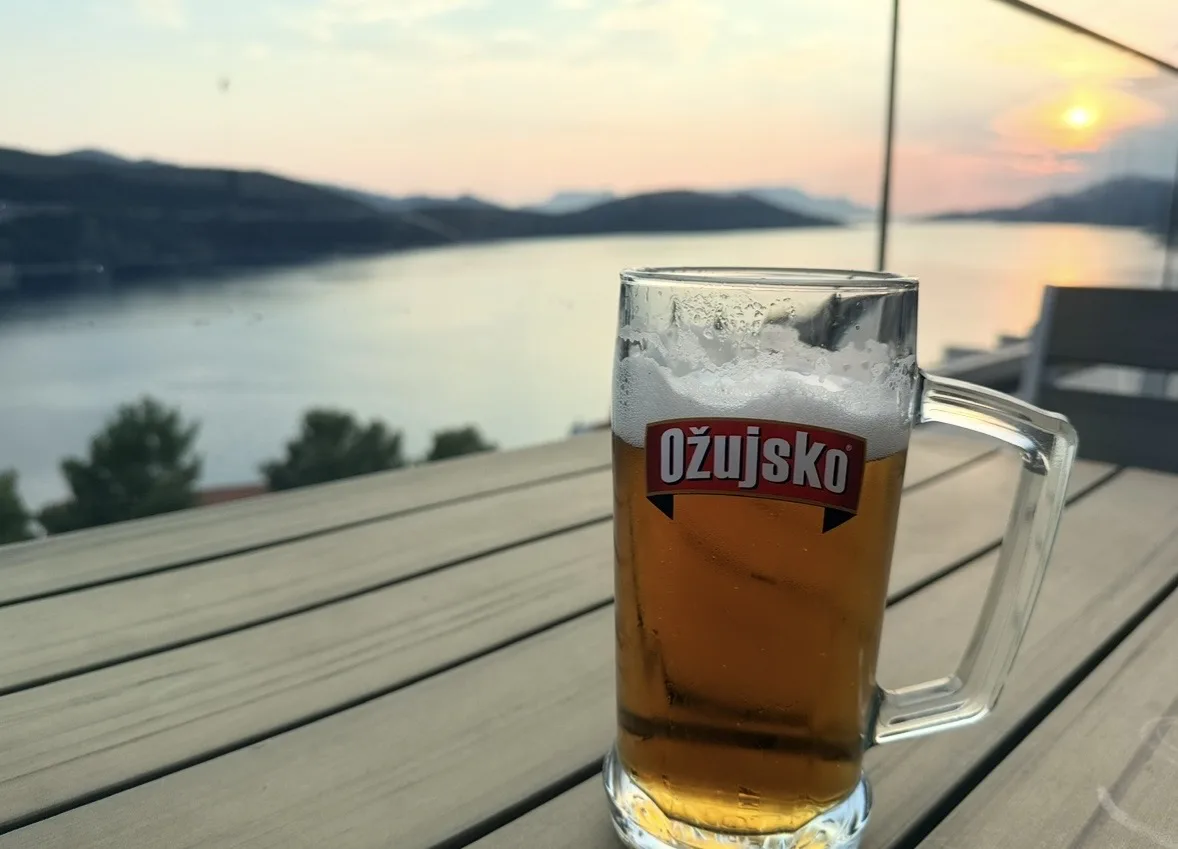
Ožujsko: the lager you'll see on most taps. Ožujsko is the brand you will encounter most often, and it is usually the safe answer when a menu lists only one draught beer.
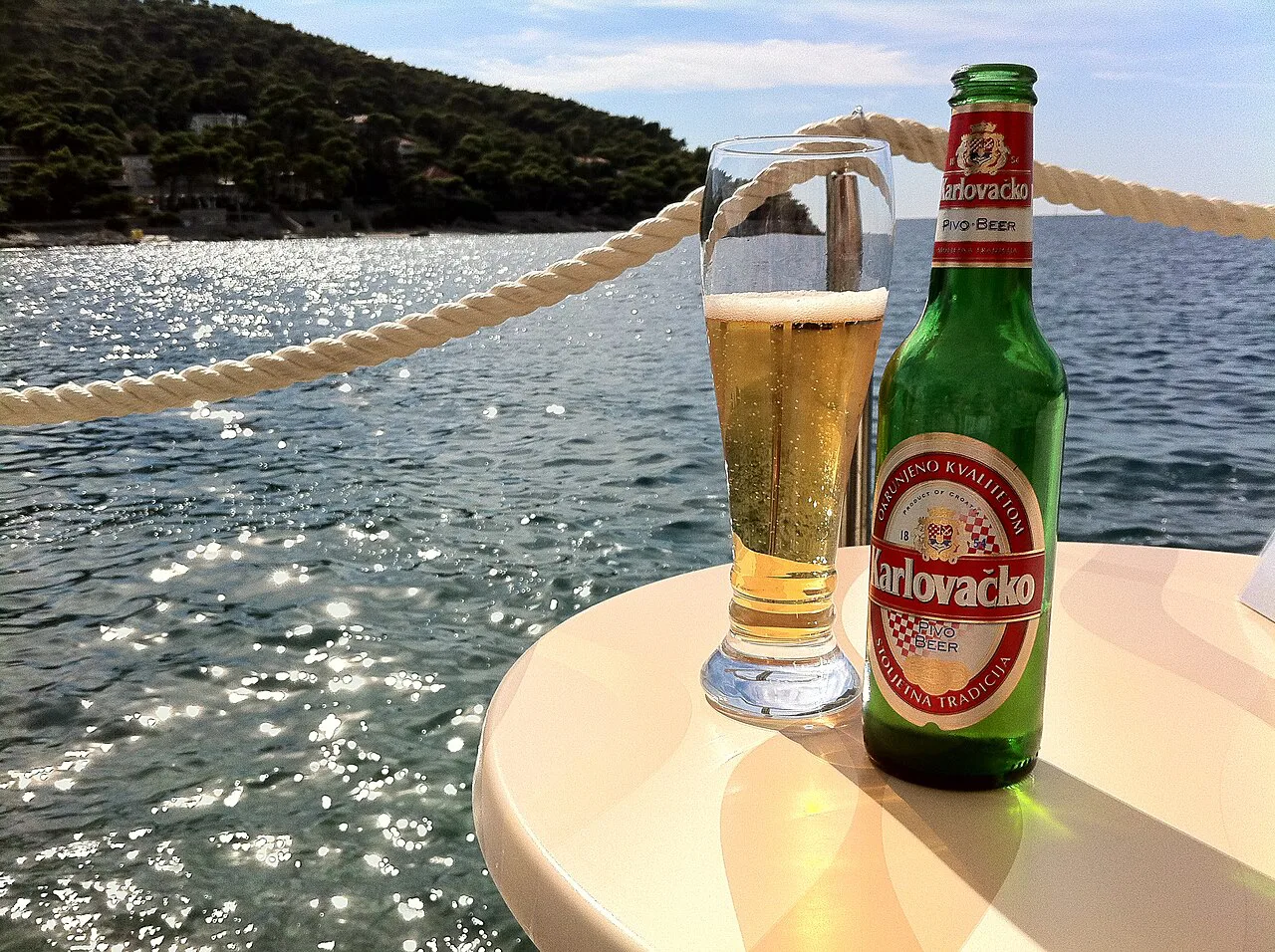
Karlovačko: the other big lager. Karlovačko is the second name on almost every bar list, brewed in the inland town of Karlovac and the other great Croatian lager.
Osječko: Croatia's oldest beer name. Osječko is the historic name in Croatian brewing, produced in Osijek in eastern Slavonia since 1697 according to the brewery's recorded history.
Ordinary drinking strength sits in the standard European lager range, so a large glass goes down easily with a long lunch. Treat beer as the everyday accompaniment to food and wine as the more ceremonial option; for a stronger, slower drink you are into the spirit territory of Croatian alcohol, and Medica is the honey-sweetened version worth knowing about. In most places the choice on draught is simply which of the big lagers the house stocks, so decide by brand rather than by style.
Ožujsko: the lager you'll see on most taps
Ožujsko is the brand you will encounter most often, and it is usually the safe answer when a menu lists only one draught beer. It is a pale lager, built to be drunk cold and in quantity rather than sipped and analysed. Served chilled it is a genuinely good thirst-quencher with a plate of grilled fish or a plate of fried squid.
In practice Ožujsko is the house lager of a great many cafés and konobas, which makes it the easiest beer to find when you sit down without a plan. Ask for it by name if the waiter offers a choice, or simply order 'pivo' and take what comes. The brand is also widely sold in shops in bottles and cans, so it doubles as the beach, ferry and apartment beer.
Karlovačko: the other big lager
Karlovačko is the second name on almost every bar list, brewed in the inland town of Karlovac and the other great Croatian lager. The choice between it and Ožujsko comes down to personal preference and what the bar happens to stock: both are pale lagers, and many drinkers simply pick the one they grew up with or the one on the tap in front of them.
Because the two brands are so evenly matched in availability, the practical advice is to try both early in your trip and then settle on your favourite. In a konoba with only one tap, it will be one or the other. In shops both are sold side by side in bottles and multi-packs, so a self-catering apartment can keep both in the fridge and compare properly.
Osječko: Croatia's oldest beer name
Osječko is the historic name in Croatian brewing, produced in Osijek in eastern Slavonia since 1697 according to the brewery's recorded history. That date makes it the longest-established beer brand in the country, and it is worth ordering at least once for that reason. It is a pale lager in the same family as the two leaders, so expect a clean, cold, easy-drinking glass rather than anything unfamiliar.
Availability is the catch. Osječko is far easier to find in Slavonia and inland Croatia than on the Dalmatian coast, where the taps lean heavily towards Ožujsko and Karlovačko. If you are travelling through Osijek or Zagreb, look for it in bars and shops there. Treat the 1697 date as brewing history rather than a claim about what you will be served today.
Other Croatian brands and small brewers
Beyond the big three, a handful of smaller Croatian breweries now supply bars in the cities, usually in bottles rather than on draught. Croatian brewing is dominated by light, refreshing lager styles, which is what most of these producers make. A bar with a fridge of local bottles is the place to explore, and asking what is Croatian and not one of the majors is a reasonable question anywhere in Zagreb, Split or Rijeka.
For most visitors, though, the practical picture is simple: the mainstream taps carry the two big lagers, and anything else is a bonus rather than an expectation. If you are serious about beer, plan your city evenings around bars with a written bottle list instead of relying on the konoba tap. Kvarner combines continental and Mediterranean cooking in one region, built around fish, scampi and lamb, and rakija sits alongside beer at the table.
How beer is ordered and served in konobas and cafés
In a konoba or café, beer comes either on draught or in bottles, and the waiter will usually offer a small or large glass. Draught beer is served very cold in a plain glass; bottled beer arrives with the cap off or with an opener, and you pour it yourself. There is no ceremony about it. Ordering a round for the table is normal, and nursing one beer over a long lunch is perfectly acceptable.
Beer is a café drink as much as a restaurant one, so you can sit with a glass in the afternoon without ordering food. It is also common to drink beer alongside a meal that includes wine, particularly at larger family tables. If you want a non-beer alternative with the same everyday role, bevanda is the local habit of wine diluted with water, light and easy to drink with food.
In a few specific venues, card-only payment applies. At Plitvice Lakes, several of the park's restaurants and cafés state that payment is by card only, which is unusual for Croatia and worth knowing before you sit down. Other places in the same park, and most small konobas and village bars elsewhere, take cash or prefer it, so carry a little either way and check before ordering if you are unsure.
Beer with food: what to drink with fish, ćevapi and pršut
Pale lager is a good partner for the food Croatians actually eat. With grilled fish, squid or a plate of scampi, the cold carbonation and light bitterness refresh the palate between bites, which is why a small glass of beer before the wine is a sensible order on the coast. Kvarner scampi are served raw and marinated in olive oil and lemon, in a risotto, or à la buzara in a sauce, and the region's restaurants pair them with a wine list that will usually outclass the beer list.
With ćevapi, the minced-meat rolls served with flatbread and raw onion, lager is the natural match: the malt sweetness softens the salt and smoke, and the fizz cuts the fat. With pršut, the dry-cured ham served thinly sliced with cheese and olives, a cold lager works but a drier, more savoury drink flatters the ham better. Istrian pršut is a protected food, dried in the bura wind covered in salt, pepper and garlic for at least six months, then aged in a dark room for another six to eight, and its intensity deserves a considered pairing.
Inland, the cooking gets heavier and the beer copes well: roasted meats, barley-based dishes and root vegetables all sit happily with a malt-forward lager. At Lička kuća in the Plitvice Lakes National Park, the menu is built on Lika Quality produce from the surrounding region, with dishes that suit a cold glass rather than a delicate one. It is a useful reminder that in Croatia the beer list follows the food, not the other way round.
Dark beer and wheat beer: what's on offer
If you want a dark or wheat beer, do not assume the konoba will have one. The mainstream Croatian market is built on pale lager, and many bars stock nothing else on draught. In cities, shops and better-stocked cafés you can find dark lagers and wheat beers from the larger breweries and from importers, usually in bottles. Ask what bottles are in the fridge rather than scanning the taps.
Croatian drinkers who want something bitter and herbal often turn to pelinkovac, the wormwood-based spirit served as a digestif, rather than to a hoppy beer. It is a different drink in a different role, but it explains why the beer range stays narrow. For those who want a fruit brandy instead, rakija is the everyday Croatian answer and comes in dozens of varieties by fruit.
Buying Croatian beer to take home
Supermarkets, small shops and petrol stations sell Croatian beer in bottles and cans, usually in single units or multi-packs, and the big lagers are always in stock. The most useful purchase for a traveller is a chilled single bottle for the ferry or the apartment fridge; the label will tell you the style and strength, and the shop assistant can point you to the local brands if the shelf is unfamiliar.
For a proper souvenir, look for Croatian producers of olive oil, cheese and honey rather than a heavy pack of beer, and check airline baggage rules before buying more than a bottle or two. Krk extra virgin olive oil, for example, carries protected designation of origin status and is a far better thing to carry home than a six-pack. If you do want the beer, buy it at the airport or in a supermarket near your departure point rather than hauling it across the country.
Which Croatian beer should you order first?
Start with whichever of Ožujsko or Karlovačko the bar has on tap: ask for the large glass, drink it cold and with food, and decide which you prefer over a couple of meals. Seek out Osječko if you are travelling through Slavonia or Zagreb, and treat the 1697 date as the reason to try it. If you want something darker or hoppier, look at the bottle fridge rather than the taps and accept that the bar may simply not have it.
Explore more Croatia guides
Sources
- Taste of Kvarner | Delicious Food and Wine
- Traditional flavours of Lika with a modern twist is a must-try culinary experience in Croatia - Nacionalni park "Plitvička jezera"
- Istrian pršut | Istrian specialties Porec Istra-Istria - official tourism portal
- Where to eat at Plitvice Lakes – best restaurants 2025
- Beer in Croatia
Notes on eating well in Croatia
Optional updates to our food guides.
You might also like



Continue reading
More guides you'll find useful





