
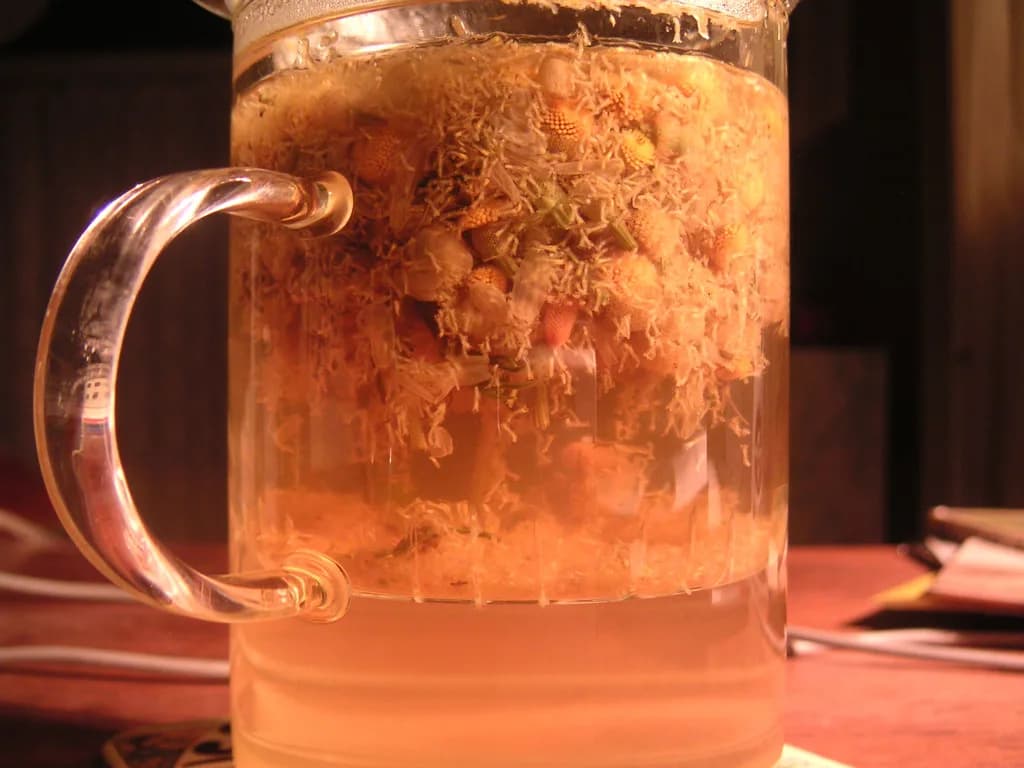
Croatian Tea: What It Is and What to Drink in Croatia
Croatian tea usually means herbal infusions such as camomile, mint and sage, with Franck among the familiar brands. Here's what to look for and how it's served.
On this page
Croatian tea is mostly a herbal infusion, not a cup of true tea. When someone in Croatia offers you čaj, expect camomile, mint, sage or linden far more often than black leaf tea, and expect it served hot and plain, at home or after a meal. This guide separates the herbs Croatians actually drink from the Camellia sinensis teas on shop shelves, names the brand most likely to be in the cupboard and explains how a cup fits around Croatian food.
What 'tea' means in Croatia
The Croatian word čaj covers both true tea and herbal infusions, so context does the sorting. Offer someone a čaj after lunch and it will usually be camomile or mint from a sachet or a jar of dried leaves; ask for crni čaj (black tea) and you will get the oxidised leaf drink. The distinction matters when you order, because a café listing čaj may have only one or two herbal options and a separate black tea.
True tea comes from one plant, Camellia sinensis, and the six classic families — white, yellow, green, oolong, black and fermented — differ mainly in how the freshly picked leaf is processed. Croatia does not grow that plant commercially, so the true teas on sale are imported, while the herbal side of the cup is often local.

The herbal infusions Croatians drink most
Camomile (kamilica) is the default evening cup, and mint (metvica) and sage (kadulja) run it close, especially in winter and after heavy meals. Linden (lipa) is the other one to know: the blossom is gathered in early summer and dried for a mild, honeyed infusion. Franck's own guide names camomile, mint, sage and linden among the most popular herbal teas in Croatia, and notes that mulberry, fig and olive leaves can also be used.
Do Croatians drink tea or coffee? Coffee is the daytime default, usually a small strong espresso, while herbal tea tends to appear in the evening or at home. Both are ordinary: a café will have čaj on the list, and a Croatian kitchen usually keeps camomile or mint in the cupboard.
What is Croatian čaj? Čaj is the word for tea in general, covering both true Camellia sinensis tea and herbal infusions. If you are offered čaj without further detail, expect camomile, mint, sage or linden rather than a black tea bag.
Is Croatia a tea-growing country? No. Croatia does not grow Camellia sinensis commercially, so true teas on its shelves are imported.
These are domestic drinks rather than café specialities. Families dry their own herbs or buy them loose from market stalls and herbal shops, and a jar of last summer's camomile at the back of the cupboard is a normal sight. If you want the everyday version, look for plain single-herb sachets in a supermarket rather than a blended boutique tea.
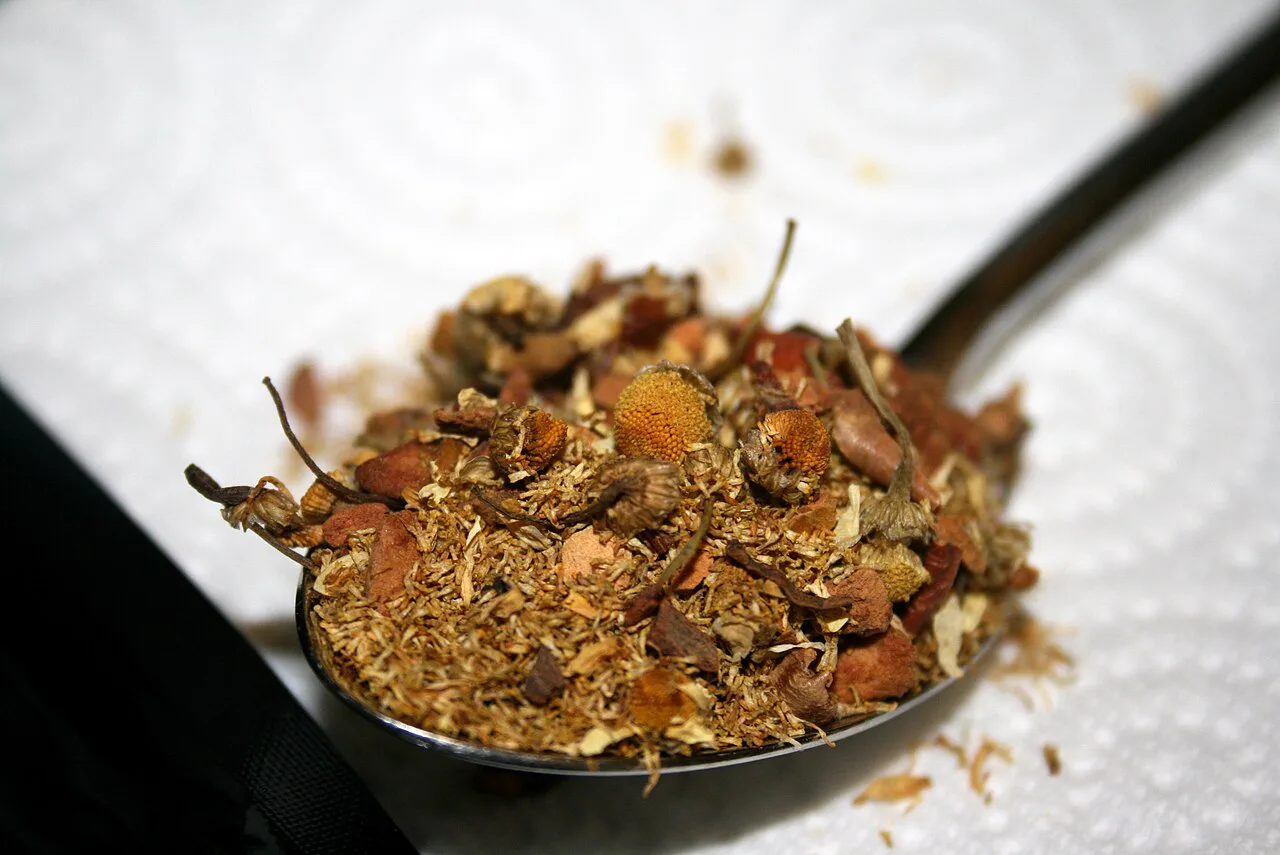
Croatian camomile and mountain herbs
Croatian camomile has a reputation built on wild-grown mountain flowers rather than plantation farming. One specialist retailer describes a Croatian camomile from the foothills of the Mednevica Mountains, gathered by a farm that collects wild mountain herbs and sold as a loose 75g pack. The claim to notice is the picking method and the origin, not any medicinal promise.
That wild-herb pattern repeats across the country's herbal shelf: sage from the karst, mint from garden plots, linden from roadside trees. What it means for a visitor is simple — a bag of Croatian camomile makes a better souvenir than a box of imported black tea, and it weighs almost nothing. Buy it at a market or a herbal shop and check the label for the plant name if you want to be sure of what you have.
True tea in Croatia: Franck and the black blends
Franck is the Croatian brand you will see most often on tea shelves, and its range spans the classic black blends as well as herbal and fruit infusions. The company's own guide to tea types treats the herbal, floral and fruit side as a broad family of its own, separate from the true teas. In practice, that means a Franck box in a Croatian kitchen might hold Earl Grey-style black tea or camomile, and the packaging tells you which.
Beyond the supermarket brands, small Croatian tea sellers blend their own loose-leaf ranges, some sold online and shipped in sachets or tins. Quality varies, so taste before committing to a large tin if you can. For everyday drinking, the plain black tea in a café is usually a bag in a pot of hot water, served with milk on the side rather than already added.
How tea is served
At home, tea arrives in a mug or a small glass, hot and unsweetened, with sugar and honey on the table for you to add. In cafés, čaj is often a sachet in a small pot or a tall glass of hot water, and it is perfectly normal to ask for a slice of lemon. It is not a ceremony: the cup is there to be drunk while you talk.
After a meal, tea competes with coffee, and coffee usually wins at lunch. The herbal cup tends to appear later in the evening, when a strong espresso would keep you up, or when someone feels a cold coming on. This is also where a small glass of something stronger might appear instead — Croatian alcohol covers the range from rakija to medica, and a warm herbal tea is the sober alternative at the same table.
Drinking tea alongside Croatian food
A plain cup works best with the sweet end of a Croatian meal. Pastries, biscuits and the nut-and-honey cakes that turn up at celebrations sit comfortably with camomile or linden, and a black tea handles anything with chocolate. Ordering a herbal tea with a slice of cake in a pastry shop is unremarkable and cheap, and it is a good way to slow down an afternoon.
For a stronger drink at the same table, look to the distilled side of the Croatian drinks cupboard: rakija is the fruit brandy poured before or after eating, while Maraschino, the cherry-based liqueur from the Dalmatian coast, is a sweeter option. Neither belongs in the same glass as your camomile, so pick one.
Croatian tea brands to look for
Franck is the safe name to recognise, stocked in supermarkets and small shops across the country. Its range is wide enough that the same shelf will hold black tea, green tea, herbal sachets and fruit infusions, so read the box rather than the brand. Small Croatian blenders and herbal sellers fill in the rest, often with looser leaf and local herbs.
If you want a Croatian-made cup rather than an international blend, start with the herbal lines and the camomile. A specialist retailer shipping Croatian mountain camomile abroad gives a sense of what single-origin loose flowers look like on the shelf, though it is a reseller rather than the farm itself.
Buying tea in Croatia
Supermarkets carry the widest choice and the lowest prices, with sachets in boxes of twenty or so and loose herbal blends in bags. Markets and herbal shops sell dried camomile, mint, sage and linden by weight, often in plain paper bags with a handwritten label, which is the best-value way to take Croatian herbs home. A specialist tea shop is the place for loose-leaf true tea.
Check what you are buying by looking at the plant name on the label: Matricaria chamomilla for camomile, Mentha for mint, Salvia officinalis for sage and Tilia for linden. Croatian packaging usually gives the Croatian name first, so kamilica, metvica, kadulja and lipa are the words to scan for. Sachets travel better than loose leaf; loose flowers give a better cup.
Which Cup to Order
Order the herbal cup if you want the Croatian version: camomile in the evening, mint after a big meal, linden when you want something mild. Buy a bag of Croatian camomile or sage from a market rather than a box of imported black tea, and you will have the more distinctive souvenir. Save the black tea for breakfast, when a strong cup with milk is what you actually want.
Explore more Croatia guides
Frequently Asked Questions
Do Croatians drink tea or coffee?
Coffee is the daytime default, usually a small strong espresso, while herbal tea tends to appear in the evening or at home. Both are ordinary: a café will have čaj on the list, and a Croatian kitchen usually keeps camomile or mint in the cupboard.
What is Croatian čaj?
Čaj is the word for tea in general, covering both true Camellia sinensis tea and herbal infusions. If you are offered čaj without further detail, expect camomile, mint, sage or linden rather than a black tea bag.
Is Croatia a tea-growing country?
No. Croatia does not grow Camellia sinensis commercially, so true teas on its shelves are imported. What is local is the herbal side: camomile, mint, sage and linden are gathered or grown and dried for domestic use.
Sources
Notes on eating well in Croatia
Optional updates to our food guides.
You might also like



Continue reading
More guides you'll find useful





