
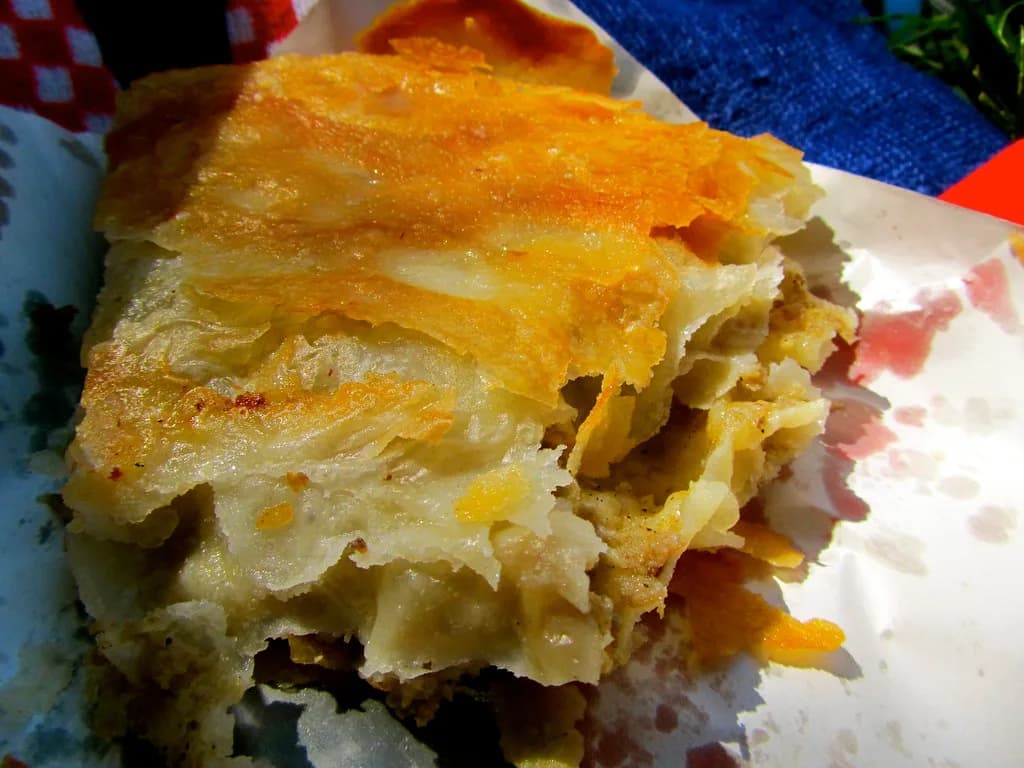
Croatian Breakfast: What Croatians Eat in the Morning
What Croatians eat for breakfast: doručak, sir i vrhnje, pršut with cheese, burek and savoury pastries, and the kava that starts the day.
On this page
Croatian breakfast is usually a small, savoury, stand-up affair: something from the pekara (bakery), bread with soft cheese and cream, or a coffee taken quickly at a café. The word you need is doručak, the standard Croatian term for breakfast, and it covers everything from a burek eaten on the move to a hotel buffet. This guide walks through breakfast dishes Croatians eat in the morning, how each is served, and the words on a menu that point to them.
The everyday morning is practical rather than ceremonial. Bakeries open early and sell savoury pastries by the piece, cafés pour kava (coffee) with a small bite alongside, and at home the table tends to hold bread, cured ham, cheese and something spreadable. Larger cooked breakfasts belong to hotels and weekend households rather than the working week.
What doručak means on a Croatian menu
Doručak is the first meal of the day, and the word appears on hotel boards, café chalkboards and menu cards that offer an all-day breakfast. It does not promise a fixed set of dishes. A Croatian doručak can be a single pastry, a plate of ham and cheese, or a full spread with eggs, so read the description under the heading to see what is actually served.
Two other words help you order: jelovnik means menu and kava means coffee, while kruh is bread and sir is cheese. A few Croatian mornings are small plates of open bread, cheese and cured meat. For the bigger picture, the guide to traditional Croatian food sets these small morning plates beside the country's larger dishes.
Sir i vrhnje: soft cheese with cream
Sir i vrhnje is soft fresh cheese served with vrhnje, a thick soured cream, and it is one of the most common things to find on a Croatian breakfast table. You spread both on bread, usually a plain white loaf or a slice of coarse country bread. The combination is mild, tangy and rich rather than salty, and it works as a light start before a long day.
What is a typical Croatian breakfast? The everyday version is a bakery pastry such as burek, bread with soft cheese and cream, or a quick coffee with ham and cheese. A larger cooked breakfast is more common at hotels and at weekends than on a working morning.
What does doručak mean? Doručak is the Croatian word for breakfast. It appears on hotel boards and café menus and can mean anything from a single pastry to a full plate.
Is burek eaten for breakfast in Croatia? Yes, burek is a common morning buy from a bakery, sold by weight or by the piece and eaten warm. It is filled with minced meat, cheese, spinach or potato depending on the tray.
Order it where it is listed as a breakfast plate or a starter, and expect the cheese and cream to arrive together with bread on the side. If you want a firmer cheese alongside, ask for a sheep's cheese such as Paški sir from the island of Pag, which gives the soft spread a salted contrast.
Pršut and cheese: cured ham sliced thin
Pršut is dry-cured ham, sliced thin and served unheated, and it is the savoury backbone of many Croatian breakfast plates. It comes with cheese, olives, bread and sometimes a few pickles, and it is eaten slowly with coffee rather than rushed. Along the coast the ham is usually milder and saltier than its Italian cousins, which makes it a good match for fresh cheese and plain bread.
A plate of pršut i sir, ham and cheese, is the safest single order if you want a Croatian breakfast that is not a pastry. It appears on café and konoba menus through the morning and is easy to share. Pair it with a small coffee rather than a large meal, which is how most locals take it.
Burek and savoury pastries from the pekara
The pekara, Croatia's bakery, is the practical answer to a Croatian breakfast on a travel day. Burek is rolled filo pastry baked in a spiral and sold by weight or by the piece, filled with minced meat in the classic version. Cheese, spinach and potato versions sit beside it, and all of them are eaten warm, often standing at the counter or walking to the bus.
Buying by weight is normal: point at the tray, say how much you want, and the assistant cuts a wedge and weighs it. Ask for it warm if a fresh tray has just come out, since burek loses its crispness quickly once it cools. A small carton of yoghurt alongside is a usual pairing, and a burek in paper is the classic Croatian breakfast on the move; for more savoury pastry options, see Croatian street food.
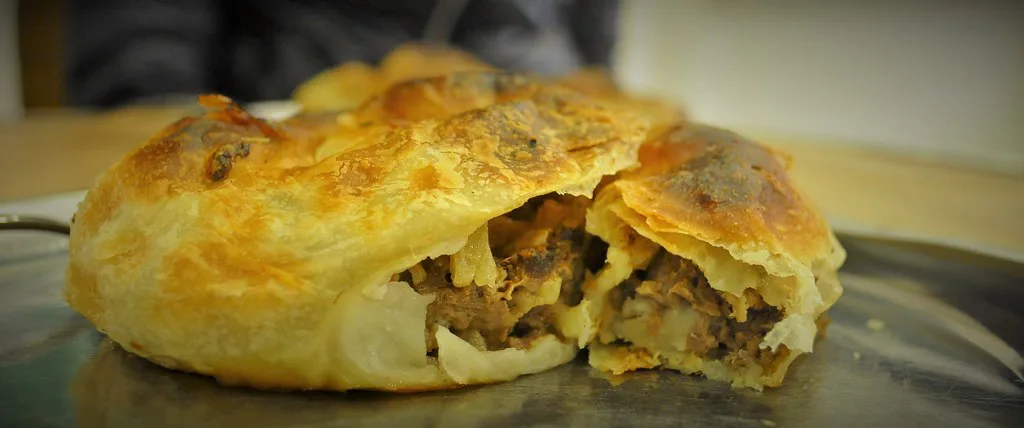
Soparnik: the Dalmatian chard pie
Soparnik is a flat savoury pie from the Dalmatian hinterland, made with a thin dough and a filling of chard, onion and olive oil. It is baked flat rather than rolled, cut into squares, and served at room temperature or slightly warm. It is a useful breakfast stop in Split and the surrounding area when you want something vegetable-based rather than meat-filled.
You will find it in bakeries and at simple counters rather than on restaurant menus, and it is often sold by the slice. Because the filling is greens and oil, it sits lightly before a morning of walking. Treat it as a bakery buy, not a plated dish.
Kruh s čvarcima and bread-based starts
Kruh s čvarcima is bread with čvarci, crisp pork scratchings made by rendering pork fat until the pieces turn golden. The scratchings are scattered over bread or eaten alongside it, sometimes with a little salt and raw onion. It is a hearty, savoury start with a strong pork flavour, and it belongs to the household and village table more than the café.
Other bread-based mornings are simpler: a slice spread with lard or cream, a piece of cheese, a few olives. These are assembled at home rather than ordered out. If you are staying in self-catering accommodation, this is the easiest Croatian breakfast to recreate from a bakery and a small shop.
Toast sa šunkom i sirom: the sandwich-bar breakfast
Toast sa šunkom i sirom is a toasted sandwich with ham and cheese, and it is the standard quick breakfast at Croatian sandwich bars and fast-food counters. It arrives hot, pressed and usually plain, sometimes with a little mayonnaise or ketchup on request. It is not glamorous, but it is reliable and fast when you need to catch a ferry or a bus.
Order it at the counter and eat it standing, or take it away wrapped in paper. Pair it with a small kava or a juice. It is the closest thing to an English breakfast sandwich you will find in a Croatian morning routine.
Sweet side: makovnjača and the slastičarnica
Makovnjača is a rolled sweet bread filled with poppy seeds, sliced thick and sold in bakeries and pastry shops, the slastičarnica. It is mildly sweet rather than sugary, which makes it a realistic breakfast rather than a dessert. A slice with coffee is a common weekend morning.
Pastry shops also sell croissants, kremšnita (custard slice) and other cream cakes, but those lean towards the afternoon. For breakfast, look for the plain rolled breads and the small buns near the till. Buy by the slice and ask for it wrapped if you are taking it away.
Kava and a small bite at a Croatian café
A Croatian café breakfast is mostly about kava. Coffee is served small and strong, either as an espresso or as a larger white coffee, and may come with a glass of water and a small biscuit or pastry. Cafés open from early morning and are a place for a short stand at the bar or a brief sit, not for a long plate of food.
If you want more than coffee, ask for a burek or a toast from the same bar, or order a plate of pršut and cheese. The café is a place to start the day lightly. Since bar prices can vary between counter and table by venue, ask before ordering at a table if you want to know.
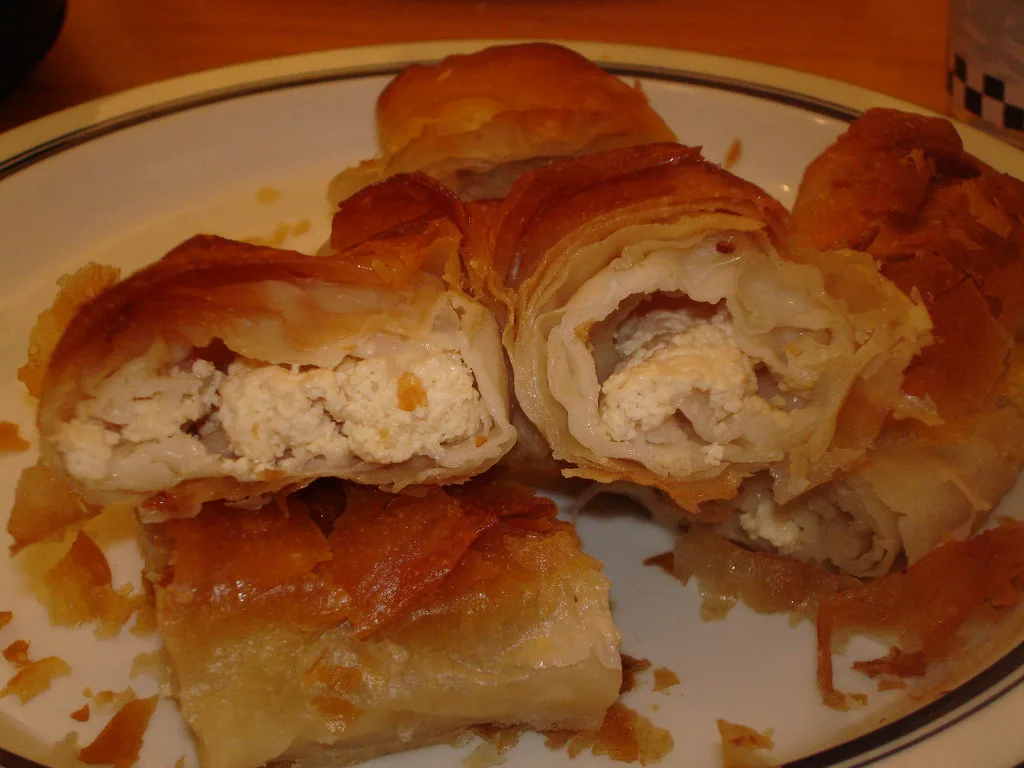
The Srijem breakfast: čvarci, kulen and švargl
A regional breakfast from Srijem in eastern Croatia has been promoted as a tourism offering, built around čvarci, kulen (a spiced cured sausage) and švargl, a coarse pork terrine rather than black pudding. The idea was to give Croatia its own recognisable breakfast brand, in the way England has its cooked breakfast. It is a regional spread rather than a national standard.
In 2018 the Vukovar-Srijem County Tourist Board presented the breakfast at the King Krešimir Heritage Hotel in Šibenik, as part of an effort to bring eastern Croatian produce into boutique hotel tables. The spread is rich and pork-heavy, with bread and pastries such as makovnjača alongside. If you meet it on a hotel menu, treat it as a regional speciality rather than the everyday Croatian doručak.
How a Croatian breakfast day actually runs
In practice, most travellers eat Croatian breakfast in three ways. The bakery stop is the fastest: a burek or a slice of soparnik, eaten standing, before a morning walk or a ferry. The café stop is slower and lighter: a coffee with bread, ham and cheese, or a small toast. The hotel table is the fullest: cold cuts, cheese, eggs, bread and pastries laid out together.
On the coast, mornings are quiet and bakeries fill early with people buying bread for later. Inland cities such as Zagreb run at a faster pace, with sandwich bars and cafés open for the commute. Wherever you are, the Croatian breakfast is usually a short stop rather than a long meal, which leaves room for the bigger midday plate.
Croatian breakfast words to know on a menu
A short vocabulary makes the morning easier. Doručak is breakfast, kruh is bread, sir is cheese, vrhnje is soured cream, pršut is cured ham and jaje is egg. Pekara is the bakery, slastičarnica the pastry shop, and kava is coffee. Čvarci are pork scratchings, burek is the rolled filo pastry, and soparnik is the flat chard pie.
On a menu, look for phrases such as sir i vrhnje, pršut i sir and toast sa šunkom i sirom, which map directly onto the plates described above. A breakfast under a hotel board is usually a buffet, while a café doručak is a set plate. If a word is unfamiliar, ask what comes with it before you order.
Which Croatian breakfast to choose
Choose the bakery breakfast if you are moving early: a burek or a slice of soparnik in paper, eaten on the way. Choose the café breakfast if you want to sit: a small kava with pršut, cheese and bread. Choose the hotel table if you want eggs and a slow start, and take the Srijem spread when a hotel offers it as a regional speciality.
Whichever you pick, keep it small and savoury, and leave room for the main meal later in the day. That is how the Croatian morning is usually built.
Explore more Croatia guides
Frequently Asked Questions
What is a typical Croatian breakfast?
The everyday version is a bakery pastry such as burek, bread with soft cheese and cream, or a quick coffee with ham and cheese. A larger cooked breakfast is more common at hotels and at weekends than on a working morning.
What does doručak mean?
Doručak is the Croatian word for breakfast. It appears on hotel boards and café menus and can mean anything from a single pastry to a full plate.
Is burek eaten for breakfast in Croatia?
Yes, burek is a common morning buy from a bakery, sold by weight or by the piece and eaten warm. It is filled with minced meat, cheese, spinach or potato depending on the tray.
What is soparnik?
Soparnik is a flat savoury pie from the Dalmatian hinterland, filled with chard, onion and olive oil and cut into squares. It is sold in bakeries and simple counters, often by the slice.
Sources
Notes on eating well in Croatia
Optional updates to our food guides.
You might also like



Continue reading
More guides you'll find useful


