
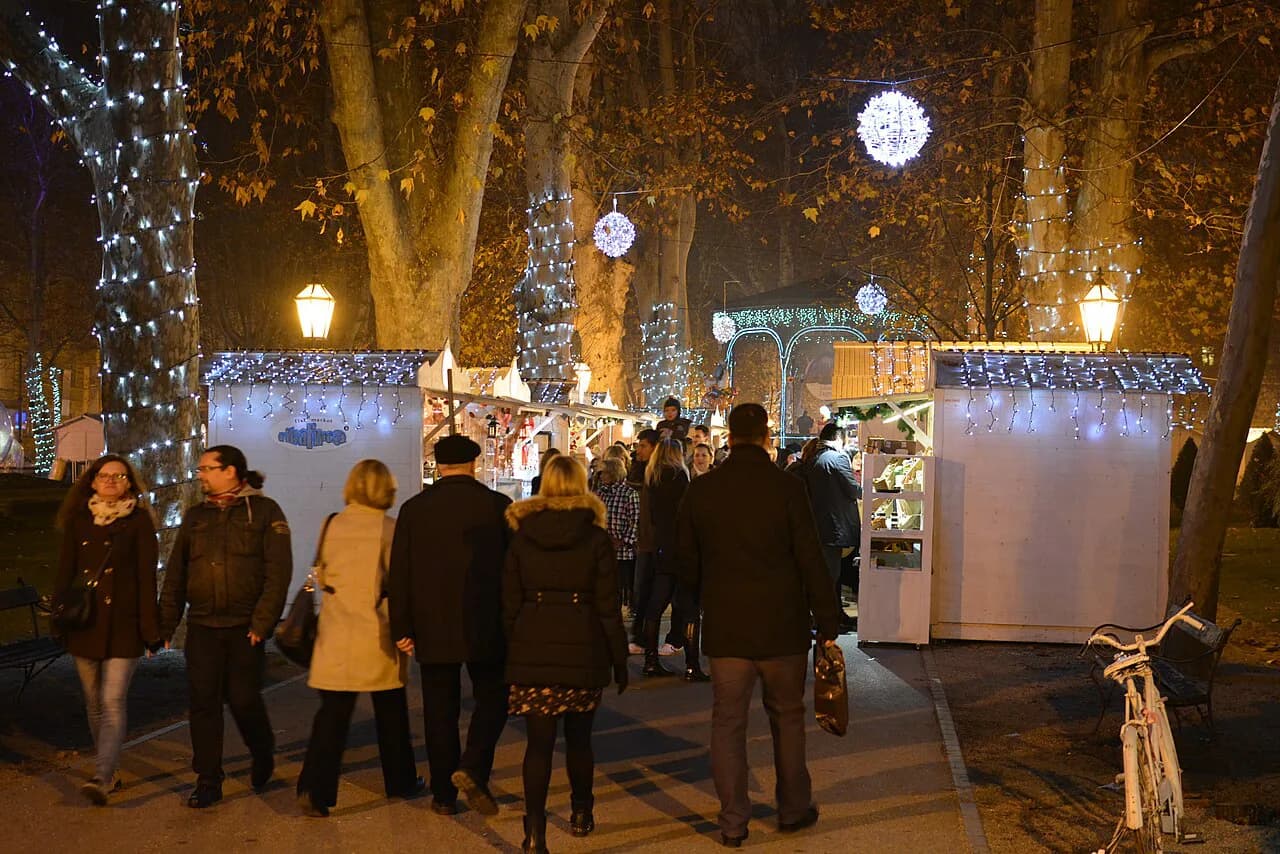
Croatian Christmas Food: Dishes on the Table, Region by Region
Croatian Christmas food explained: sarma, fiš paprikaš, pašticada, fritule and makovnjača, plus how the festive menu shifts from Dalmatia to Slavonia.
On this page
Croatian Christmas food is built around a cold starter, a soup, a roast or stewed main and a table of sweets, with sarma (cabbage rolls of minced meat and rice) on almost every regional menu. What changes as you move north, east or down the coast is the centrepiece: turkey or duck inland, suckling pig in Lika, pašticada on the Dalmatian coast. This guide sets out the dishes, the sides that make them work and the sweets worth saving room for.
Christmas Eve is a separate meal from Christmas Day, and many Croatians mark it by fasting from meat, with bakalar (dried cod stew) or other seafood often on the table instead of the roast. The roast lunch comes on Christmas Day itself, followed by fritule, poppy seed rolls and stamped biscuits.
Croatian Christmas food at a glance
If you remember four dishes, remember these: sarma (sour cabbage leaves wrapped around minced meat and rice and simmered in tomato sauce), fiš paprikaš (a red fish stew heavy with paprika, popular in eastern Croatia), pašticada (beef braised for hours and served with njoki, or potato dumplings, in Dalmatia) and fritule (small deep-fried doughnuts from the coast). Around them sit the sides and the sweet table.
Regional variation is real, so do not expect one national menu. Zagreb and its surroundings look to turkey and mlinci, Međimurje to stuffed roast duck, Lika to suckling pig with potatoes, Istria and Kvarner to roast turkey with a nutty Bishop's Bread among the sweets, and Dalmatia to pašticada rather than a roast. Across Croatia, sarma is the constant, and households cook more than the table needs so it reappears in the days after Christmas.
How a Croatian Christmas table is built: cold starter, soup, main, dessert
The shape of the festive lunch is consistent even when the dishes are not. It opens with cold cuts and cheese, typically homemade sausages, prosciutto and bacon, sometimes with Russian salad or aspic, and may or may not include a soup before the main event.
What is the unspoken rule in Croatia? At a Croatian table, the host tends to keep pressing food on guests, so a second helping is the polite answer to a second offer. Resist the urge to fill up on the cold starter, because the main course and the sweets come afterwards.
Is Croatian food similar to Italian? On the coast there is overlap in the fish, olive oil and simple grilling, but the festive table is different: paprika-rich stews, sour cabbage rolls, pork sausage and poppy seed rolls come from a central European tradition rather than an Italian one.
What is peka? Peka is the domed lid used to cook meat or octopus under hot embers, and the name is used for the resulting dish. It is not a Christmas fixture in the usual menu, but it is a common way to cook on the coast through the year.
Then comes the centrepiece, roasted meat or a slow-braised dish, with its sides, and the meal ends in a spread of biscuits, rolls and creamy cakes that stays on the table for days. Croatians habitually cook more than the table needs, so the same dishes reappear on the days after Christmas.
If you are building a Christmas menu of your own, this order is the useful part to borrow: a sharp, salty opener, a warm soup, one large centrepiece with a starchy side, and a plate of small sweets rather than one big pudding. It is an approachable structure for cooking at home, and it maps onto the way traditional Croatian food is served through the year.
Sarma: cabbage rolls of minced meat and rice
Sarma is the dish that anchors the whole table. Minced meat, rice and seasoning are rolled in kiseli kupus (sour, fermented cabbage leaves) and boiled in a spiced tomato sauce, sometimes with bacon, until the rice is cooked through, then served with mashed potatoes.
It is eaten all year, but winter is its moment, and it is the dish Croatians most associate with going home to family. A milder version is made with fresh cabbage or blitva (chard) leaves; the sour cabbage version is the one to order, and the plain tomato sauce means it lands mild rather than fiery, so add pickled chilli from the table if you want heat.
Fiš paprikaš: the paprika-rich fish stew of eastern Croatia
In eastern Croatia, fiš paprikaš, often shortened to fiš, is a spicy red fish stew that cooks in large pots over open fires, sometimes outside restaurants and beside the river. Paprika supplies both the colour and the heat, and it is a fixture on Christmas Eve tables in the region.
Order it as the main event rather than a starter, and expect a bowl rather than a plated fillet; the broth is as much the point as the fish. It suits the meatless Christmas Eve pattern well, which is why it appears alongside bakalar on the same evening in different parts of the country.
Badnjak: Christmas Eve and bakalar
Badnjak is Christmas Eve in Croatian, and many families keep it meatless, eating bakalar (dried cod stew) or other seafood specialities before the evening gathering and Midnight Mass. The wheat sown on St Lucia's Day, božićna pšenica, is one of the season's visible traditions, grown into green shoots and tied with ribbons near the nativity scene.
The point for a visitor is that the two days are different meals. Do not assume the roast you have read about turns up on Christmas Eve; those who fast that evening eat bakalar or other seafood instead of meat.
The main course region by region
In Zagreb and its surroundings the classic Christmas roast is turkey, occasionally suckling pig, with mlinci, baked potatoes and štrukli alongside. Slavonia most often serves roast beef, sometimes pork or chicken, and distinguishes itself with a multilayered cake among the sweets; in northern Međimurje, roast stuffed duck is the speciality.
Lika puts roast suckling pig on the table, less often lamb, and the region's much-prized potatoes are obligatory on the side, often halved and baked or grilled in embers. Istria and Kvarner usually roast turkey, sometimes veal or pork, with homemade bread alongside and Bishop's Bread on the sweet table.
Dalmatia is the exception that proves the rule: the festive main course is pašticada, not a roast, though turkey may appear as well. In Split, the run-up to lunch involves varenik, hot wine with honey and pepper, and fritule are served across Dalmatia before the meal.
Pašticada and njoki on the Dalmatian table
Pašticada is a single piece of good beef stewed slowly in a rich, dark sauce and carved at the table, almost always served with njoki. It is the dish that defines a Dalmatian festive lunch, and it is the one to seek out if you are on the coast over Christmas.
On the coast the everyday seafood repertoire is wide, from crni rižot (black squid-ink risotto) to simply grilled fish, and it is what you will eat around the holiday as well as on ordinary days. Pašticada is the festive anchor, but the rest of the Dalmatian kitchen is the context that makes ordering on other days easier.
Sides that come with the roast: mlinci, baked potatoes, štrukli
Mlinci is a thin, pasta-like flatbread that gets cooked briefly in soup or fat before serving, and it is the side that makes a Zagreb-style roast fowl taste right. Baked potatoes, or Lika's halved potatoes grilled in embers, do the same job further south.
Strukli, a dough with a cheese filling that can be boiled and then baked, is another northern table regular, and gibanica, a layered pastry with a cheese filling, appears in central Croatia. French salad, frozen mixed vegetables bound in mayonnaise or mayonnaise and soured cream, is the other fixture beside the meat, and it is served across the Slavic region whether or not the name flatters it.
Punjena paprika in winter
Punjena paprika (stuffed peppers) are close relatives of sarma: peppers filled with rice and minced meat and baked in tomato sauce. They appear on winter tables alongside the cabbage rolls rather than instead of them, and they are a gentle introduction to the sour-savoury, paprika-led flavour that runs through the whole menu.
Krvavica and čvarci from the winter pig slaughter
Krvavica is a blood sausage made with pig's blood, which colours it black once cooked, and the filler varies from bread and potato to buckwheat, corn flour or barley; sometimes a little offal goes in. Pigs are traditionally dispatched in winter, and the weather is too warm in summer to make it, so the sausage appears only in the cold months.
Čvarci, fried pork rind, come from the same tradition, and Croatian tables often include both as part of a cold spread. Try a little before committing to a portion; the texture and richness are not to everyone's taste.
Fritule: the deep-fried doughnuts of the coast
Fritule are small deep-fried doughnuts that historically come from Dalmatia, usually flavoured with brandy or loza, a grape rakija, and served with sugar, jam or chocolate. They are the sweet most likely to be handed round before the main lunch rather than after it.
Eat them warm, when the outside is crisp and the middle light. A jar of loza in the dough is normal, so the flavour is adult rather than plain, though the alcohol is a seasoning rather than the point of the dish.
Sweet rolls and biscuits: makovnjača, paprenjaci, vanilin kiflice, strudel
Makovnjača is a yeast-dough roll filled with poppy seed, traditional enough to appear on most festive tables, and it can be dry on its own, so it is often eaten with a glass of hot milk for dipping. Paprenjaci are peppery gingerbread biscuits dating back at least to the 16th century, stamped with a pattern and varied by household, with honey or sugar, butter or other fat, walnuts or hazelnuts, and cloves, cinnamon and nutmeg alongside the pepper.
Vanilin kiflice are vanilla half-moon biscuits, a sweet, biscuit-like take on the doughs made at home, and strudel is passed down through families, with the technique mattering more than the exact list of ingredients. Nut and poppy seed rolls join these on most tables, and the season also brings honey cakes and wafers.
Bishop's Bread and the Istrian sweet table
Bishop's Bread is an Istrian sweet, a biscuit dense with nuts and dried or candied fruit, and it is at its best several days old, which makes it ideal for a holiday table because it can be made well in advance. Look for it in Istria and Kvarner alongside the roast turkey in place of the fried doughnuts of the coast.
Most of Croatia also puts a Christmas Gugelhupf on the table, a ring cake inherited from the Austro-Hungarian period, and creamy cakes such as kremšnita and chocolate cubes join the biscuits. If you only try one thing from the Istrian sweet table, make it the Bishop's Bread, cut thin.
What to drink with Christmas lunch
In Split the Christmas run-up involves varenik, hot wine sweetened with honey and seasoned with pepper, and it sets the tone for a cold-weather table. With the meal itself, wine is normal in moderation, and loza or a grape rakija may appear in small glasses or in the fritule dough rather than as a drink.
Keep the drinking modest and the food the focus; a long lunch of sarma and roast meat does not need a long drinks list. Hot milk with makovnjača is the most traditional way to finish without alcohol.
Merry Christmas in Croatian: a few table phrases
Sretan Božić is Merry Christmas, and Božić is the Christmas Day feast itself as well as the name of the holiday. Badnjak is Christmas Eve and Ponoćka is Midnight Mass, so both come up naturally when you ask about plans over the festive days.
At the table, the useful move is simply to accept a small portion of everything and ask what a dish is called; hosts tend to be pleased to explain sarma and fiš rather than offended that you do not know them. Dobar tek, the standard good-appetite greeting, works before any meal, not just at Christmas.
Which Christmas dish to try first
Start with sarma, because it is the one dish you will meet across every region and it teaches you the flavour the rest of the table is built around. From there follow the map: fiš paprikaš in the east, pašticada with njoki in Dalmatia, roast fowl with mlinci inland, and Bishop's Bread if you are in Istria.
Save room for fritule and a slice of makovnjača, and if a blood sausage appears on the cold spread, try a small piece before taking a plate. These are home dishes rather than restaurant inventions, so the best approach is to order what the people around you are eating.
Explore more Croatia guides
Frequently Asked Questions
What is the unspoken rule in Croatia?
At a Croatian table, the host tends to keep pressing food on guests, so a second helping is the polite answer to a second offer. Resist the urge to fill up on the cold starter, because the main course and the sweets come afterwards.
Is Croatian food similar to Italian?
On the coast there is overlap in the fish, olive oil and simple grilling, but the festive table is different: paprika-rich stews, sour cabbage rolls, pork sausage and poppy seed rolls come from a central European tradition rather than an Italian one.
What is peka?
Peka is the domed lid used to cook meat or octopus under hot embers, and the name is used for the resulting dish. It is not a Christmas fixture in the usual menu, but it is a common way to cook on the coast through the year.
Sources
Notes on eating well in Croatia
Optional updates to our food guides.
You might also like



Continue reading
More guides you'll find useful





