
Best Food in Croatia: Dishes to Order on Your First Trip
The best food in Croatia, from crni rižot and pašticada to Ston oysters and Pag cheese, with what each dish is and how to order it in a konoba.
On this page
Order crni rižot, pašticada and a plate of pršut with paški sir and you have the core of the best food in Croatia on one table. These are the dishes a konoba, the traditional simple-cooking restaurant, does best, and they tell you more about a kitchen than any laminated photo menu. This guide runs through the dishes worth ordering first, what each one actually is, how it is served, and how the cooking shifts between the coast and the interior.
Croatian cooking rewards a little knowledge because the country eats regionally. On the coast you are eating Mediterranean food built on olive oil, vegetables and fish landed that day, while inland cooking leans on meat and Central European influences. Knowing which side of that line you are on decides whether you order fish or a slow-cooked stew.
What to order first: the short answer
If you order only three things, make them crni rižot, pašticada and a shared starter of pršut and paški sir. Add a plate of cold octopus salad if the day is hot, and finish with fritule if they are on the list. That combination covers the Dalmatian seafood canon, the coast's signature braise and the cured-meat tradition that starts most meals.
Crni rižot earns its place first because nearly every kitchen cooks it, so it works as a fair test of whether the rest of the menu is worth your money. A good version tastes of the sea rather than of ink alone, and the rice should still have a little bite. If you are inland rather than on the coast, skip ahead to the meat dishes, which is where the local strength lies.
Crni rižot: squid ink, shellfish and a test of the kitchen
Crni rižot is a risotto turned deep black with squid or cuttlefish ink, cooked with shellfish such as clams, mussels and scallops, plus tomato, garlic and parsley. It is Dalmatian and Istrian coastal cooking with clear Venetian influence, and it is the closest thing Croatia has to a national dish that everyone cooks. Expect it to stain your lips and teeth for an hour, which is part of the experience.
What food is Croatia best known for? Crni rižot, the black squid-ink risotto with shellfish, is the dish most closely associated with the Croatian coast, and pašticada, a slow-braised beef served with njoki, is the other signature. Alongside them, pršut, paški sir, octopus salad and Mali Ston oysters are all worth seeking out.
Is Croatian food similar to Italian? On the coast, yes: olive oil, vegetables, fish, risotto-style rice dishes and a Venetian influence in Dalmatia and Istria. Inland it changes entirely, moving towards meat, stews and Central European flavours, so you should expect two quite different food cultures in one country.
What is the unspoken rule about eating out in Croatia? Order from the traditional part of the menu rather than the tourist items. In high season some restaurants switch their cooking towards pizza, pasta and fast food for visitors, and locals avoid those places, so a short menu of fish, braises and cold starters is a better sign than a long one.
Because it is ubiquitous, it is also the dish that exposes a lazy kitchen: thin, watery rice or a version that tastes only of salt means the rest of the menu is probably aimed at passing trade. Ask for it as a first course and share it, since a proper portion is rich. Pair it with a dry Dalmatian white rather than a heavy red.
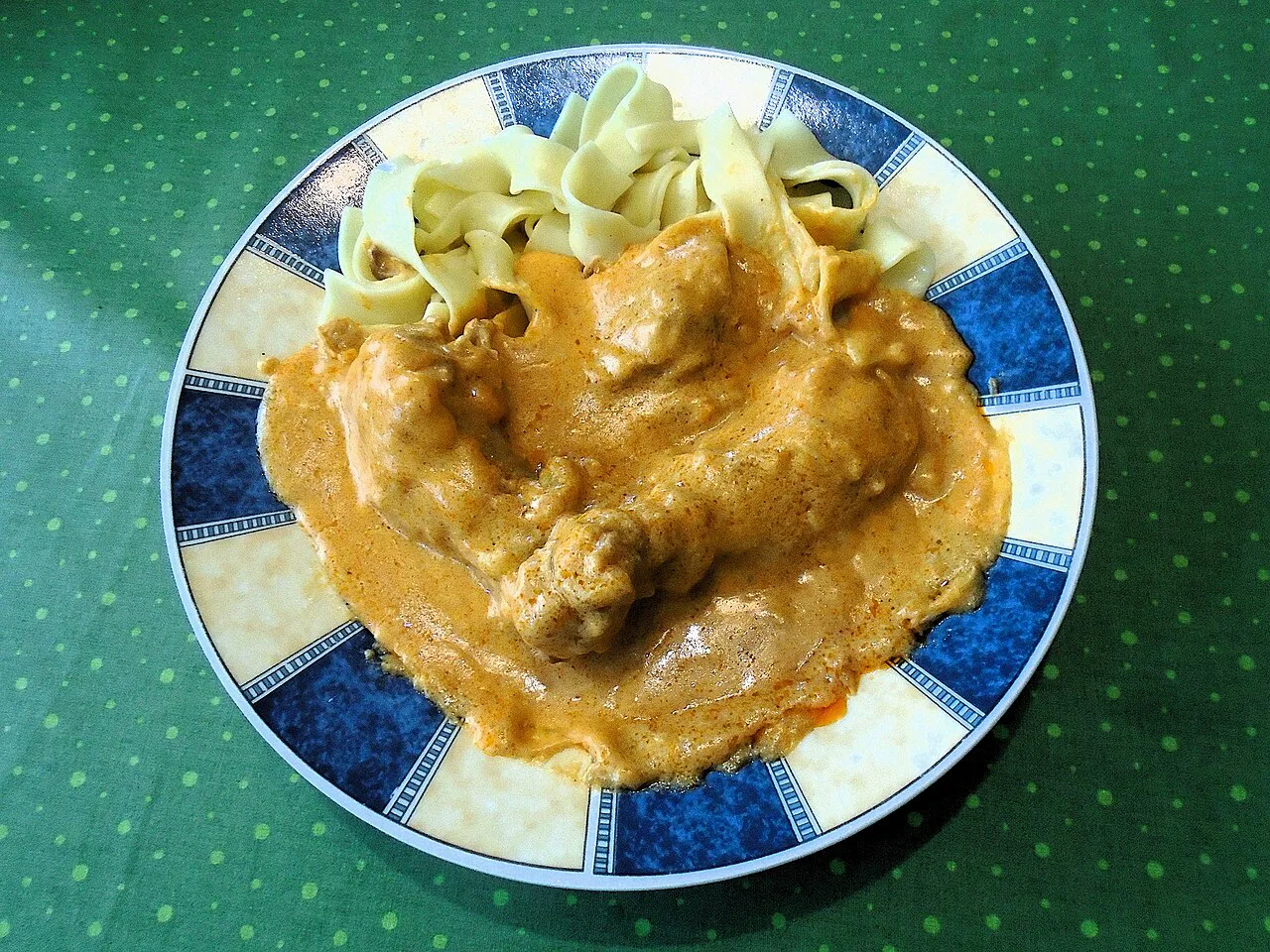
Pašticada: beef braised slowly and served with njoki
Pašticada is a Dalmatian beef dish, a large cut marinated and then braised slowly until it collapses, served with njoki, the small potato dumplings that soak up the dark sauce. It is the sort of food a family cooks for a celebration, and it is the one dish on a coastal menu that has nothing to do with the sea. Order it when you want a break from fish or when the weather has turned.
On a menu it usually appears under mains rather than starters, and it is filling enough that a shared starter is all you need alongside. The sauce is the point: it should be sweet-sour and glossy from long cooking, not thin. If you are eating in Split or on the islands, this is the dish to choose on a cool evening.
Octopus salad: cold, olive oil and onion
Octopus salad is exactly what it sounds like: boiled octopus cut into pieces, dressed with olive oil, onion, parsley and often a little vinegar, and served cold. It is a light starter for a hot lunch and a good way to judge the kitchen's sourcing, because the octopus should be tender rather than rubbery. It appears across Dalmatia and the islands.
Order it with bread and a glass of white, and treat it as the opener before a fish main. It is also one of the more reliable choices if you are eating late and want something that has not been sitting under a heat lamp. If a menu offers it alongside a mixed seafood plate, the salad is usually the better-value route.
Fritule: small fried dough balls for the end of a meal
Fritule are small fried dough balls, somewhere between a doughnut and a fritter, usually dusted with sugar and sometimes flavoured with lemon zest. They turn up as a dessert on coastal menus and are best eaten hot, straight from the fryer. A plate is normally shared rather than a single serving.
They suit the end of a long lunch better than a heavy pastry, and they go well with a small coffee rather than more wine. If fritule are not on offer, look for whatever the kitchen has fried that day; the principle is the same. Avoid ordering them as a starter, since they arrive sweet and are meant to close the meal.
Mali Ston oysters: raw, from the bay near Dubrovnik
Mali Ston oysters come from the bay on the Pelješac peninsula north of Dubrovnik, where shellfish farming is a long-established local industry. The European flat oysters grown there are served raw, usually with lemon, at seafront restaurants, and locals rate them among the best in the world. Order them as a starter with a white from the Pelješac peninsula.
If you are driving the coast, a detour to the Ston area puts you in reach of oyster sellers and restaurants that deal in them directly. Eat them simply, with lemon and bread, rather than in a complicated dish where the oyster gets lost. This is the one seafood order where freshness matters so much that the plainest presentation is the right one.
Pršut and paški sir: the cured ham and salty island cheese to start
Pršut is Croatian dry-cured ham, sliced thin and served as a starter with olives, cheese and bread; the Istrian version is seasoned with sea salt and air-dried in the bora wind. Paški sir is the hard sheep's cheese from the island of Pag, salty and sharp because the sheep graze on herbs and grass breathed on by salt air. Together they make the default opening plate in a konoba.
Order them as a shared board rather than a single portion, and ask what is local if the menu lists more than one region. The cheese is assertive, so pair it with a light red or a dry white rather than anything sweet. It is also the right order when you have just arrived and want something before a main course arrives.
Manestra: the vegetable soup locals eat mid-morning
Manestra is Croatia's answer to minestrone, a hearty vegetable soup cooked with whatever is in season and often a little pasta or beans. In Dalmatia it is eaten as a mid-morning meal, the marenda, rather than as a delicate first course at dinner. It is inexpensive, filling and one of the best-value things you can order.
Look for it on lunch menus and in konobas away from the main squares, where it is cooked for local workers rather than tourists. Its flavour depends entirely on the vegetables, so order it in late spring or summer when tomatoes and greens are at their best. If you want the wider context of the mid-morning meal, our guide to Croatian lunch explains the rhythm of the day.
Where the food changes: coastal fish and olive oil against inland meat cooking
The Adriatic coast eats Mediterranean food: olive oil, vegetables, fish landed by small boats and family olive presses. Inland Croatia eats more meat, with Central European and Hungarian influences, and the two traditions barely overlap. That is why a menu in Zagreb looks different from one in Hvar, and why you should order accordingly rather than hunting for fish inland.
The coastline also varies: Istria leans on truffles, wild asparagus and its own pršut, Dalmatia on fish and shellfish, and the far south around Dubrovnik on oysters and Pelješac wines. If you are travelling north to south or the reverse, expect the menu to change with the landscape. The practical rule is to eat what the region does well rather than what the restaurant has imported.
What to drink with it: a Dalmatian white and a Pelješac red
With crni rižot and most seafood, order a Pošip, the robust Dalmatian white, served by the glass or the carafe. With pašticada or a plate of pršut and paški sir, a red from Pelješac works better. Croatian wine is no longer a bulk product, though it is still rarely exported, so drink it while you are there.
House wine in a konoba is usually local and far cheaper than the bottled list, so ask what is open rather than reaching for a familiar label. Keep to a glass or two with lunch if you are driving or spending the afternoon on the water. Croatian wine lists are worth reading, but the simple pairing of local white with fish is hard to beat.
How a konoba works: simple, fresh cooking and how to spot a tourist menu
A konoba is the Croatian equivalent of a trattoria: a traditional restaurant serving simple food from fresh, local ingredients. The best ones cook with what they have that day, sometimes from their own fishing boat or olive press, and the menu may be short. That shortness is the point, not a limitation.
Watch for the trap described by locals: in high season some restaurants switch their winter cooking for fast food aimed at visitors, and the menu fills with pizza, pasta and risotto. Order from the traditional list instead, where the fish, the braise and the cold starters sit, and you will eat far better. If a place has an English-only menu on a stand outside, treat it as a warning rather than an invitation.
When a venue is named on a menu or a sign, it helps to know what a specific kitchen does well. A reliable approach is to order one shared starter, one fish or braise and one dessert, and judge from there. Croatian pizza is decent, but it is not why you came.
Which three dishes to order on your first night
Order crni rižot to test the kitchen, pašticada if you want the Dalmatian braise, and a pršut and paški sir board to start. Add fritule to finish and you have covered the essentials in one meal. If you are inland, build the meal around the meat cooking instead.
The rest is choosing the right room: a konoba with a short menu and a local wine list will almost always beat a terrace with photographs of the food. Eat where the seasonal cooking is, and Croatia will surprise you. For a wider map of the country's dishes, our guide to Croatian food is the natural next stop.
Explore more Croatia guides
Frequently Asked Questions
What food is Croatia best known for?
Crni rižot, the black squid-ink risotto with shellfish, is the dish most closely associated with the Croatian coast, and pašticada, a slow-braised beef served with njoki, is the other signature. Alongside them, pršut, paški sir, octopus salad and Mali Ston oysters are all worth seeking out.
Is Croatian food similar to Italian?
On the coast, yes: olive oil, vegetables, fish, risotto-style rice dishes and a Venetian influence in Dalmatia and Istria. Inland it changes entirely, moving towards meat, stews and Central European flavours, so you should expect two quite different food cultures in one country.
What is the unspoken rule about eating out in Croatia?
Order from the traditional part of the menu rather than the tourist items. In high season some restaurants switch their cooking towards pizza, pasta and fast food for visitors, and locals avoid those places, so a short menu of fish, braises and cold starters is a better sign than a long one.
What should I drink with Croatian food?
A Dalmatian white such as Pošip with fish and black risotto, and a red from Pelješac with braised meat or cured ham. House wine in a konoba is usually local and worth asking about before you order from the bottle.
Sources
Notes on eating well in Croatia
Optional updates to our food guides.
You might also like



Continue reading
More guides you'll find useful





