
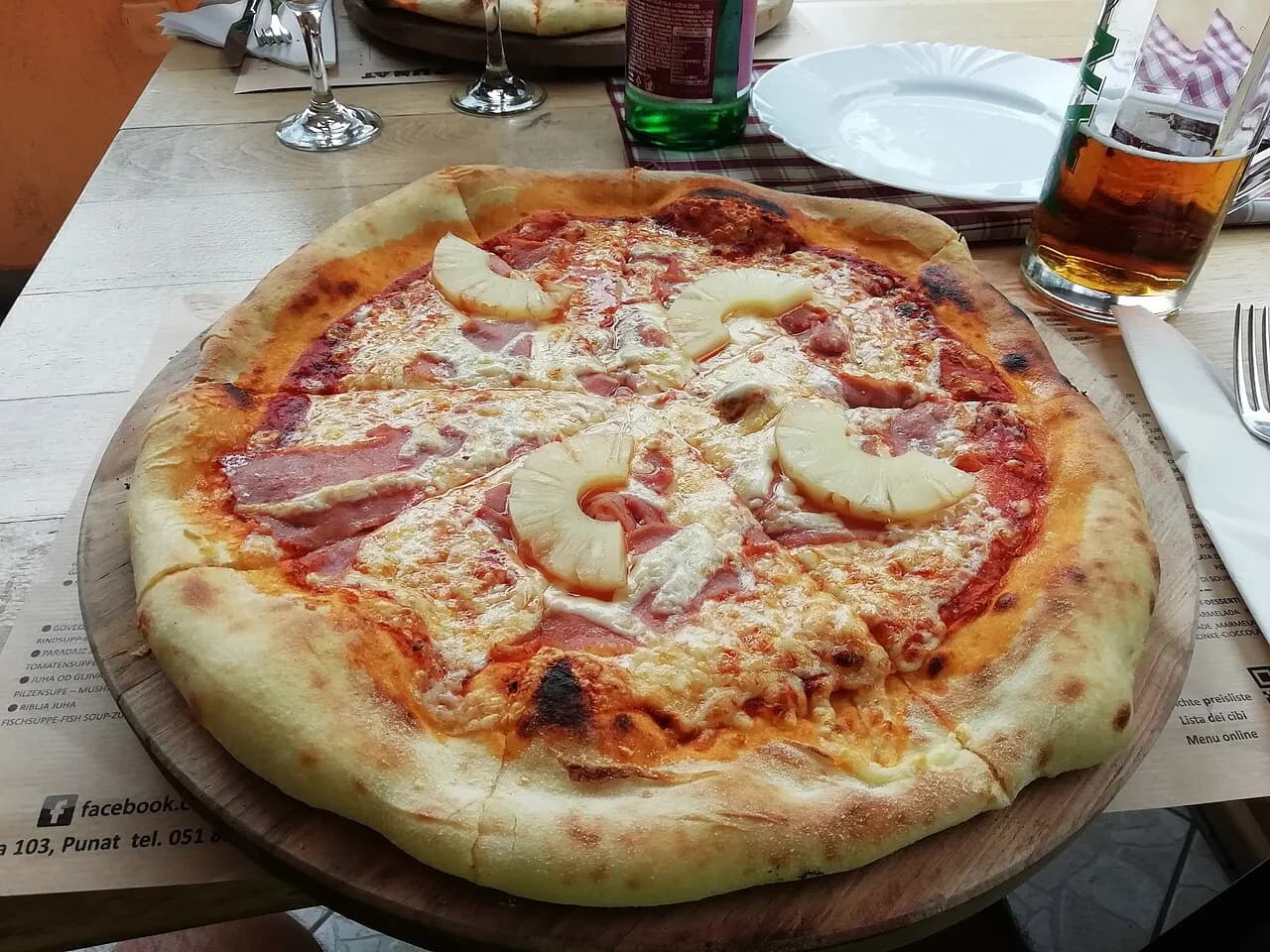
Croatian Pizza: What It Is and What to Order
Croatian pizza is thin, wood-fired and everywhere on the coast. Here is what goes on it, where it sits on the menu and how it differs from soparnik.
On this page
Croatian pizza is good, if unspectacular: a thin base, a modest layer of tomato and cheese, and a short list of toppings that leans on local ham, seafood and vegetables. It is the meal most Croatian towns can deliver without a booking, and the one that saves a budget when a konoba's fish is sold by weight. This guide covers what goes on it, when to pick a pizzeria over a konoba, and how the Dalmatian flatbread soparnik differs from the real thing.
The setting matters as much as the dough. A pizzeria is a casual, often family-friendly room where a large pizza is commonly shared between two, while a konoba is built around fish, grilled meat and slow-cooked dishes. Knowing which room you are walking into is the main practical decision of the evening.
What Croatian pizza actually is
Expect a thin, wood-fired pizza with a crisp rim and a light hand on the sauce. It is served across the country in pizzerias that sit on the same streets as konobas, so in most coastal towns and in Zagreb you can choose between the two within a couple of minutes' walk. The style owes more to the Italian trattoria across the Adriatic than to any distinct Croatian tradition, which is why the menu reads so familiarly.
Where pizza sits on a Croatian menu. In many restaurants pizza shares the page with pasta, grilled meat and a small seafood section, so a group can order across all three without anyone compromising.
The toppings you will see most. Pršut is the topping that matters most. It is dry-cured ham, sliced thin and added to a pizza so that the salt and cured pork fat cut through the cheese, and it appears on menus from Istria down through Dalmatia..
Pizzerias versus konobas: which to choose. Choose a pizzeria when you want speed, a fixed price per pizza and a table without a booking in high season.
Where pizza sits in the wider picture of Croatian food is worth understanding before you order. The country's cooking is built on fish, shellfish, grilled meat, pasta, cured pork and vegetable stews, and pizza arrived as an urban everyday meal rather than a regional speciality. On the coast it competes with dishes like crni rižot, the dark squid-and-rice risotto, which is served in konobas and takes far longer to make than a pizza base takes to bake.
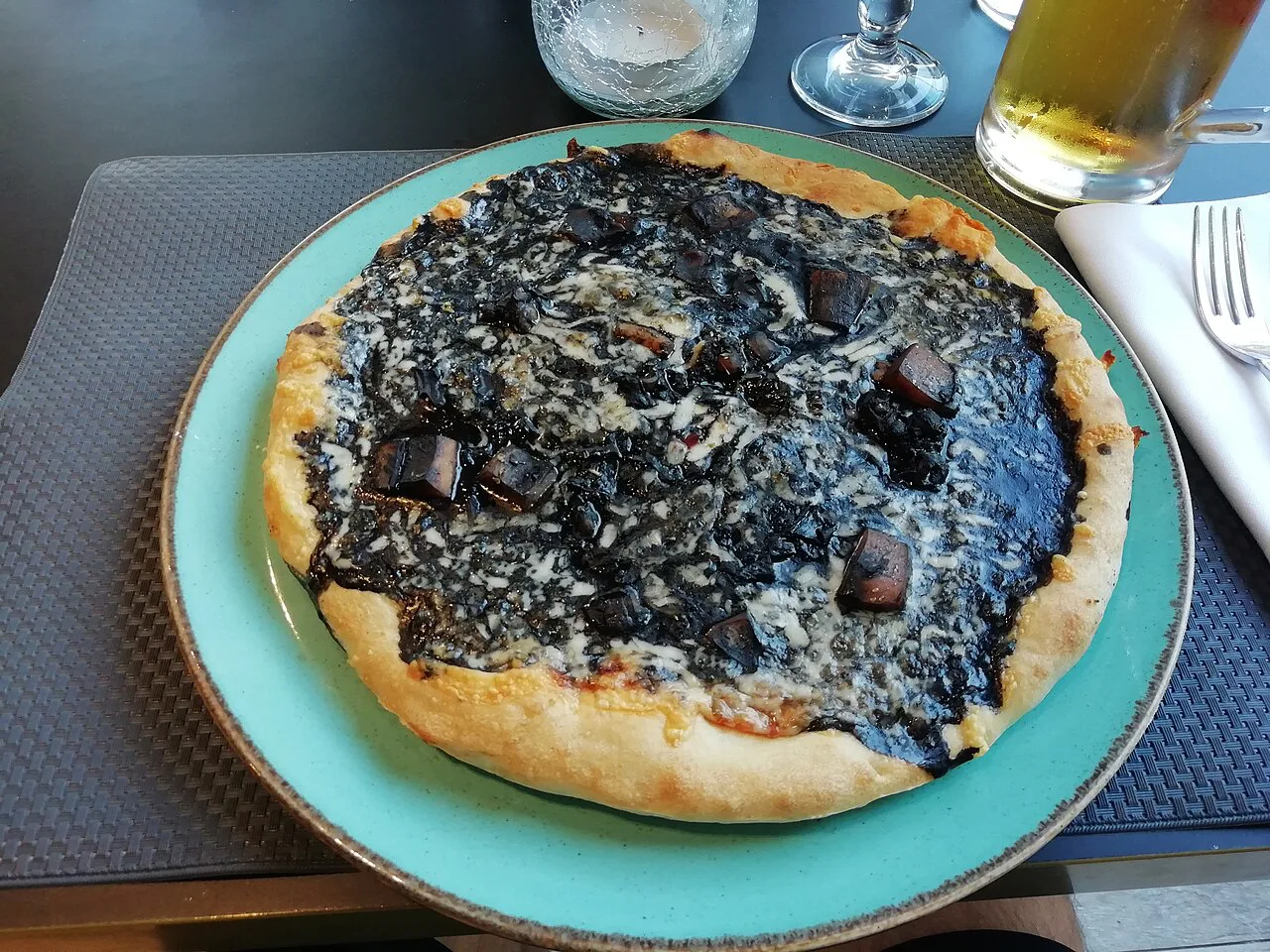
Where pizza sits on a Croatian menu
In many restaurants pizza shares the page with pasta, grilled meat and a small seafood section, so a group can order across all three without anyone compromising. A pizzeria tends to go further, offering nothing but pizza, calzone and a few salads, which is why it suits a fast family lunch rather than a long evening. If you want the full spread of traditional Croatian food, with peka, stews and grilled fish, a mixed menu is usually the better table.
Pizza is also the fallback meal on a coast where fish is priced by the kilo. A whole fish sold by weight can carry a bill far beyond what a traveller expects, and the price is agreed before cooking rather than printed as a fixed figure. Ordering a pizza removes that uncertainty entirely, which is a legitimate reason to choose it on a first night in an unfamiliar town.
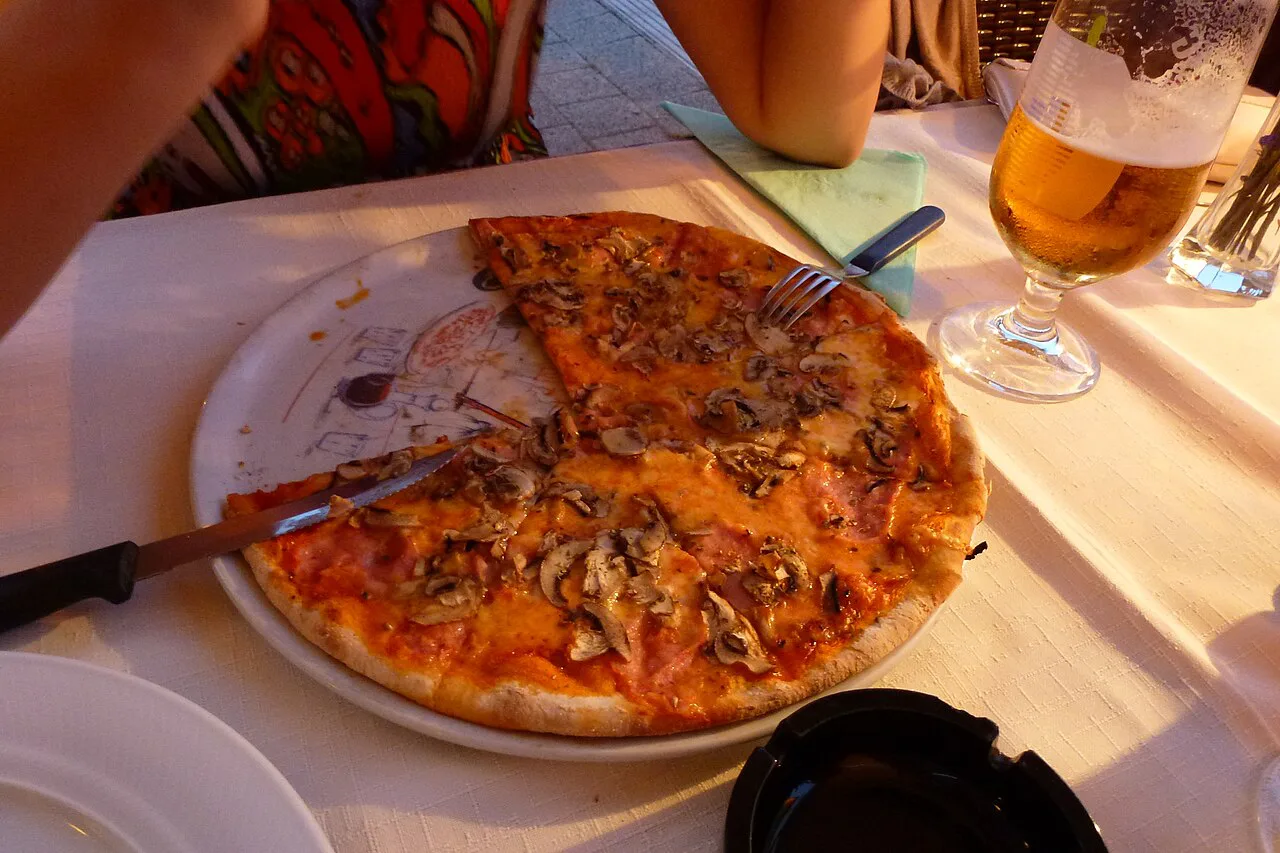
The toppings you will see most
Pršut is the topping that matters most. It is dry-cured ham, sliced thin and added to a pizza so that the salt and cured pork fat cut through the cheese, and it appears on menus from Istria down through Dalmatia. Istrian pršut made in the prescribed way is dried in the bura wind for at least six months under salt, pepper, garlic and natural aromas, then finished in a dark closed room for another six to eight months, and the Poreč tourist board describes it as a protected food.
Beyond pršut, expect cheese, seafood, vegetables and olive oil. Scampi and mussels turn up on coastal pizzas, sometimes shelled and sometimes not, and a pour of local olive oil before serving is common. Extra virgin olive oil from the island of Krk carries protected designation of origin and is used widely in the region's kitchens.
Cheese is not always what a British or American eater expects. A Croatian pizza may come with a domestic semi-hard cheese, a mozzarella-style cheese or a mixture, and the menu will usually name it. Order a margherita first if you want the simplest comparison; if the cheese is pale and slightly salty rather than milky and stretchy, that is the local character of the pizza rather than a mistake.
Pizzerias versus konobas: which to choose
Choose a pizzeria when you want speed, a fixed price per pizza and a table without a booking in high season. Choose a konoba when the meal itself is the reason you came: fish, shellfish, lamb or a slow-cooked dish, ordered with a starter and a dessert. The two rarely do both jobs well, and most towns have several of each, so the answer depends on energy, budget and how hungry the table is.
The seafood side of a konoba menu reflects the region closely. Kvarner scampi are served raw and marinated in olive oil and lemon as a starter, folded into risotto, or cooked à la buzara in a light sauce, and the region's restaurants are grouped under the Kvarner Gourmet and Kvarner Food quality labels. Ordering a pizza in that setting is not wrong, but it wastes a table that does scampi well.
How pizza is priced and served
Pizza is usually the cheapest full meal on a Croatian restaurant menu, and it is priced per pizza rather than by weight, which makes it easy to budget for. A large pizza is commonly shared between two people, with a salad or a portion of olives alongside, and this is normal rather than stingy. Ask for it to be cut in the kitchen if you intend to share.
Payment is where travellers get caught out. Croatia uses the euro, but not every kitchen takes cards, and some small places still prefer cash, so carry euro notes and coins even if you plan to pay by card. At Plitvice Lakes, the national park's own restaurant list marks several outlets as card-only, which shows that payment rules vary from venue to venue. Ask when you sit down and you avoid a search for a cash machine after the meal.
Soparnik is not pizza
Soparnik is a Dalmatian flatbread from the Poljica area behind Split, made from a simple dough of flour, water and salt with a filling of chard and olive oil. The dough is not proofed with yeast, which already separates it from pizza, and it is baked covered with embers so that the top and bottom cook at once. It is served cut into squares, often with garlic and olive oil, and it belongs to the vegetable-and-bread side of Croatian cooking rather than the cheese-and-tomato side.
Ordering soparnik expecting a pizza will disappoint you, while ordering it as a starter to share will not. It is at its best warm from the oven and makes a light lunch rather than a full dinner. If you see it written as savoury pie or chard pie on an English menu, that is the same dish.
Pizza by region: the coast, Zagreb and the islands
Pizza is easiest to find in cities and coastal towns, where pizzerias serve locals and visitors year-round, and it is the most reliable option when coastal restaurants close for the season. On the islands, choice narrows sharply outside the summer months. In Zagreb and inland towns, pizzerias sit alongside the bakeries and cafés that supply Croatian breakfast, and a slice or small pizza with a coffee is a normal mid-morning stop.
The regional larder changes the toppings more than the base does. On Krk, that means olive oil with protected designation of origin, homemade sheep's cheese and pršut. In Istria, pršut and truffles dominate the menus around Poreč and Rovinj. In Lika, inland around Plitvice Lakes, the cooking is built on local produce certified under the Lika Quality label, and the park's Lička kuća restaurant has served regional dishes since 1972.
What to drink with pizza in Croatia
A light local white or a simple red is the usual match, and most pizzerias sell wine by the glass or in a small carafe, which keeps the bill down. Vrbnička Žlahtina, a fresh white from Krk, suits seafood and lighter pizzas on the Kvarner coast, and a Croatian lager is the default beer. Sparkling water with a slice of lemon is ordered as often as anything else.
Drink moderately and keep a bottle of water on the table, especially at lunch in summer. If you want a non-alcoholic alternative to fizzy drinks, ask for mineral water or a fresh juice, both of which appear on most menus. Coffee after the meal is standard, and in Dalmatia it is ordered as espresso or a small white rather than a large milky drink.
Pizza night or konoba night?
Pick the pizzeria for a no-fuss meal with a fixed price, especially on your first night or when the group cannot agree, and pick the konoba when you want fish, scampi or lamb and are prepared to pay for them. Order pršut as a topping at least once, share a large pizza rather than ordering two, and keep euros in cash for the places that do not take cards.
Leave soparnik for a daytime plate, and treat pizza as the everyday meal it is in Croatia rather than a regional speciality to seek out. For the dishes that actually define the country's cooking, start with Croatian food and its regional variety, then come back to pizza when you want a quiet evening.
Explore more Croatia guides
Sources
- Taste of Kvarner | Delicious Food and Wine
- Traditional flavours of Lika with a modern twist is a must-try culinary experience in Croatia - Nacionalni park "Plitvička jezera"
- Istrian pršut | Istrian specialties Porec Istra-Istria - official tourism portal
- Where to eat at Plitvice Lakes – best restaurants 2025
Notes on eating well in Croatia
Optional updates to our food guides.
You might also like



Continue reading
More guides you'll find useful





