
Croatian Meat Dishes: Čobanac, Pašticada and What to Order
Croatian meat dishes explained: Slavonian čobanac simmered in a kettle over fire, Dalmatian pašticada with njoki, and the paprika rules behind each.
On this page
Croatian meat dishes split into two broad traditions: the inland, paprika-heavy stews of Slavonia and the slow-braised beef dishes of Dalmatia. The two you are most likely to meet are čobanac, a shepherd's stew of mixed meat and sweet paprika, and pašticada, a sweet-sour beef stew served with njoki (gnocchi). This guide explains how each is built, which ingredients are non-negotiable, and how to read them on a menu.
Both belong to the wider family of Croatian comfort cooking, where a handful of ingredients and a long, patient simmer do the work. Knowing the technique behind each dish tells you more about what will arrive at the table than any list of names, and it makes ordering in a konoba far less of a guess.
What Croatian meat dishes are
Croatian cooking is regional, and the meat dishes shift accordingly. Inland, in Slavonia and around Zagreb, the kitchen leans on paprika, onion and long-simmered stews, while the Dalmatian coast cooks beef and lamb with wine, vinegar and dried fruit. What holds the two together is a peasant approach: cheap cuts, few ingredients, and time.
That simplicity is deliberate rather than a limitation. Cooks use what is at hand and rely on spice and technique to build depth, which is why a paprika stew and a sweet-sour braise can taste so different despite sharing the same cut of beef.
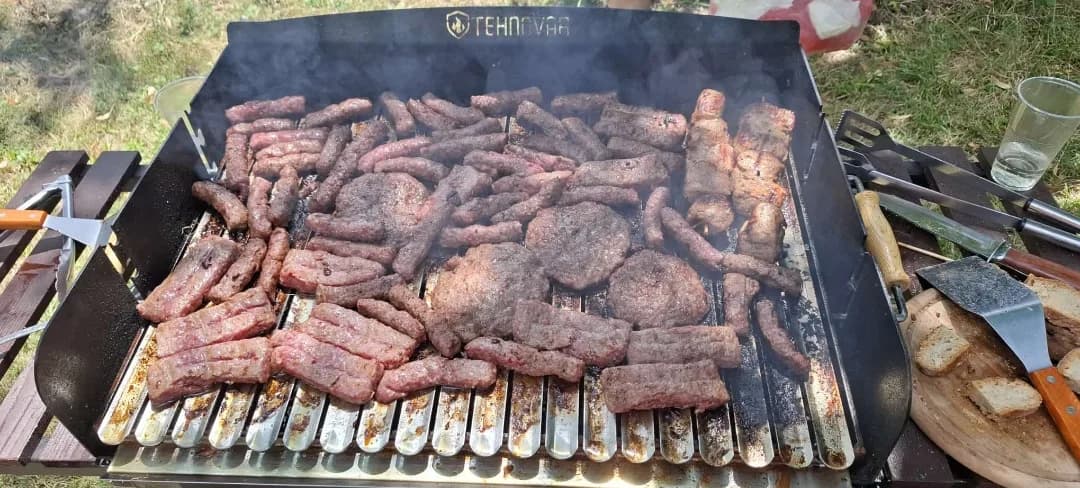
If you want the wider map, the grilled minced-meat dishes are a separate branch altogether. Order ćevapi and you get small grilled rolls of minced meat, usually with flatbread and raw onion, a Balkan staple that is now part of everyday Croatian eating.
Cabbage is the other pillar of the inland table. Sarma, Croatia's stuffed cabbage rolls, are made with soured cabbage leaves wrapped around minced meat and rice and simmered slowly; they often appear alongside the stews, especially in winter.
Slavonian čobanac: paprika, mixed meat and the kotlić
Čobanac is a paprika-based mixed meat stew from Slavonia, the fertile eastern region known for pastoral traditions and paprika-rich cooking. The name comes from čoban, meaning shepherd, which points to its outdoor roots: it was a dish cooked by people watching animals, not by restaurant cooks. Today it remains brothy rather than thick, red from paprika and built on at least two types of meat.
Is čobanac the same as goulash? No. Čobanac is a paprika-led mixed meat stew that stays brothy, has no flour or cream, and is traditionally cooked over fire in a hanging metal kettle.
What does pašticada come with? Traditionally pašticada is served with homemade njoki, which are gnocchi, and the sauce is the point of the pairing. It is a sweet-sour beef stew rather than a broth, so it works as a single substantial plate.
Do Croatian meat stews contain potatoes? Čobanac traditionally does not: potatoes are left out so the paprika-red broth stays clear and brothy. Bread on the side serves the same purpose as a starch and is the usual accompaniment.
Traditionally it is cooked in a kotlić, a hanging metal kettle set over an open fire. The cook adjusts the height of the kettle to control heat, simmering the stew gently for two to three hours while the liquid reduces and the flavours concentrate. That method is the reason the dish is associated with gatherings and outdoor cooking rather than a quick weeknight supper.
Beef gives the stew structure while pork brings richness and fat, and that pairing is the backbone of the flavour. In hunting communities you may also meet wild boar, and lamb or venison turn up as variations, but the two-meat base is the standard.
Why čobanac stays brothy: no flour, no cream, no potatoes
Čobanac is not thickened with flour or roux, and it contains no cream or sour cream. Instead, a generous quantity of onions softens and breaks down over the long simmer, giving the broth body without any thickener. The result is spoonable, coats the meat, and stays light enough to ladle.
Potatoes stay out of the pot as well. That is a deliberate choice rather than an oversight: they would cloud the paprika-red broth and turn a stew into a one-pot meal. Bread on the side does the job instead.
It is also worth separating čobanac from the Hungarian dish it gets compared to. Croatian meat stew keeps a brothy consistency and never uses flour or cream for thickening, so it reads lighter on the plate than a goulash. If you order Croatian goulash expecting the same thing, you will get a different dish.
What goes into a proper čobanac: onions, sweet and hot paprika, garlic and bay
The ingredient list is short and the ratios matter. Sweet paprika is the heart of the dish, building the deep red colour and the warm, rounded flavour, while hot paprika is used more sparingly for gentle heat. Garlic adds savoury depth and bay leaves give a soft aromatic note that supports the paprika without competing with it.
Pork fat or a neutral oil starts the base, and water or light stock covers the meat so it stays brothy. Salt and black pepper are the only other seasoning, which lets the paprika stay the focus rather than being buried under herbs.
Some additions are accepted: a spoonful of tomato paste for acidity, bell peppers for sweetness, a little caraway, smoked pork for depth, or a splash of dry red wine near the end. Others break the dish. Flour, cream and potatoes are out, and heavy herbs such as thyme or rosemary are avoided because they overwhelm the paprika.
A roasted red pepper relish is a natural companion to this kind of cooking. Ajvar, made from roasted peppers, sits well with grilled and braised meat and is worth looking for on a menu or in a market.
How čobanac is cooked outdoors and how home cooks adapt it
Over fire, the cooking happens in stages. Onions go first in pork fat, then the meats are added in batches, and the paprika is bloomed carefully before water goes in. That last step is where most mistakes happen, because paprika scorches easily and turns bitter.
At home, a heavy Dutch oven stands in for the kettle. You soften the onions slowly, seal the meat without aggressive browning, then lower the heat before adding the paprika. After the liquid goes in, the stew simmers with the lid slightly ajar, stirred occasionally and topped up with hot water as it reduces.
The home version usually narrows to beef and pork, runs slightly milder on heat, and uses stock instead of water. The texture should still be brothy rather than reduced to a gravy, so resist the urge to cook it down too far.
Pašticada: the Dalmatian beef stew served with njoki
Pašticada is the Dalmatian counterpart: a beef stew with a sweet-sour profile, traditionally served with homemade njoki. Where čobanac is built on paprika and broth, pašticada leans on the sweet-sour balance that runs through Dalmatian cooking.
If you see njoki on a Croatian menu, it means gnocchi, and with pašticada they are there to soak up the sauce. It is a Sunday-lunch dish in spirit, ordered when you want one substantial plate rather than a spread.
Čobanac and pašticada side by side: paprika-broth versus sweet-sour sauce
Set the two against each other and the differences are clear. Čobanac is a paprika-led, flourless broth cooked in stages over fire or on a hob, and it relies on onion for body. Pašticada is a beef braise served with a sauce and njoki, so it is saucier, richer and more likely to be a single-plate order. For the full picture of both dishes, see our overview of Croatian dishes.
That makes ordering a matter of appetite. If you want something to eat with bread and share, čobanac is the lighter, more broth-like choice. If you want one hearty plate with a starch built in, pašticada does that job without needing side dishes.
The paprika tradition reaches other parts of the menu too. Punjena paprika — stuffed peppers, also written punjene paprike in the plural — fills peppers with minced meat and rice in a sauce, a dish that shares the same inland pantry of paprika and onion.
What to drink with a Croatian meat stew
Both stews suit a moderate glass of red rather than a full evening of drinking, and a rustic loaf of bread does more for either dish than any side order. With čobanac, the paprika and gentle heat reward something simple and not too oaky.
If the stew is a supporting dish rather than the main event, the grill is often on the same menu. Pljeskavica, a large grilled minced-meat patty, is the other everyday order, served with flatbread and onion in much the same way as ćevapi.
The flatbread itself has a name worth knowing. Lepinja is the soft Balkan flatbread that comes with ćevapi and other grilled meat, and it is the right thing for mopping up a brothy stew.
Where these dishes sit on a Croatian menu
On an inland menu, čobanac tends to appear in the mains alongside other braised and stewed dishes, and often as a winter order. On the coast, look for pašticada among the meat mains rather than the seafood section. Both are usually priced as a plate rather than by weight, unlike fish.
Elsewhere on the meat side, spit-roast lamb, janjetina s ražnja, is the festive coastal and inland order, cooked whole over fire and sold by the portion. Lamb peka, cooked under a domed lid with embers heaped on top, is the other slow-cooked showpiece and usually needs ordering ahead.
Simpler dishes fill out the list. Zagrebački odrezak is a veal cutlet stuffed with cheese and ham, breadcrumbed and fried, and it belongs to the same family of comfort food as the stews.
Istria adds its own meat tradition. Boškarin is the local Istrian ox breed, and its meat turns up in braises and steaks across the peninsula.
Inland and in the Dalmatian hinterland, there are dishes with a stronger sense of place. Sinjski arambašići are sour cabbage rolls from the Sinj area, tied to the town's identity and its Sinjska alka tradition, and they sit close to sarma on the table.
Which stew to order first
If it is cold, or you are inland, start with čobanac: it is forgiving, paprika-forward and made for bread. If you are on the coast and want one substantial plate, pašticada with njoki is the better order.
Both reward a cook who understands the technique, so the safest bet is a kitchen that already has the stew on the menu as a regular rather than a special. Order one of each across two meals and you will have covered the two poles of Croatian meat cooking.
Explore more Croatia guides
- Ajvar: The Roasted Pepper Relish to Look For in Croatia
- Croatian Goulash (Gulaš)
- Janjetina
- Krvavice
- Lamb Peka
- Lepinja: the soft flatbread that comes with ćevapi
- Pljeskavica
- Punjene paprike
- Sarma: What Croatia's Stuffed Cabbage Rolls Are and How to Eat Them
- Zagrebački odrezak
- Ćevapi: What They Are and How to Eat Them in Croatia
- Boškarin
- Sinjski Arambašići
Frequently Asked Questions
Is čobanac the same as goulash?
No. Čobanac is a paprika-led mixed meat stew that stays brothy, has no flour or cream, and is traditionally cooked over fire in a hanging metal kettle. Goulash is a different dish with its own paprika base and consistency.
What does pašticada come with?
Traditionally pašticada is served with homemade njoki, which are gnocchi, and the sauce is the point of the pairing. It is a sweet-sour beef stew rather than a broth, so it works as a single substantial plate.
Do Croatian meat stews contain potatoes?
Čobanac traditionally does not: potatoes are left out so the paprika-red broth stays clear and brothy. Bread on the side serves the same purpose as a starch and is the usual accompaniment.
Sources
Notes on eating well in Croatia
Optional updates to our food guides.
You might also like



Continue reading
More guides you'll find useful





