
Blitva: Croatia's Chard and Potato Side Dish Explained
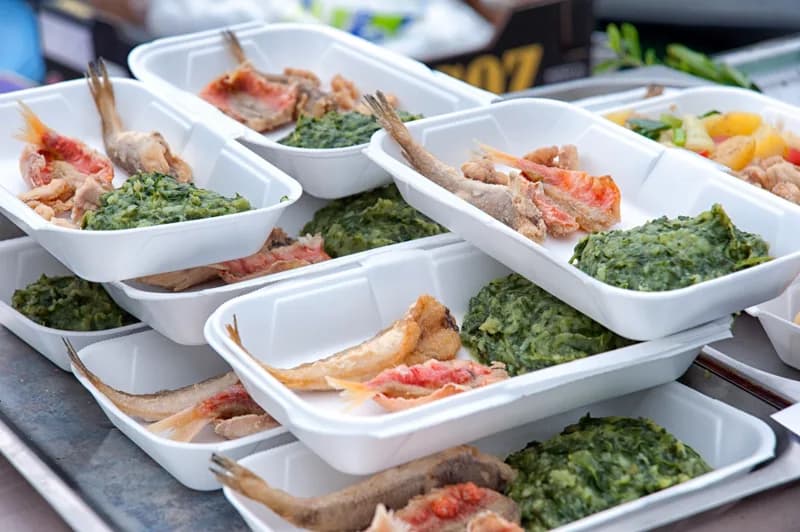
Blitva is Croatia's chard and potato side dish, dressed with olive oil and garlic and served with grilled fish or meat. Here is what arrives on the plate.
On this page
Blitva is a Croatian side dish of leafy greens, usually Swiss chard or silver beet, cooked with potato and finished with olive oil and garlic. It is not a main course, so expect a bowl or a heap on the plate next to grilled fish or grilled meat rather than a dish in its own right. This guide covers what it tastes like, where it appears on the coast, the Kvarner chard-and-nettle version and how to cook it at home.
What blitva is
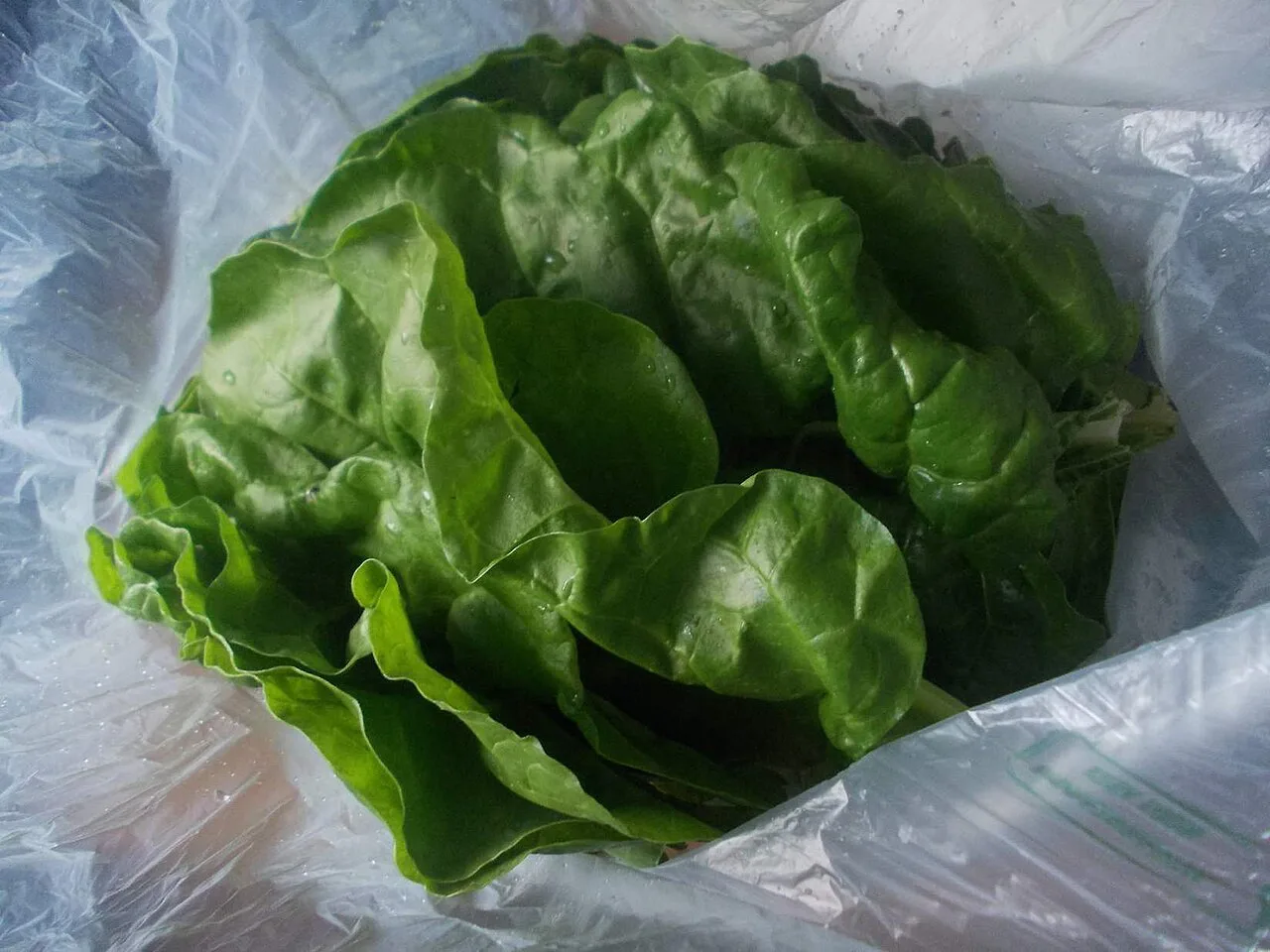
At its simplest, blitva means chard: silver beet or Swiss chard, the thick-stemmed leaf that grows well along the Adriatic. It is boiled or simmered with chunks of potato until both are tender, then dressed with olive oil and garlic. The result is soft, green and faintly earthy, with the potato lending body and the oil carrying the garlic through the greens.
The everyday Dalmatian version pairs chard with potato, but home cooks vary it freely. Broccoli, spinach, broad beans, courgette and green beans all turn up in place of chard, and the dish still gets called blitva. If you order it and the greens look milder and paler than chard, that is the reason rather than a mistake.
Why it arrives beside grilled fish and grilled meat
On the Dalmatian coast the plate is often built around a grilled piece of fish or meat, bread, a salad and a vegetable side, and blitva is a common choice to fill that role. Its job is to cut through the char and salt of the grill with something soft, green and olive-oily. It is the natural partner for grilled fish.
Is blitva a main course? No. Blitva is a side dish of greens and potato served alongside grilled fish or meat, usually as part of a wider plate with bread and salad.
What is blitva made of? It is typically Swiss chard or silver beet cooked with potato, olive oil and garlic. Cooks also make it with spinach, broccoli, broad beans, courgette or green beans.
What is blitva i kopriva na padelu? It is a traditional Kvarner dish that combines chard with nettles, giving a deeper, more mineral green flavour than the standard chard-and-potato version.
Treat it as an accompaniment when you plan a konoba meal, not as the thing you came for. A plate of grilled fish or meat with blitva and bread makes a complete, unfussy lunch. If you want the main event to be something slower, look at a peka cooked under an iron bell instead and keep blitva as the side.
What it looks and tastes like on the plate
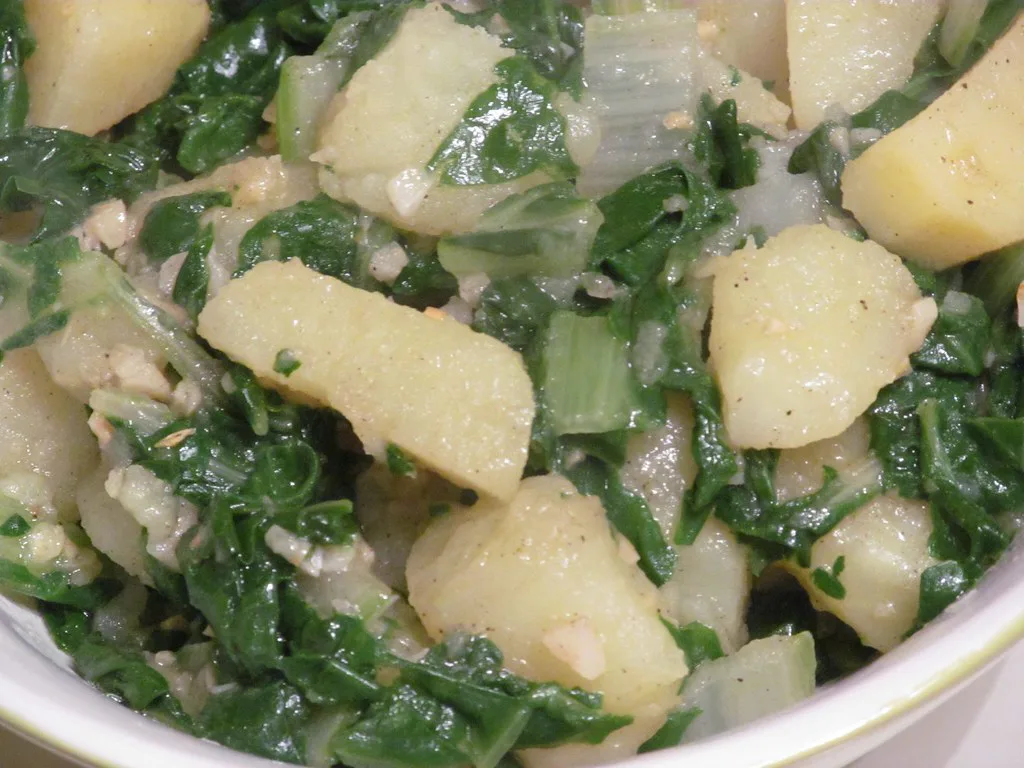
On the plate blitva is a soft tangle of dark green leaves and pale potato chunks, glossy with oil rather than swimming in it. The flavour is mild and savoury: earthy greens, sweet potato, raw garlic warmed by the hot vegetables, and a peppery olive-oil finish. It is not a sharp or vinegary dish, and it is rarely spicy.
The texture is the giveaway. Good blitva holds a little moisture so it does not taste dry, and the potato should be tender rather than collapsing into mush. Chard stems, if left in, add a slight crunch and a faintly bitter edge that offsets the oil.
Blitva in Kvarner: chard with nettles
The Kvarner region has its own older version, blitva i kopriva na padelu, which combines chard with nettles. It is a traditional Kvarner dish rather than a Dalmatian one, and it shows that the blitva idea stretches well beyond chard and potato. If you see it on a menu around Rijeka or the Kvarner islands, order it to taste a different side of the same vegetable.
The nettles bring a deeper, more mineral green flavour than chard alone, which is why the dish survives as a regional speciality. It is still a side, served alongside the main course rather than eaten on its own. Keep the name in mind when reading menus in that part of Croatia.
The other greens that go into blitva
Chard is the default, but the dish is forgiving enough that cooks swap the greens to suit the garden or the family. Spinach makes it softer and quicker, broad beans make it starchier and more substantial, and courgette or green beans lighten it in summer. Broccoli is a common stand-in because its flavour is mild and children eat it without complaint.
Chard itself can taste strong and earthy, which is exactly why some cooks dilute it with potato or milder greens. If you are cooking at home and find chard too assertive, mix it half and half with spinach or broccoli rather than adding more oil.
How to order blitva in a konoba
Ask for blitva as a side, either alongside your main or as a shared bowl for the table. It pairs naturally with grilled fish, but it also works with grilled meat and with heavier stews that need something green. If the menu lists it as a prilog, the Croatian word for side dish, that confirms what you are getting.
Two sides make a better meal than three, since blitva plus bread plus a salad already covers vegetables and starch. For a fuller sense of how a Croatian meal is built, from bread and sides through to the main plate, browse the Croatian dishes guide before you go. And if you are starting the day rather than ending it, a flaky burek from a bakery is the more typical Croatian order.
Making blitva at home
Boil the peeled, chunked potato first, then add the greens and garlic near the end so everything finishes together. Cut the potato small and the greens can go in at the same time; leave the potato in larger pieces and the greens wait until it is nearly done. Salt generously and finish with plenty of olive oil once the pot is off the heat.
The two trade-offs are water and timing. Drain the pot but leave a little water behind, because fully dry blitva tastes flat and dusty, and stop cooking the potato before it breaks down. Roughly mash or cut everything together in the pot, then taste for salt before you serve it.
Serve it hot beside grilled fish, grilled meat or a roast, and treat leftovers as a warm salad with a little extra oil and lemon. The dish is cheap, quick and built from everyday ingredients, with chard increasingly available alongside spinach in British and American supermarkets.
Is blitva worth ordering?
Yes, if you are ordering grilled fish or meat and want a vegetable side that is genuinely Croatian rather than an afterthought. Order it once as a side, share it across the table and judge it on texture: soft greens, tender potato, a glossy olive-oil finish.
If you see the Kvarner chard-and-nettle version on a menu, try that instead for a sharper, more mineral flavour. Otherwise, make it at home with chard or a milder green and keep a splash of water in the pot.
Explore more Croatia guides
Frequently Asked Questions
Is blitva a main course?
No. Blitva is a side dish of greens and potato served alongside grilled fish or meat, usually as part of a wider plate with bread and salad.
What is blitva made of?
It is typically Swiss chard or silver beet cooked with potato, olive oil and garlic. Cooks also make it with spinach, broccoli, broad beans, courgette or green beans.
What is blitva i kopriva na padelu?
It is a traditional Kvarner dish that combines chard with nettles, giving a deeper, more mineral green flavour than the standard chard-and-potato version.
Does blitva contain meat?
No, the standard dish is vegetables cooked in water and dressed with olive oil and garlic. It is served with meat or fish rather than containing it.
Sources
Notes on eating well in Croatia
Optional updates to our food guides.
You might also like



Continue reading
More guides you'll find useful




