
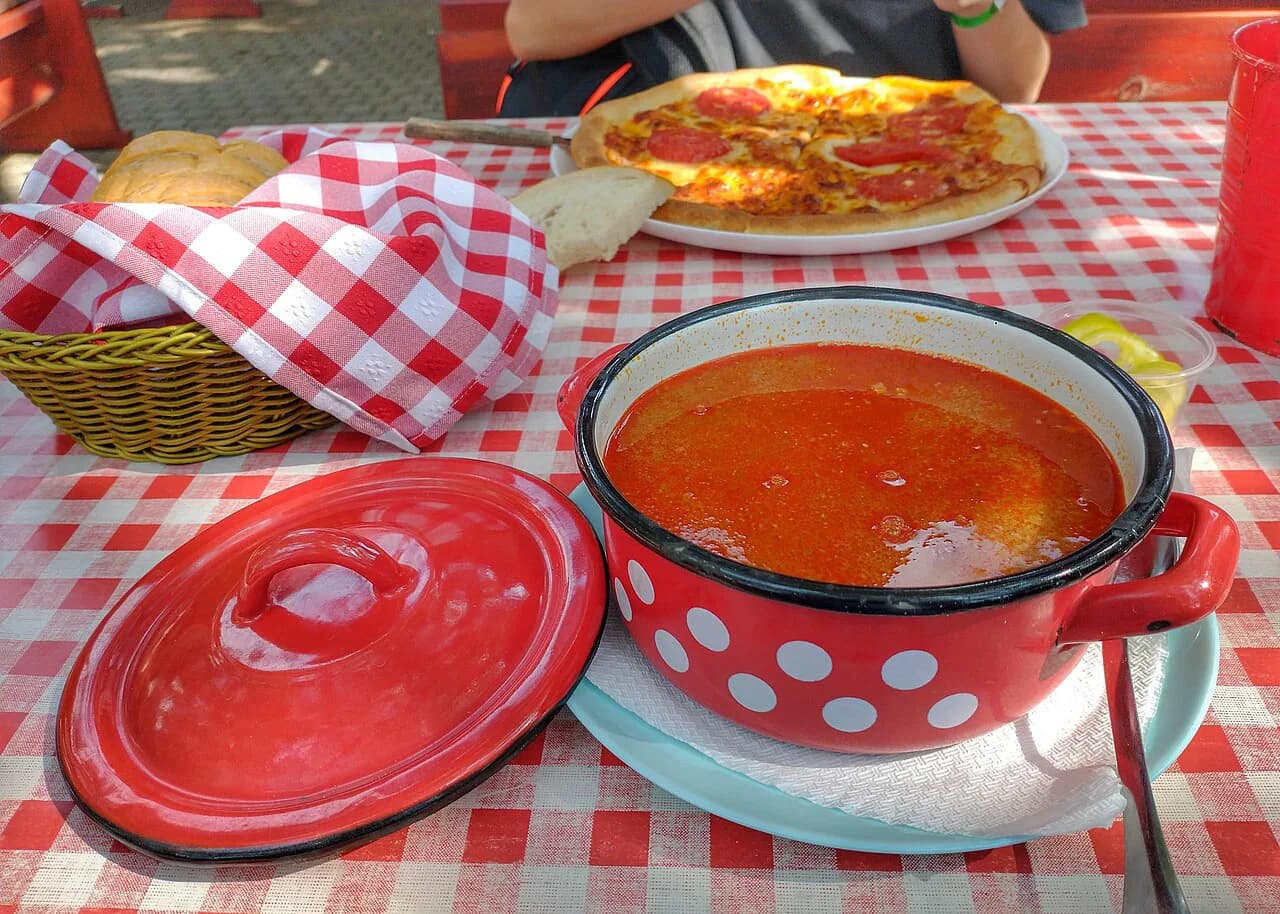
Fiš Paprikaš: Croatia's Slavonian Fish Paprikash Explained
Fiš paprikaš is a Slavonian fish paprikash of at least two kinds of fish, sweet and hot dried paprika and white wine, served with wide homemade noodles.
On this page
Fiš paprikaš is a red, gently spiced fish stew from Slavonia and Baranja, in eastern Croatia, and the defining rule is that it takes at least two kinds of fish rather than one. It is served with homemade wide noodles, which are part of the dish rather than a side you choose. This guide explains what goes into it, how it is cooked, what reaches the plate and how the short menu form fiš works, so you can order it with confidence.
It belongs with the wider set of Croatian dishes that reward a little background before you sit down, from coastal fish stews to inland paprika cooking. Read it as a plate-by-plate explanation rather than a recipe to follow at home.
What fiš paprikaš is and where it comes from
Fiš paprikaš is a speciality of Slavonian and Baranjan cooking, the flat river country of eastern Croatia where freshwater fish and dried pepper dominate the kitchen. The name is usually shortened to fiš, and the dish is a paprikaš in the Hungarian sense: a pepper-led stew rather than a thick soup. It carries an unmistakable red colour and a heat that builds gently rather than sharply.
A widely circulated version of the recipe is credited to the Baranja tourist board, which tells you how firmly the dish sits in the region's identity. It is a river-fish preparation, tied to the Danube and Drava lowlands rather than the Adriatic. Expect it on tables in Osijek, in Baranja villages and in Slavonian homes.
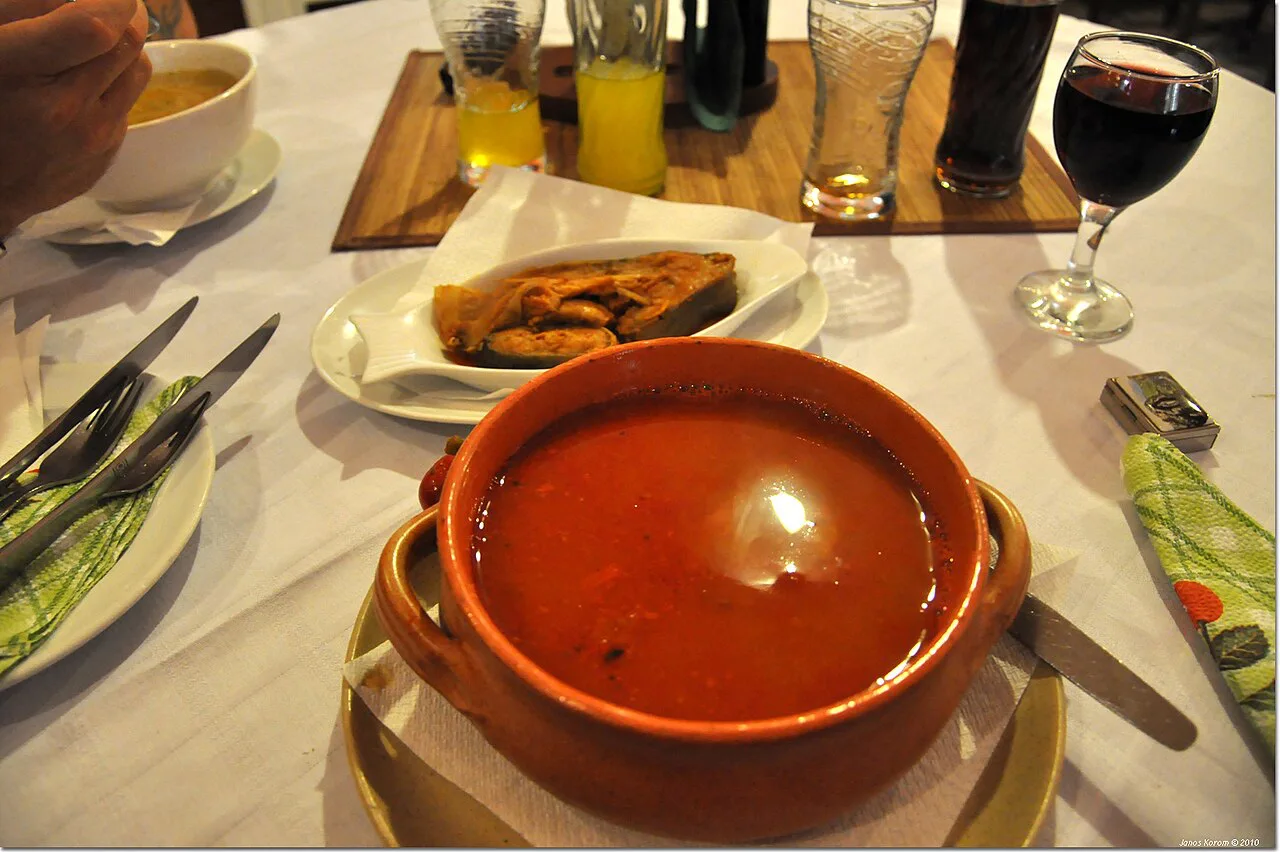
What goes into it: at least two fish, dried paprika, onion and white wine
The constants are fish, a lot of onion, sweet and hot dried paprika, and white wine. The paprika does double duty: the sweet sort gives the broth its colour, while a small amount of dried hot chilli supplies the bite. Onion is not a background note here; it forms the body of the stew once it softens down.
What is fiš paprikaš made of? It is made from at least two kinds of freshwater fish, a large quantity of onion, sweet and hot dried paprika, and white wine. It is served with wide homemade noodles.
Do you put paprika on fish? In this dish the paprika is dried and added to the cooking base rather than dusted on at the end. Sweet paprika gives the colour, while a little dried hot chilli provides the heat.
Is fiš paprikaš the same as Hungarian fish paprikash? They are close relatives but not the same. The Hungarian version is finished with sour cream and flour into a thicker sauce, whereas the Slavonian dish stays a loose red broth served with wide noodles.
The two-fish rule is the point of the dish: mixing a fatty fish with a leaner one gives the broth depth that a single species cannot. A commonly cited Slavonian version names carp (šaran) and catfish (som) together, and the catfish brings a soft, almost boneless flesh to the pot. Carp is the everyday river fish of the region and carries the stew's savoury base.
White wine goes in with the fish and seasons the broth, and a glass of Baranjan white is the natural thing to drink alongside. The dish is not a cream-thickened stew in the Slavonian style described in Croatian recipes.
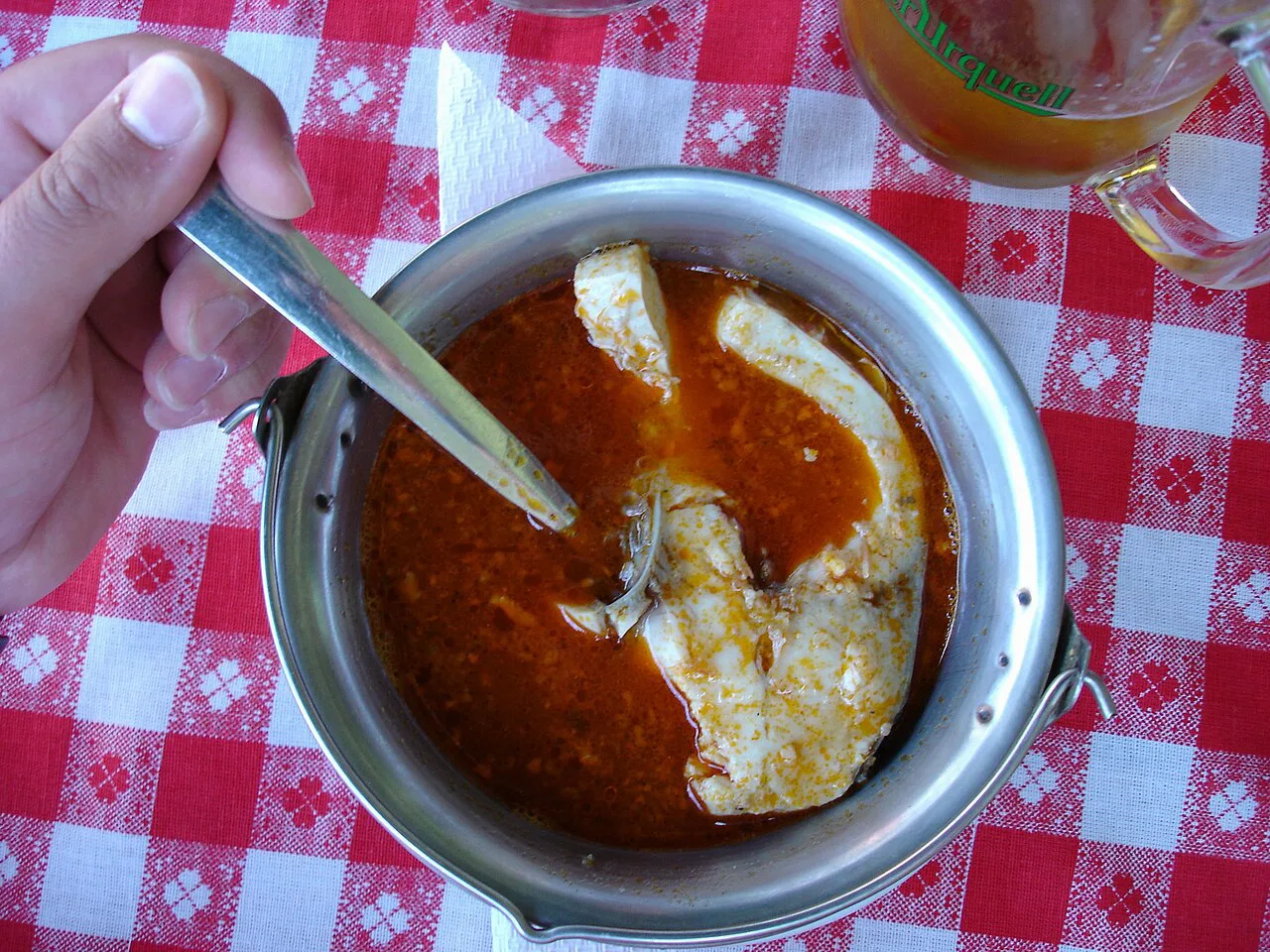
How it is cooked: onions softened first, then the fish simmered gently
The order of work is what gives the dish its character. Onion is softened in hot oil until golden, then garlic, sweet paprika, crushed chilli and peppercorns go in, and the lot is covered with water and left to bubble before any fish is added. That step builds the red base the fish will cook in.
The fish, cut into pieces, goes in with the white wine and simmers gently for around forty minutes. The crucial instruction is not to stir: the pot is only shaken now and then so the soft fish holds together. Anyone who has watched a river-fish stew break up on the stove will recognise why.
Paprika cooking of this kind is not unique to Croatia, and the technique is shared across the region. The Slavonian version stays a fish broth served with wide noodles, while the Hungarian catfish paprikash finishes with sour cream and flour into a thicker sauce.
What it is served with: homemade wide noodles
Fiš paprikaš comes with wide homemade noodles, cooked separately and served alongside or under the stew. They are broad, flat ribbons that soak up the paprika broth, and they are the reason the dish eats as a full meal rather than a starter. Order it and you get the noodles as part of the plate, not as an optional extra.
Croatian cooking has plenty of other starch partners, from the pastry layers of burek to the hand-rolled fuži of Istria, but fiš keeps to its noodles. If you are working through the country's inland repertoire, this is the pairing to know.
How to read it on a menu: fiš as the short form
On Croatian menus and blackboards the dish usually appears simply as fiš, the everyday shortening of fiš paprikaš. If you see fiš on a Slavonian or Baranjan menu, it is this stew, not a plain grilled fish. Look for it alongside other river-fish dishes rather than among the Adriatic fish listings.
Because inland kitchens work from rivers rather than the sea, a Slavonian menu can look quite different from a coastal one. Coastal plates such as crni rižot, the dark cuttlefish risotto, belong to a separate tradition, and a menu that leads with fiš is telling you which one you are in.
Fish used in Slavonian and Baranjan versions
The Slavonian recipe that circulates most widely pairs carp with catfish, both freshwater fish from the region's rivers. Carp is the staple, dense and savoury; catfish is the softer, richer partner that rounds the broth out. Together they deliver the two-fish depth the dish is known for.
Fiš paprikaš appears in round-ups of southeastern European freshwater fish cooking, which places it in a wider river-fish family stretching from Croatia through Serbia and Romania. That context matters when you are reading a menu: the same technique turns up under different names.
What you will not usually find is a sea fish in the pot. This is a freshwater preparation, and the flavour of the fish is mild and earthy rather than saline.
Where it sits in Croatian cooking
Croatian food divides broadly along a coastal-inland line. The coast gives you olive oil, grilled fish, black risotto and chard with potatoes, while the inland kitchen leans on paprika, river fish, pork and noodles. Fiš paprikaš is the clearest single dish on the inland side of that line.
Slow-cooked dishes are a Croatian strength in both regions, from the iron bell of peka on the coast to the long-simmered fish pots of Slavonia. Fiš is the river-country counterpart to those coastal techniques.
Compare it with gregada, the Hvar fish and potato stew, and you can see how the same idea of gentle fish cookery splits by geography. Gregada is built on white fish, potatoes, olive oil and wine, and it is finished with a lighter hand than the paprika-heavy Slavonian stew.
Fiš paprikaš compared with Hungarian catfish paprikash
Hungarian catfish paprikash uses the same paprika-led technique but finishes with sour cream and flour to thicken the sauce, and it is typically served with dumplings or cheesy noodles rather than plain wide ribbons. In Hungary the dish is closely tied to the catfish of the Tisza, and Szeged is known for it.
The practical difference on the plate is body: the Croatian version stays a loose, red broth, while the sour-cream finish of the Hungarian dish makes it creamier and milder. If you like a creamier sauce, you will notice the difference immediately.
Both dishes forbid aggressive stirring, because the fish falls apart. That shared rule tells you the two kitchens are close relatives, even when the final bowl looks different.
What to expect on the plate
A bowl of fiš arrives red from the paprika, glossy with a little oil, and with visible pieces of fish rather than a uniform purée. The heat is gentle and builds at the back of the throat, and the wine leaves a faint acidity that keeps it from tasting flat. Noodles come alongside or underneath, broad enough to hold the broth.
It is a substantial plate, and one portion is usually enough for a main course. The soft texture of the fish means it will not hold up long on the pass, so it is best eaten as soon as it reaches the table.
If you are planning a wider Croatian food itinerary, this is the dish to seek out once you head inland. For the sweeter end of the Croatian table, the filled pancakes known as palačinke make an obvious follow-on.
Should you order fiš paprikaš inland?
Yes, if you are travelling through Slavonia or Baranja and want the dish that most clearly defines the region's cooking. Order it knowing that you are getting a two-fish paprika broth with wide homemade noodles, gently hot and red rather than creamy.
In Zagreb or elsewhere inland, look for it on menus that lean Slavonian, and expect it to be listed under the short form fiš. Pair it with a local white wine in moderation and leave room for something sweet afterwards. For the broader picture of what you are choosing from, the Croatian dishes guide is the sensible place to start.
Explore more Croatia guides
Frequently Asked Questions
What is fiš paprikaš made of?
It is made from at least two kinds of freshwater fish, a large quantity of onion, sweet and hot dried paprika, and white wine. It is served with wide homemade noodles.
Do you put paprika on fish?
In this dish the paprika is dried and added to the cooking base rather than dusted on at the end. Sweet paprika gives the colour, while a little dried hot chilli provides the heat.
Is fiš paprikaš the same as Hungarian fish paprikash?
They are close relatives but not the same. The Hungarian version is finished with sour cream and flour into a thicker sauce, whereas the Slavonian dish stays a loose red broth served with wide noodles.
Which fish are used in fiš paprikaš?
A widely followed Slavonian version uses carp and catfish together. The two-fish rule is central to the dish, so the exact pairing can vary by kitchen.
Sources
Notes on eating well in Croatia
Optional updates to our food guides.
You might also like



Continue reading
More guides you'll find useful





