
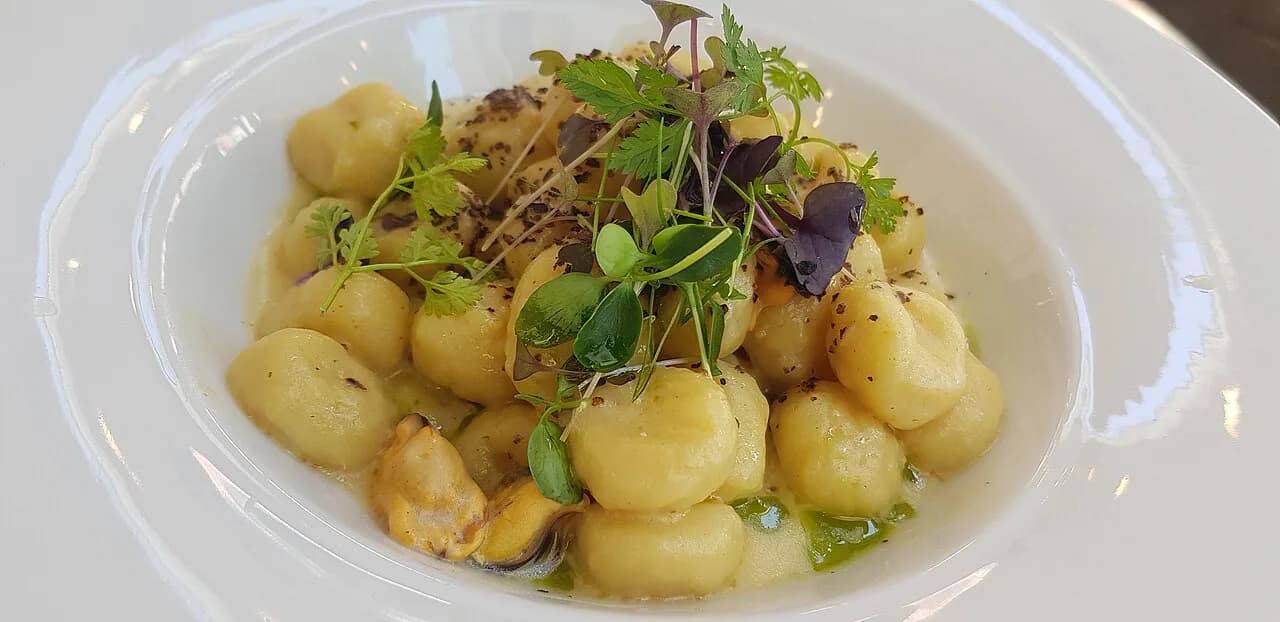
Njoki: Croatian Potato Dumplings and How They Are Served
Njoki are Croatian potato dumplings, close to Italian gnocchi, served with sage butter, cream or meat sauce. Here is what to expect on the plate.
On this page
Njoki are small potato dumplings eaten across Croatia and closely related to Italian gnocchi. Expect a light, soft pillowy texture rather than a firm pasta bite, and a sauce that can be as plain as melted butter with sage or as rich as a cream and ham sauce. This guide covers how the dough is built, why the potato matters, how the dumplings are cooked and what to look for when you order them.
They appear on Croatian menus in several guises: as a meat-free main, as a starter, and as a side to stewed meat dishes. The Croatian word njoki translates simply as dumplings, and each kitchen has its own version, so the plate you get depends heavily on the sauce and how much flour went into the dough.
What njoki are
Njoki are boiled dumplings made from cooked potato, egg and flour, roughly the size of a wine cork and typically ridged along one side. They are dropped into salted water and lifted out when they rise to the surface, then dressed or baked. The result should be tender enough to cut with a fork but not collapsing.
Their role shifts with the setting. In a home kitchen they are a quick lunch, and the sauce can be made in the time it takes the dumplings to boil. On a restaurant menu they are more often a substantial meat-free main or a foil for a rich braise.
Treat them as comfort food rather than a showpiece. The appeal is in the contrast between the soft dumpling and a sauce with some body, and the best versions taste of potato rather than of raw flour.
How njoki differ from Italian gnocchi
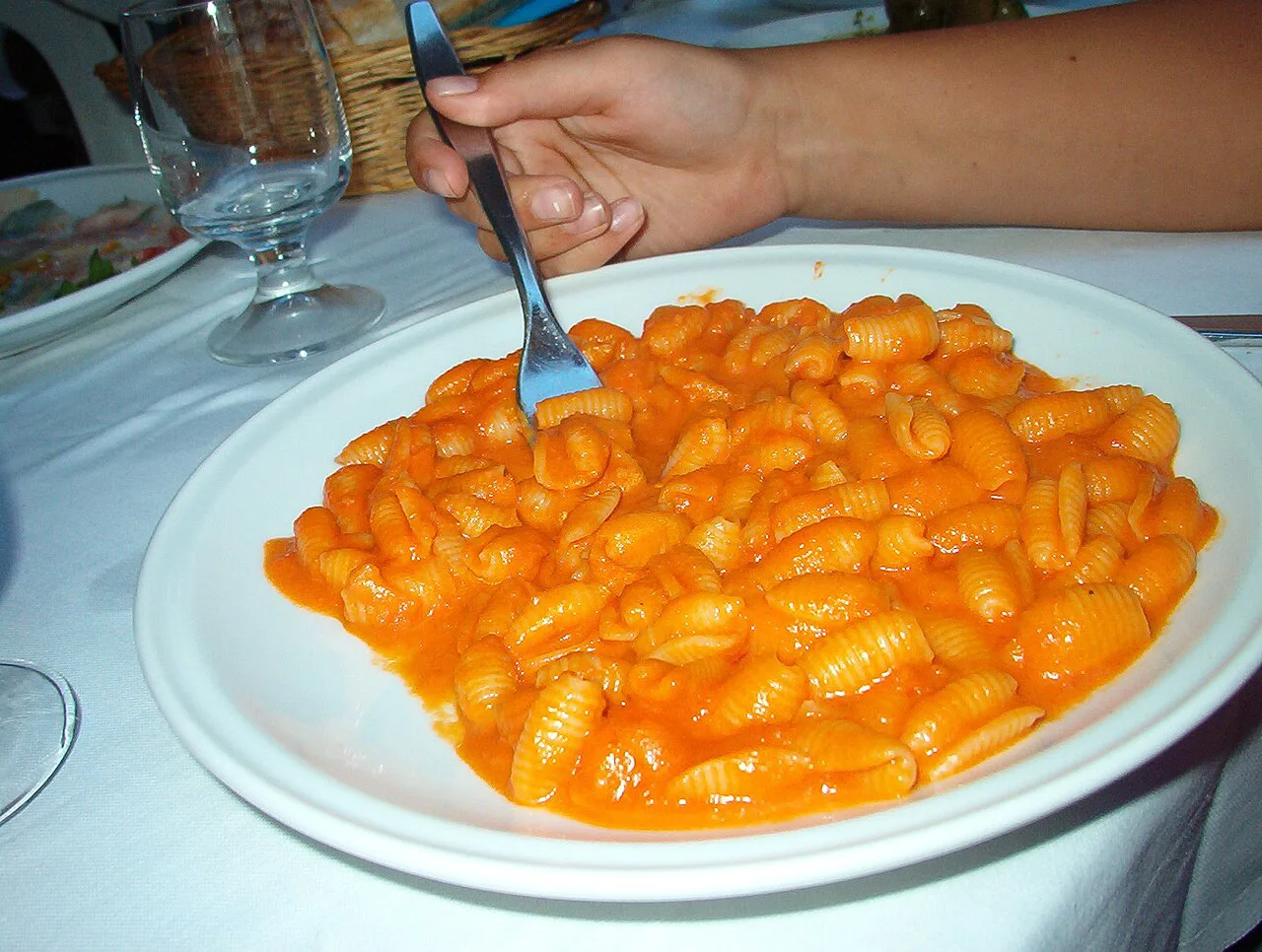
The idea is the same in Croatia and Italy: potato, flour and egg worked into a soft dough and boiled. The difference is mostly in the handling, since Croatian home versions lean towards a softer, more yielding dumpling.
Which country do njoki come from? Njoki are eaten in Croatia and are closely related to Italian gnocchi. Croatian kitchens make their own soft version with egg and a small amount of flour.
What do Italians eat with gnocchi? Italian gnocchi are commonly served with melted butter and sage, tomato sauces, pesto or cheese-based sauces. Croatian versions follow similar lines, with cream, pršut and baked tomato and mozzarella toppings appearing on menus as well.
What is the secret to light njoki? Dry, high-starch potatoes and as little flour as the dough will take. Croatian cooking guidance suggests no more than about 320 g of flour per kilogram of potato, ideally closer to 150 g, and a dough that is kneaded quickly and gently.
You will also find Italian names on Croatian menus, and the same dish may be listed as gnocchi on one page and njoki on another. Judge the plate by the sauce and the texture rather than by the spelling.
Croatian kitchens make fresh dough dumplings in other forms too, and this family of dishes is covered in the Croatian pasta guide alongside filled and rolled varieties.
The potato: high-starch, older tubers boiled in their skins
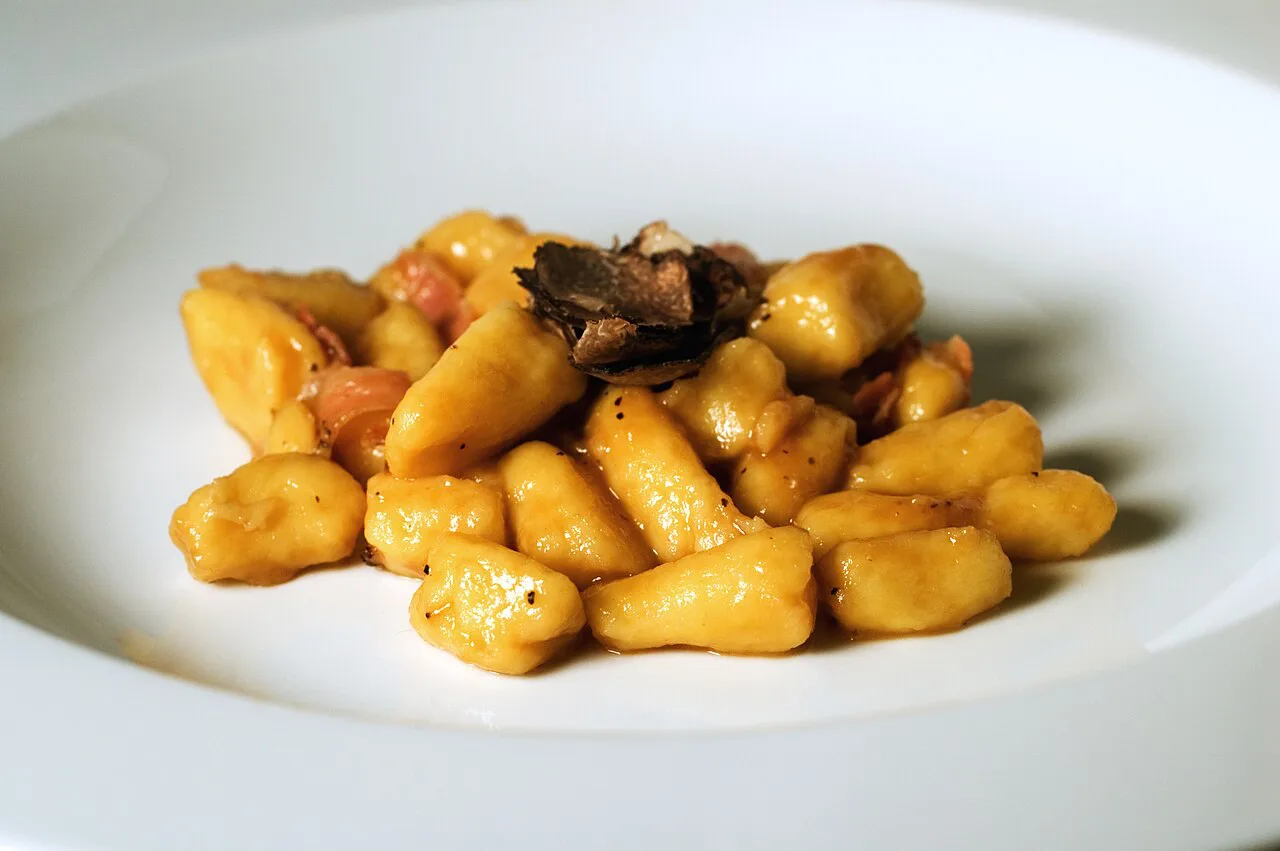
The potato decides the texture. Croatian cooking guidance favours older, high-starch potatoes with white flesh and rough skins, because dry flesh needs less flour to hold the dough together. Named varieties suggested include Désirée, with Idaho and Butterball also described as working well.
The potatoes are washed, sorted into similar sizes so they cook evenly, and boiled whole in their skins in water for roughly 30 to 60 minutes. They are drained at once so they do not soak up water, then left a few minutes to steam dry and peeled while still hot.
The peeled potatoes are riced while hot, which gives a smoother dough. Wet potato is the usual reason a batch turns heavy, so drying matters as much as the variety.
The dough: warm potato, egg, salt and as little flour as possible
The hot riced potato goes onto a clean surface with a well in the middle for lightly beaten egg or yolks, salt and, if you like, a little fat. Sharp flour is sprinkled over and the rest held back. The mixture is kneaded quickly and gently into a dough that is still slightly sticky.
The rule of thumb is that less flour gives lighter njoki. Croatian cooking guidance puts an upper limit of about 320 g of sharp flour per kilogram of potato, with around 150 g described as the better target, provided the potato is properly dry. A spoonful or two of wheat semolina can replace part of the flour, and a pinch of ground pepper or nutmeg is a common addition.
The dough rests for about ten minutes, then is rolled into ropes roughly 2 cm thick and cut into 2 to 3 cm lengths. Rolling each piece over a grater or the tines of a fork gives the rough, ridged surface that sauce clings to.
Additions that change the colour and flavour
Plain potato dough is only the base. Cooked spinach or beetroot turns the dumplings green or deep pink, and both are common enough to be worth recognising. Grated cheese, curd cheese known as skuta, chopped herbs and even squid ink are listed as additions that change both colour and flavour.
Skuta is a fresh curd cheese, mild and slightly tangy, and it lightens the dough as well as flavouring it. A cheese-forward plate of njoki often owes its character to this rather than to a hard grating cheese stirred into the sauce.
Heavy additions such as cheese need a little extra flour to hold, which is the trade-off against the light texture you are aiming for.
How they are cooked: a bare simmer and the float test
The dumplings go into a large pan of salted water kept at a barely visible simmer rather than a rolling boil. They sink at first and begin to rise after about a minute. If they stick to the bottom, a spatula lifts them gently free.
Njoki are cooked when they float to the surface, and a further minute makes them easier to digest. They are lifted out with a slotted spoon rather than tipped into a colander, which keeps them intact and stops them draining into a soggy heap.
Cooks test one dumpling first. If it falls apart in the water, a little more flour goes into the dough before the rest are boiled.
Serving styles you will see on a Croatian menu
The simplest dressing is melted butter with sage, which lets the potato taste come through and is a good benchmark for a kitchen. Cream sauces are the richer option, and smoked salmon with cherry tomatoes is one quick version given in Croatian recipe collections.
Pršut, the Croatian dry-cured ham, appears in a cream sauce with njoki, a combination rich enough that a bowl of leafy salad alongside is the sensible order. Baked versions layer the dumplings with a Bolognese-style meat sauce or a tomato sauce enriched with mascarpone and topped with mozzarella.
A plain pesto is another quick route, and the basil version is described as filling the kitchen with its scent as it is stirred through. For a different one-pot style built on fish and potato, gregada shows how potatoes behave in Dalmatian cooking when they are the backbone rather than a dumpling.
What to order with them
Because njoki in cream or with pršut are filling, a simple salad or a plate of blitva, Croatia's chard and potato side, balances the meal better than another starch. The chard brings acidity and a little bitterness that cuts through butter and cream.
If you are ordering several dishes to share, treat njoki as the substantial plate and keep the rest light. A fish starter or a bowl of soup before them is usually enough, and a baked njoki dish on its own will not leave much room afterwards.
For a meat-free Croatian plate, they sit comfortably alongside vegetable-led dishes such as soparnik, a thin chard pie from the Dalmatian hinterland.
Where njoki sit on a Croatian menu
On a typical menu njoki appear as a meat-free main, as a starter in a smaller portion, and as a side to stewed meat. That flexibility means you should check the portion size rather than assume, because a side order will be much smaller than a main.
As a side they suit braises and stews that produce plenty of sauce. Pašticada, the Dalmatian beef dish cooked with dried fruit and wine, is the kind of plate where a dumpling or similar starch makes sense for soaking up the juices.
They also turn up in the broader family of Croatian dishes that sit between pasta, dumpling and side, which is why the menu heading can be misleading. Ask whether the kitchen serves them as a main or an accompaniment if the description is unclear.
How to judge a good plate
A good plate of njoki is light in the mouth, holds its shape on the fork and tastes of potato rather than raw flour. The sauce should coat each dumpling and gather in the ridges instead of pooling at the bottom of the bowl.
Heaviness is the usual fault. It comes from wet potato or too much flour, and it shows as a dense, gluey bite. A plate that tastes floury has been over-floured to compensate for dough that was never properly dried.
Baked versions are harder to judge because the oven adds richness. Look for dumplings that are still distinct under the topping rather than a single set mass.
Should you order the njoki?
Order njoki if you want a comforting, meat-free plate and are happy with butter, cream or cheese at the centre of the meal. Skip them if you are after something light, or if the sauce on offer is one you would rather eat with fish or meat.
When a menu lists both a plain and a baked version, the plain one with sage butter or a simple tomato sauce tells you more about the kitchen's handling of the dough. The baked version is the safer order if you want a richer, more forgiving plate. For the practical details, see the burek.
Explore more Croatia guides
Frequently Asked Questions
Which country do njoki come from?
Njoki are eaten in Croatia and are closely related to Italian gnocchi. Croatian kitchens make their own soft version with egg and a small amount of flour. They are a familiar home dish rather than a restaurant-only speciality.
What do Italians eat with gnocchi?
Italian gnocchi are commonly served with melted butter and sage, tomato sauces, pesto or cheese-based sauces. Croatian versions follow similar lines, with cream, pršut and baked tomato and mozzarella toppings appearing on menus as well.
What is the secret to light njoki?
Dry, high-starch potatoes and as little flour as the dough will take. Croatian cooking guidance suggests no more than about 320 g of flour per kilogram of potato, ideally closer to 150 g, and a dough that is kneaded quickly and gently.
Are njoki always served with meat?
No. Njoki are often a meat-free main or a side dish, served with butter, sage, cheese, cream or tomato sauce. Meat versions exist, including a cream sauce with pršut and baked dishes with a meat ragù, so check the menu description if you are avoiding meat.
Sources
Notes on eating well in Croatia
Optional updates to our food guides.
You might also like



Continue reading
More guides you'll find useful





