
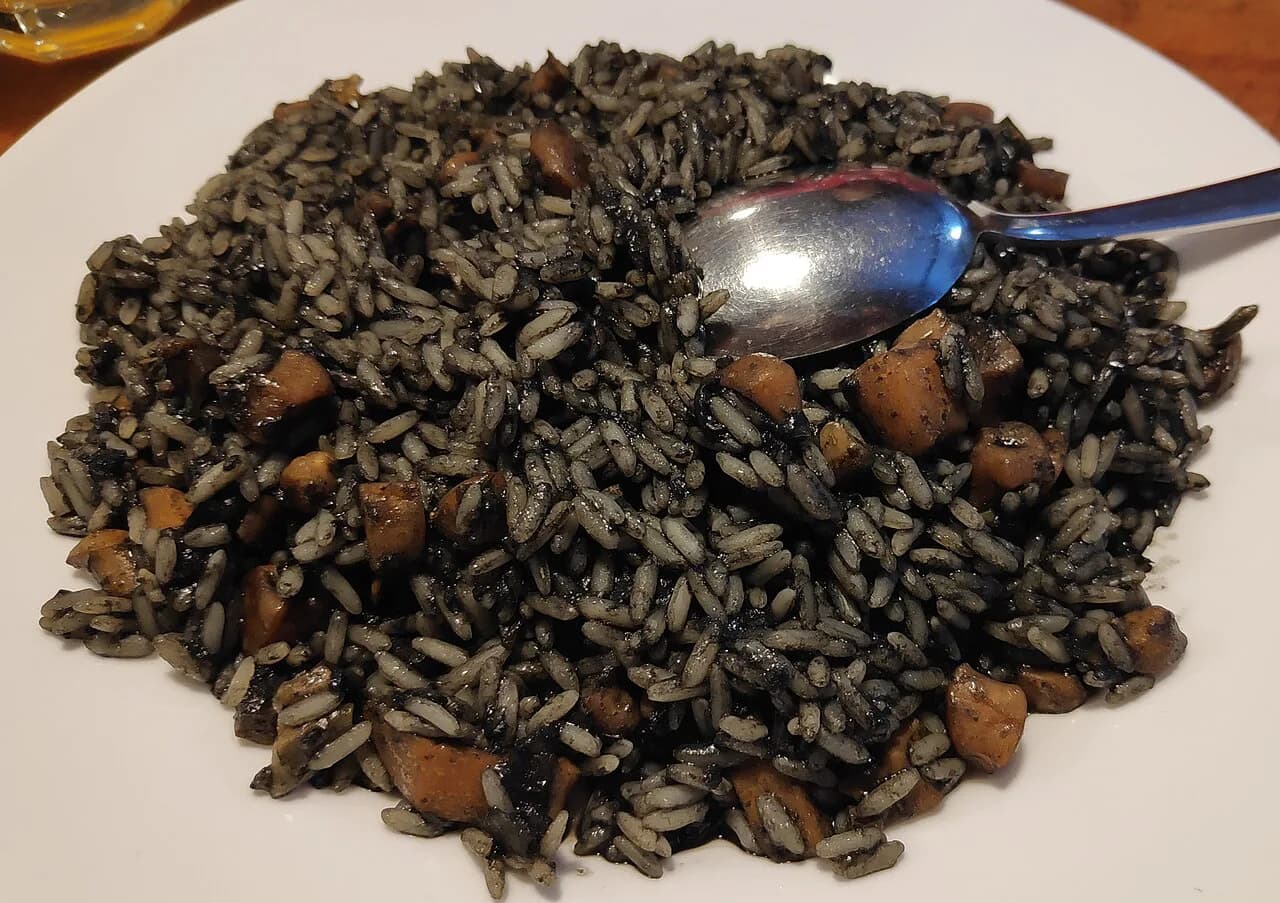
Black Risotto (Crni Rižot): Croatia's Squid Ink Rice Dish
Black risotto, or crni rižot, is Croatia's squid-ink rice dish: briny, creamy and jet black. Here's what gives it colour, how it's cooked and what to order.
On this page
Black risotto, called crni rižot in Croatian, is a creamy seafood rice dish turned jet black by squid or cuttlefish ink. It is a Dalmatian staple found on konoba menus along the coast, and it tastes briny and faintly sweet rather than fishy. This guide covers what the ink actually does, how the dish is cooked, and how to order it well.
The colour is not a gimmick: the ink carries the ocean flavour, so a good crni rižot is savoury and earthy rather than merely dramatic on the plate. It belongs with the wider family of Croatian dishes built on rice, seafood and slow stirring, from Skradin risotto inland to seafood risottos on the islands.
What black risotto is in one answer
Crni rižot is a risotto-style rice dish cooked with squid or cuttlefish and their ink, which colours the rice black and gives it a briny, umami flavour. In Croatia it is served as a main course, usually in coastal konobas, and it is rich enough that a portion goes a long way. The dish is closely related to Venetian squid-ink cooking, but it has its own place on Dalmatian menus.
If you only order one seafood rice dish in Croatia, this is the one that shows off the local catch most plainly: the ink does the seasoning, and the seafood does the rest. Expect a dark, glossy plate rather than a neat mound, with the rice looser than a dry pilaf.
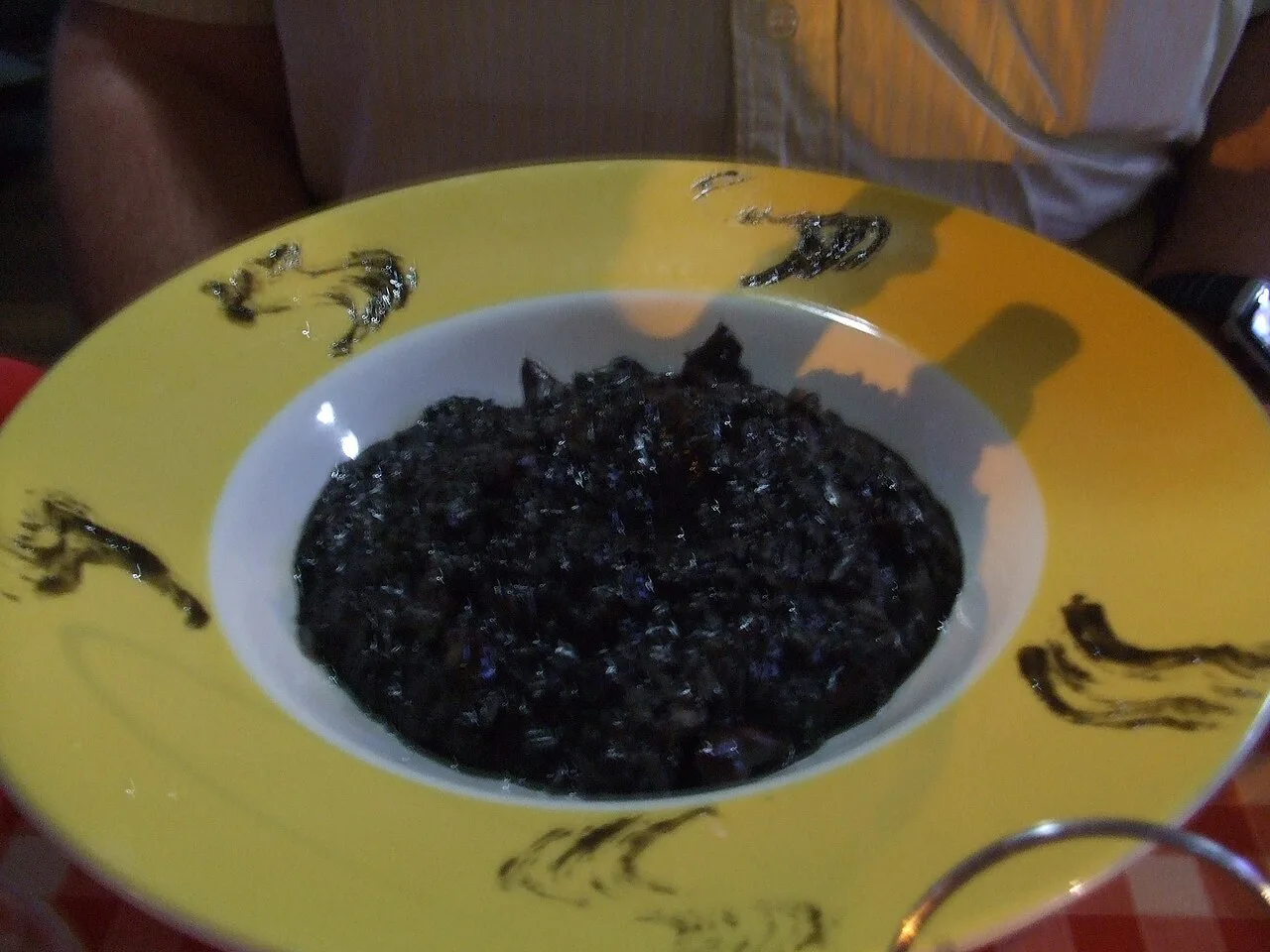
Why the rice turns black: squid and cuttlefish ink
Squid, cuttlefish and octopus release ink as a defence mechanism, and cooks use it as both colouring and seasoning. The ink tastes of the sea, savoury with a subtle sweetness, which is why black risotto needs less salt than you might expect.
Is black risotto safe to eat? Yes. Squid ink is a normal cooking ingredient, used in Italian, Japanese and Chinese cooking, and it is safe to eat.
Does black risotto taste fishy? It tastes briny, earthy and slightly sweet rather than strongly fishy. The ink gives a savoury, umami flavour, and the rice and butter soften it into something creamy and rich.
Croatian recipes commonly use cuttlefish, and the ink sac is squeezed into the pan or stirred in from a jar. A small amount goes a long way: too much and the dish turns bitter and inky rather than sweet.
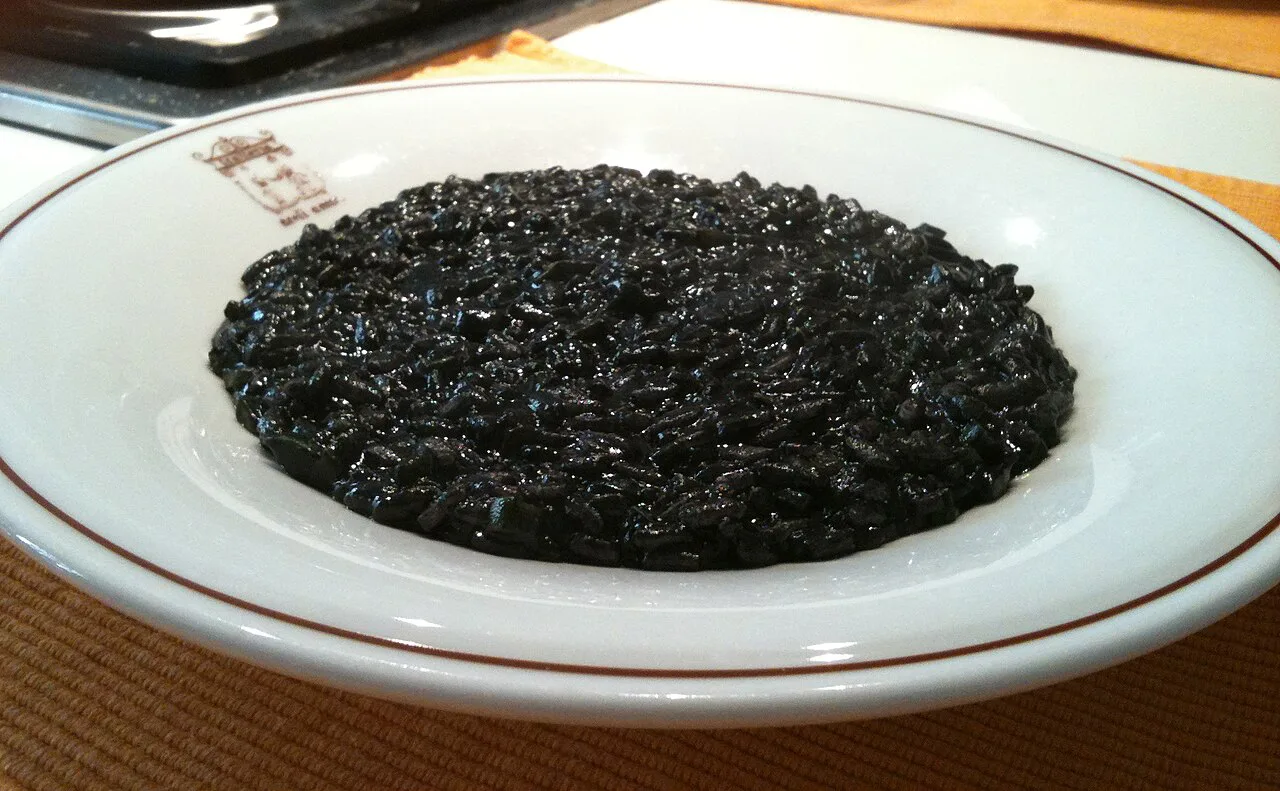
Crni rižot and the Venetian seppie al nero connection
Venice, across the Adriatic, cooks cuttlefish in their ink and serves them with polenta as seppie al nero; the Adriatic coast has its own version in crni rižot, where the same ink goes into rice instead. The two are cousins rather than the same dish: one is seafood in a dark sauce with polenta, the other a full risotto.
This shared history explains why the dish appears on both sides of the water and why Croatian menus sometimes list it as a Venetian-style speciality. Treat it as part of the Dalmatian repertoire first and foremost, and try it in a simple konoba where the ink flavour is the point.
What it tastes like: briny, sweet and rich
The first impression is briny and earthy, followed by a faint sweetness from the seafood and a deep savoury finish from the ink. The rice itself adds creaminess, and a knob of butter stirred through at the end rounds it out.
Texture matters as much as flavour: properly cooked risotto is creamy but still firm to the bite, and the seafood should be tender rather than rubbery. If the plate looks like black glue, the rice has been overcooked or too much ink has gone in.
The core ingredients
The base is short-grain risotto rice, olive oil, onion and garlic, with white wine and stock added slowly. Parsley finishes the dish, and the seafood is either cuttlefish or squid, cleaned and cut into rings with the tentacles included.
On the rice question, both Carnaroli and Arborio appear in recipes, and either will work if you stir patiently; Carnaroli holds its shape best over slow cooking. The stock should be good quality because it carries the whole dish, and a dry white wine is the usual choice for deglazing.
How it is cooked
The cook sweats onion and garlic in olive oil, adds the seafood, then deglazes with white wine before the rice goes in to absorb the liquid. Stock is added a ladle at a time with occasional stirring, and the ink goes in near the end so the colour spreads evenly.
The final step is off the heat: butter or olive oil stirred through for creaminess, then the seafood arranged on top so it stays visible rather than disappearing into the black. The result should be glossy rather than stiff, with the rice loose enough to spread on the plate.
Cuttlefish or squid: how the choice changes the dish
Cuttlefish gives a meatier, chewier bite and is the classic partner for the ink, while squid cooks faster and stays a little more delicate. Croatian recipes lean towards cuttlefish for the body it gives the dish, but squid is a fine substitute when that is what is available.
The trade-off is texture and time rather than price, since the ink and rice do most of the work. If you are cooking at home, choose the seafood your fishmonger has freshest and clean it yourself or ask them to do it.
How to order it in Croatia
In a konoba, crni rižot usually arrives as a main course, often after a plate of pršut or a simple seafood starter. Order it when you want something rich and savoury, and pair it with a green salad or a side of blitva if the menu has one.
Keep the rest of the order simple: a glass of local white wine works, and a light dessert such as palačinke afterwards balances the richness. If you are eating on the move earlier in the day, a burek from a pekara is the other great Croatian staple to know.
Common mistakes when cooking it at home
Too much ink is the classic error to avoid: add a little, stir it through and taste before adding more, so the briny sweetness of the seafood still comes through. Undercooked rice is the next trap, so keep adding stock until the grains are firm but tender.
Adding the seafood too early makes it tough by the time the rice is ready, so cook it briefly and return it at the end. Failing to stir at all gives an uneven, watery result, while stirring constantly makes it gluey.
Should you order black risotto in Croatia?
Yes, if you like briny seafood flavours and Don't mind a dramatic-looking plate. Crni rižot is one of the clearest expressions of Dalmatian cooking, and a well-made version is savoury, sweet and creamy all at once.
If you are not sure where to start with Croatian food, use it as one dish among several and build a meal around it, then explore the wider repertoire of stews and pasta. If you want something lighter, a Skradin risotto or a simple fish dish is the safer choice.
Explore more Croatia guides
Frequently Asked Questions
Is black risotto safe to eat?
Yes. Squid ink is a normal cooking ingredient, used in Italian, Japanese and Chinese cooking, and it is safe to eat. The dish is simply rice, seafood, stock and ink.
Does black risotto taste fishy?
It tastes briny, earthy and slightly sweet rather than strongly fishy. The ink gives a savoury, umami flavour, and the rice and butter soften it into something creamy and rich.
Sources
Notes on eating well in Croatia
Optional updates to our food guides.
You might also like



Continue reading
More guides you'll find useful





