
Croatian Desserts and Regional Sweets: What to Order After a Meal
Croatian dessert counters sit in slastičarnice pastry shops. Here is how regional sweets, kremšnita and fruit fit round a konoba lunch or fish dinner.
On this page
Croatian dessert culture lives in the pastry shop, the slastičarnica, and in the regional sweets that appear beside the coffee. The practical advice is to order a slice from the case after a konoba lunch, choose fruit-based sweets on the coast, and use the same counter for a lighter finish when the main course has been heavy. This guide covers what the shops are, how ordering works, which sweets suit the Croatian counter, and when a light dessert is the better end to a meal than a pastry.
What Croatian Dessert Counters Sell
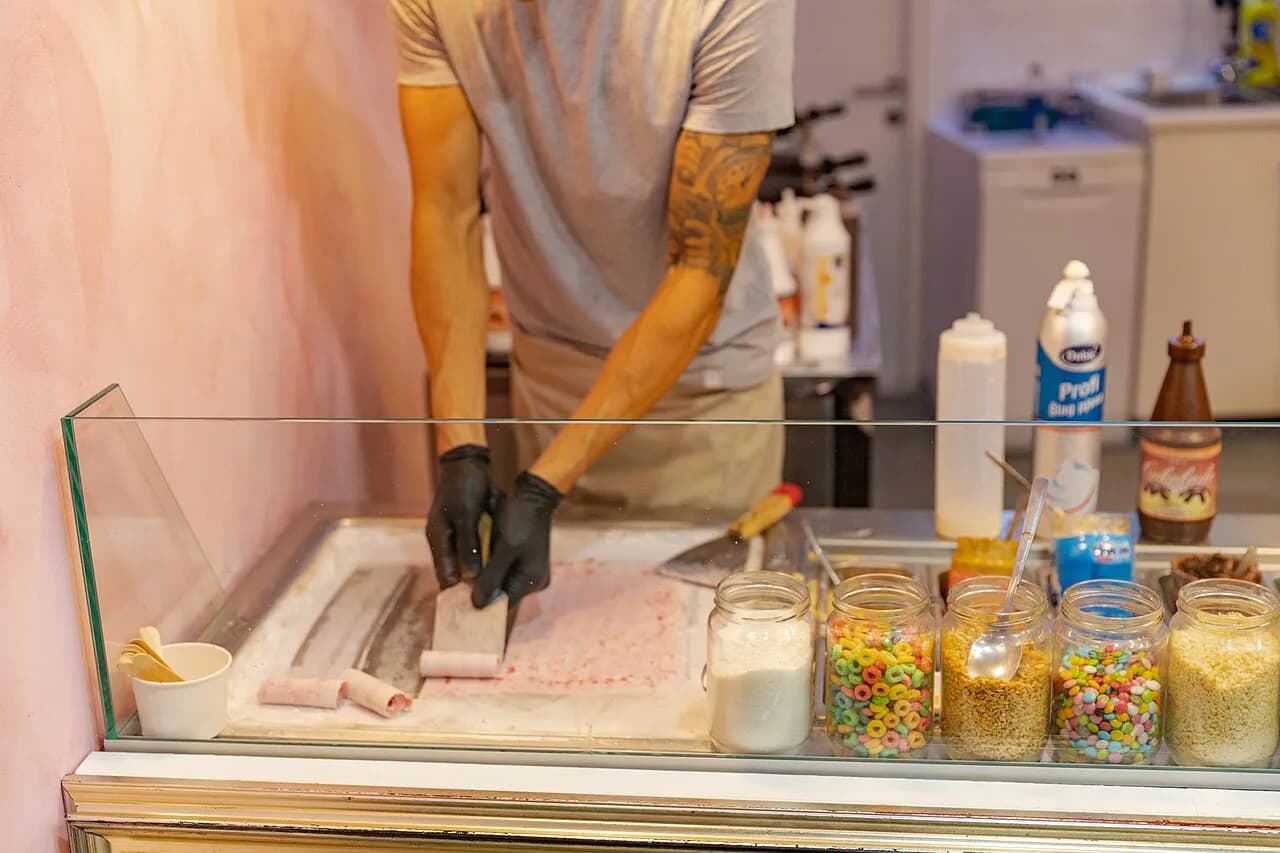
Croatian dessert counters display cakes and pastries in a glass case, and you choose by the slice rather than by the tub. The price is settled by the portion you name before you reach the counter, which makes it a low-risk stop for a family. A small slice and a coffee go further than visitors expect.
Croatia's regional food story sits with dishes rather than with sweets. Kvarner's food pages present the region's cooking through olive oil, fish and lamb, so treat the pastry counter as a good everyday shop and a place to try the seasonal fruit in the case.
The Slastičarnica: A Pastry Shop With a Dessert Counter
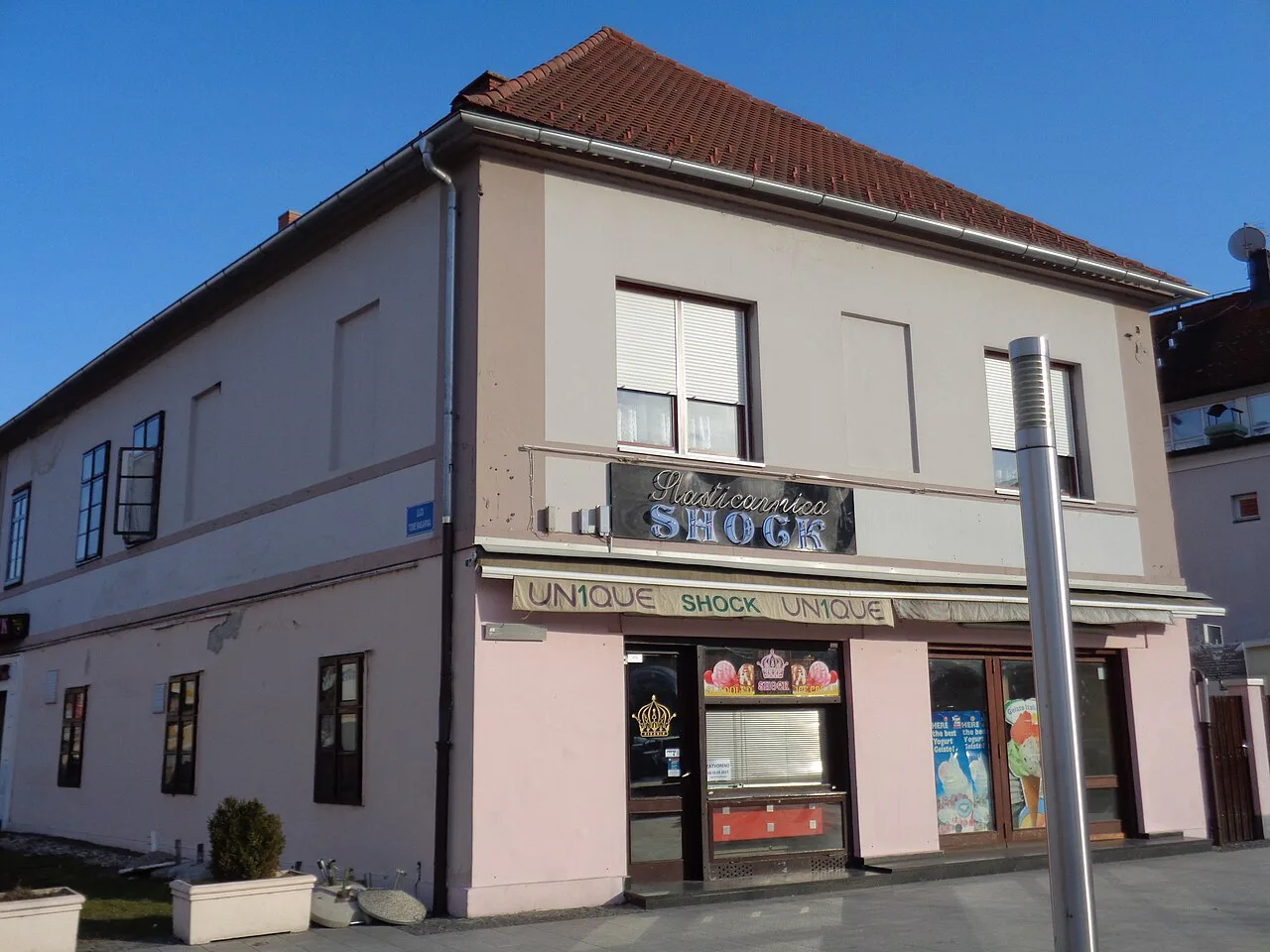
A slastičarnica is a pastry shop, and many have a glass case of cakes at the front and a few tables at the side or rear. That mix is the key to using one well: you can order a coffee and a slice, or take a pastry away, without changing venue. Look for the word on the shopfront and you know you are in the right kind of place for both.
Do Croatian dessert shops take cards? It depends on the venue. Some park venues at Plitvice Lakes are card-only, while small counters may prefer cash.
What is a slastičarnica? A slastičarnica is a Croatian pastry shop with a counter of cakes, pastries and sweets, often with a few tables where you can sit with a coffee and a slice.
The larger Croatian dessert tradition sits in that same case. Our guide to Croatian desserts explains the layered pastries, yeast cakes and fried sweets you will see beside the ice cream, from the walnut roll to the cheese pastry and the little doughnuts. Read it before you go so that you choose between known quantities rather than pointing at random.
How You Order at a Croatian Dessert Counter
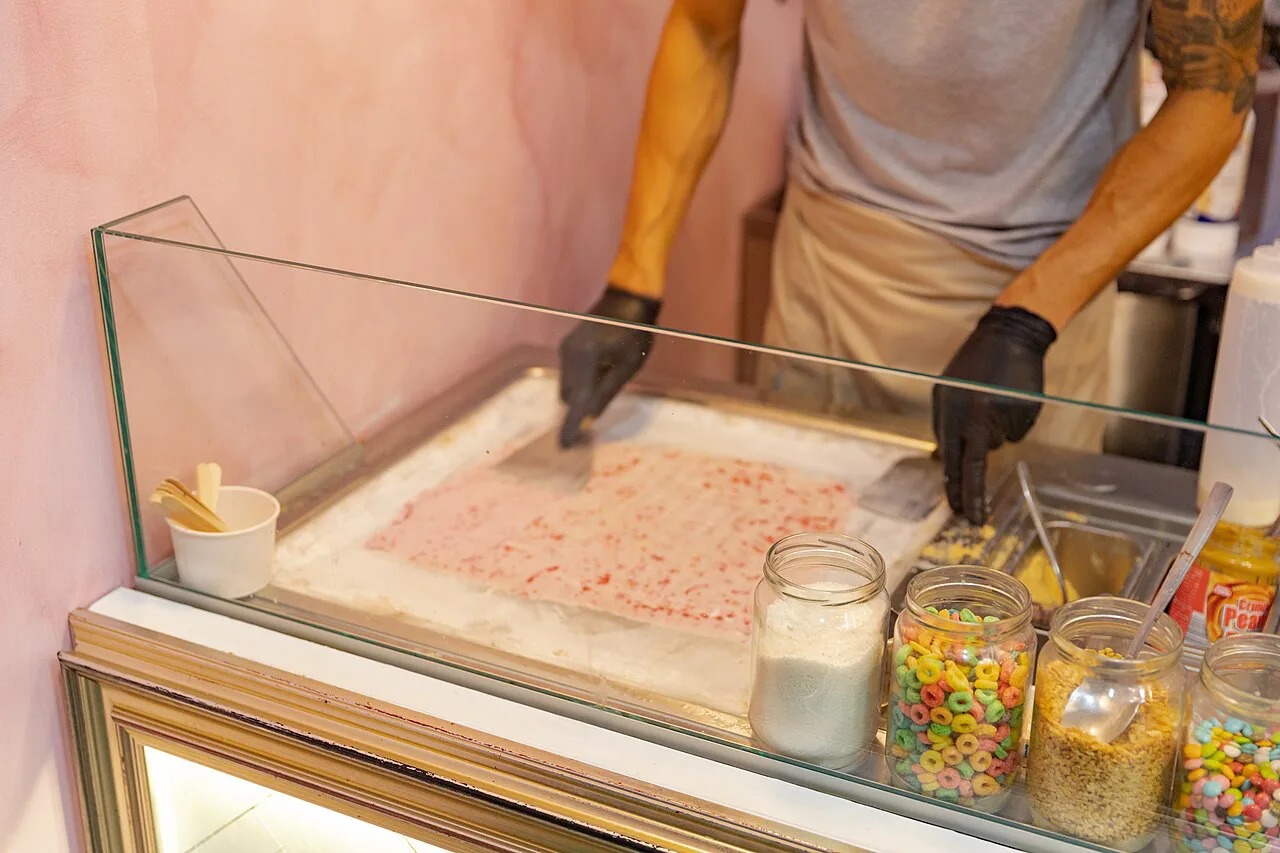
Ordering follows a simple sequence that holds across most counters: choose a cake or pastry from the case, name your portion, then take a seat or pay at the counter. Cakes suit a sit-down dessert or a coffee break, while pastries are for eating on the move. If you want to sit, take a table first and order from the waiter; if you are taking it away, order and pay at the counter.
The slice is the unit rather than a large tub. One slice is a normal adult order and two is generous, so start small and go back rather than ordering the biggest piece on the board. In high season a queue at a seafront counter is normal, so allow time for it.
Flavours and Sweets to Look For
The Adriatic staples repeat from town to town: lemon, orange, fig, peach and apricot in summer, and almond, hazelnut and walnut throughout the year. Chocolate and vanilla are always there as the safe choice, and creams and fruit tarts appear on most boards. On the coast, pick the fruit you can see growing nearby; inland, the nut flavours tend to be stronger.
The wider dessert counter is where regional identity shows. In Kvarner, Rab cake is a local sweet with a long tradition, and the island of Krk has its own sweets alongside its olive oil, which carries protected designation of origin status. That gives you a rule of thumb: on the islands, ask what the shop makes itself and take that over the mass-produced cakes.
Pastry rather than frozen dessert is how most Croatian sweets travel, so a slastičarnica case often tells you more about the region than a freezer does. The cream cake known as kremšnita, a custard slice with a puff-pastry lid, is a well-known example and appears on many counters. If the shop has it, order a slice alongside a coffee and compare.
Dessert After a Konoba Lunch or Fish Dinner
A konoba meal on the coast usually ends with a decision: a pastry, a piece of fruit or a short walk to a café. A light fruit dessert is the finish when the main course has been heavy, which often means grilled fish with blitva or a slow-cooked beef stew. A lemon or mandarin sweet after a fish dinner feels right where a cream cake would be too much.
The same logic works inland, where the main course is richer. Lika cooking is built on local produce and slow cooking, and the national park's own restaurant describes its menu as based on Lika Quality products from the surrounding area. After a meal of that weight, a fruit-based dessert rather than a second pastry is the sensible order.
Skip dessert entirely before a big meal. Croatian starters are substantial, and pršut with cheese is enough to take the edge off an appetite in a way a pastry will not. Istarski pršut, the Istrian dry-cured ham, is served with cheese and olives as a starter and is a protected food produced under a specified method. If you are eating a full lunch, take the walk first and come back for the dessert later.
Kvarner, Istria and What a Counter Sells
Regional produce shapes the counter, so the sweets worth asking about differ by area. Kvarner's kitchens are known for scampi served à la buzara, in a sauce, and for Cres lamb, while Opatija's restaurants build dishes around wild asparagus and truffles. A pastry counter in that region will often have a fruit or nut sweet tied to the season rather than a single local signature.
In Istria the produce is the draw and the dessert case follows it: figs, almonds, honey and olive oil. Istrian pršut is the savoury flagship, and the shops that sell it often sell the region's sweets alongside. Buy a small box of local biscuits to take away, and use the pastry counter as the thing you eat on the spot.
Cake or Lighter Finish: Choosing at the Same Counter
Most slastičarnice make both cakes and lighter sweets, so the decision is about appetite and timing rather than about finding a different shop. A fruit dessert is the lighter, quicker option; a slice of cake is the sit-down dessert with a coffee. If you have already had a big lunch, take the fruit; if you have skipped lunch and want a proper break, take the cake and a coffee.
The heavier Croatian sweets are worth knowing by name when you are standing at the case. A Croatian walnut roll is a sliced yeast cake that appears in portions rather than whole, and the cheese pastry known as sirnica is another option that works at breakfast or with a mid-morning coffee. Knowing these two alone will help you read most pastry counters.
Small fried doughnuts are another common sight, especially in coastal towns, and they are the thing to order when you want something warm rather than cold. The almond pastries of the Dalmatian coast are the other local classic. Both work better as a shared order than as a solo dessert.
Cafés, Park Restaurants and Paying by Card
Seaside cafés and park restaurants often serve dessert, and the range is narrower than at a dedicated slastičarnica. At Plitvice Lakes, the park lists its hospitality venues and marks the ones that take cards only, which matters if you are carrying little cash. The same list includes a caffè and pastry venue among the park's places to eat.
Carry a little cash for small counters and keep a card for the larger places. At a busy parlour, ask before you order whether card payment is possible, and pay at the counter where the queue forms. At Plitvice Lakes, the park marks several of its hospitality venues as card-only.
Which Croatian Sweet Should End Your Meal?
For most meals on the coast, a seasonal fruit dessert at a local slastičarnica is the right finish, and it takes less effort than finding a table for cake. If you have skipped lunch or want a proper sit-down break, order the pastry instead and take your coffee with it.
Use the counter as a guide to the region: at Plitvice, eat where the park's own restaurants are, and on the coast, look for the shop making its own cakes that morning. Order small, go back for a second pastry if you want it, and leave room for the next meal.
Explore more Croatia guides
Frequently Asked Questions
Do Croatian dessert shops take cards?
It depends on the venue. Some park venues at Plitvice Lakes are card-only, while small counters may prefer cash. Check at the counter before ordering if you are relying on one method.
What is a slastičarnica?
A slastičarnica is a Croatian pastry shop with a counter of cakes, pastries and sweets, often with a few tables where you can sit with a coffee and a slice.
Sources
- Taste of Kvarner | Delicious Food and Wine
- Traditional flavours of Lika with a modern twist is a must-try culinary experience in Croatia - Nacionalni park "Plitvička jezera"
- Istrian pršut | Istrian specialties Porec Istra-Istria - official tourism portal
- Where to eat at Plitvice Lakes – best restaurants 2025
Notes on eating well in Croatia
Optional updates to our food guides.
You might also like



Continue reading
More guides you'll find useful





