
Kroštule: Croatia's Crisp Fried Pastry Ribbons Explained
Kroštule are thin ribbons of fried dough dusted with icing sugar, made with flour, eggs, sugar and a splash of brandy or rum. Here is how they are made.
On this page
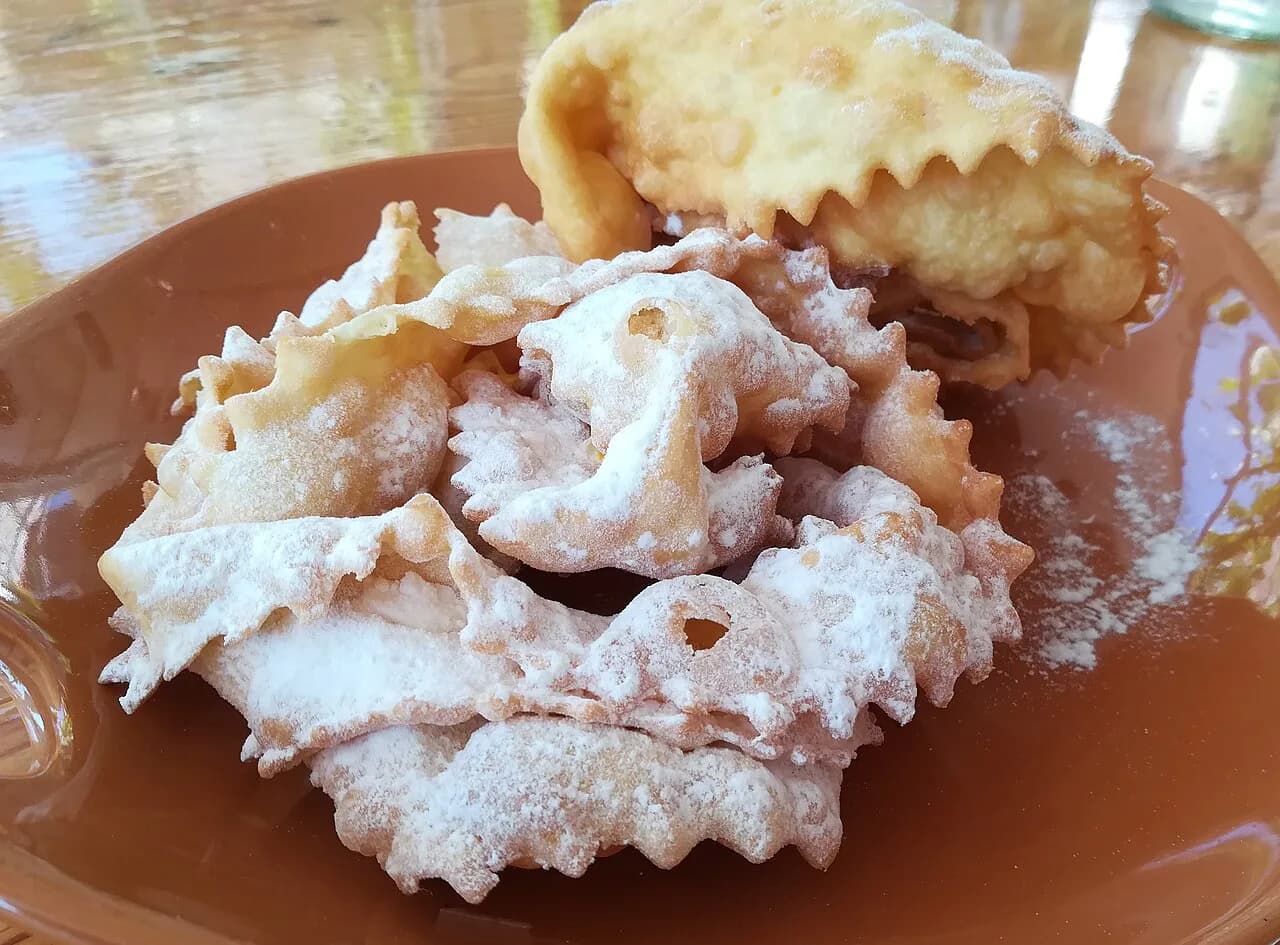
Kroštule are thin ribbons of sweet dough, twisted, fried until golden and finished with a heavy dusting of icing sugar. They are a celebration pastry in coastal Croatia, most closely associated with Dalmatia and Istria, and they are eaten with coffee, with dessert wine or straight from the plate. This guide explains what goes into the dough, why the frying makes them so light, how they are shaped and where you meet them.
If you have eaten your way around Croatian sweets, the closest comparison in texture is a light doughnut, not a biscuit: crisp on the surface, airy within, gone in two bites. That makes them a natural companion to the softer, creamier cakes on the same table, including the chilled custard slice known as kremšnita.
What kroštule are
Kroštule are made from a simple dough that is rolled thin, cut into strips, twisted into loose knots or ribbons, fried and then sugared. The result is a pastry with almost no weight to it, golden at the edges and pale where the dough has puffed. The shape matters as much as the recipe: a thin twist fries evenly and stays crisp, while a thick piece turns heavy and greasy.
They belong to a family of Croatian sweets built on flour, eggs and sugar, but they stand apart by method and texture. Yeast-raised walnut rolls and layered apple pies are soft and crumbly; kroštule are fried and shatteringly crisp, served plain rather than filled or glazed. For anyone mapping the wider field, they sit comfortably alongside the cakes and pastries in this guide to Croatian desserts.
Their lightness makes them an easy finish to a long lunch, which is why they turn up on festive tables rather than as a plated restaurant dessert. There is no filling and no sauce to compete with, just sugar and crunch.
How the dough is made: flour, eggs, sugar and a splash of brandy or rum
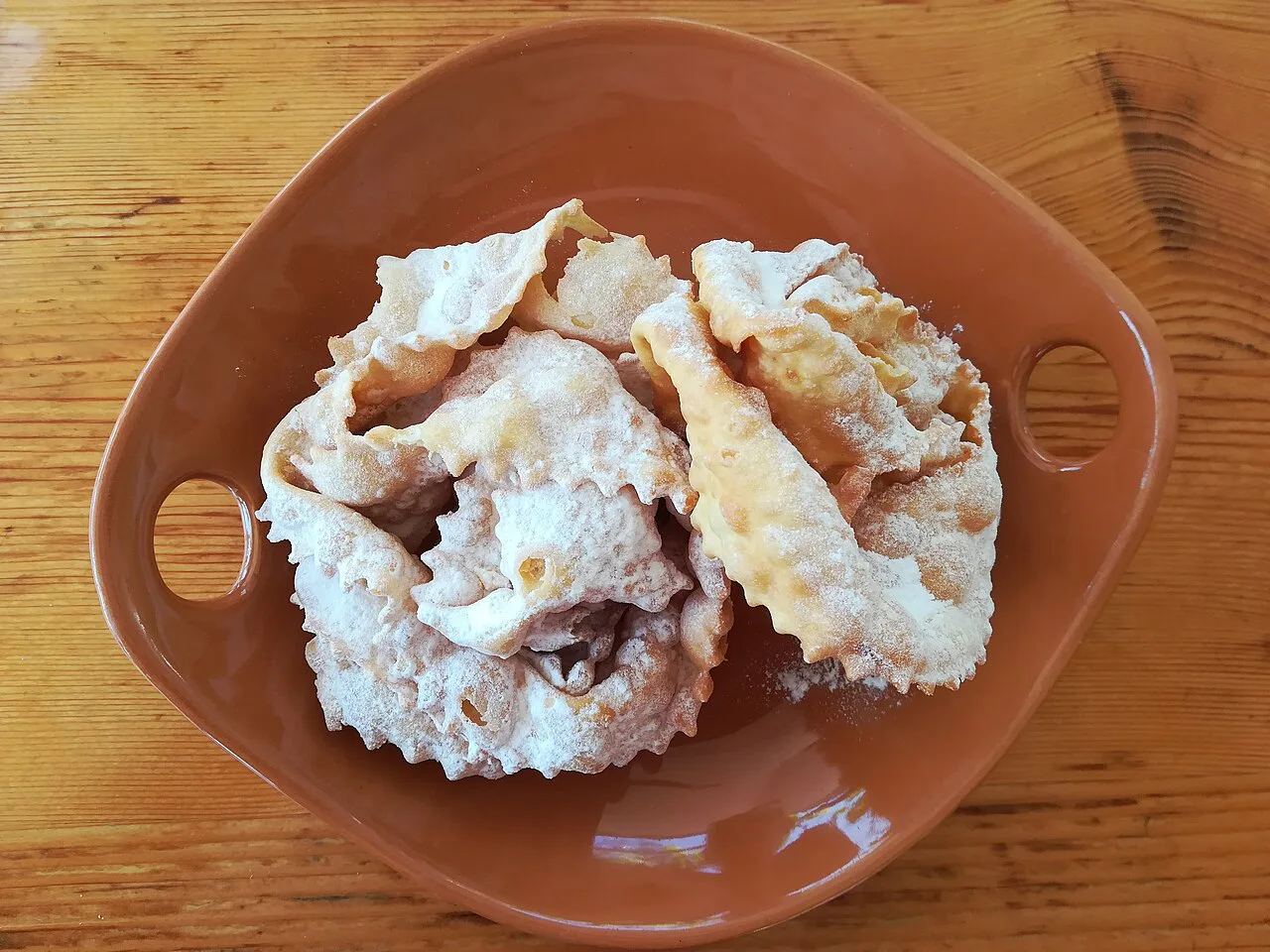
The dough is short and plain: flour, eggs, sugar and a small measure of brandy or rum. The alcohol is not there to get anyone tipsy, and the quantity in a batch is modest; it is a flavouring and a piece of kitchen technique in one. Family recipes vary in the details, but the base list stays recognisably the same across the coast.
What are kroštule made of? A plain dough of flour, eggs and sugar, mixed with a small measure of brandy or rum, then rolled thin, cut into strips, twisted and fried. Once drained they are dusted with icing sugar.
Are kroštule the same as fritule? No. Fritule are small rounded yeasted doughnuts, often flavoured with citrus or raisins and softer to eat.
Do kroštule contain alcohol? The dough includes a splash of brandy or rum, which mostly cooks off in the hot oil. Anyone avoiding alcohol altogether should ask the cook, since family recipes vary.
After mixing, the dough rests, then it is rolled out as thinly as the cook dares. Thinness is the whole game: the sheets are cut into narrow strips, which are then twisted so they hold their shape in the oil. Too thick and the centre stays doughy while the outside browns; too thin and the ribbon breaks before it reaches the pan.
Kroštule are almost always a home or celebration kitchen project, not a factory product, and they are often made in company, with one person rolling, one cutting and one at the pan. That shared work is part of their character.
Why the alcohol and the frying make them light and crisp
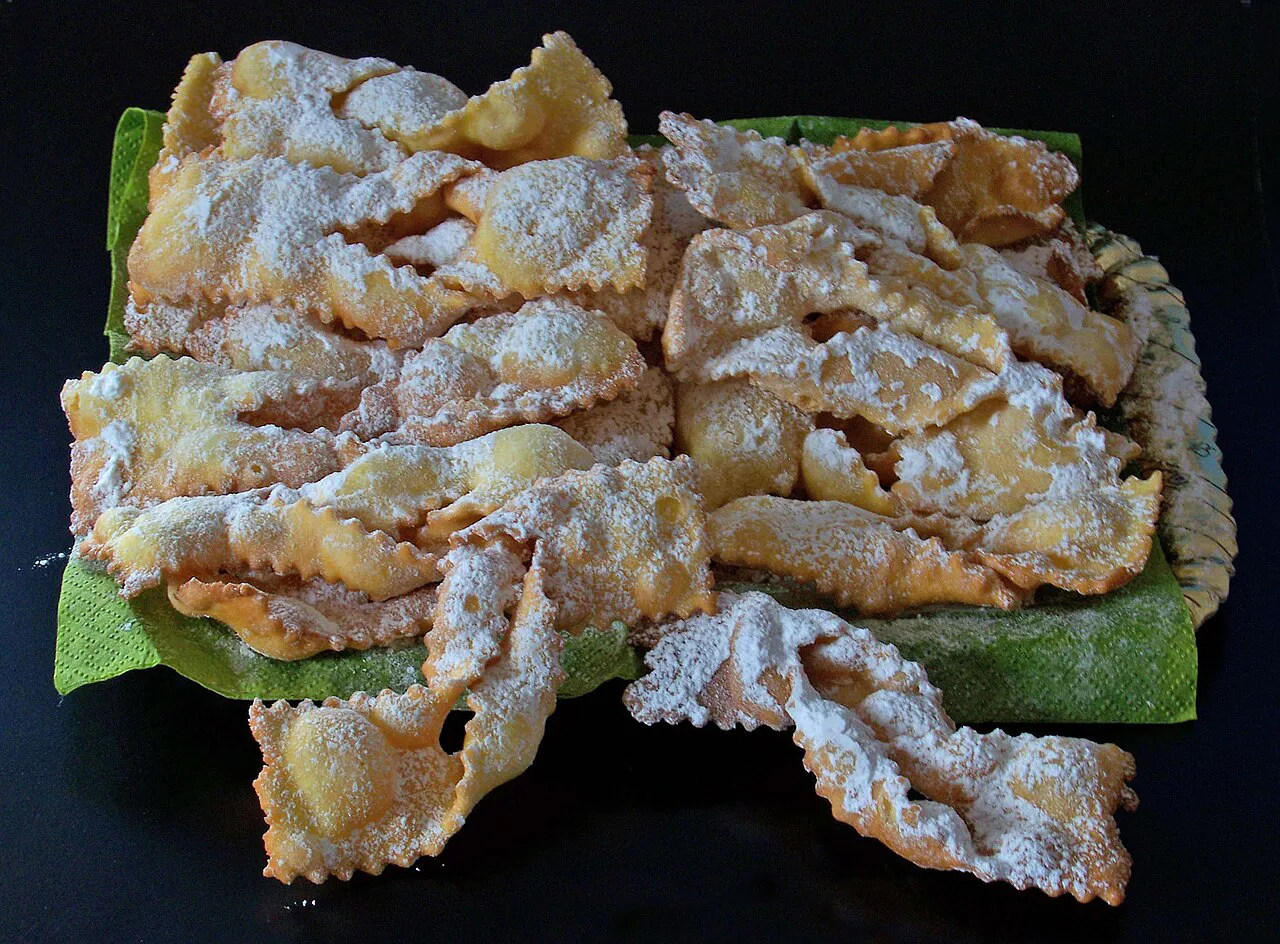
The splash of brandy or rum does two jobs. It carries flavour into an otherwise plain dough, and it helps the dough fry up light and crisp rather than dense. That is the practical reason the spirit appears in recipes, quite apart from taste.
Frying, rather than baking, is what gives kroštule their signature snap. Hot oil sets the outside almost immediately, so the ribbon crisps through before it can soak up fat. The strips are turned so they colour evenly, lifted out golden, and drained before sugaring.
The same principle separates kroštule from Croatia's other fried sweet, the small yeasted doughnuts known as fritule. Those are rounded, slightly chewy and often flavoured with citrus or raisin; kroštule are flat, twisted and brittle-crisp. If you are choosing between them, pick fritule for a softer bite and kroštule for crunch.
The shape: thin ribbons twisted before frying
The cut strips are twisted into bows, knots or loose spirals before they go into the oil, and the twist is what keeps them interesting to eat. A flat strip fries into something closer to a crisp; the twist creates edges that brown faster than the middle, so each ribbon has a range of textures. Some cooks tie the strips into simple loops, others leave longer ribbons curled around a finger.
Because the shape is open and irregular, no two pieces look the same, and that is part of the charm on a serving plate. It also means the sugar clings unevenly, catching in the curves.
Icing sugar and how they are finished
Once drained, kroštule are dusted generously with icing sugar, and the coating is not a garnish but the finishing touch that makes them what they are. The sugar settles into the twists and onto the plate, so the last few pieces are sweeter than the first. They are served at room temperature and eaten by hand.
They keep reasonably well in a sealed tin, which is one reason they suit weddings, holidays and large family gatherings where food is made ahead. Their dry crispness also means they do not spoil a table spread the way a cream-filled cake would.
Where in Croatia you find them: Dalmatia and Istria
Kroštule are a coastal pastry, most strongly associated with Dalmatia and Istria, and they appear on sweet tables rather than as a menu staple in the way that kremšnita does in the north. On the Dalmatian coast and islands they are a fixture of baptisms, first communions and weddings, and in Istria they turn up at family celebrations and festive tables.
Inland and in the north the pastry landscape shifts towards baked sweets, including the honey-and-spice biscuits known as medenjaci and the decorated gingerbread hearts of the north. Kroštule remain the fried, sugary outlier of the coastal table.
If you are hunting them as a visitor, look at pastry counters and sweet tables where a plate of pale, sugar-dusted twists sits beside cream cakes and biscuits. They are more reliable at celebrations than on a restaurant dessert list.
When they are made and served: weddings, holidays and family gatherings
Kroštule are celebration food. They are made for weddings, holidays and family gatherings, served on a platter alongside other Croatian sweets, and they are also eaten casually with a mid-morning coffee. In Dalmatia the making itself is a social occasion, with several people gathered around a table to roll, twist and fry while they catch up.
That communal element is worth knowing if you are invited to a Croatian home or a village celebration: a plate of homemade kroštule is a gesture of hospitality rather than a bought-in dessert. Expect them at the sweet end of a long meal, when coffee appears.
What to eat or drink with kroštule
The classic pairing is coffee, strong and unsweetened, or tea; the sugar on the pastry does the work that milk and sugar would. A small glass of dessert wine is the festive alternative. A lemon or orange zest in the dough lifts the flavour, and a little vanilla is a common addition, both of which sit well with citrus-forward drinks.
On a sweet table, kroštule work best as the light, crisp note next to softer cream cakes, cheese-filled pastries and fruit tarts. A slice of the cheese pastry sirnica alongside brings a savoury contrast, and a piece of nut roll gives weight to the plate.
Keep the portions small. Kroštule are moreish and light enough that the plate empties quickly, so plan a couple per person alongside anything richer.
Which Croatian sweet should you try first?
Start with kroštule if you want something crisp, simple and unmistakably festive, then work through the softer cakes and pastries. If you prefer a slower, juicier sweet, the walnut roll and apple pie styles may suit you better.
Wherever you try them, ask whether the kroštule on offer are homemade, since that is where most of their character comes from. The best versions are thin, brittle and generously sugared.
Explore more Croatia guides
Frequently Asked Questions
What are kroštule made of?
A plain dough of flour, eggs and sugar, mixed with a small measure of brandy or rum, then rolled thin, cut into strips, twisted and fried. Once drained they are dusted with icing sugar. The alcohol is used for flavour and to help the dough fry crisp, not for effect.
Are kroštule the same as fritule?
No. Fritule are small rounded yeasted doughnuts, often flavoured with citrus or raisins and softer to eat. Kroštule are thin twisted ribbons of dough, fried until brittle-crisp and finished with icing sugar. The difference is in both the shape and the texture.
Do kroštule contain alcohol?
The dough includes a splash of brandy or rum, which mostly cooks off in the hot oil. Anyone avoiding alcohol altogether should ask the cook, since family recipes vary.
Sources
Notes on eating well in Croatia
Optional updates to our food guides.
You might also like



Continue reading
More guides you'll find useful





