
Licitar Heart: Croatia's Red Gingerbread Souvenir Explained
A licitar heart is a hard, decorated biscuit from northern Croatia, sold as a keepsake. Learn what it is, how it is made and what the heart shape means.
On this page
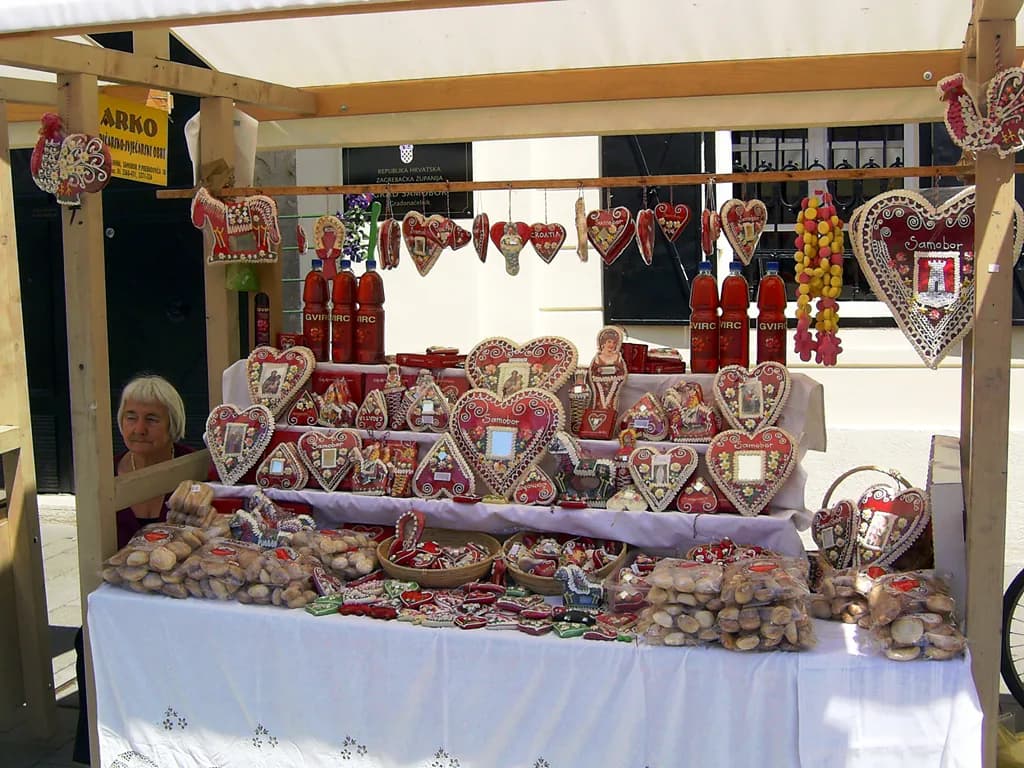
A licitar heart is a hard, decorated biscuit in the shape of a heart, sold across Croatia as a keepsake rather than a snack. It belongs to the gingerbread craft of northern Croatia, and the small red hearts hanging in souvenir shops are the most familiar version. This guide covers what the biscuit is made of, why it is red, what the heart shape means and how to pick one that survives the journey home.
What a licitar heart is
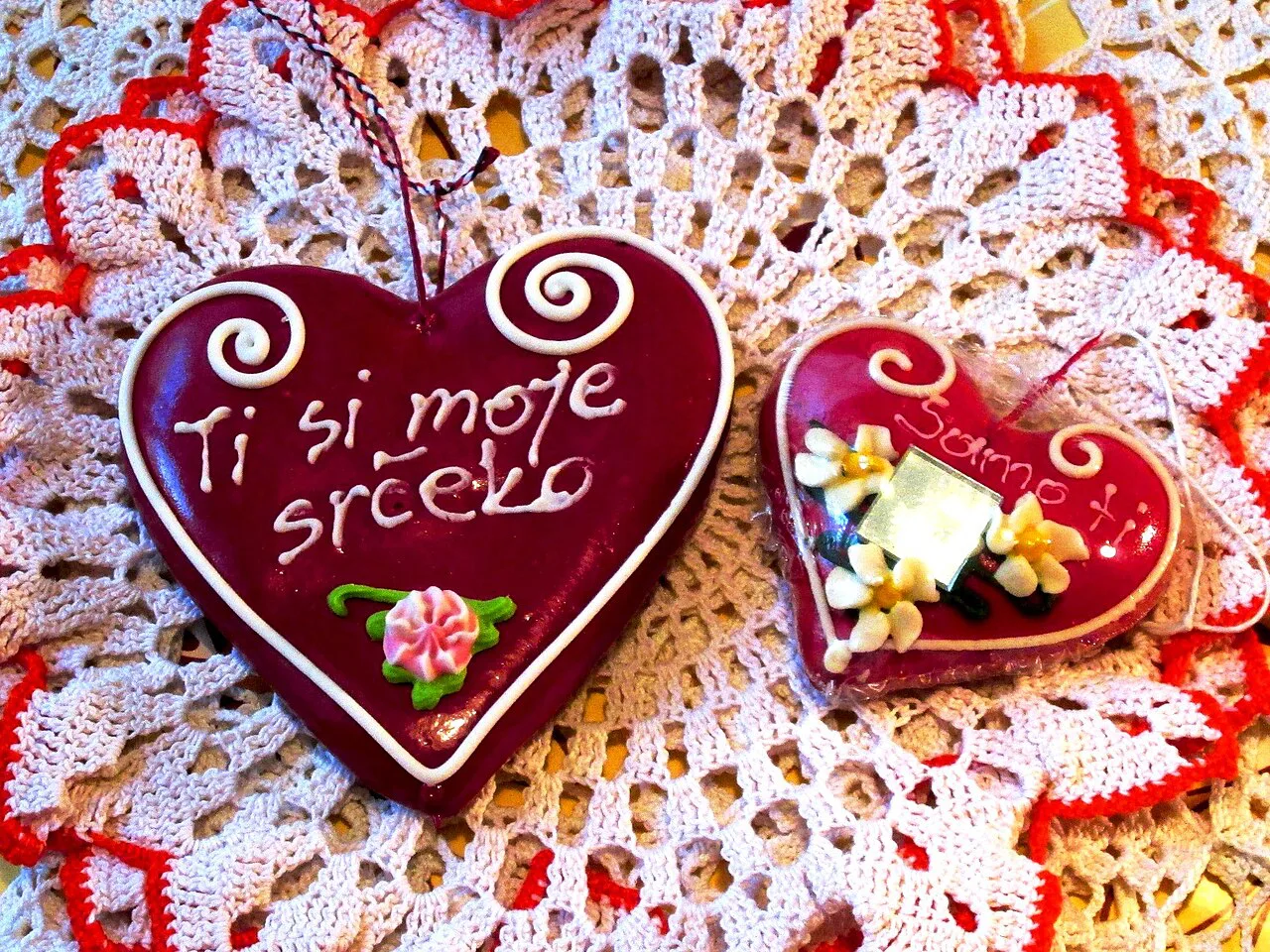
A licitar is a hard, sweet biscuit made from a simple dough of flour, honey, eggs and yeast, then coloured and decorated with piped icing. Despite being treated as a type of gingerbread, the classic recipe contains no ginger at all. Licitars come in many shapes, but the heart is the one most visitors recognise, and in Zagreb it is known affectionately as srčeko, literally "little heart".
Why licitars are red and heart-shaped. Red is the standard colour, and the heart is the standard form, because the licitar began as a token of affection.
How the biscuits are made. The historic method is slow. The dough is left to leaven for a few days, then shaped, stamped or moulded into hearts and baked. After baking, the biscuits are left to dry out completely for about two weeks before any.
A keepsake, not a snack. Licitars are edible in the technical sense, but they are made to last rather than to be enjoyed at tea.
The word licitar does double duty: it can describe the decorated biscuit itself or the craftsmen and craftswomen who make it. Both meanings point to the same tradition, in which a single heart takes days of shaping, drying, colouring and decorating before it is shop-ready. Treat the object you buy as the end of that process, not a factory novelty.
Why licitars are red and heart-shaped
Red is the standard colour, and the heart is the standard form, because the licitar began as a token of affection. In the old custom, a boy gave a heart-shaped licitar to a girl; if she kept it close, the affection was mutual, and if she took a bite, it signalled she was not interested. Licitars are still given as tokens of affection and as gifts, bought as souvenirs or keepsakes of a holiday, a memory or an event.
The shape has outgrown its romantic origins. Licitars are given as gifts and bought as holiday keepsakes, and they appear as wreaths and other forms as well as hearts. If you want the version with the strongest story behind it, choose a red heart and ask the seller whether it was made by hand.
How the biscuits are made
The historic method is slow. The dough is left to leaven for a few days, then shaped, stamped or moulded into hearts and baked. After baking, the biscuits are left to dry out completely for about two weeks before any colour goes on.
The red base colour is applied next, followed by another drying period of roughly two weeks. Only then is the piped icing added on top, usually white but sometimes in other colours, which is what gives each heart its outline and pattern. From start to finish, a traditionally made licitar can take up to two months.
All that drying is the point: it turns a soft biscuit into a hard, durable object that can be hung, displayed and kept. Mass-produced licitars skip the traditional recipe and the long drying stages, so they look similar but behave differently. If the making matters to you, look for a stall or shop that sells handmade pieces and says so clearly.
A keepsake, not a snack
Licitars are edible in the technical sense, but they are made to last rather than to be enjoyed at tea. The dough is deliberately dense and dry, and a heart that has spent weeks hardening tastes of very little. Bite one if curiosity wins, but expect a stale, tough texture rather than a soft gingerbread.
Croatian baking offers plenty of soft, made-to-be-eaten sweets, from fritule, the little fried doughnuts dusted with sugar, to the layered kremšnita, a custard and cream slice. If you want something to eat on the spot, those are the better buy; a licitar heart is the thing you take home. The site's guide to Croatian desserts sets out the wider field, so you can match the souvenir to the sweet.
Buying licitars: gift shops, stands and sizes
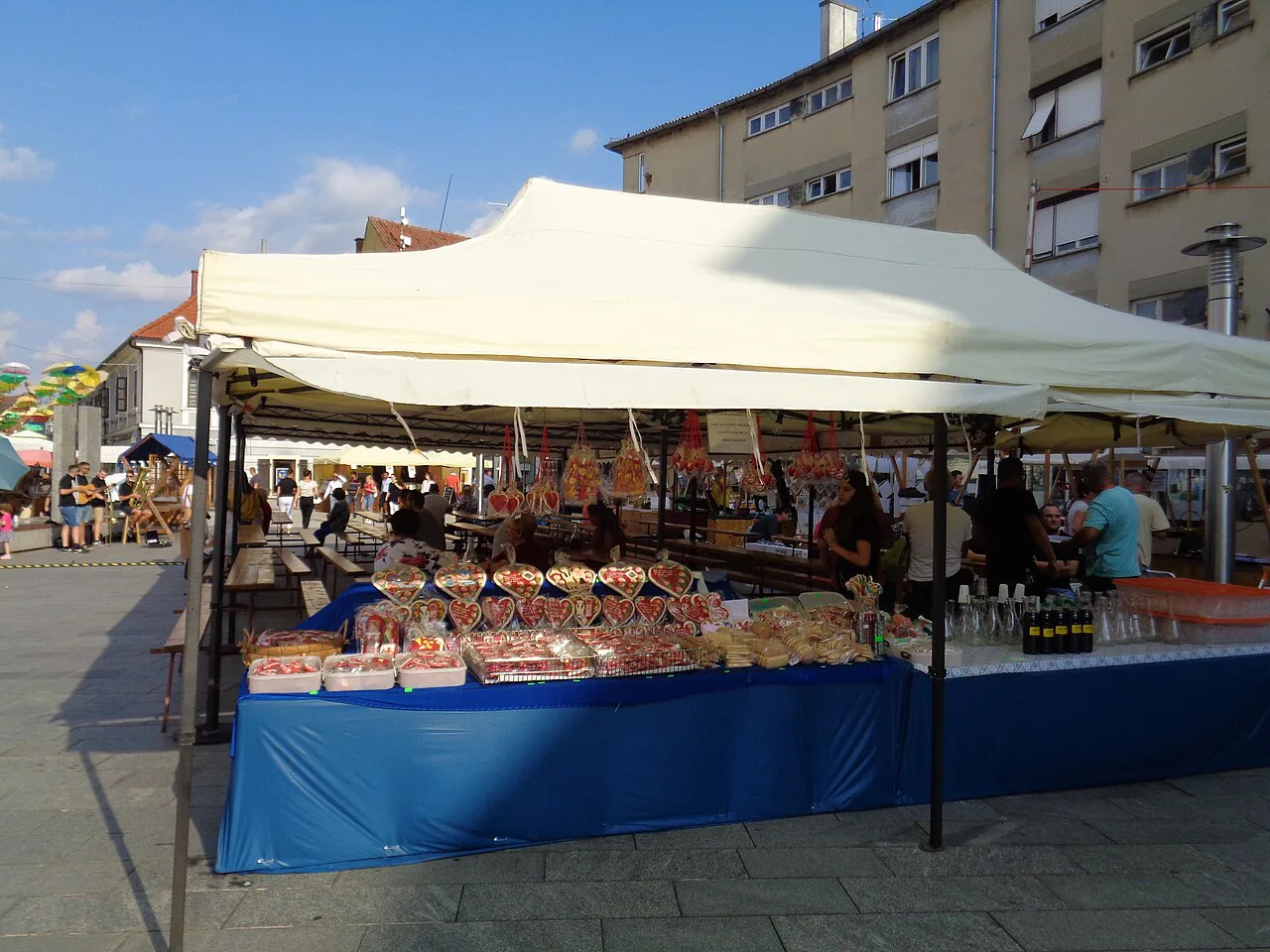
Licitars turn up in gift shops and souvenir stands all over the country, not only in Zagreb, and they range from tiny plain hearts to large, heavily decorated pieces. As a rough indication, the Croatian National Tourist Board puts a small simple heart at around US$1.50, while a large elaborate heart or other shape can reach upwards of US$30. Treat those figures as an indication rather than a quote from any particular shop.
The trade-off is straightforward. A small heart is cheap, light and easy to pack, but the decoration is minimal; a large one makes a proper gift or ornament, yet it is bulkier and more fragile in a suitcase. Decide before you shop whether you are buying a small token for several people or one statement piece.
Buy where the seller can tell you how the piece was made, and check the icing for cracks before paying. A licitar is a craft object first, so a clean, sharp outline and an even red base are better signs than a fancy shape alone. If buying several, ask for them to be wrapped separately so they do not knock together on the way home.
Keeping a licitar heart intact
A licitar can last for a decade or more if it is treated with care. The main enemy is water: keep it dry, and avoid hanging it anywhere damp, such as a steamy kitchen or a bathroom wall. Handled that way, a heart bought on holiday makes an enduring memory of the trip.
Pack it flat and padded rather than loose among clothes, and keep it away from anything that might crush the icing. At home, a shelf away from direct sun and moisture is safer than a window. Small hearts can travel in hand luggage with almost no risk; large ones are better wrapped in a box.
Licitar hearts as decorations
In northern Croatia, licitar hearts and wreaths are traditional Christmas tree ornaments, to the point that many families keep a few in the decorations box from year to year. They also hang on walls at home and dangle from rear-view mirrors. A heart bought in summer is therefore not just a holiday souvenir but a reusable ornament.
If you plan to hang yours, check that the icing is fully dry and that the hanging loop is secure before it goes on a tree. A bitten heart, as many Croatian childhoods attest, usually ends up at the back of the tree. Better to leave the eating to the softer pastries and keep the licitar whole.
Which licitar heart to buy
Buy a red heart if you want the version with the strongest meaning, and pay more for a large handmade piece only if it is meant as a gift or a lasting ornament. For several small presents, a handful of simple hearts is cheaper and travels better. Check the icing, keep the pieces dry, and the souvenir will outlast the holiday.
Explore more Croatia guides
Sources
Notes on eating well in Croatia
Optional updates to our food guides.
You might also like



Continue reading
More guides you'll find useful





